Until next time!
Ignacio

©2017 by Ignacio Alperin Bruvera

Until next time!
Ignacio
©2017 by Ignacio Alperin Bruvera

This Sunday Concert is dedicated Mr. George Benson.
Here he is in the live concert “George Benson: Absolutely Live” from a few years ago.
The track list has to please ardent fans as well as casual listeners. There are 17 songs in this concert including Deeper Than You Think, The Ghetto, Moody’s Mood, This Masquerade, Breezin´, Give Me The Night and, of course, On Broadway.
Enjoy!
Until next time.
Ignacio

©2016 by Ignacio Alperin Bruvera
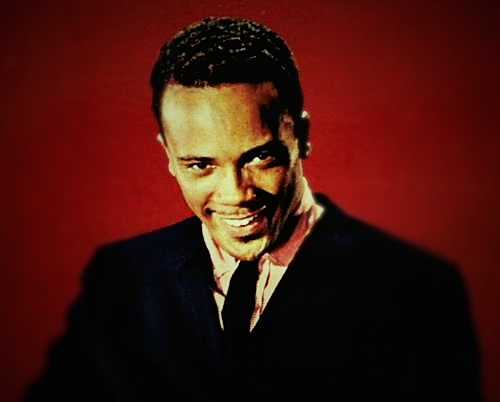
This week we move to Canada. We are at the Montreux Jazz Festival and it is the year 2008.
It is also a very special year. It is Quincy Jones 75th birthday. And to celebrate, Montreux put together a huge concert with the man of the hour himself right center in the front row, and giants from Herbie Hancock to James Moody, Al Jarreau and a cast too big to mention on stage.
So, on this second Sunday of 2017…let´s enjoy the concert, the music and simply celebrate a great career.
Until next time!
Ignacio

©2016 by Ignacio Alperin Bruvera

Happy New year everyone!!!!
A great New Year´s Sunday treat: John Belushi and Dan Aykroyd playing live in NYC on New Year´s eve, 1978.
From Wikipedia: The Blues Brothers are an American blues and soul revivalist band founded in 1978 by comedians Dan Aykroyd and John Belushi as part of a musical sketch on Saturday Night Live. Belushi and Aykroyd, respectively in character as lead vocalist “Joliet” Jake Blues and harmonica player/vocalist Elwood Blues, fronted the band, which was composed of well-known and respected musicians. The band made its debut as the musical guest on the April 22, 1978, episode of Saturday Night Live.
Until next time.
Ignacio
©2016 by Ignacio Alperin Bruvera

Wow! For this Christmas Sunday concert we have something really different that will blow your mind.
From France´s Love @ Jazz sous les Pommiers 2015 we have this huge concert by Snarky Puppy.
This is not the Jazz you are used to listening but after a little while, it will sound as if you have been listening to it your whole life.
Enjoy!
Until next time.
Ignacio

©2016 by Ignacio Alperin Bruvera

It seems that lately we are milking Jazz Casual dry! For all of you who don’t know, Jazz Casual was an occasional 30 minute TV Jazz series on National Educational Television (NET), the predecessor to the Public Broadcasting Service (PBS). The show was produced by Richard Moore on KQED in San Francisco. It ran from 1961 to 1968 and was hosted by jazz critic Ralph Gleason. This time, our Sunday concert is dedicated to the great late B.B. King.
Enjoy!
Until next time.
Ignacio

©2016 by Ignacio Alperin Bruvera
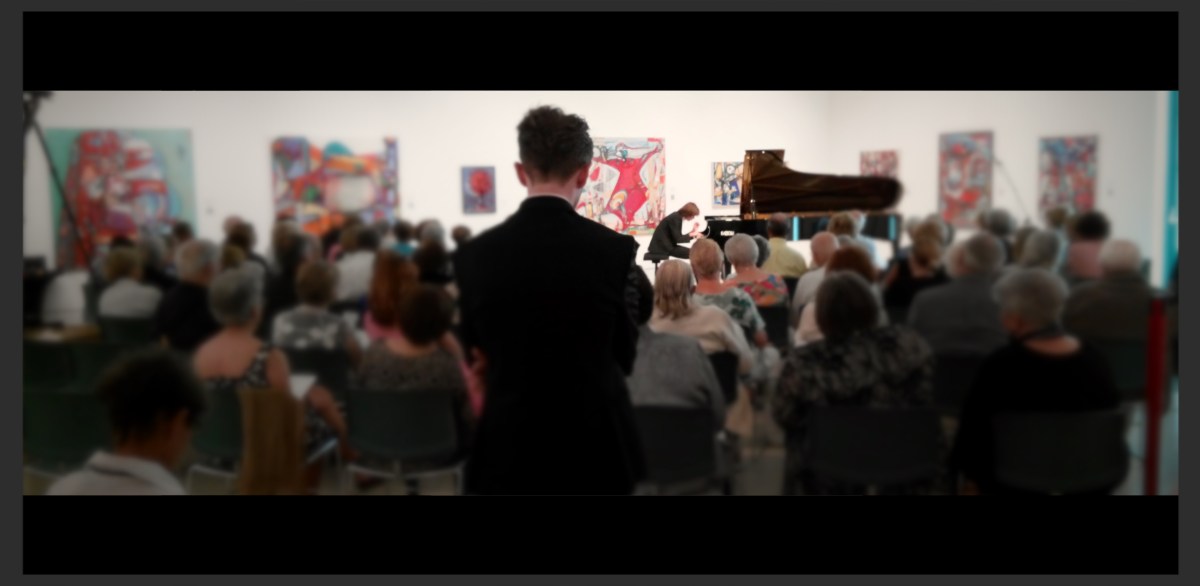
A nice mix of art review, article and interview written by the prestigious Lindsey Nesmith for Florida Weekly in May. I hope you like it.
A painter gifted with the art of listening
BY LINDSEY NESMITH
Ignacio Alperin’s exhibition “A Visual Jazz Affair” is showing at The von Liebig Center through June 3.
Synesthesia, the neurological phenomenon where the activation of one of the five senses stimulates another, could be considered to be a quirk of human evolution. Being able to smell laughter is an odd talent, but is also nothing to get worked up about if you happen to be the one person out of 2,000 who experience it.
If you’re an artist however, synesthesia can be a wonderful gift, particularly if you have an affinity for music and the ability to visualize it.
Argentinean artist Ignacio Alperin, whose exhibition “A Visual Jazz Affair” is showing at The von Liebig Center through Friday, June 3, is so blessed: He “sees” music as he hears it. His work is often compared to that of Kandinsky, who he learned also experienced sound-tocolor synesthesia.
Works by Ignacio Alperin on display at The von Liebig Art Center through June 3 include, clockwise from above left, “Paper Moon,” “Whatever Lola Wants” and “Kind of Blue (and Ochre Too).”
Visitors to The von Liebig exhibit can tune in to the music that inspired several of the paintings in “A Visual Jazz Affair” by scanning a QR code next to the painting and listening through their smartphones.
An ardent love for American jazz, which Mr. Alperin discovered as a child, served as inspiration for the current show.
“People always say there is something musical and rhythmic about the paintings; that there seems to be sound coming out of them,” he says. “It allows my brain to produce shapes and colors with music.”
His paintings certainly do evoke a certain musicality, particularly when viewed alongside the jazz piece he selected to accompany each piece. In “Kind of Blue (and Ochre Too),” for example, viewers can see the syncopation and meditative groove Miles Davis infuses into his cool jazz era recordings. But Mr. Alperin says he didn’t simply transcribe onto canvas the shapes he saw when he listened to “Kind of Blue.” His painting, he says, “is more like a general reference to the album and a feeling. It was a groundbreaking album, and if you look at the painting, you can see how the perspective is breaking up.”
Another painting, “Whatever Lola Wants,” features a chaotic space and broken perspective centered on a zaftig female figure. Not exactly the self-contained maneater described in “Whatever Lola Wants,” but rather a meditation on Lola come undone.
“This is stormy Lola,” he says. “Lola is wild.”
Visitors to the exhibit will also see six pieces that demonstrate the reverse painting technique, in which Mr. Alperin paints in backward order on the backside of plexiglass. Canvas paintings are layered in such a way that an artist’s first stroke lays the foundation of the work, whereas reverse painting requires that the first stroke be in the foreground and integral element of the composition. “Paper Moon” is one of the plexiglass paintings on display.
“It’s much more restrictive,” he says. “I cannot change what I did first. It has to be thought out.”
The advantage, however, is seeing how the light creates a dimensionality not typically found on canvas when it can pass through the glass and layers of paint. “The colors come alive,” he says. “All that third dimensionality comes up when the light bounces off it.”
Mr. Alperin’s works have been exhibited throughout the world, including London, New York, Miami, Melbourne, Zurich, Lisbon and in Argentina, where he is a professor of creativity and innovation at The Argentine National Catholic University in Buenos Aires.
The artist grew up in Australia and says when his parents took him on an extended trip to Europe as a child, he came home painting after having been to practically every art museum on the continent.
He was childhood friends with Nichaud Fitzgibbons, who became one of Australian’s premiere jazz musicians. At the time, however, her father, Smacka Fitzgibbons, was at the forefront of the music scene, and she knew all the musicians.
“I became hooked on jazz, and it has followed me all my life,” Mr. Alperin says. “I have high respect for the genre … it’s America’s best gift to the world in the 20th century.” ¦
‘A Visual Jazz Affair’
>> What: An exhibit of works by Ignacio Alperin, several of which the viewer studies while listening to the jazz music that inspired them
>> When: Through Friday, June 3
>> Where: The von Liebig Art Center
> Hours: 10 a.m. to 4 p.m. Monday-Saturday

BY LINDSEY NESMITH
Ignacio Alperin’s exhibition “A Visual Jazz Affair” is showing at The von Liebig Center through June 3. Synesthesia, the neurological phenomenon where the activation of one of the five senses stimulates another, could be considered to be a quirk of human evolution. Being able to smell laughter is an odd talent, but is also nothing to get worked up about if you happen to be the one person out of 2,000 who experience it.
If you’re an artist however, synesthesia can be a wonderful gift, particularly if you have an affinity for music and the ability to visualize it.
Argentinean artist Ignacio Alperin, whose exhibition “A Visual Jazz Affair” is showing at The von Liebig Center through Friday, June 3, is so blessed: He “sees” music as he hears it. His work is often compared to that of Kandinsky, who he learned also experienced sound-to-color synesthesia.
View original post 36 more words

Just in case you missed it, this Sunday we have a great Jazz Day concert, at none other than the White House. From April 30th, 2016.
Enjoy!
Until next time.
Ignacio

©2016 by Ignacio Alperin Bruvera
 IGNACIO ALPERIN: THE ART OF THINKING OUT LOUD / EL ARTE DE PENSAR EN VOZ ALTA