Categories
2019 Creativity Creativity / Creatividad Design Exhibitions IN ENGLISH Innovation Promoting your Art sustainability Uncategorized Videos

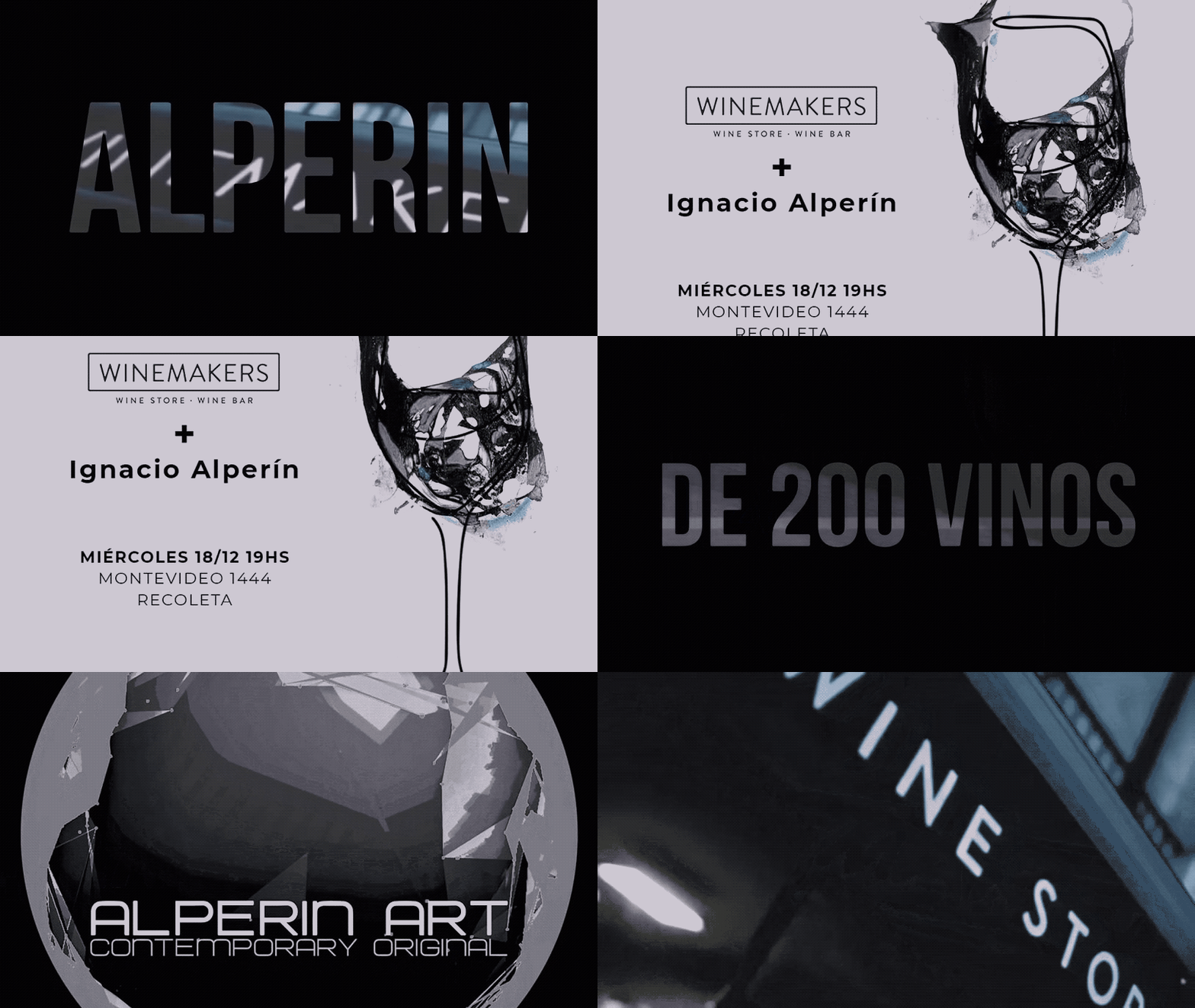
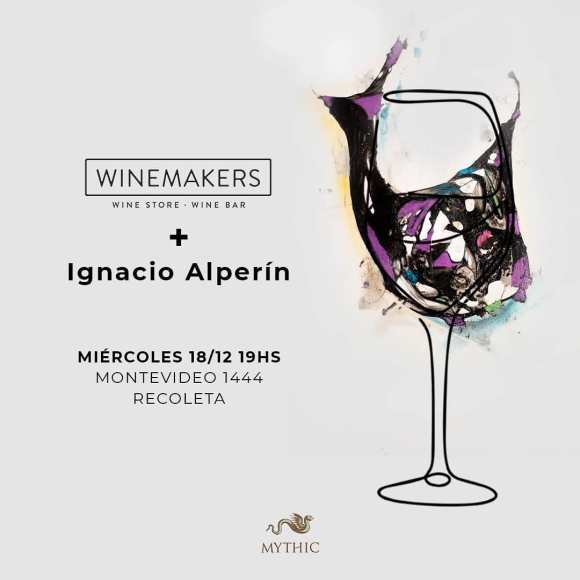
WINEMAKERS + IGNACIO ALPERIN: Seguimos descorchando hasta Febrero!

This slideshow requires JavaScript.

Pasó la inauguracion pero seguimos hasta Febrero!

TE ESPERAMOS!

Esta es una de esas ocasiones que no podés dejar pasar, por eso te pido que lo agendes ya.

Con estás obras terminamos 2019 y arrancamos 2020.

De Lunes a Sábados, a partir de las 14 podés pasar, y si.me avisos, te espero ahí para guiarte.

En Winemakers, Montevideo 1444 (justito frente a la plaza Vicente López), en pleno barrio de la Recoleta, CABA.

Vas a encontrarte con más de 20 nuevas obras a valores muy especiales, y junto a ellas vas a descubrir más de 200 vinos de bodegas boutique, de esos que los chicos de Winemakers saben elegir tan bien.

Y no solo eso, con la compra de una obra (que bien puede ser para regalarte o regalar), nosotros te regalamos a vos una espectacular botella de vino de alta gama. Y en las obras de mayor tamaño, una de las espectaculares cajas de regalo de Winemakers con 3 botellas de vinos extraordinarios.

Los esperamos con las copas en mano, las obras listas, y muy buena onda.

Nacho

WINEMAKERS + IGNACIO ALPERIN
Hasta Febrero 2020
MONTEVIDEO 1444, RECOLETA, CABA, ARGENTINA

Ignacio Alperin nació en Argentina, creció en Australia y vivió temporariamente en varios países alrededor del mundo. Posee una experiencia internacional extensa, y diversa, obtenida en una carrera profesional alejada de lo lineal. Hoy en día es Profesor de Entrepreneurship en los MBAs de la Universidad Católica Argentina (UCA), Profesor de Creatividad e Innovación (Grado) en UCA Internacional, es un Emprendedor serial, consultor, orador en eventos nacionales e internacionales, evangelista secular, y artista plástico.
Ignacio Alperin was born in Argentina, grew up in Australia and lived temporarily in several countries around the world. He has extensive and diverse international experience, obtained in a professional career far from the linear. Nowadays he is Professor of Entrepreneurship in the MBAs of the Argentine Catholic University (UCA), Professor of Creativity and Innovation (Degree) in UCA International, a serial Entrepreneur, consultant, speaker in national and international events, secular evangelist, and an artist.
©2019 by Ignacio Alperin Bruvera
#vinos #winemakers #arte #exhibiciones #venta #artedigital #vinosboutique #recoleta #alperin #ignacioalperin #creatividad #innovación #regalos #regaloscorporativos

Categories
2019 Creativity Creativity / Creatividad Design Exhibitions IN ENGLISH Innovation Promoting your Art sustainability Uncategorized Videos

Hoy Inauguración: WINEMAKERS + IGNACIO ALPERIN


Esta es una de esas ocasiones que no podés dejar pasar, por eso te pido que lo agendes ya.

Esta va a ser mi mí última muestra del año y se inaugura hoy, miércoles 18 de Diciembre.

Descorchamos a partir de las 19 hs en Winemakers, Montevideo 1444 (justito frente a Plaza Vicente López), en pleno barrio de la Recoleta, CABA.

Voy  a estar presentando más de 20 nuevas obras a valores muy especiales, y junto a ellas vas a encontrar más de 200 vinos de bodegas boutique, de esos que los chicos de Winemakers saben elegir tan bien.

Y no solo eso, con la compra de una obra (que bien puede ser para regalarte o regalar), nosotros te regalamos a vos una espectacular botella de vino de alta gama. Y en las obras de mayor tamaño, una de las elegantes cajas de regalo de Winemakers con 3 botellas de vinos extraordinarios seleccionados por su sommelier.

Los esperamos copa en mano, con mucho arte y muy buena onda.

Nacho

WINEMAKERS + IGNACIO ALPERIN

HOY MIERCOLES 18 DE DICIEMBRE

HORARIO: 19 A 22 HORAS

MONTEVIDEO 1444, RECOLETA, CABA, ARGENTINA

@winemakers

Ignacio Alperin nació en Argentina, creció en Australia y vivió temporariamente en varios países alrededor del mundo. Posee una experiencia internacional extensa, y diversa, obtenida en una carrera profesional alejada de lo lineal. Hoy en día es Profesor de Entrepreneurship en los MBAs de la Universidad Católica Argentina (UCA), Profesor de Creatividad e Innovación (Grado) en UCA Internacional, es un Emprendedor serial, consultor, orador en eventos nacionales e internacionales, evangelista secular, y artista plástico.
Ignacio Alperin was born in Argentina, grew up in Australia and lived temporarily in several countries around the world. He has extensive and diverse international experience, obtained in a professional career far from the linear. Nowadays he is Professor of Entrepreneurship in the MBAs of the Argentine Catholic University (UCA), Professor of Creativity and Innovation (Degree) in UCA International, a serial Entrepreneur, consultant, speaker in national and international events, secular evangelist, and an artist.
©2019 by Ignacio Alperin Bruvera
#vinos #winemakers #arte #exhibiciones #venta #artedigital #vinosboutique #recoleta #alperin #ignacioalperin #creatividad #innovación #regalos #regaloscorporativos

Categories
2019 Creativity Creativity / Creatividad Design Exhibitions IN ENGLISH Innovation Promoting your Art sustainability Uncategorized Videos

Un maridaje perfecto: WINEMAKERS + IGNACIO ALPERIN


Esta es una de esas ocasiones que no podés dejar pasar, por eso te pido que lo agendes ya.

Esta va a ser mi mí última muestra del año y se inaugura este miércoles 18 de Diciembre.

Descorchamos a partir de las 19 hs en Winemakers, Montevideo 1444 (justito frente a la plaza Vicente López), en pleno barrio de la Recoleta, CABA.

Voy  a estar presentando más de 20 nuevas obras a valores muy especiales, y junto a ellas vas a encontrar más de 200 vinos de bodegas boutique, de esos que los chicos de Winemakers saben elegir tan bien.

Y no solo eso, con la compra de una obra (que bien puede ser para regalarte o regalar), nosotros te regalamos a vos una espectacular botella de vino de alta gama. Y en las obras de mayor tamaño, una de las espectaculares cajas de regalo de Winemakers con 3 botellas de vinos extraordinarios.

Los esperamos con las copas en mano, las obras listas, y muy buena onda.

Nacho

WINEMAKERS + IGNACIO ALPERIN

MIERCOLES 18/12/19

HORARIO: 19 A 22 HORAS

MONTEVIDEO 1444, RECOLETA, CABA, ARGENTINA

This slideshow requires JavaScript.

Ignacio Alperin nació en Argentina, creció en Australia y vivió temporariamente en varios países alrededor del mundo. Posee una experiencia internacional extensa, y diversa, obtenida en una carrera profesional alejada de lo lineal. Hoy en día es Profesor de Entrepreneurship en los MBAs de la Universidad Católica Argentina (UCA), Profesor de Creatividad e Innovación (Grado) en UCA Internacional, es un Emprendedor serial, consultor, orador en eventos nacionales e internacionales, evangelista secular, y artista plástico.
Ignacio Alperin was born in Argentina, grew up in Australia and lived temporarily in several countries around the world. He has extensive and diverse international experience, obtained in a professional career far from the linear. Nowadays he is Professor of Entrepreneurship in the MBAs of the Argentine Catholic University (UCA), Professor of Creativity and Innovation (Degree) in UCA International, a serial Entrepreneur, consultant, speaker in national and international events, secular evangelist, and an artist.
©2019 by Ignacio Alperin Bruvera
#vinos #winemakers #arte #exhibiciones #venta #artedigital #vinosboutique #recoleta #alperin #ignacioalperin #creatividad #innovación #regalos #regaloscorporativos

Categories
2019 Creativity Creativity / Creatividad Design Exhibitions IN ENGLISH Innovation Promoting your Art sustainability Uncategorized Videos

THE UNIVERSAL MIND, SUSTAINABLE DEVELOPMENT, AND YOU

It is a fact that our modern view of the world, of what is sustainable development, and of the underlying environmental issues, feel as something relatively recent. For many centuries we theorized about almost everything that surrounds us. And as a human society, we have even searched for universal truths forever. In fact, we still do.

Social and technological evolution has gathered speed, and we have gone way beyond what is close -our towns, counties, countries and continents-, to more holistic views of life and the planet. As we search for the meaning and survival of our own evolutionary development, we look at the Universe and beyond, even theorizing on the existence of multiverses, or perhaps an omniverse filled with “island universes” like ours (these new descriptions came to be as the theories of multiple realities advanced). As a result, the common account of what is “universal” came into question.

After all, multiplicity attempts against a common belief of just one shared reality (the word universe literally means “turned into one”, or even “transformed into one”-from the Latin unus – one- and versus, which does not mean “against” as in the modern usage, but to turn or to transform). And as we question what we know, and as incredible or farfetched the concepts may seem to many today, we advance and grow as a civilization.

Clearly, as we search for understanding, we look further and further for feedback and for answers. Looking everywhere for clues and searching for new sources of information is a method as old as humanity. But this hyper amplification of our data bases, and of information sourcing, which is at the center of our current rate of progress, is something novel.

Only 50 years ago, our daily life today would have easily qualified as science fiction. And we do not need to look at cellphones, nanotechnology, AI or the internet to assert this. It is enough to look at something more simple and geographical in nature.

People then, as it had happened throughout history with few exceptions, generally moved very little from the area where they had been born. Or if they did so for any reason, the chances of changing again from the place in which they had made a new home, or a new life, were very low.

Many centuries, and even decades ago, most scientists would present their findings -just like today- to other members of the scientific communities of the time. The difference is that they were mostly real communities in the traditional sense. Unless something was planned years in advance, most of the scientists turning up would basically be your neighbors, as there were few means to extend communication and travel beyond what was nearby.

Thus, they all lived quite close to each other. That way they would take advantage of the feedback from other scientific minds. But that would result in a restricted span of enquiries -as would be the opinions-, since they would also generally share a “school” of thought (the local school). Still, that did not mean that there was any lack of brilliance. In fact, we have seen enormous comparative advances arising from the greatest minds and schools of thought from our distant past.

One of the great things -and comparative advantages- about our lives today clearly center around the fact that people – and therefore ideas – are moving around the world with much more fluency and speed. In fact, and as a partial example of our love of travel, figures show that there are more than a million people floating up in the air every second of the day and night, moving from one place to another just by flight (and without counting those who are living and travelling in space throughout the year).

Advancement in the sciences, education, technology, and quality of life has as much to do with discovery as with the fact that this constant interchange has viralised cultural and scientific information, opened societies, deepened our understanding at a global scale, and as a result, increased the speed of progress.

In other words, the exponential increase in the virtual and physical transmission of data of all types throughout the world, highlights the fact that, it may be in that peculiarity of our time, where lies one of the logical precursor to the explosion of worldwide change since the late 20th Century.

A simple example would be that, seeing how others live, has made people, particularly those far from the central economies, to want to improve their standards of living, and no longer accept what others tell them should be adequate. The same could be said of other accelerated developments.

Today, people will move everywhere, while communication is constant. As a result, ideas tend to spread like memes – expressed as a unit of information that spreads from person to person – and are then gradually adopted by most. Information becomes much more widespread and as a result, it seeds change everywhere, though concepts can easily be misunderstood in the early stages of interaction since discernment -which requires deeper information and some experience- always lags the first contact.

I grew up in Melbourne, Australia. I still remember how one day, as I was chatting during recess with one of my school friends at CBC St. Kilda, the Christian Brothers College I attended, I was surprised -enough to still remember the anecdote- by the fact that he confessed he had only travelled only as far as Ballarat until then (we may have been 16 years of age and for those who do not know, Ballarat is a beautiful gold rush town that lies about 70 miles from Melbourne).

By then my family and I had travelled from Argentina to Australia by Peru, Tahiti, New Zealand and Sidney. Years before, while still in Argentina, we had toured Europe extensively, and regionally in South America. What I had lived already may have been a little out of the ordinary for a kid then -and in many places even now-, but his lack of movement and contact with outside influences was also already quite unusual.

I would tell him stories about what I had seen in my family´s trips and for him, it was both an eye opener and quite foreign and difficult to relate to his own life experiences at the time. Now fast forward from my own childhood to these days, and things have dramatically changed.

Currently Australians travel on average 15,500 miles per year, while the average number of miles driven by Americans per year is about 13,500. Meantime, it is estimated that commercial airlines carried just over 4.3 billion passengers worldwide on scheduled flights in 2018. That is not only people, it is close cultural, scientific, and intellectual contacts that just spread across the face of the planet slowly changing the whole human climate.

There may be still kids -and grown-ups- who may take their time before travelling – or getting the opportunity to travel- somewhere far from home, but all of them have traveled the virtual domain enough to have had a much deeper knowledge and contact of the “outside world” than my friend ever had at 16 years of age. And they have also been openly – and sometimes unconsciously- influenced by ideas, philosophies and technology which arrived to them from very far away.

All of this has had a great deal with the strengthening of what some have come to describe as the “Universal Mind”. Jazz pianist Bill Evans recorded in 1966 a famous interview/documentary with his brother called exactly “The universal mind of Bill Evans”, referring to this from a musical perspective (recommended viewing and freely available on YouTube @ https://www.youtube.com/watch?v=QwXAqIaUahI).

This notion is not new, and it definitely predates the wonderful Bill Evans by a few thousand years. In fact, the first recorded concepts around the idea of a universal mind may come to us from a pre-Socratic Greek philosopher called Anaxagoras, who arrived in Athens around 480 BC and who was later quoted by Plato and others. The Buddhist school of thought also talks about the universal mind from long ago. And the whole concept has been passed on by philosophers and religions through the centuries.

It could even be submitted that, if our universal mind exists, then it may have been evolving as much as our individual intelligence. So, it would not be surprising that it could be ventured that this process may have evolved to partially mirror our individual brain synapses as well, which can be chemical or electrical. In the universal mode we would also have the virtual spread of ideas by electric transfer (in the sense that it involves technology based modern communications, internet, and all audiovisual modes but no physical interchange), and a chemical transmission, in that it requires a physical interchange of ideas (mostly face to face, or in groups, interchanging chemicals -like hormones-, and other more physical, man created tools).

The importance of this hypothesis is that, even as late as Evans´ times (mid 1960s), it still predates globalization and the present global acceleration of processes and sharing of ideas. Furthermore, in general terms, it did predict that information would be shared globally (the “How” may be the point of discussion amongst each position) and explained how the whole world tends to adopt concepts and points of view, as if each person was part of a common consciousness. In this case size matters, as the more people become associated with an idea, the better the chances that idea will be redeployed and even adopted by others.

In the realm of inventions this is commonly known. Inventors throughout history tend to come up with similar concepts, very close to each other in time (sometimes at exactly the same time), separated by a street or sometimes by oceans, and generally not aware of the existence of the other. It could even be said that innovations tend to “mature” at a global rate and it is only timing, means, and the individual will what separates those who will ultimately become famous (and sometimes very wealthy), from those history will probably forget.

In the specific area of sustainable development and the environment, the whole idea is not new. It goes back to 17th Century Europe – particularly in Great Britain – and concepts related to forest management. It is in this realm that the whole process developed. The evolving notion of the wise use of resources can be traced, at least in its formal approach, to Gilford Pinchot, first head of the US Forestry Service.

In the early 1960s, the then embryonic environmental movement started highlighting what was the relationship between the environment and economic development. That hit a type of milestone with the MIT influenced 1972 Club of Rome report on the Limits to Growth, which described the desirable “state of global equilibrium”.

The contents were way ahead of their time. In fact, the paragraph that has been most quoted basically says: “We are searching for a model output that represents a world system that is sustainable without sudden and uncontrolled collapse and capable of satisfying the basic material requirements of all of its people”. Enough said.

There were no Sustainability Managers or Directors in Corporations -or in public life for that matter- at the time, and nobody had even thought of the task or the position. Then everything changed.

From the 1800s until the1960s spread was hampered by limited scope and little contact with outside forces. In the early 1960s it opened up. By 1972 it was clear that it could address issues of general development, and in the early 2000s it was already a concept in the universal mindset. That is how long it took for the idea to finally mature as an accepted concept and finally catch on. There is obviously much more to say about sustainable development from before and after the 1972 milestone, but I believe the point is made.

It is not, then, that we are slow to understand the importance of a notion as a result of it being novel. This timetable shows that the process can be slow, but once it acquires some basic critical mass, it has a fairly predictable -and fast- universal “speed of synaptic activity”. This human (and with apologies to Mr. Spock, not Vulcan) “mind meld” is then accelerated as we now move with a perpetually incremental speed in the exchange of communication as well.

The result is that a new beginning for the meme is set at the global mindset at some point. A magical transformation, from the thoughts and inspirations of the few to the motivations of the many, is subsequently produced.

So, as much as It is difficult to wrap our brains around the idea that corporate areas specialized on sustainability, for example, did not exist almost anywhere for so long, it is understandable that there is still certain superficiality in the analysis, and a misunderstanding as to the real nature of the massive cultural and business shift that is advancing worldwide. Even if concepts may become more easily recognizable, and spread in the common conversation, enlightenment will tend to take a little longer still, and flourish in the last stretch of connectivity.

To do that, we obviously need the freedom to communicate and express new ideas, a leveled playing field (or at least one with clear rules), enforcement that is real and present, and within those sets of parameters, creativity and innovation that can envisage to have long term effects may finally occur and flourish in the best possible sense.

In any case, and no matter what we do, it is not possible any longer to do our jobs detached from sustainability, ecological parameters, a deeper understanding of universal laws, ethics and integrity, and from our responsibility to the community in general. Our role must be seen within a holistic approach to solutions that are systemic in nature, and rarely individual. That implies that no one in particular, but the conjunction between the different actors in society, should produce the desired results.

On the business side, sustainability is slowly being understood by the major corporations. We have come from the mere use of “sustainable referencing language” (doing it because it is trendy), to slowly attempting to introduce sustainability into the DNA of each business.

Most organizations are finally working for today while preparing for a very different tomorrow. They have come to realize the real economic impact, and the financial benefits, of sustainable growth and the potential of adding to that mixture, the benefits of innovation and creativity (regarding organizational change, products, services, methods, and so on).

I believe there are numerous opportunities around the world yet to be explored. And I also believe that this may be a great time to discover them.

Conservation history teaches us that, at the genesis of any movement to save a place around the world, there has always been one emotionally and ethically inspired citizen who has mobilized the rest. One person who has taken on the task of organizing communities, who has created engagement, and who has generated the long-term constituency that will preserve change.

And that is why we need honest brokers. Individuals and organizations that can present innovative solutions that are systemic and full of counterbalances (Government, Venture Capital, Multilaterals and NGOs, Technology, and obviously Business), and which can produce results that engage and with wide ranging benefits in mind.

Sustainable strategies can produce real environmental, community based positive long-term results, that in the case of business, can also be very profitable, while in the case of nations, help them achieve the next level of long-term sustainable growth. And we know that sustainable and long-term growth, is the key to building strong communities and large middle classes. It is also one of the main paths towards the elimination of poverty, and a major tool in the inclusion, into a wider and more inclusive society, of those who were left out of the system along the way.

It is time to convince the political leaders, corporations and cultural influencers that have yet to come onboard, and to help them aspire to become that “one person” in their impact zone that will go down in history as a promoter of responsible development, and at the center of that change.

At the heart of it lies the power to move hearts and minds. In my lectures I always say that passion and sentiment must never be discarded. The force of sheer scientific numbers will always impress, but it is necessary to engage people at their emotional intelligence level. There is no question either that the globalization of (good) ideas acts as an innovation accelerator.

Nevertheless, beyond the global perspective, the difference obviously starts at the individual level and within our own areas of influence. We cannot make a few enlightened groups responsible for our future. Change is already here, and it is the new society with a new and growing economy, that is flowing rapidly towards us.

The viral nature of information and the free availability of ideas, knowledge and new concepts is the fuel that is making our jobs much simpler. Our constant hunger to advance is the engine, while our aspirations could be a large factor behind the push for change. And it is not something that will happen at some point, that paradigmatic transformation is already moving the ground from underneath our own feet.

Let go then of what is old and of little use (thank you Marie Kondo for viralizing another valuable idea!) and embrace all that is good in this shift of major boundaries. And remember, that you should find the way to make it to the other side is not what is behind this shift. Instead, it is a recognition that either we try to succeed together, or there is a big chance that we will not make it at all.

IA

Originally published as an article on LiknkedIn Pulse, 2019.

© 2019 by Ignacio Alperin Bruvera

___________________________________________________________________
(S) Ignacio Alperin nació en Argentina, creció en Australia y vivió temporariamente en varios países alrededor del mundo. Posee una experiencia internacional extensa, y diversa, obtenida en una carrera profesional alejada de lo lineal. Hoy en día es Profesor de Entrepreneurship en los MBAs de la Universidad Católica Argentina (UCA), Profesor de Creatividad e Innovación (Grado) en UCA Internacional, es un Emprendedor serial, consultor, orador en eventos nacionales e internacionales, evangelista secular, y artista plástico.
(E) Ignacio Alperin was born in Argentina, grew up in Australia and lived temporarily in several countries around the world. He has extensive and diverse international experience, obtained in a professional career far from the linear. Nowadays he is Professor of Entrepreneurship in the MBAs of the Argentine Catholic University (UCA), Professor of Creativity and Innovation (Degree) in UCA International, a serial Entrepreneur, consultant, speaker in national and international events, secular evangelist, and an artist.


Categories
2019 Creativity Creativity / Creatividad Design Exhibitions IN ENGLISH Innovation Promoting your Art sustainability Uncategorized Videos

TU DOBLE (MALVADO O NO) TE ESTÁ INCITANDO A HACER COSAS IMPENSADAS

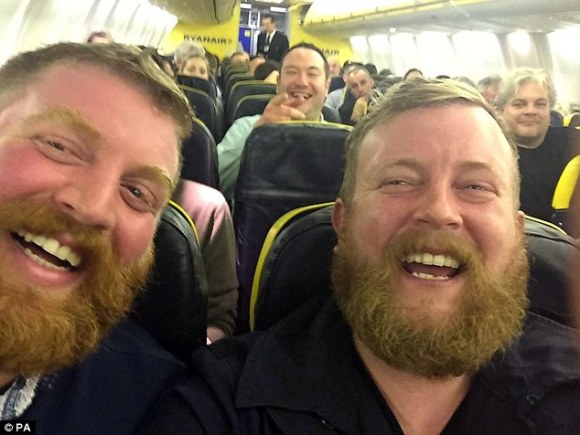
Creo que a todos nosotros, en algún momento de nuestras vidas, se nos ha cruzado la duda sobre si no existirá alguien, caminando por algún rincón del planeta, que se nos parezca al punto de que se nos confunda el uno con el otro.

Esto no es nada nuevo. La idea de un doble es muy antigua y tiene probablemente sus orígenes en la mitológica idea de los “dobles de espíritu”. Donde un mismo espíritu es dividido en una mitad buena y una maligna, para luego encarnarse en dos personas idénticas, pero con motivaciones opuestas.

No hace falta mucho trabajo para ver lo popular del concepto. Sin ir más lejos, Hollywood le ha sacado el jugo de manera constante. Desde Terminator Genesis, Muppets most wanted, y Superman III, a Bill & Ted´s Bogus Journey, Replicant, Matrix, y Oblivion, el cine nos ha entregado dosis constantes de dobles con siniestras o sorpresivas intenciones.

Los alemanes (y los angloparlantes, quienes han adoptado la palabra) llaman doppelgängers a estos supuestos dobles. Es una palabra compuesta (como muchas alemanas) que significa “doble acosador” y originalmente se refería a un espectro o aparición que es una réplica o doble de una persona viva, pero que no proyecta sombra alguna y a quien uno no le debería hablar nunca si lo ve, ya que presagia algo malo que está por suceder, o inclusive la muerte.

Algunas historias hablan de estos dobles como “gemelos malvados”, porque intentan dar consejos engañosos, o plantar ideas siniestras en la mente de sus víctimas para hacerles daño, o matarlos, y potencialmente reemplazarlos asumiendo sus identidades.

En la vida real, y sin ser aparentemente tan perversos, hay – solo hace falta buscarlos en la web- varios sitios que, armados de una foto, tratan de ubicar a una persona con características faciales parecidas a las nuestras.

Los algoritmos se encargan de realizar lo que se denomina “reconocimiento facial” (face recognition en inglés), buscando coincidencias en fotos publicadas online. Se considera que las características que marcan la fisonomía de un rostro son generalmente 8, pero estos programas se encargan de buscar coincidencias en una serie de características denominadas puntos nodales que, en referencia a la cara, suman hasta unos 80, y refinan mucho más la búsqueda comparando parecidos y diferencias. Obviamente que cuantas mayores coincidencias, más semejante a mí será la otra persona (y viceversa).

De hecho, los programas biométricos (en parte gracias su utilización masiva en el ejercicio de buscar continuamente estas características online por mera curiosidad), han ido mejorando su eficacia de manera exponencial. Hoy en día, la mayoría de estos sistemas pueden buscar y comparar estos puntos de coincidencia en entre 20 y 30 millones de caras por segundo, y la velocidad -así como la eficiencia en la correcta comparación- continúan en constante aumento.

Sin embargo, de acuerdo con un estudio realizado en 2015 por científicos de la University of Adelaide, en Australia, se calcula que las posibilidades de que exista una persona cuyos rasgos faciales coincidan con los propios en solo los 8 rasgos básicos es de una en mil millones, mientras que lleguemos a cruzarnos con alguien que sea totalmente idéntico a nosotros de manera integral (cuerpo y cara) tiene una probabilidad de uno en un millón de millones. O sea, puede suceder porque es una verdad matemática, pero no es demasiado probable que ello ocurra.

O por lo menos, es tan probable como que un chimpancé encerrado con una máquina de escribir termine tipeando Romeo y Julieta de Shakespeare por casualidad (esa es la conclusión -matemáticamente probable pero casi inconcebible desde el punto de vista de las probabilidades- del famoso “problema del mono infinito”).

Ahora bien, no necesitamos monitos encerrados, ni fantasmagóricos fenómenos con maliciosas intenciones, para poder aseverar que, de hecho, existen dobles nuestros y que, tal como ocurre con los famosos doppelgängers, nos influencian y nos pueden llevar por caminos decisorios novedosos -y posiblemente impensados -, de no haber surgido su empuje persuasivo.

Cada vez que entramos a una red social (Facebook, LinkedIn, Instagram, Twitter et al) vamos a encontrarnos con “sugerencias” sobre actividades, potenciales nuevos contactos, amistades, productos o servicios interesantes. Muchas veces se trata (particularmente en productos o servicios) de mera publicidad. Todo es algorítmico (publicidad incluida), pero lo notable es lo que no es meramente -u obviamente- publicitario.

En algunos casos, se nos sugerirán amigos de nuestros amigos, por lo que la presunción es que tal vez los conozcamos, o que nos interese conocerlos. En otros casos, se trata de un proceso de comparación entre nuestros doppelgängers y nosotros. Personas que interactúan, miran, buscan, y compran con patrones muy similares (o idénticos a los nuestros). De ese proceso surgen las diferencias y la presunción que las cosas que ellos ya han probado, y han decidido que les gustan, son también ítems que a nosotros nos pueden llegar a interesar.

Cuando entramos a Amazon, o a Mercado libre en Sudamérica, lo que ocurre es mucho más directo. Siendo sitios comerciales, la búsqueda exhaustiva (Data Mining) de estas características genera sistemáticamente grupos de personas parecidas. Podríamos denominarlos “dobles virtuales”, ya que posiblemente no se parezcan para nada a nosotros en términos físicos, pero sí son casi idénticos en términos de intereses, gustos, lectura, música, películas o diversión.

La comparación de lo que hace nuestro doppelgänger de Mercado Libre, por ejemplo, genera propuestas del sitio para que probemos productos o servicios que ellos ya probaron y adquirieron. Y siguiendo la teoría de los espejos, nosotros estamos generando al mismo tiempo sugerencias para ellos, también como sus dobles.

Big Data Análisis (que se asemeja en algo al Big Brother de George Orwell), busca replicar a los dobles mitológicos utilizando una metodología llamada “K nearest neighbors”, basada en una de las funciones más utilizadas, la de la distancia euclidiana (la cual se deduce a través del teorema de Pitágoras).

En la práctica es una función muy simple que calcula la distancia más corta entre dos muestras. El algoritmo KNN (por sus siglas en inglés) simplemente realiza estos cálculos utilizando una múltiple variedad de atributos. O sea, encuentra nuestros dobles en gustos de lectura, o de electrónica, o de lo que fuera, y eso permite que el sitio nos ofrezca aquellas experiencias que nuestros dobles ya probaron y nosotros no (y viceversa).

Puesto en terminología que todos comprendamos, y haciendo un paralelo con la mitología, el resultado de este cálculo es el de dar consejos basados en intereses de otros “nosotros” – que pueden ser engañosos como en las viejas historias pero que apuntan a fomentar nuestros niveles de consumo-, o plantar ideas -no necesariamente siniestras, a no ser que nuestros dobles estén demostrando características o intereses diabólicos que nosotros todavía no mostramos- en la mente de quienes seríamos, sus “víctimas”.

Obviamente que el interés es puramente comercial, y no necesariamente malicioso (aunque la puerta está abierta para cualquier tipo de influencia). Pero en la práctica esos “dobles” están lenta, e indefectiblemente, modificando nuestras actitudes individuales, ya que el “grupo de doppelgängers “(como de hecho lo rebautizó Seth Stephens-Davidowitz, autor del libro “Big Data, New Data, and what the internet can tell us about who we are”) está, de alguna manera, homogeneizando nuestros gustos e intereses.

Desde el punto de vista comercial, esto es fantástico porque nos permite identificar, con creciente certeza, a los grupos de potenciales clientes con características muy específicas dentro de una enorme masa social totalmente heterogénea.

En otras palabras, pasamos de publicitar masivamente, aunque de manera sectorizada y con la esperanza que alguien actúe (sea esta clickbait o publicidad clásica), a identificar y sugerir el producto o servicio directamente a cada persona y a título individual, basado en sus supuestos -y muy concretos- intereses.

Es cierto que, tal vez, nos hubiésemos interesado igualmente en muchos de los ítems sugeridos por estos sitios, y es también cierto que mantenemos una cierta libertad de elección (relativa porque, por ejemplo, siempre existen presiones culturales para incorporarnos a tribus sociales determinadas, y muchas veces estos productos son parte del rito de iniciación).

Pero es un hecho que esas sugerencias también acotan nuestro muestreo de opciones y generan una especie de visión de túnel comercial o intelectual. Y es más, hasta se podría argumentar que lentamente vamos modificando nuestras individualidades, por lo que el resultado, implícito o impensado, puede que sea el de “crear” grupos con características específicas.

También es verdad que nos estamos concentrando en una franja muy específica de esta función de análisis de Big Data. Pero es una de las funciones que más nos afectan día a día. Porque de alguna manera, más allá de que tengamos una libertad absoluta para elegir lo que queramos en internet, nuestras elecciones reales de información y de datos son, en la práctica, muy limitadas.

Limitadas -entre otras cosas- por nuestras costumbres, nuestros prejuicios, nuestras restricciones culturales y educativas, nuestro idioma, nuestras necesidades de probarnos en el lugar correcto y con la posición correcta, nuestros complejos y como dijimos, las presiones sociales. O sea, la aparente libertad de decisión es mucho menos libre -o democrática- de lo que nos damos cuenta.

Pero el resultado tiende a ser el mismo que vemos en el concepto gestor de la democracia moderna, que se parece mucho al tradicional acto de magia donde se nos pide elegir una de muchas cartas, para terminar siempre eligiendo la que el mago quiere que escojamos.

No es una novedad que en la democracia moderna todos podemos elegir. Pero también es cierto que a los candidatos los elijen siempre unos pocos (o un pequeño grupo de dirigentes, o bien pocos en relación al total de los electores). Y para que vean -como dice el viejo dicho- que “en todos lados se cuecen habas”, uno de los que comenzaron este tipo de democracia con final preestablecido fue un infame político norteamericano, líder de Tammany Hall (un viejo partido demócrata de New York en el siglo XIX), llamado Boss Tweed.

Para no perdernos en la explicación, solo basta decir que pasó a la fama, entre otras cosas, por su efectividad para controlar legislaturas, por sus altos niveles de corrupción, y por su frase más famosa: “No me importa quien vote, siempre y cuando sea yo el que nomine al candidato” (cualquier coincidencia con sus experiencias personales en sus propios países, es meramente causal…).

Un ejemplo muy actual de deformación en el proceso de elección es el que se produce en Gran Bretaña. Como recordarán, a mediados de 2019 la Primer Ministro Theresa May anunció su renuncia. El sistema británico permite que cualquier miembro del Parlamento pueda presentarse como candidato siempre y cuando sea apoyado por otros dos miembros provenientes del partido dominante (que en este caso, era del Partido Conservador).

Una vez conformada la lista total de candidatos, los mismos miembros del Parlamento pasan a votar y descartar en sucesivas elecciones al último en cada elección, hasta que quedan solo 2 candidatos posibles. En esa instancia todos los miembros registrados del partido, que en el caso del Partido Conservador Británico son aproximadamente unos 150.000, deciden quién será ungido como el siguiente Primer Ministro. Demás está decir que este proceso “democrático” se produce en una Gran Bretaña donde viven más de 66 millones de personas.

Queda claro que el ejemplo vale por su obviedad, pero se repite en mayor o menor medida, en casi todas las democracias modernas. Pueden cambiar los métodos (aparente u obvios), y las explicaciones o justificaciones, pero el resultado es bastante parecido.

Volviendo a lo que concierne a nuestra experiencia online, la realidad es que Big Data es Big Business y eso es muy bueno, pero también puede generar inconvenientes. Ya hemos visto que nuestras elecciones no son verdaderamente ilimitadas, pero a eso debemos sumarle desde la potencial discriminación, al mal uso de la información personal, pasando por la manipulación política y social, y la generación de errores y descuidos sobre la información personal que nos pueden afectar en el momento, o mucho tiempo después. Todos estos son inconvenientes que ya han recibido mucha atención y que todos, de alguna manera, conocemos.

Pero un tema que queda generalmente un poco bajo el radar, es el del agregado de la fuerte influencia que ejercen nuestros dobles en nosotros, y lo que representan en términos de las modificaciones de lo que hubiesen sido nuestras acciones sin esas sugestiones o presiones.

Podemos argumentar que casi no existe decisión sin influencia, y eso es totalmente cierto. Pero es, al menos incómodo, pensar que otras personas con gustos similares están gradualmente modificando lo que hago, y que de hecho, otros están aprovechando ese proceso para impulsar una mimetización forzada entre nosotros que facilite aspectos comerciales ajenos a nuestras vidas.

Cuando llevamos adelante ejercicios en grupos de trabajo sobre temas de negociación, siempre estamos atentos a evitar lo que se denomina en inglés groupthinking, o pensamiento grupal. Esa actitud genera problemas, porque unos pocos terminan forzando opiniones sobre aquellos que cuentan con menos voz, o menor capacidad de defender sus posturas.

A su manera, este proceso de retroalimentación de doppelgängers virtuales, pero igualmente reales, me genera una sensación de similar preocupación.

Una manera de evitarlo es, simplemente, saber que esto ocurre y de manera consciente ir siempre mucho más allá de lo que nos sugieren. Vivimos en la era de la información y del conocimiento, y nuestra salvación es la de absorber la mayor cantidad de conocimiento posible, así como la de mantenernos lo más informados que podamos.

Disfrutar de este gran momento de la historia, requiere también que aprendamos la valiosa lección de la película de los Muppets. No dejemos que nos pase lo que le ocurrió a Kermit, y no permitamos que un Constantine (el Kermit oscuro) se apodere de nuestras vidas y reemplace nuestra capacidad de vivirla de acuerdo con nuestro (relativo) libre albedrío.

Mientras lo positivo es que la tecnología unifica, al proporcionar acceso universal a la información, también y por su propia naturaleza, tiende a estandarizarnos. Es por eso que el futuro necesariamente demanda que, no solo compartamos valores comunes, sino también que sepamos marcar esas diferencias que nos hacen únicos, y también algo impredecibles.

IA

Publicado como artículo por el autor originalmente en Linkedin Pulse en 2019.

© 2019 by Ignacio Alperin Bruvera

______________________________________________________________________
(S) Ignacio Alperin nació en Argentina, creció en Australia y vivió temporariamente en varios países alrededor del mundo. Posee una experiencia internacional extensa, y diversa, obtenida en una carrera profesional alejada de lo lineal. Hoy en día es Profesor de Entrepreneurship en los MBAs de la Universidad Católica Argentina (UCA), Profesor de Creatividad e Innovación (Grado) en UCA Internacional, es un Emprendedor serial, consultor, orador en eventos nacionales e internacionales, evangelista secular, y artista plástico.
(E) Ignacio Alperin was born in Argentina, grew up in Australia and lived temporarily in several countries around the world. He has extensive and diverse international experience, obtained in a professional career far from the linear. Nowadays he is Professor of Entrepreneurship in the MBAs of the Argentine Catholic University (UCA), Professor of Creativity and Innovation (Degree) in UCA International, a serial Entrepreneur, consultant, speaker in national and international events, secular evangelist, and an artist.


Categories
2019 Creativity Creativity / Creatividad Design Exhibitions IN ENGLISH Innovation Promoting your Art sustainability Uncategorized Videos

THE ELEMENTARY NATURE OF CREATIVITY

The entire Universe is the product of a process of constant creation and modification.

While our civilization has always tried, in one way or another, to exercise – or pretend to exercise- control over nature and the universe itself, experience confronts us with a somewhat different reality.

Our own existence as a human race has always depended on a series of events that are partly due to what our own actions generate, and in a significant proportion, to series of absolutely fortuitous events.

Within what we call fortuitous events, some will occur within the familiar, professional and commercial ecosystems that we generate, while others will have to do with facts related to the actions of others, and in most cases, to the expected operation of the universe itself.

Our global and individual survival is, then, largely based on our own adaptability and creativity at every moment of our lives, as well as on how we share that learning process across generations.

Although we may not perceive ourselves as creative beings and speculate that, alternatively, there are specifically creative people who have genetically inherited this gift, reality tells us otherwise.

While it is undeniable that we are all different, there is a co-existence of those who naturally show certain individual vocations, with the ones which are sporadically touched with a magic wand and which are born with exceptional individual characteristics, plus those who are the product of inherited traits, either genetically or through family or social mandates. And then, there is the rest, who traditionally have been presumed to lack that special spark that makes them different.

Fortunately, education, science and experience have shown us that this division is not necessarily correct. As much as some are “touched” with certain explicit talents, it is equally true that we all have, without exception, the ability to add assets to our arsenal of abilities thorough intuition, experience, and constructively through learning and understanding, and be equally creative members of society, and capable of exploiting that creativity beyond our personal and family environment.

Contrary to what we were taught, and most believed for centuries, there is even no major clear or defining differences between what traditionally has been defined as “creative” and “non-creative” people. In fact, we are all born with quite similar characteristics and our brains are all pretty similar.

There are differences though in how each person approaches different issues, and the natural ease with which we can approach certain problems. We could even say that while we are all creative, we are all different types of creatives. In fact, we can also increase those creative processes -and other creative characteristics that may not have been so obvious or naturally occurring- by opening our minds to the possibility of learning them.

As children, we all share common traits. One of them is that we are all very creative, very free thinking and hungry for knowledge individuals. Our imagination tends to fly free and we do not find limitations other than those imposed to us. It is not that we can do anything, but it is that we believe that we can[i].

As society and traditional education come into our lives, that imaginative flair and the creative confidence that comes with it, begins to fade. We are taught in terms of right and wrong, The right answer is what pushes us forward, while the wrong answer must be avoided at all costs.

We are also taught, for example, how to resolve puzzles as a way of training our logical mindset, our capacity to put together complex ideas, and to pay attention to detail. While these are worthwhile and positive exercises, particularly in childhood[ii], life does not necessarily follow the same rules. And as other restrictions, fears, pressures and experiences begin to mount, our creative abilities recede and sometimes, may almost disappear.

In life there are answers which are mostly correct and answers that are mostly incorrect. In fact this statement is just mostly correct. There is also a great deal of grey in between. In fact, while being precise is good, the fact remains that we tend to learn more from failure than from success[iii].

Success is important but can make us overconfident and, as we all know, life tends to blindside us at some point. In fact, and going further, what is correct today may not be correct tomorrow. We all know that 2+2=4, yet there are simple mathematical models that can show that even 2+2 could be something else[iv]. What is black or white suddenly gains a shade, and we must now learn how to deal with that change.

And while puzzles are very entertaining, believing that life could be like solving a series of puzzles – or even an enormous single one- may stump our capacity for growth and enjoyment, since life always hides some of the pieces.

An incomplete puzzle will stop us cold, while the capacity to create our own reality based on the pieces we have may give us, instead, the ability to create our own image (and we may even be lucky enough to have some pieces leftover to use on another project).

So, why is it so important to work out and develop our creative strengths today? Simply because, as we have seen, our society and our planet are going through a paradigmatic transformation. And understanding the dynamics involved in the creative process, learning to see the connections, being able to reinvent ourselves as may be required, might be major and substantial assets and strengths as we move forward.

However, we have a series of hurdles to surpass if we wish to get there.

One is about opening our minds to the possibility of exploring our aptitudes. We all know that we have received certain talents that may come from our genetic pool, our natural abilities, and even from our environment. We have been traditionally taught that concentrating on one would make our lives worthwhile. “Choose your talent and work on your skills” may sound familiar[v]

Dispersing our time and efforts would take us nowhere. Yet, we all know that we possess more than one talent, and having most of those gifts buried while we concentrate on only one, may end up making us very frustrated individuals.

The major excuse to do so tends to be a matter of time. But if there is one thing technology has given us, it is the gift of time. And taking advantage of it is a learning process. And that is so because at the same time that automation replaces some of our more tedious tasks, liberating us of time consuming and brain numbing activities, we may get caught in a sea of dopamine[vi] and get hooked on screens that take that unfettered time away from freedom, to do tasks that sometimes are very unnecessary, and even very unproductive.

Learning the process of rediscovering our creative capabilities, while reviving our freedom to think beyond the norm, exploring our talents and endeavoring to be all that we can be, will only make our future endeavors even more successful.

Learning the process of rediscovering our creative capabilities, while reviving our freedom to think beyond the norm, exploring our talents and endeavoring to be all that we can be, will only make our future endeavors even more successful. And as a result, It will make us more fulfilled and, hopefully, happier individuals as well as better societies.

It is as much a matter of unlearning -in traditional terms- as one of learning – in new ways-. And in a world that is requiring us to shift and change constantly, the capacity to think and imagine a different future, will never make us obsolete.

The other characteristic that becomes obvious in a creative environment, is the realization that we do not create anything alone. Contrary to the common held idea of the creative individual as someone who is unable to “play” with others, a person difficult to train, and not easily suited for the corporate structure, the fact is that creatives love teamwork, are conscious that nobody owns the truth, and acknowledge that innovation is a construction of the many and not -normally- the brilliance of the one.

It used to be the case that creatives where somewhere else. A room with a table tennis set, a couch and some video games to play made up what was seen as the basics. It was perceived as the kind of environment in which people with a “creative vent” would be able to come up with ideas that the system could then translate into real commercial, or industrial, products or services.

Today, we all are slowly moving towards much more relaxed working environments[vii]. These make us feel less like cogs in a system, and more like active participants. And the result is that while companies are gaining more creative ideas to deal with a changing environment, they have not loss corporate cohesiveness or effectiveness. If anything, the opposite has been the case.

In fact, the creative mindset is a perfect conduit for the process that should take us away from so much “Me”, and into a more collaborative system. As mentioned before, the whole creative process – as life itself- is also heavily influenced by what is better for “Us” – family, the team, the company, the group, even the whole of society and the planet that sustains us- rather than what is based on solitary effort.

Now, evolving and changing does not necessarily imply speed. Each of us can generate change at one´s own speed.

What is important is that once we decide to move, we keep doing so. This is also a general rule of life. Like someone once said, it is impossible to drive a car while parked. If we move we can decide the route. Standing still, it will never happen. And once we move, we will evolve and develop the ability to digest all that is thrown at us, as well learning how to make it new.

And as we talk of evolving, one of the biggest misconceptions on the general theory of evolution, just to bring this point forward, is that the mechanism of natural selection – central to the theory –, and which may result in improved abilities to survive and reproduce, should necessarily mean that the outcome is progressive[viii].

As it happens, this is clearly not so. What is called natural selection under the theory, does not produce organisms perfectly suited to their environments by magic, as it is commonly misinterpreted. What it means, really, is that these organisms through different traits and skills are “good enough” to survive while others do not. The best suited gene pools survive, the others perish. And the whole system strengthens and improves.

So evolving and surviving in our economic, social and financial ecosystem within the wider universe, may simply mean learning to adopt survival characteristics which may be new to us, or even reacquiring qualities and attributes that were useful before, which may have been lost for one or more generations due to environmental or social changes, and now have become of importance once again.

So how does this translate to the XXI Century?

Well, it means for a start that the role of a creative professional is not to keep up with the speed of change, but with change itself. In sporting terms, the creative thinker may be more like a long distance runner than a sprinter.

Secondly, being creative means being open to novelty and interested in everything. The creative mind is always acquiring data. To those looking from the outside, it may seem a useless exercise of information gathering which they might find inconsequential.

It is common to hear creatives talk about themselves as encyclopedias of useless information, or something to that effect. And always said with a certain mischievous glint in their eyes. They know very well that the information they gather, and which most will discard for apparent good reason, it will not be useless to them.

But we must learn to choose what we assimilate. So another evolutive quality for a 21st Century creative mind, may be then knowing when to go back, rather than forward. That may mean looking at past experience as an exercise in reformulating events into a new market o society. In other cases it may also mean, sometimes, to even “go back” to 19th Century London and pay a visit to 21b Baker Street.

Sir Arthur Conan Doyle[ix] created great detective stories based on a Professor named Joseph Bell, whom he had met while studying medicine. Doyle admired him, particularly for his quick logical understanding of situations as a physician, and for his unique personal method of deductive reasoning, which caused great the great admiration of both students and his fellow colleagues (“Observe carefully, deduce shrewdly, and confirm with evidence”).

Bell´s experience and characteristics got “remixed” by Conan Doyle, and in late 1886, the figure of the master of all detectives, the great Sherlock Holmes, finally came to life.

It is no surprise that the role of the creative individual is very similar to the role of the detective. It involves keen observation, careful deduction, asking the right questions, having the correct basic knowledge, and above all, connecting all the dots (coming up with a hypothesis that is not necessarily constricted by a traditional structure). Or simply put, “Elementary, Dr. Watson”[x].

At a time where information surpasses us, while technology seems to be speeding up way ahead, becoming like the road runner may be the wrong approach.

In my personal experience, and it may be that I enjoy facing the waves, but if everything speeds up, I usually slow down (and vice versa). Creative reasoning and creative thinking in a slow moving environment -one which allows time to investigate-, ultimately allows for swift action. While if everybody rushes, our role is to slow down, which will permit us to see what everybody else is missing.

Like Neo in the Matrix, our advantage is that of being capable of decelerating everything down to the point where we are actually so cognitively enhanced that, in reality -and for everyone else for that matter-, we are indeed ahead of the curve.

Being creative, then, has to do with recognizing ourselves as such, and being flexible and adaptable to new work and technological needs. Basically it is to be, in individual terms and consciously, the same thing that we have already been as a civilization in an evolutionary and intuitive way. And of course, embracing these concepts also happens to show an understanding that it is not a given fact that, because luck has been our companion so far, it will remain so forever.

That is why the advanced vision of creativity is that of collaboration. Joining together in the creation of configurable and pliable systems that resemble concepts already present in life and nature. It means providing each individual with a series of tools, and to show each one the ways those tools can be put into good use.

We can no longer trust that we will find the needed solutions exclusively in a book, in a theory, or in a pre-formatted systemic solution. Much of the solution may be there, but we must accept that we are moving towards a brand new world with new rules, as well as never seen before ethical and professional uncertainties. And those new conundrums will need to be answered with a strong dose of new thinking as well.

Humanity has an invaluable accumulated research experience, and it is necessary that it be known, interpreted, and respected. At the same time, we must accompany the process of discernment, particularly in relation to all the information that flows in the sea of data that surrounds us, so we may learn to separate what is really important for our needs and what is not.

Promoting the acquisition of competences that enable us to thread and relate all this information in a productive way, and to collaborate in the improvement of individual satisfaction in this area, must be also one of our main objectives.

Ignacio Alperin

© 2019 by Ignacio Alperin Bruvera

[i] Ken Robinson: Do schools kill creativity? | TED Talk – TED.com (2014) https://www.ted.com/talks/ken_robinson_says_schools_kill_creativity/transcript?.
[ii] The Benefits of Puzzles in Early Childhood Development, by Michelle Manno, Teach.com (2013) https://teach.com/blog/the-benefits-of-puzzles-in-early-childhood-development/
[iii] Leadership, Strategies for Learning from Failure by Amy C. Edmondson, Harvard Business Review, April 2011 Issue
[iv] Money & Markets, Here’s How Your Watch Can Prove That 2 + 2 Doesn’t Equal 4 by Elena Holodny, Business Insider Australia (2014) https://www.businessinsider.com.au/2-2-doesnt-always-equal-4-2014-6
[v] Skills and Interests, Student Life, Tufts University (2018) https://students.tufts.edu/career-center/i-need/explore-skills-interests
[vi] Has dopamine got us hooked on tech? by Simon Parkin, The Guardian (2018) https://www.theguardian.com/technology/2018/mar/04/has-dopamine-got-us-hooked-on-tech-facebook-apps-addiction
[vii] 10 Workplace Trends You’ll See In 2018 by Dan Schawbel, Forbes (2017) https://www.forbes.com/sites/danschawbel/2017/11/01/10-workplace-trends-youll-see-in-2018/#10d683794bf2
[viii]Understanding Evolution, Misconceptions about Evolution, University of Berkeley (2018) https://evolution.berkeley.edu/evolibrary/misconceptions_faq.php
[ix] Biography of Sir Arthur Ignatius Conan Doyle, Encyclopedia Britannica / Britannica.com https://www.britannica.com/biography/Arthur-Conan-Doyle
[x] A Mind like Sherlock Holmes by Katherine Ramsland Ph.D., Psychology Today (2013) https://www.psychologytoday.com/us/blog/shadow-boxing/201301/mind-sherlock-holmes
______________________________________________________________________
(S) Ignacio Alperin nació en Argentina, creció en Australia y vivió temporariamente en varios países alrededor del mundo. Posee una experiencia internacional extensa, y diversa, obtenida en una carrera profesional alejada de lo lineal. Hoy en día es Profesor de Entrepreneurship en los MBAs de la Universidad Católica Argentina (UCA), Profesor de Creatividad e Innovación (Grado) en UCA Internacional, es un Emprendedor serial, consultor, orador en eventos nacionales e internacionales, evangelista secular, y artista plástico.
(E) Ignacio Alperin was born in Argentina, grew up in Australia and lived temporarily in several countries around the world. He has extensive and diverse international experience, obtained in a professional career far from the linear. Nowadays he is Professor of Entrepreneurship in the MBAs of the Argentine Catholic University (UCA), Professor of Creativity and Innovation (Degree) in UCA International, a serial Entrepreneur, consultant, speaker in national and international events, secular evangelist, and an artist.


Categories
2019 Creativity Creativity / Creatividad Design Exhibitions IN ENGLISH Innovation Promoting your Art sustainability Uncategorized Videos

Take less than 5 minutes and read this. You will not regret it.

As life moves on, the biggest challenge we all face at a personal level is learning to balance our personal lives with the goals and pressures brought in by the working environment. It is all very competitive out there. And even if we have a safe job, the pressures, the time constraints, the deadlines, and the need to produce and make a profit, or obtain a result, rank very high on our minds.

Maybe you did not know this, but about 186,000 people will not be around tomorrow in the world (that’s how many people pass away every day on our planet according to official figures). Yes, it’s the old “here today, gone tomorrow”. As simple as that (on a positive note, around 256,000 babies are born every day as well).

But besides the sobering thought regarding our own finality, it is also an opportunity to ask ourselves about our own happiness, and how we make life better for the people around us.

It is always a good idea to ask ourselves during the day (and not, as we have always been taught, at the end when it is already late to do anything about it), what difference am I making today? What difference am I making right now?
C. S. Lewis said that “we meet no ordinary people in our lives”. There are always reasons why we must cross paths with whomever is out there (good and bad).

This may be a good time to think about today, yesterday, or last year maybe, and ask ourselves how many people we have said ” Well done, man”, ‘Yes, you can make it!”, “There you go girl!”, or simply “You will do better next time, keep at it”, and think also how many we may have mistreated, taken advantage of, or simply ignored.

How many in our personal and social circle we have said today “I love you”, “I will miss you”, or “don’t worry, things will improve”, or even better, “what can I do to help you?”

Life is too short, and because we need to consume stuff (and before you tell me, there is nothing wrong with acquiring all the stuff that help us lead a better and more confortable life), we race around our own short term urgencies and forget about what is important.

It is a fact that we have been sold on a kind of immortality, or at the very least, an idea that we just enjoy today, lay-by tomorrow, you will have time to do it some other time. Pablo Picasso once said, “you should only put off until tomorrow what you are willing to die having left undone”. With that in mind, I think the point is made.

Stop, think, feel, be good to others, be kind to others, smile more often (it helps to produce pheromones that improve your complexion and are good for your heart), and most importantly, think a little more about “us” and a little bit less about “me”, and your life will blossom. That I can promise.

Have a great day!

Ignacio

©2019 by Ignacio Alperin Bruvera

(S) Ignacio Alperin nació en Argentina, creció en Australia y vivió temporariamente en varios países alrededor del mundo. Posee una experiencia internacional extensa, y diversa, obtenida en una carrera profesional alejada de lo lineal. Hoy en día es Profesor de Entrepreneurship en los MBAs de la Universidad Católica Argentina (UCA), Profesor de Creatividad e Innovación (Grado) en UCA Internacional, es un Emprendedor serial, consultor, orador en eventos nacionales e internacionales, evangelista secular, y artista plástico.
(E) Ignacio Alperin was born in Argentina, grew up in Australia and lived temporarily in several countries around the world. He has extensive and diverse international experience, obtained in a professional career far from the linear. Nowadays he is Professor of Entrepreneurship in the MBAs of the Argentine Catholic University (UCA), Professor of Creativity and Innovation (Degree) in UCA International, a serial Entrepreneur, consultant, speaker in national and international events, secular evangelist, and an artist.
#tomorrow #personal #balance #challenge #goals #people #professionals #challenge #alperin #ignacioalperin #creativity #innovation #efficiency #corporate


Categories
2019 Creativity Creativity / Creatividad Design Exhibitions IN ENGLISH Innovation Promoting your Art sustainability Uncategorized Videos

THE COMPLEX JOB OF MAKING “SIMPLE”

The great journalist, writer and movie director Norah Ephron[i] used to tell stories about her mother´s particular characteristic of constantly framing events in terms of “everything is a copy”. Ms. Ephron didn´t know exactly what her mother meant by that. She used to think that it may have meant that things tend to repeat themselves, or simply that she thought everything was ultimately copied.

In time the same concept became more mainstream and refined, and today it is very common to speak about the fact that life and novel ideas are, generally speaking, a remix very much like that of a “mash-up”[ii]. A combination of the old and the new, in which we incorporate our own experiences and views as well as those of others who happen to have the power to influence our views and ideas. And the result becomes what is normally considered to be “novel”.

Like all simple concepts, it hides a great deal of complexity. I always say that we must strive for solutions that exude simplicity, or in other words, solutions that are elegant in nature. Albert Einstein[iii], Murray Gell-Mann[iv], Stephen Hawking[v], Isaac Newton[vi] before all of them, and even Aristotle[vii] before all of us, and generally speaking most scientists, tend to have a similar vision of their areas of expertise.

Furthermore, it is quite common that these ideas tend to overflow into their views of concepts related to life, nature and human existence.

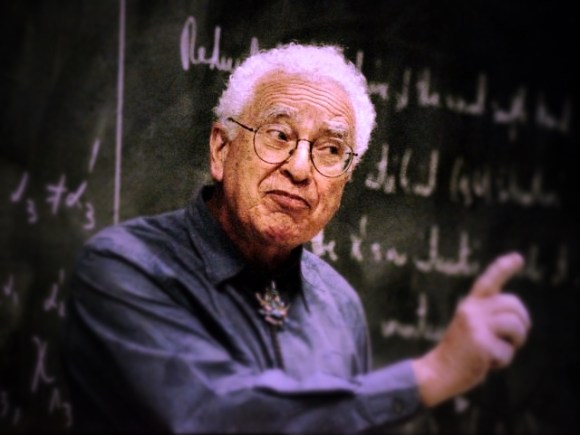
One of the most vocal has been Murray Gell-Mann. Gell-Mann (1929-2019) was an American physicist. A friend and colleague of Albert Einstein, who received the 1969 Nobel Prize in physics for his work on the theory of elementary particles.

A man eager to transmit knowledge, even in his late 80s he was still going strong. He is obviously famous for his scientific studies and most importantly, he is basically known as the father of the Quark, which is the name he and his team gave to a minute particle which is a fundamental building block of neutrons and protons, and which he found has very unusual properties.

Just like most scientists, his curiosity made him delve into other subjects such as linguistics, archeology, and he even expanded his views and opinions into the subject of creativity and innovation. Amongst those, he used to speak about the fact that the Universe as we know it, is one and we are part of it. And as part of such a large event, we follow necessarily certain rules that are common to everything that exists within it.

As mentioned before, Gell-Mann was not alone. It is not uncommon to hear physicists or mathematicians refer to the beauty, simplicity or elegance of equations or theorems and how these characteristics tend to be a good omen that a correct formula is close-by. In fact, Isaac Newton talked about the fact that “Nature is pleased with simplicity”, while Aristotle made a point in favor of simplicity by advocating as few as possible postulates[viii].

Gell-Mann used to always tell the story about his 1957 theory on the weak force which he and his colleagues decided to publish even though it was not complete[ix]. They did so even though it went against seven well know experiments which held very different views. According to him, they did it because they obviously thought they were correct, but the indication that this was so was just the fact that, to them, their answer was a simple one while the others were convoluted and ugly. In time it was shown that Gell-Mann and his friends were correct and all known experiments at the time were clearly wrong.

I always refer to the fact that simplicity is at the core of all successful enterprises, while overly complex concepts tend to have a much lower success rate, and in the case of initial success, relatively low survival rate. By simplicity I also mean organic, natural, intuitive, well suited to its economic and social ecosystem.

A common business example of simplicity and organic thinking that is well suited to its ecosystem can be found in most cellphones today. It is none other than Facebook.

In terms of its core architecture, Facebook is an example of simplicity, and it is so well aligned to its mission and vision, that it almost shocks those who sit down to analyze it.

For a long time -it may still be going on under the new helm- the then VP of Product and later CPO (Chief Product Officer) at Facebook, Chris Cox, would give newcomers a remarkable introductory talk. In it he would focus, amongst other things, on explaining Facebook´s product architecture and how it relates to the mission of the company.

When we talk about a company´s architecture, we mean the building conceptual blocks of a company, its structure, and how these objects relate to each other and with each other.

Cox, moved by great minimalistic aptitude, always described Facebook as a directory of people, their friends, and their interests; plus a directory of businesses, from global brands all the way to small local businesses. Plus, on top of those directories, a thorough map which basically showed the relationships that exist between all those groups. That is Facebook in a nutshell [x].

And it can´t be denied that it is a crystal clear formulation of the product, directly relevant to the mission the company has set, and above all, easily understood by anyone who sees it. It is in scientific terms as beautiful as it is elegant, it is in line – within the corporate cosmos – with Albert Einstein’s famous remark about the fact that he had faith in that “the principle of the universe will be beautiful and simple.”

As far as company´s architectures go, it is beautifully simple, and it is organic to the extent that it is following our everyday interactions, which occur naturally in society, and in doing so it is also helping us to make them richer.

Now, to the big question. Is then the claim that simple, beautiful and elegant answers or processes, as proclaimed by scientists -and partially concurred by many who deal in many diverse professions-, is based on factual evidence or there may be more mundane explanations for this? Does apparent simplicity explain itself or does it hide something else within the underlying structure of reality? Or can it simply be explained by way of sociological, psychological or practical considerations?

Just from the above enumeration of possibilities one gets the distinct notion that things are not that “simple” when we talk about “simple answers”.

For a start, it is important to notice that the aesthetics of equations -which is one of the bases for the scientific view- is quite deceiving. An answer may not be convoluted in terms of steps or length because many symbols, which make it look short and “elegant”, involve within their meaning, long and complex equations. What is hidden in all derivative operations is nothing less that long and complex definitions. Thus the “appearance” of simplicity may hide great deal of complexity, and it usually does.

But does this vitiate the argument that “simplicity and elegance” is a good sign in regards to proper and workable solutions?

While mathematicians compress very complex ideas in easily understood symbols, life itself does a bit of the same.
When I say someone is “good”, as opposed to someone who is “evil”, what am I really saying? The concept of “good” requires a long, and usually difficult to agree, definition. Many philosophers and theologians have spent their lives looking for a formal demarcation without definite agreement. Yet it is one of the most used concepts in any language since the beginning of time.

What has happened is that common consensus has looked to “simplify” its meaning. It is probably an acceptable explanation that what we call a good person can be conceptually explained as the sum of the idea of a person who (generally speaking) does not act against his/her fellow men, with one who (mostly) acts in a responsible manner, and one who has a certain degree of solidarity, honesty, and social conscience. May also involve concepts such as being a respected and loving father/mother, brother/sister, son/daughter, husband, wife, partner or friend. And so on.

The definition involves a series of terms which act in the same manner as arithmetical derivatives, and when put together, they come up with a symbolic word which makes a very intricate but widely acceptable concept into something simple and elegant.

The same can be said of anything. Our day to day life involves a constant oversimplification of complex concepts. The oversimplification factor can overlook many nuances but it also makes concepts easily understood and shared by all, and sharing is one of the key factors which transforms a society into a healthy and growing civilization.

So simplicity may be the appearance that intricate concepts acquire when consensus generates a commonly agreed -albeit limited- explanation or un unpretentious way of saying “effective complexity”. Everything seems to be pointing that way. A flower is a flower, but depending on the level of complexity with which I wish to analyze it, it is a flower or it is something so complex that only a molecular physicist, biologist or botanist can muster.

If it is then a matter of socially acceptable definitions? Can then simplicity be merely described in sociological terms? Is it just a mirage in a wide desert of concepts as abundant as grains of sand? The answer may be resting somewhere in between.

In the same way that the concept of the Universe can be explained in fairly simple and elegant terms, it can also be described as the most complex conjunction of situations, equations, “random coincidences”, and an uncertain prequel and origin we have been able not to ever explain at this time.

Simple answers thus generally hide extremely complex definitions, equations or layered responses which no longer need to be probed as their terms are generally accepted, or because the general description is acceptable on its own terms even if one sees or intuits that a more complex situation lies beneath the surface.

“Simplicity and elegance” may be then a matter of communicating the commonly accepted look and feel of something in a terminology that is understood by most at a specific period of time. A novel definition may be that “Simplicity could be defined as an elegant way of referring to Effective Complexity”[xi].

In terms of creative processes, innovation, and the bright new world we face, simplicity in its most commonly understood meaning, is key. For a start because it is the way most technology works. Not in the deep interpretation of its inner working environment, but definitely within the interface that acts with us humans.

In that regards, technology is forcing us -some would say that in mostly a good way- to simplify our methods and interactions, to allow the other side -be it longtime or casual user, client, colleague- to provide us with ways to work in a collaborative manner rather than the old fashioned way, where the designer/producer/service provider gave us the rules of engagement, and then it was up to us to understand how to use it in accordance to design.

A very common occurrence with technology may be that of explaining to an older person -and not much older mind you- that whatever it is we are talking about, it will not break. “Don´t be afraid, just use it until you get it right” is a common phrase. The idea of the designer as an all-powerful being which sets how things should work, for example within traditional product design, trained generations to be afraid of electronic equipment. And that happened because the interfaces -besides what may have been technological limitations- were not intuitive at all, but rather prioritizing some artistic or designing concept above ease of use. Now we have learned that both are possible.

A simple idea, an elegant architecture (corporate or otherwise), a concise and obtainable mission, a clear termed vision (a “mantra” in the terms of Guy Kawasaki), a simply understood connecting path between vision, mission and architecture, even intuitive programming that allows itself to be rapidly adopted by users are all different, yet they are all connected by the same common conceptual characteristic[xii].

And the connection is not an accident even if apparent simplicity may hide a great deal of complexity that most, unless looking for it specifically, do not need not know at first.

The simple answer, the commonly understood and shared goal, the straight line between two points still exists and we should always strive to aim for it even if just because it is the most satisfying of results. As to complexity. It is always there and, at least in general terms, it may need to be known only when the simpler answer does not satisfy us.
Thus, and to round up the concepts, I can find four clear reasons that support this view of simplicity and elegance as a good model to follow in most cases.

The first one would be that, in my experience, the answer which simplifies the steps which need to be taken as well as the reasoning behind it, has a tendency to be more widely understood and therefore, more likely to be put into action. And an answer which is widely applied is, by its own definition, probably not only correct at the time, but also successful.

Next, I would argue that an explanation which simplifies a complex issue, and thus adds a certain elegance in a response, is very often the result of connecting different occurrences to a single common cause. Therefore eliminating unnecessary steps and making the response more widely applied as well.

Concurrently, longwinded, complex (“ugly”), and difficult to understand answers or solutions will be more difficult to apply or prove, and thus less likely to be widely adopted, no matter their level of correctness.

Finally, and this may be cheating, but many scientists and mathematicians have a rule of thumb. Known as Occam’s Razor[xiii], so named – or rather misnamed – for the English monk William of Ockham (or Occam), c.1285-c.1349 AD. This concept stands on the idea that if there are multiple plausible explanations for something, the simplest one will probably be the correct one. To avoid reductionism, one should add that this rule has a proviso that says “all things being equal”. In other words, it is mostly correct as long as we do not compare “bananas and apples”.

So, albeit this may have seemed a dichotomist argument -as in reality what seems simple also hides intricacy-, the truth is that nothing in life is that easy, but almost everything should be approachable if explained in certain understandable terms. There is no battle here, but there is a probable winner nonetheless.

Whether in business, art, nature, mathematics or life itself, what we understand as answers that are, in relative terms, simple (ie: understandable, elegant, beautiful, non-repetitive, wider scoping, and so on) do run with an advantage over those seen as complex (difficult to fathom, convoluted, repetitive, ugly, non-organic, and so on).

“Simple” – elegant, beautiful- answers hide within their nature the inherent complexity of life itself, but manage to show their results in a way that satisfy most. And as such, they tend to provide us with a healthy guide towards the right path. And furthermore, and not by coincidence, if they lead us on the right path the end result will also tend to become a beautiful -and mostly successful- experience.

I.A.

(Originally published on Linkedin in 2019)

©2019 by Ignacio Alperin Bruvera

(S) Ignacio Alperin nació en Argentina, creció en Australia y vivió temporariamente en varios países alrededor del mundo. Posee una experiencia internacional extensa, y diversa, obtenida en una carrera profesional alejada de lo lineal. Hoy en día es Profesor de Entrepreneurship en los MBAs de la Universidad Católica Argentina (UCA), Profesor de Creatividad e Innovación (Grado) en UCA Internacional, es un Emprendedor serial, consultor, orador en eventos nacionales e internacionales, evangelista secular, y artista plástico.
(E) Ignacio Alperin was born in Argentina, grew up in Australia and lived temporarily in several countries around the world. He has extensive and diverse international experience, obtained in a professional career far from the linear. Nowadays he is Professor of Entrepreneurship in the MBAs of the Argentine Catholic University (UCA), Professor of Creativity and Innovation (Degree) in UCA International, a serial Entrepreneur, consultant, speaker in national and international events, secular evangelist, and an artist.

[i] Norah Ephron Biography https://en.wikipedia.org/wiki/Nora_Ephron
[ii] What is a Mash-up https://www.merriam-webster.com/dictionary/mash-up
[iii] Albert Einstein Biographical, The Nobel Price Organization https://www.nobelprize.org/prizes/physics/1921/einstein/biographical/
[iv] Murray Gell-Mann Facts, The Nobel Price Organization https://www.nobelprize.org/prizes/physics/1969/gell-mann/facts/
[v] Stephen Hawking Biography, http://www.hawking.org.uk/
[vi] Isaac Newton Biography, Isaac Newton Institute for Mathematical Sciences https://www.newton.ac.uk/about/isaac-newton/life
[vii] Aristotle Biography, Encyclopedia Britannica, https://www.britannica.com/biography/Aristotle
[viii] Aristotle and Mathematics, Stanford Encyclopedia of Philosophy (2004) https://plato.stanford.edu/entries/aristotle-mathematics/
[ix] Beauty, Truth…and physics? By Murray Gell-Mann, Ted Talks (2007) https://www.ted.com/talks/murray_gell_mann_on_beauty_and_truth_in_physics?language=en
[x] What I learned from Facebook CPO Chris Cox by Stephen Amaza,Hackernoon.com (2017) https://hackernoon.com/lessons-i-learnt-from-facebook-cpo-chris-cox-28ef615be643
[xi] Simplicity equal beauty, by Ignacio Alperin Bruvera (2013) – Unpublished-
[xii] Mantras vs Mission Statements by Guy Kawasaki (2006) https://guykawasaki.com/mantras_versus_/
[xiii] What is Occam´s Razor by Phil Gibbs (1996), Adapted by Sugihara Hiroshi (1997), University of California, Riverdale http://math.ucr.edu/home/baez/physics/General/occam.html