Categories
2016 art works 2017 Artworks 2017 Exhibitions IN ENGLISH Promoting your Art Visual Jazz

Galleries, Fairs, Online and Direct from the Artist art sales

There is nothing new when I say that Art can be beautiful, mesmerizing, incomprehensible, terrifying, funny, or make you think about those things you may not want or had a chance to think about.

Art lifts you to new places, and at its most basic level, it makes your daily life much more interesting and attractive to live.

But buying art is a mystery shopping experience.

Because the value of artwork is a subjective exercise. In fact, we could say that Art is the first cryptocurrency, long before computers existed.

These may be algorithms that have not been studied enough, but just like a present day cryptocurrency, Art and new- and old- artists’ prices increase through a natural process of engagement and consideration that is passed on from person to person. A wave of word of mouth knowledge, academic considerations, and admiration that, as it flows around the globe, creates new stars and increases the intrinsic value of an artist and his or her art.

So how do you know if a price is correct? Well, in fact this may be the biggest disconnect with my comparison with cryptocurrencies. You don´t (or at least there is no obvious set of highly complex but allegedly explainable algorithms that justify its value). There is a certain understood value that the “market” will allow for a specific artwork. The problem is that there is no one market.

The traditional market could be seen as the gallery market. While a logical place to shop, the truth is that it is a diminishing market. High rental prices, high overheads in general, little regard for the career of the represented artists, little transparency (towards the buyer and towards the artist), exorbitant commissions (on average 50% of the value of an artwork will go to the Gallery plus space rental and other expenses which can mean that an artist could get paid 30% or less of the value of a painting… if they really know how much was really paid for their art, and if they do get paid).

There are good galleries of course. But many galleries have, for decades, pushed prices up for their own benefit and not for the artist´s benefit, and with little logic. Value of an artwork may increase or decrease according to how they gage their potential customer. This one looks he or she can pay some more, so we will ask for more. In another case, we need money for rent tomorrow, so we will let a piece go for less. That and the business of selling fake art works have hurt them a great deal. Those attitudes, which hinder on the value building exercise which must go behind any artist´s body of work, plus the opening up of alternate opportunities with social media, fairs, artist run events and so on, have made the wider traditional Gallery market, more or less a sinking system.

Art Fairs are divided between gallery run and artist run. In all cases these are business ventures which have the advantage of bringing people and artists together. The Gallery run Fairs are still an extension of the Gallery system. They can be a little more transparent because of the inherent competition that is intrinsic to these events. Artist run Fairs are more transparent, but they can be patchy in terms of quality and not necessarily a guide into real prices. The whole ambiance will push you to impulse buying, and you may find you bought something you didn´t actually like a couple of days later.

Online galleries are out there (Saatchi being the most famous). They are a decent mix between what I mentioned above and what I will talk about below. They usually take credit card payments and allow for returns. They mostly take artwork directly from the artists, although I know of several traditional galleries who have secretly placed art on these online galleries marketplaces.

Many artists today do self management of their careers. And that is a completely different market. Some do it on their own and some with the advise of others. In my case, I have mostly stayed away from galleries and managed my own career. Maybe it is my bad luck, but I have not been able to run across a gallery owner who has had the ethics, honesty, and knowledge that I expect. I am still hopeful I will find the right person (gallerist or Agent) that will do part of my current job, but I am still looking.

So I manage my own art career with the invaluable help of notable curators. Jack O´Brien (Naples Art Association), Anna Mish (formerly of the Manassas Center for the Arts and an independent curator), Irene Jaievsky (Museo de la Mujer, Buenos Aires), Alfredo Ratinoff (formerly at the Smithsonian and Chief Curator at the Embassy of Argentina in Washington DC and the IDB Gallery), Bobby Donovan (former Assistant Director of Arts Programs at the University of Maryland) are just some of the people whom, over the last few years, have given me good, intelligent, knowledgeable and sensible advise at different times. They have all been generous, sensitive, and above all, they are all people who love art deeply, and care about the artists above any financial consideration. I can truly say I have been very lucky.

So what would be a good guide into prices?

Well, first of all, buying directly from an artist may save you some money. No intermediaries means that you probably will pay a little less. Buying directly from the artist should also get you away from the fakes. It is more difficult. Usually it means looking at paintings online, no physical setting to look at them because the marketplace is global (unless you live close by). Most artists will give you 10 days or more to change your mind if you decide against a painting you purchase. And even though you will have to pay for the P&H of the return, as long as the painting has not been damaged, you will probably get your money back.

Reputable galleries will also give you time to change your mind (between 10 and 30 days) and they have the advantage of having the paintings on show and if not they will be online (although, again, in a global market that is the same as with direct from the artist purchases). They will take credit cards and they can give you some good (and sometimes bad) advise.

Online galleries are purely a matter of impulse buying, since you do not have any human interaction between you and the art you are looking at.

In very general terms, I always say that art sales could be divided between the impulsive (I love this, I want it now!), the emotional (a person slowly falls in love with a painter´s story and body of work, and that emotional connection makes them want to have some of it), the utilitarian (I need a painting with these colors so it enhances the wall behind my couch at home or my desk at the office, or as a gift for my friend´s  house or office), the investor (this artist has increased in value by 100% over the last 2 years, I need to get some of that…), and the “I simply need something nice and that it will fit on my wall, but not too expensive please” kind of crowd.

In all cases, the combination of quality + price + ease of purchase is key. To that you must add, particularly when prices are higher, how interesting is the artist story and background, and the potential for value growth for the particular art work and the artist behind it.

Like anything, buy what you can afford. If it seems reasonable, it probably is. If it does not, it may not be, or it may be and you need to do some more background research on the artist to see if it is really worth it.
That said, make sure you also buy from your heart rather than your wallet.

When it comes to art, your heart will always give you better advise than any recommendation that anyone of us can give you. Remember, the art you buy will mostly stay with until the end. So, just like in life, it is much easier to live with someone you love than with someone you hate and only married for money!

I hope this helps.

Happy Art hunting! And as long as you are, check out http://www.ignacioalperin.com for some rally nice art pieces.

Until next time.

Ignacio


PhotoFunia TV interference Regular 2014-08-04 01 55 05

©2018 by Ignacio Alperin Bruvera
 

Categories
2016 art works 2017 Artworks 2017 Exhibitions Creativity Creativity / Creatividad IN ENGLISH Innovation Promoting your Art sustainability Visual Jazz

IF YOU LIKE TO TELL PEOPLE WHAT TO DO, THEN READ ON

I always find that many people, mistakenly, asume for a fact that the central characteristic of leadership is having the power to tell other people what to do and when to do it (even if that may happen at some point as part of the whole decision process). This is clearly a common confusion. And an idea about the characteristics of the role which is, very often, held by people who probably should either freshen-up their views, or reconsider being in positions of leadership.

And this is as much an issue for those people pushed into holding decision making positions when they are not suitable for them, as much as a problem related to the person or persons who put them there in the first place.

Leadership is not a natural progression in our career, or a position to be filled, or our chance to tell people off.

Leadership is a choice we make, and which often others offer us, based on our personal qualities and strengths. Much like any other career choice, it is an option which only those with the gift and qualities necessaries to be leaders may successfully engage. Unsuccessful leadership roles may not only damage a person´s career, they may also be very detrimental to an organization´s future.

Despite what others may think, or what other people may offer us, the fact is that there is nothing wrong with not taking a position of leadership if that is not what we want to do, or if we truly feel such a responsibility is not for us.

More often than not we feel obligated to take on the mantle of management as a logical step in the corporate ladder. And it takes a great deal of honesty to asses internally if a leadership role is really for us. We have been taught that successful people get to lead, and so leadership becomes synonymous with success. And while it is partially true, it may not always be so.

It is tempting. Obviously there is usually more money, more “power”, and very often a better office among all the benefits that come with the job. Leadership saves us as well, sometimes, from that part of our old jobs that used to be too repetitive or tedious. But with that comes responsibility.

I believe that the “core business” of leadership is giving those under our responsibility the space, the protection, the freedom, and the encouragement to think for themselves, to do their job in the best possible way, to help them learn from their mistakes, to take them successfully through the thought process behind decision making, to set them reasonable and clear parameters so they can be efficient, to promote common responsibilities, to make them think about “us” rather than “me”, to allow them to exploit their strengths -which is always good for morale- while helping them  to deal with their weaknesses and thus improving overall results, and to make them strong but caring so, some day, some of them are able to replace us, and do and even better job than us. And that is not something that everyone can, or wants to do.

In the cases where I have had to manage larger groups of people, I have always tried to be, not only an open door manager, but I purposely have tried to actively engage each one to see how they were so as to promote honest communication, and have very often gone to see each person at their desk -rather than having them come to see me- when things did not seem right, while trying to put into context what is happening at the office (which many times, even if affecting the work environment, has nothing to do with the work and has to do with other issues outside the office).

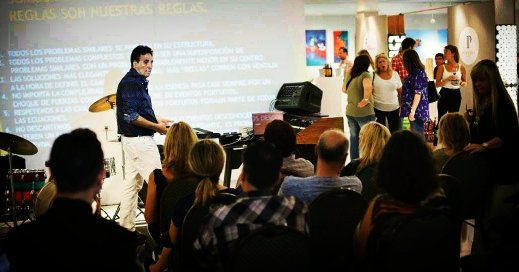
Seminar for Radio Mitre producers, journalists, and technical and administrative personnel – Buenos Aires, Argentina – 2017

While not having had a strong experience in matrixed organizations (at least in the formal sense), my experience has always being in organizations where limitations forced us, in practice, to carry more than one hat and have cross functional obligations and reporting.

At the same time, I have had to deal with organizations which were sometimes in flux, or needed a formal shake-up, or needed to go through deep restructuring and policy changes. And I have carried those transformations, which sometimes may have been quite traumatic, with my deepest commitment and honesty.

Did I make mistakes? Sure. Could I have done things differently in specific cases and/or at some point in my career? You bet! Do I have second thoughts about having accepted positions of leadership? No. It is something I am comfortable with, I enjoy it. I like nurturing, I like showing the way and I feel proud when others do well, and hopefully do better than how I did.

That and taking responsibility. Generally speaking, if we truly believe in our capacities as leaders, then our attitude should also be, as close as possible, to an old fashioned “the bucket stops here”. In other words, whenever we have to propose -or carry out- substantial changes that may be against traditional views or processes, we need to work in constant communication with our team. Final responsibility for errors of vision should normally assumed by the leadership (towards the hierarchy), while good results should be shared by the whole team.

I guess I have largely spent the last 20 years in Argentina, so it is fair to say that I have mostly worked for organizations or companies that, at some point or another (or most of the time), suffered financial limitations and obvious time restrictions (in Argentina everybody wants everything done by “yesterday”).

So when I hear complaints about budget constraints for meeting basic standards, or doing the job you set out to do in the most proper and efficient manner, I always reply that it is not a matter of money. It is, instead, a matter of commitment, of taking ownership of the specific issue, project or problem, and thus resolving it in the most efficient way.

That requires creativity, lateral thinking, reinforcement of trust and understanding of group dynamics, as well as a lot of calm. In other words, it requires real leadership qualities.

If results and success were only the realm of those with time and money instead of personal traits, then Albert Einstein working as a simple clerk at a Patent office for a meager salary, Gates or Jobs struggling in a garage, or Oprah being kicked out of TV as a young reporter for being considered “unfit for television news”, would have meant the end of their careers.

So you need to ask yourself if this is what you want to do. If you do, and you believe in yourself, then be humble, learn from others, listen, never close the door, and enjoy the ride together with those that you been given the responsibility to lead.

Until next time

Ignacio


PhotoFunia TV interference Regular 2014-08-04 01 55 05

©2018 by Ignacio Alperin Bruvera

Ignacio Alperin Art
http://www.ignacioalperin.com
http://www.theartofthinkingoutloud.com

Categories
2016 art works 2017 Artworks 2017 Exhibitions IN ENGLISH Promoting your Art Visual Jazz

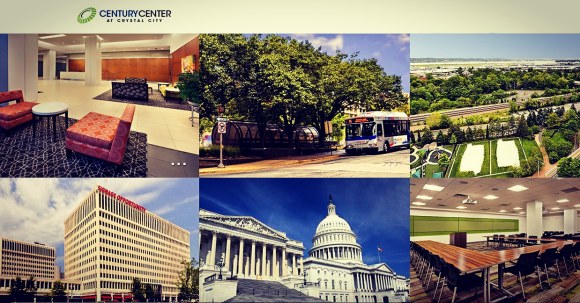
EXHIBITING AT CENTURY ONE ARTSPACE, CRYSTAL CITY, WASHINGTON DC

Alperin current Exhibition

January 3rd until March 1st

Generously invited by respected curator Bobby Donovan (former Assistant Director of Art Programs at the University of Maryland, and current curator of the Art Program at the Federal Court Complex at Greenbelt), I am currently exhibiting over 20 pieces selected specially to be shown at the Century One Art Space.

Close to the Center of Town and Ronald Reagan International Airport, everyone is invited to drop by the exhibit.

Look forward to your visit and feedback.

ADDRESS:
Century One Artspace
2450 Crystal Drive
Arlington, VA 22202
Until March 1st 2018
Hasta el 1º de marzo de 2018
Contact/Curator: Mr. Bobby Donovan
Bd@hyattstownmill.org
#AlperinArt
#alperinart #alperin

This slideshow requires JavaScript.

Until next time!

Ignacio


PhotoFunia TV interference Regular 2014-08-04 01 55 05

©2018 by Ignacio Alperin Bruvera

Categories
2016 art works 2017 Artworks 2017 Exhibitions IN ENGLISH jazz Promoting your Art Videos Visual Jazz

ALPERIN ART: A VERY QUICK LOOK AT WHAT WAS 2017

A look at some of the events, exhibitions, art and travel that occurred during 2017.

It´s been a very hard, exiting, and rich year.

Looking forward to 2018 and all the news that it brings!

Happy Hannukah, Merry Christmas, have a wonderful holidays, and a Very Happy, Peaceful, Loving and Profitable 2018!!!!

Until next time!

PhotoFunia TV interference Regular 2014-08-04 01 55 05

©2017 by Ignacio Alperin Bruvera


Categories
IN ENGLISH jazz Promoting your Art The Sunday Concert (Jazz) Videos Visual Jazz

THE SUNDAY CONCERT: Michael Buble´s Christmas in New York

The now traditional Christmas Show from Canada´s best Michael Buble. This is from 2014 and at Radio City Music Hall.

I hope you enjoy it!

Until next time.

Ignacio

sombras nada mas arteba mod3ochreBcard

©2016 by Ignacio Alperin Bruvera


Categories
2016 art works 2017 Artworks 2017 Exhibitions IN ENGLISH Promoting your Art Visual Jazz

ALPERIN DIGITAL : HOY EL ÚLTIMO OPEN HOUSE DEL AÑO

Regalar y regalarse arte implica dar algo que permanece en el tiempo. En el caso de un regalo a otros, es un acto que constantemente le recuerda a quien lo recibe el cariño de quien lo regaló. Es obsequiar algo tan maravilloso como los trazos del alma de un artista, es dispensar emoción, es promover cultura, es fomentar el crecimiento y la maduración de un país a través de una de sus expresiones más nobles y enriquecedoras.
Por eso, y gracias a la organización y puesta a punto de TUTEA, hemos decidido realizar este último Open House del año.
Para mayores informes y RSVP, contactar a Fernanda Akian (TUTEA) por inbox: tutea@tutea.com.ar.
Nos vemos el HOY jueves, desde las 18:30 y hasta las 21:30 hs.
Ignacio

This slideshow requires JavaScript.

Until next time!

Ignacio


PhotoFunia TV interference Regular 2014-08-04 01 55 05

©2017 by Ignacio Alperin Bruvera

Categories
2016 art works 2017 Artworks 2017 Exhibitions Creativity / Creatividad IN ENGLISH Promoting your Art Visual Jazz

EMBRACING THE UNEXPECTED

“Act on the unplanned with as much energy as with what is planned”


Any hard working artist will tell you that, when creating a piece, it is always the actual work the one that tells you what it needs, and what it does not.

Writers talk about characters basically writing themselves or dictating dialogue. In painting, no matter how much planning, it will also happen. Some will allow it to happen more than others (I am one of those), but it happens to all of us. Reality takes over the theory. Chance (or what we feel is just chance) takes a look and decides to be heard.

When I am asked about what do I think is my biggest strength as an artist, I always reply that I feel it is probably my capacity to turn what may have originally felt like a blunder (i.e. a deviation from my original and thought out path, at the very least), into some kind of a triumph.

I make a lot of mistakes. Like the gentleman whom, while I was doing some live painting at an event, asked me very politely what was it that I was obviously correcting when he could not see any discernible elements or recognizable figures in my work, the truth is that the difference between intent and chance is not easy to see sometimes from the outside. In fact, I may be the only one who knows that what I did was not what I intended to do. But that does not rule out the fact that for some reason I did something unpredicted to me and even unwanted at the time.

When we are learning, more often than not, we immediately correct course (in painting that means that we repaint and correct). After we start knowing what it is all about, we sometimes respect chance and follow the new course that has just been dictated by the forces of nature. I usually find that my work is a lot richer if I work on the unexpected with as much vigor and excitement as with what I had planned.

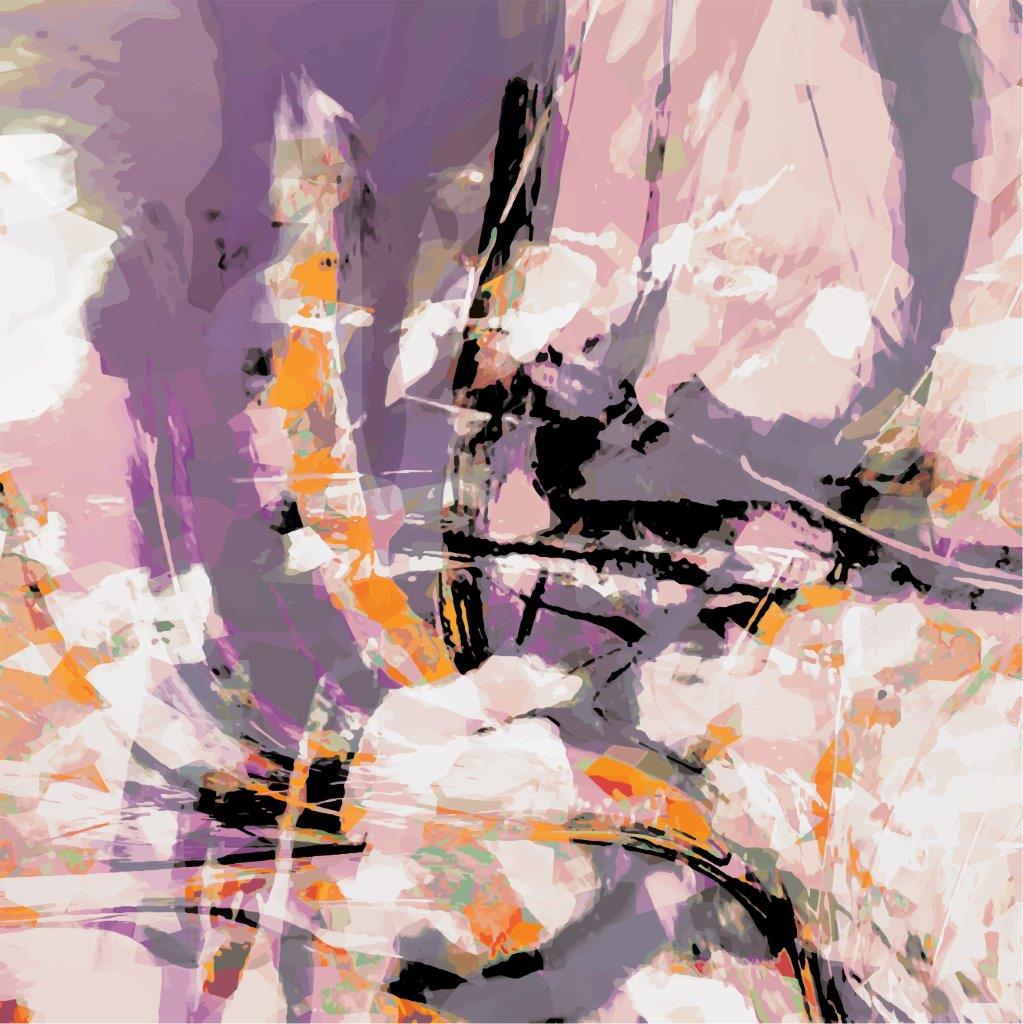
My Digital Art Series are another example. I work my drafts in digital form. Then I paint. There is a very reasonable explanation to do this, and one which I may write about in the future, but let´s just say that I test everything with my electronic pen and screen. Colors, shades, textures. Even where my emulsified ink drippings will finally land come into consideration in that digital realm.

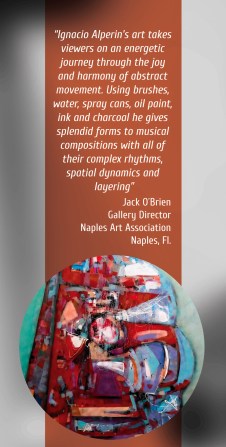
Looking through some of my drafts last year, the very knowledgeable and hard working Jack O´Brien, who is the Director and Curator of the Watson Gallery at the Naples Art Association (he has been there for almost 20 years now), suggested I try printing my digital drafts (artwork) on metal.

Today, my ALPERIN DIGITAL art series allow me to reach a completely new public and it is an exciting way of venturing beyond paint.
I was not looking to print and my digital work was almost private. My chance conversation with Jack planted the seed. Everything else is now history.

If we want to go a little further into the theory, we could say that there is no chance, and there is no fortuitous, There is only unexpected (because it is so in reference to our expectations).

Thus, in these cases there is only that what was due to happen and we did not see coming.

Now, if you run a nuclear power plant, unexpected may not be that good. But if you are in a creative or executive position, if you are in business, or if you move in the realm of the arts, this may be your chance to add new layers to your work.

I believe everything we do in life can be explained as part of a huge (astronomical may be the word) mathematical equation. Everything is in the realm of a possibility, and in hindsight we may find the elements that explain how that possibility became a probability, and after that, a reality.

As I always say, the fact that we did not expect it only highlights the fact that we did not calculate correctly our path (and because we cannot incorporate everything into our calculation, it is also a reminder of our human limitations). Yet, if it happened, then probability theory will tell you that there was always a big chance of it happening (whatever “it” was) if certain elements finally combined in the formula. Thus those elements were always there  (or within the realm of probability), and we can only see them as we reverse engineer whatever it was. Then, we usually say: “of course, it HAD to happen, how did I not see it!”

Thus treat chance as your friend. It is part of the reality that you did not expect but came knocking at your door. Fortuitous is just another way of saying, I didn´t see it coming. But it came anyway. So don´t fight it (unless it creates a major problem). Embrace it, open your mind,  use it to your advantage and make good use of it, see what you can incorporate (totally or partially) to your original plan, and allow it to open new realms for you (and your art, your project, your career or your work, whatever it may be).

Because the fact is that, if it is here, then there is a very good chance that under the present circumstances, it was always supposed to be here.

Happy surprises and until next time!

Ignacio


PhotoFunia TV interference Regular 2014-08-04 01 55 05

©2017 by Ignacio Alperin Bruvera


Categories
IN ENGLISH jazz Promoting your Art The Sunday Concert (Jazz) Videos Visual Jazz

THE SUNDAY CONCERT: More Penguins for the Holidays

After all the questions, thumbs up and surprise from many about this band (many of you did not know of them), here is another those.
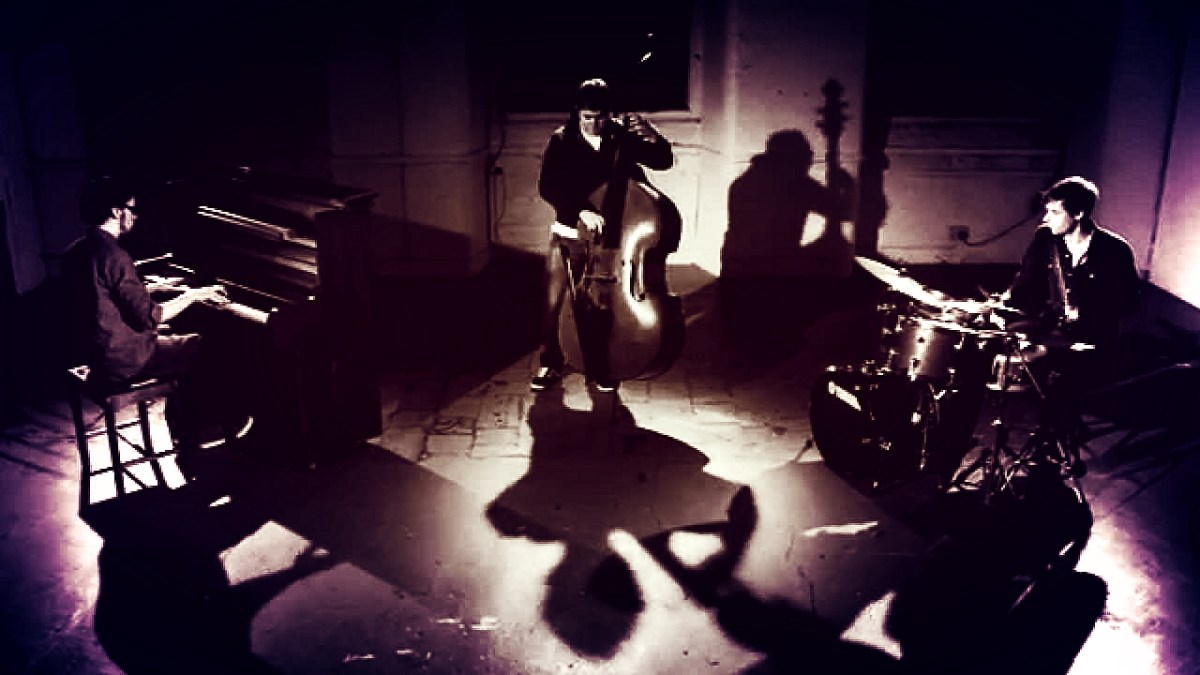
GoGo Penguin live from the Old Granada Studios.
30 delightful minutes of great music.
I hope you enjoy it!

Until next time.

Ignacio

sombras nada mas arteba mod3ochreBcard

©2016 by Ignacio Alperin Bruvera