Categories
2014 Art works 2015 Exhibitions 2016 exhibtions IN ENGLISH Promoting your Art Visual Jazz

NO SOUP (OR ART) FOR YOU! From the soup Nazi to the art Nazi

You know that there are things you love. You see them, touch them, they may make you feel happy, or uncomfortable, or childlike, or even sad. Yet, you still love them.

That happens to me with many gallery experiences. I go in and see stuff that I simply enjoy. As most of you may know, I am an artist myself. So I love seeing what others do, how others express themselves, their techniques, their sublime expressiveness and their massive flops. It is all part of the planetary network of neurons that we all share as artists. If you want, it is something like letting the left side of your brain getting a glimpse of what the right side is doing. Sometime you may approve and sometimes you may not, but most of the times, you will probably think “that´s different, why didn´t I think of that” (while in others it will be more like “I´m glad I didn´t go there…).

There are as many visual paradigms as inhabitants on this planet we call Earth. Yet the freedom to express those different views of the world are not that simply available. We artists are, in general, highly sensitive individuals. And we are courageous too. The truth is that not everyone is prepared to pour his or her heart out so that someone can trample on it. We artists do that time and time again, and I can assure you there is always someone ready to trample, jump, back-up over the victim, and even do a few wheelies over the dead body.

But we learn to survive with certain stoicism. Sometimes it hurts, but we have also learned that survival is paramount to our success. Most of us will use basic methods of defense like intellectually separating the views on our art from personal references (which are different things in fact, but not always easily disconnected at the receiving end).

The truth is that our art is usually something very personal. Our artistic expression is a part of our inner being just hanging somewhere for people to see and criticize. And so, in self defense, some of us may resort to more unusual methods of resistance. They may vary from practicing Voodoo, to even make the “tramplers” (I think I just made up a new word) part of a very profound exhibition on the subject of feces – or something of the sort -.

Jokes aside, it is quite clear that criticism, and therefore critics, are part of the business. There are good critics. Some kind, some harsh, some provocative, but in general terms, they are looking to guide, to get the kinks out of our work by forcing us to move when we have become staid, or to help us stop when we are moving too far away from our essence. The truth is that there are as many critics as people who see our work (“Everyone´s a critic” as the old showbiz saying goes).

But then there is another special race. These are darker figures lurching in the shadows. Critics like, let me see… like you are a werewolf and they are vampires and we are in the middle of a battle from the “Underworld” movies.

These people gladly – and without afterthought – destroy without pity, they convey lessons that they themselves made up about the “right” way to do things and the “wrong” way to do them, or are even stuck in some rigid and parsimonious “standard of practices manual” – which they themselves have written or presumed-.

And it is not that I do not agree with the fact that certain things should not be done in the name of art. People hurting animals, or other people for that fact, or making fun of the old or the frail in the name of art sickens me. Can someone call that art? Sure, you can call art anything  you want. Now, is it art? And most importantly, should that be done? In my book these things would rank as a definite “No” (Paraphrasing Chris Rock: “You can drive a car with your feet, but that doesn’t mean it is something to be done”).

But these people are not about criticizing these things. They place themselves in the role of judges of the correct ethical and artistic paradigm, and then proceed to destroy the poor artist who dares cross over or yet remain in visual or aesthetic areas with which they do not agree.

Some of these so called critics, albeit not all of course, even agree with the crazy stunts I mentioned before for the sake of being on the “edge”, or for the sake of generating a new market, or a new “visual experience”. And if they change their own sustaining paradigms in the middle of the stream, they will usually explain this move as just their way of evolving. Never as the result of the work of the artists which they had summarily and harshly dismiss not long ago.

These people I have happily renamed “The Art Nazis”. Just like the beloved “Soup Nazi” of Seinfeld fame, the Art Nazi is that person who has such a strict view of what art is or should be, that shoots to kill anything that does not fit within his or her views.

The truth is that we may find them anywhere. There are even dealers and gallery owners who also belong to the Art Nazi breed. And I can tell you, they are not only difficult for the emerging artists who come to them for advise, and who get shot down and sent to the back of the imaginary line. They are also the young artist´s worst enemy, and the established artist most difficult nightmare.

“What rubbish”, or the look of disdain and the typical “this is not good enough”,   to the pretty extremist  “get THIS out of my gallery” (all true cases) are not uncommon. These rebukes, and right to the jugular type of criticism, resonates in the poor heads of artists, some of whom have even crumbled under the weight of the Art Nazi´s critical hammer.

People have the right to “like or not like”, criticize, ignore or applaud – I am not disputing any that -, but visual coerciveness to force a resolution acceptable to some rule is conceptually the opposite of art. Yet, it is apparent that some egos must be fed, some closed markets maintained and some careers pushed along.So the Art Nazis survive by keeping a tight reign over their whole area of influence.

The lesson is always one. Always take the time to listen, even if it is harsh criticism. But learn to distinguish between a tough critic and your run of the mill “art nazi”. In their case, the way to proceed is to just ignore their painful remarks and keep looking for other avenues of exchange.

The main thing is not to lose your faith and keep searching for those who will finally understand what you are trying to say. Look for the ones who may even “get” your point, or those who will be critical – even relentlessly –  but always in good faith. Search for those who will be amazed at your freedom of expression and at the fact that, your constant disregard of some accepted paradigm, has allowed you to cross over into another artistic dimension. In short, search for the ones that, with their comments,  will nurture you somehow instead of just feed their own egos.

There are a lot of good people out there. From individual art lovers, to experts, critics, journalists, curators, art dealers, “connoisseurs”, and gallery owners who love art a little bit more that the “Art industry”. And do not misunderstand me. I am all for the Art Industry. But if we kill the artist, we will kill the industry as well.

So, find the good honest thinkers, the ones that believe in, and protect, freedom of expression. Maybe, unlike the Soup Nazi, they may not always necessarily have long queues of people at the door who are ready to be fed their concoctions. But these are the people who know what true Art is all about. They are the ones who will guide you and help you to go as far as you possibly can with your career.

I urge you to look for them. I am sure they are out there waiting for you and your art.

Until next time!

Ignacio

CAR_edited

©2016 by Ignacio Alperin Bruvera

Categories
2015 art works 2015 Exhibitions 2016 art works 2016 exhibtions Creativity / Creatividad IN ENGLISH Promoting your Art Visual Jazz What is Art

SHORT LECTURES: When information is shared, knowledge is multiplied

long

The whole concept behind every one of my short lectures, seminars and curses on creative and innovative thinking, working productively in groups, art and other connected subjects, is to engage the imagination and the interest of newcomers to the subject and knowledgeable individuals alike.

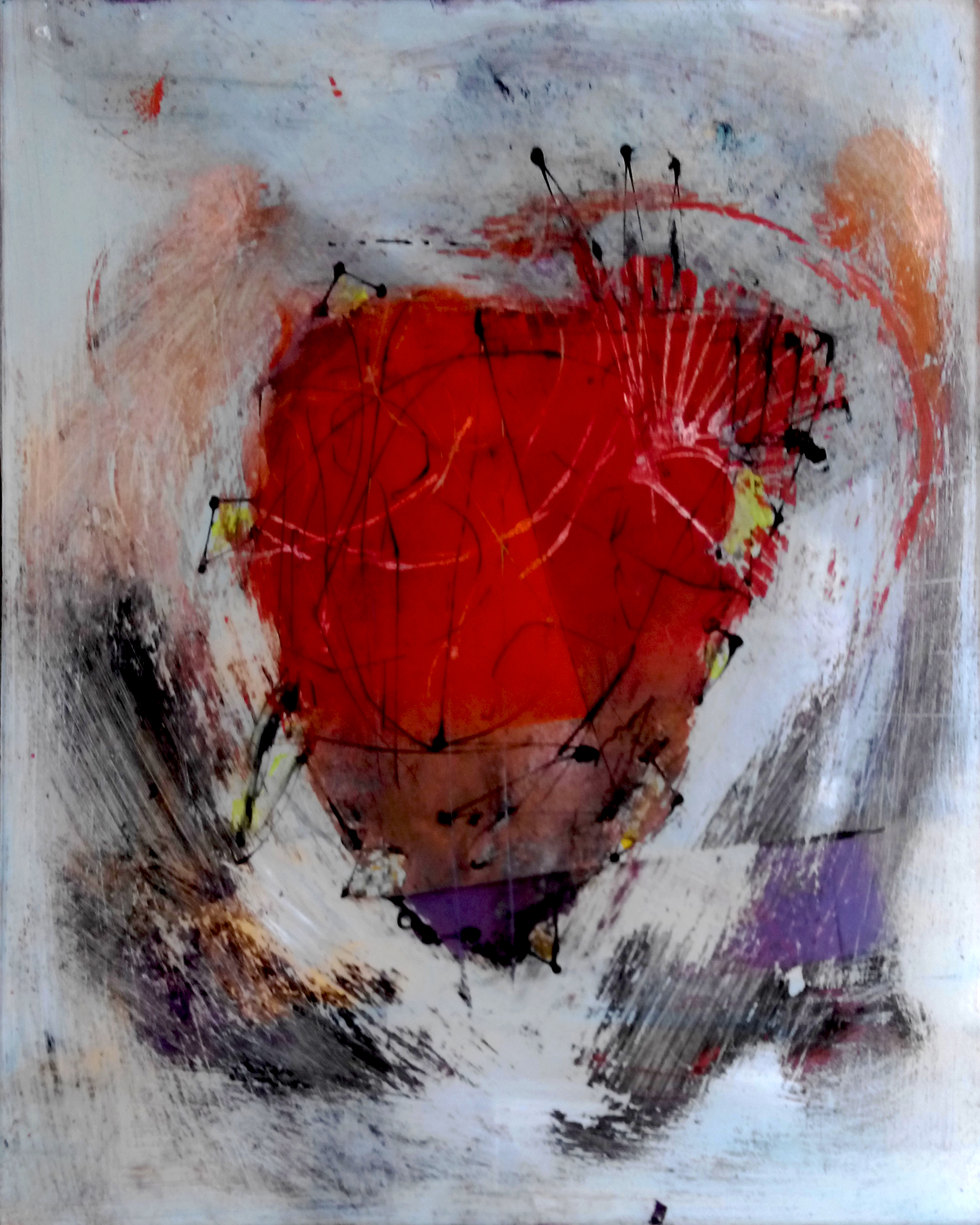
The heart of the matter (2016) 40x32_IAB
THE HEART OF THE MATTER (2016) by Ignacio Alperin

It is very common to hear these days about people feeling unhappy with work, and very often with their life choices as well. The end result is an evident tension at home and at the work place, few new ideas, lack of energy to pursue other options, and a general feeling that things are not flowing for them.

Sometimes this has to do with family pressures, sometimes with limitations we set ourselves. Most of the time there is a feeling that we have been given a series of talents and “gifts”, as I call them, and we are not taking advantage of them. There is this numb sensation that life goes on without us doing anything to change our reality and that one day we may realize, maybe even too late, that we did not follow our dreams and that opportunity has knocked on our door, and left forever.

The idea is to deconstruct many of these preconceptions about being creative members of society, resolve common perceptions based on fears, disinformation or social pressures, and open hearts and minds to the immense possibilities of freeing our creative juices, be it for our own benefit, the people we work with, and our community in general.

Attendees should leave these lectures armed with “tools”, concepts (and concrete ways to put them into use) that will help them to be more effective, work better with others, and donthangaroundbe more productive in general.

Finally, these lectures and seminars are not about “self-help”. Quite the contrary, they are about recognizing that to be happy and active members of society, things must be less about “me” and a lot more about “us”.

Depending on what is required, and the level of detail, they all can range from 30 minutes + Q&A to 2 hours + Q&A each.

Aimed specially (but not exclusively) at: Students, creative professionals, artists, CEOs/Managers of creative enterprises or corporate areas, and anyone interested in creative activities.

These are single lectures, but they can also be mixed and matched in terms of contents, or converted into full seminars. Any company, group, NGO, or government office interested in any one of these lectures can contact Luz at luzpages@ignacioalperin.com for more information.

Until next time!

Ignacio

drawiabcol

©2016 by Ignacio Alperin Bruvera

Categories
2014 Art works 2015 Exhibitions 2016 exhibtions IN ENGLISH Promoting your Art Visual Jazz

OF HALF WAY HOUSES AND LABERYNTHS

borgesBorges is one of Argentina´s great prides. The kind of author that forces everyone to say “Of course I´ve read Borges!” (be it true or not).

His friend and sometime collaborator, the also brilliant writer Adolfo Bioy Casares, called his texts “halfway houses between an essay and a story”.

Borges was not known as a great lover of music. He enjoyed classical music, and even tango as long as the “bandoneon” was not too prominent.

There is a lovely story about him going, invited by a friend, to watch a tango musician and composer whom everyone said was some kind of “boy wonder” of the new tango wave. One that borrowed a great deal from his New York upbringing and carried a very jazzy influence. His name was Astor Piazzola.

Borges apparently stayed for about six songs, and suddenly turned around, looked at his friend, and said: “Let´s go. Apparently they decided they were not going to play tango tonight”. Or so the story goes.

If you have never read him, recommended works by this very influential author (some have gone as far as to say that he may have been the XXth Century´s best writer: http://www.bbc.com/culture/story/20140902-the-20th-centurys-best-writer ) could be Ficciones (The Garden of Forking Paths, The Circular Ruins for example), Laberynth, The Aleph, and the earlier The Approach to Al-Mu’tasim (1938).

Borges is a bridge. A bridge between old and new, North and South, Classical and modern trends. In  way he is also a bridge between Europe, Africa, Asia and the Americas. He is all about being new while rehashing what has already been done. Showing that what we create is more like what we “recreate”. His stories are wonderful to read, despite their inherent complexity, and they always feel new.

Clearly, he was also more open minded than many gave him credit for, since even after allegedly leaving Piazzola´s concert and despite his known dislike for the bandoneon, shortly after he went on to join forces with him in a project in 1965. From that wonderful coupling we have this beautiful song simply called: “El Tango”.


Borgianian Kafkaris(2016)_edited.jpg
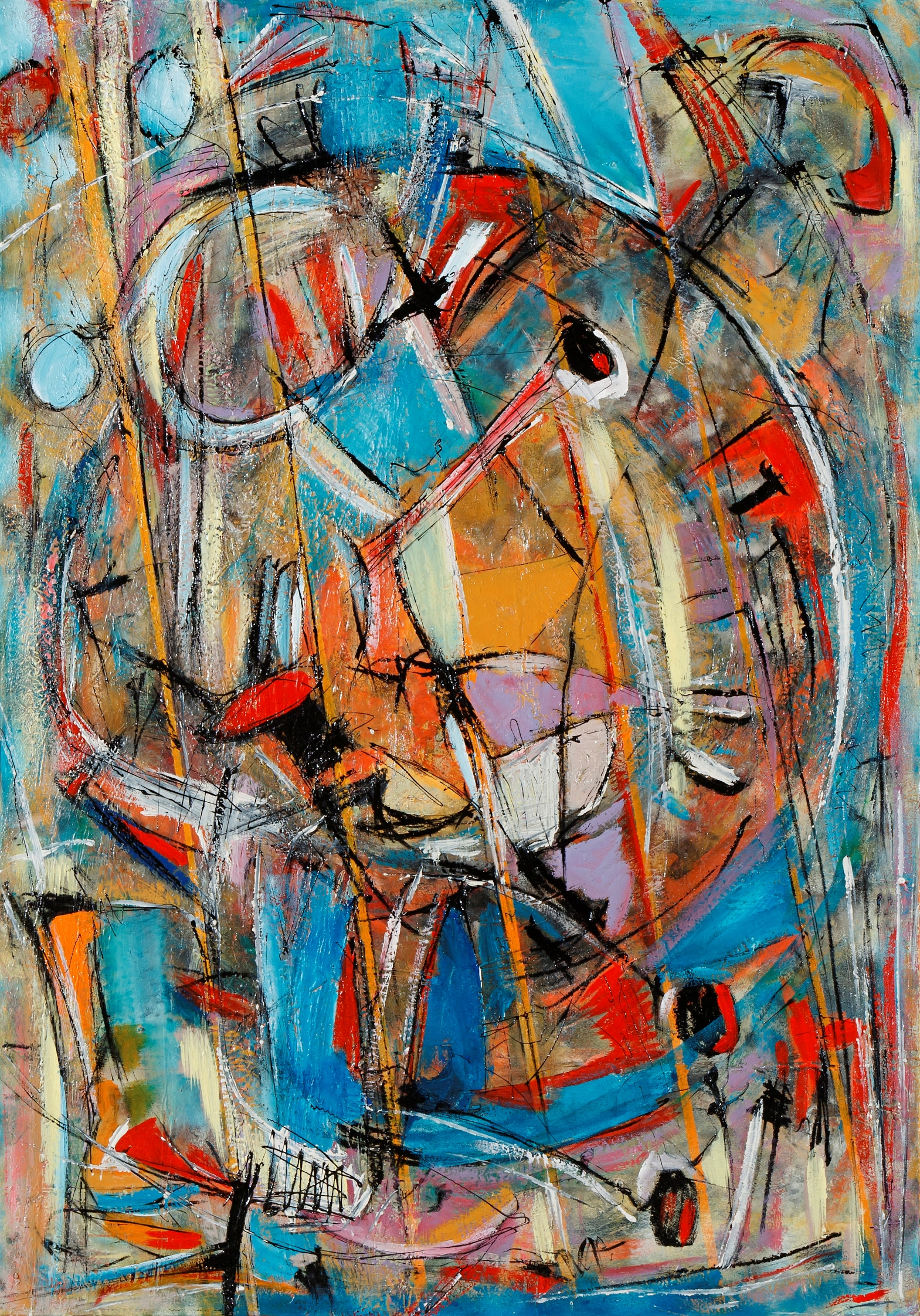
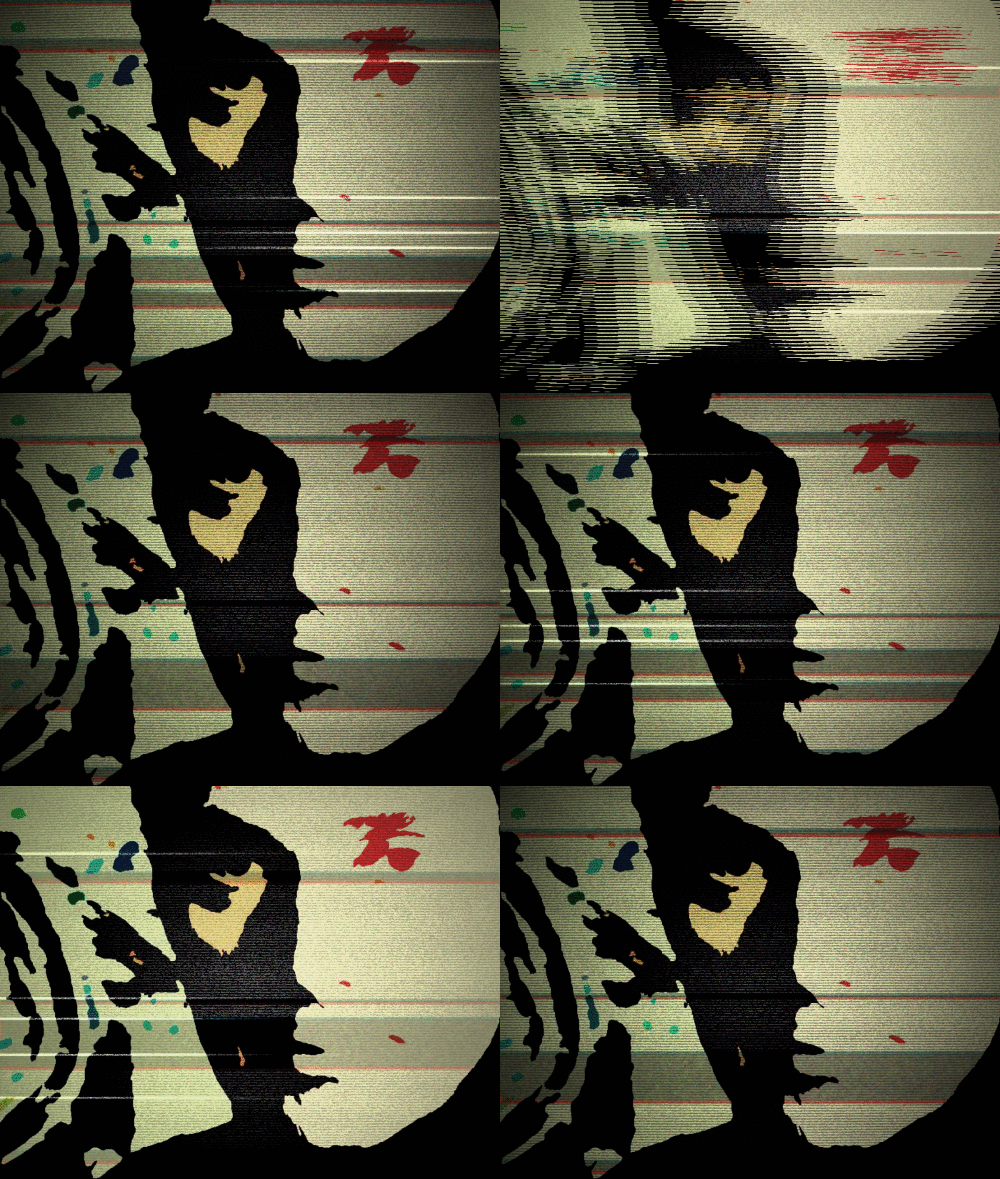
BORGIANIUS KAFKARIS (2016) by Ignacio Alperin – 150cm x 150cm –

Until next time!

Ignacio

PhotoFunia TV interference Regular 2014-08-04 01 55 05

©2016 by Ignacio Alperin Bruvera

Categories
2015 art works 2015 Exhibitions 2016 art works 2016 exhibtions Creativity / Creatividad IN ENGLISH Promoting your Art Visual Jazz What is Art

Cooking with Art´s Chili Pepper

Everyone who has explored his or her creative gifts has found that inspiration cannot be kept tied to one single form of expression. The fact is that many painters sing or act, some actors cook or paint, even some dancers are singers or sculptors. The choices and variations are almost limitless.

As you all know, I paint. It is my preferred expressive outlet. I love what I do, I feel I am constantly growing and I love exploring my artistic leanings through color and form. I know that I also have other God given talents. For example, I sing, although my shyness has gotten the best of me. My baritone voice is today a rough expression of a natural gift and it will probably remain so for the foreseeable future; I have also studied acting and I love it. But yet again, I never managed to get that “break” that seems to be necessary to make something of it and that has been that, at least until now.

For a lateral thinker like me, creativity can take on many guises. Cooking was one of the earlier ones, together with painting. My old school buddies still remember me in the kitchen “creating” grape sorbets and crazy cookies when we were just 10 or 12. Today, I probably  cook as much as I paint, and I know my friends enjoy coming to visit, see what I’m working on a canvas, and later enjoy a full meal prepared by me while we chat.

For those who are afraid of cooking, let me tell you, it is one of the most creative and freeing exercises you can find. It is quite simple to grasp once you know some of the basic concepts (ALL of them so obviously logical and sensible that you will wonder why you didn’t learn them before).

Food is something to be shared. Both at the preparation stage (with your family, your kids, your wife, girlfriend, or boyfriend or just with friends) and obviously as you all enjoy the end result. It is also a great way to become even more creative.

So, my recommendation would be: Let´s go cooking!

And as long as we are talking about cooking, how about if we look now at some cooking of mine, but of a different kind.

This is Cooking with Art´s Chili Pepper (and a taste of Art Pepper´s Chili Peppers right after it).

Enjoy!

Cooking_with_Art's_Chili_Pepper_(2011)_100cmX70cm.jpg
COOKING WITH ART´S CHILI PEPPER (2012) by Ignacio Alperin


Until next time!

Ignacio

drawiabcol

©2016 by Ignacio Alperin Bruvera

Categories
2015 art works 2016 art works 2016 exhibtions IN ENGLISH previous works by the same artist Promoting your Art Videos Visual Jazz What is Art

JUMPIN´ OFF A CLEF

joacmacro4
JUMPIN´OFF A CLEF (2016) by Ignacio Alperin- Macro photography detail

For an artist, doing the sure thing, the thing one feels most comfortable with, is usually something close to what is traditionally called “the kiss of death”.

Repeating the same work over and over again has often taken artists from seemingly wonderful work into the realm of the tedious.

The same way, the “system” (to call it something) tends to force its hand by pushing artists into doing over and over again, and maybe with minor variations, those paintings by the artist which “sell”.

The end result may, although not necessarily, be a profitable return on investment, but it mostly turns a creative and artistically rich individual into a laconic, easily infuriated, and mostly frustrated artist.

I have tried my best to be as flexible as possible with the market. I will not deny that I accept that if the public likes something in my work, then it is up to me to give it to them. I accept and embrace the market. But I also make the effort to keep my art close to my heart rather than my pocket. That also means that I keep and feed the energy needed to try to produce something new every time I face blank canvas.

joacmacro2
Jumpin´off a Clef (2016) – Detail

Those who know me and have seen me work, always mention that I quickly demystify the usual idea of the cool artist with a long brush in his or her hand, sitting in front of an easel contemplating life before every brushstroke.

Instead, I usually end up looking like a long distance cross country runner, feeling (and appearing) exhausted after a few hours of “running” free with my ideas and inspiration into a canvas. I suffer, walk, look, leave and comeback, and I work to the point of collapse.

That does not mean that the end result is better or worse, but there is a good chance that something in it will definitely be original. Most of my paintings will say one thing about me, and that is that I will not surrender to the temptation of mere repetition. I am always attempting, at the very least, to come up with something new, explore things I have not tried, and see if in the process I manage to grow, as a person and as an artist, a little bit more.

And to do this, I must jump off the proverbial cliff (or maybe at least “off a Clef”).


I believe that whenever you want to explore your talents, you must endeavor to go where you have not been before. And it does not matter if the cliff is 10 inches or 2 miles deep. The distance matters but the jump is the real key. It is feeling, at least for a moment, that there is nothing keeping you safe on the ground. It is that sensation that nothing you know will save you, so you must look into what you don´t know.

In creativity we may call that “divergent thinking” (term coined by Dr. J. P. Guilford during WWII). It is what happens when your brain faces something that for most people would mean crushing into a mountain, but you manage to come up, under pressure, with a new strategy to avoid it.

This is the experience of painting for me. It is looking for that “unknown factor” that will get my burning plane into a safe landing situation. In a simplified manner, I always say that my biggest thrill is when I manage to turn my mistakes into triumphs.

We all can do it. You just need to take a deep breath, make a quick run, and just jump off the cliff. As simple and as terrifying as that.

So, I dare you. Yes, let´s go together! Just get ready, set…

Jumpin´ off a Clef (Just like Chet)
JUMPIN´OFF A CLEF by Ignacio Alperin (2016) Acrylic, inks, and oil based paints on canvas – 220cm x 130cm

Until next time!

Ignacio

PS: I recommend you check out these exercises on “divergent thinking”: http://faculty.washington.edu/ezent/imdt.htm

vintageib1

©2016 by Ignacio Alperin Bruvera

Categories
2015 art works 2015 Exhibitions 2016 exhibtions IN ENGLISH Videos Visual Jazz

Dream a little dream (of me)

Dream_a_little_dream_(2014)_100cmx100cm_IAB_alt.jpg
Dream a Little Dream (2014) by Ignacio Alperin

Stars shining bright above you

Night breezes seem to whisper “I love you”

Birds singing in the sycamore trees

Dream a little dream of me


Say nighty-night and kiss me

Just hold me tight and tell me you’ll miss me

While I’m alone and blue as can be

Dream a little dream of meDream_a_little_dream_(2014)_100cmx100cm_IAB_longdetail


Stars fading but I linger on dear

Still craving your kiss

I’m longing to linger till dawn dear

Just saying this


Sweet dreams till sunbeams find you

Sweet dreams that leave all worries behind you

But in your dreams whatever they be

Dream a little dream of me


Stars fading but I linger on dear

Still craving your kiss

I’m longing to linger till dawn dear

Just saying this


Sweet dreams, till sunbeams find you

Gotta keep dreaming leave all worries behind you

But in your dreams whatever they be

You gotta make me a promise, promise to me

You’ll dream, dream a little of me


Songwriters

FABIAN ANDRE, GUS KAHN, WILBUR SCHWANDT

Published by

Lyrics © Sony/ATV Music Publishing LLC, Warner/Chappell Music, Inc., Universal Music Publishing Group

Painting: Dream a Little Dream (2014) by Ignacio Alperin. Oil based paints, inks and acrylics on canvas – 100cm x 100cm. ©2014 by Ignacio Alperin Bruvera.

PhotoFunia TV interference Regular 2014-08-04 01 53 31

Categories
2015 art works 2016 art works 2016 exhibtions IN ENGLISH previous works by the same artist Promoting your Art Videos Visual Jazz What is Art

FORTY SOMETHING

The number 40 is of great importance in Judeo-Christian tradition.

fotos-1927478h640In biblical times, it was assumed that a person would die 40 days after he or she stopped breathing. The great Kings of Israel (Saul, David and Salomon) all reigned for forty years, Jonas preached for 40 days before Nineveh’s destruction, Noah’s great rains lasted 40 days and Moses received his call at 40 years of age and stayed in Sinai for 40 days. Furthermore, the chosen people lived in the desert for 40 years, while Jesus preached for 40 months, was tempted in the same desert by the devil for 40 days, disappeared from his burial place within 40 hours and appeared after resurrection, and before ascension, for exactly 40 days. And, obviously, forty days is the preparation time before Easter.
Forty was presumed to be THE number required for full transformation or renewal.

So is then forty a magical number? Probably not (I do not have the answer). It may probably be just a number, but it is definitely something else, and that is a message in a bottle.

It may simply mean “give it reasonable time”.

It may exemplify the fact that everything that is important, everything that requires a shift from an accepted paradigm, or a change of perspective, also requires a sensible time to mature and happen.

It´s only a canvas sky hanging over a muslin tree parcial 3

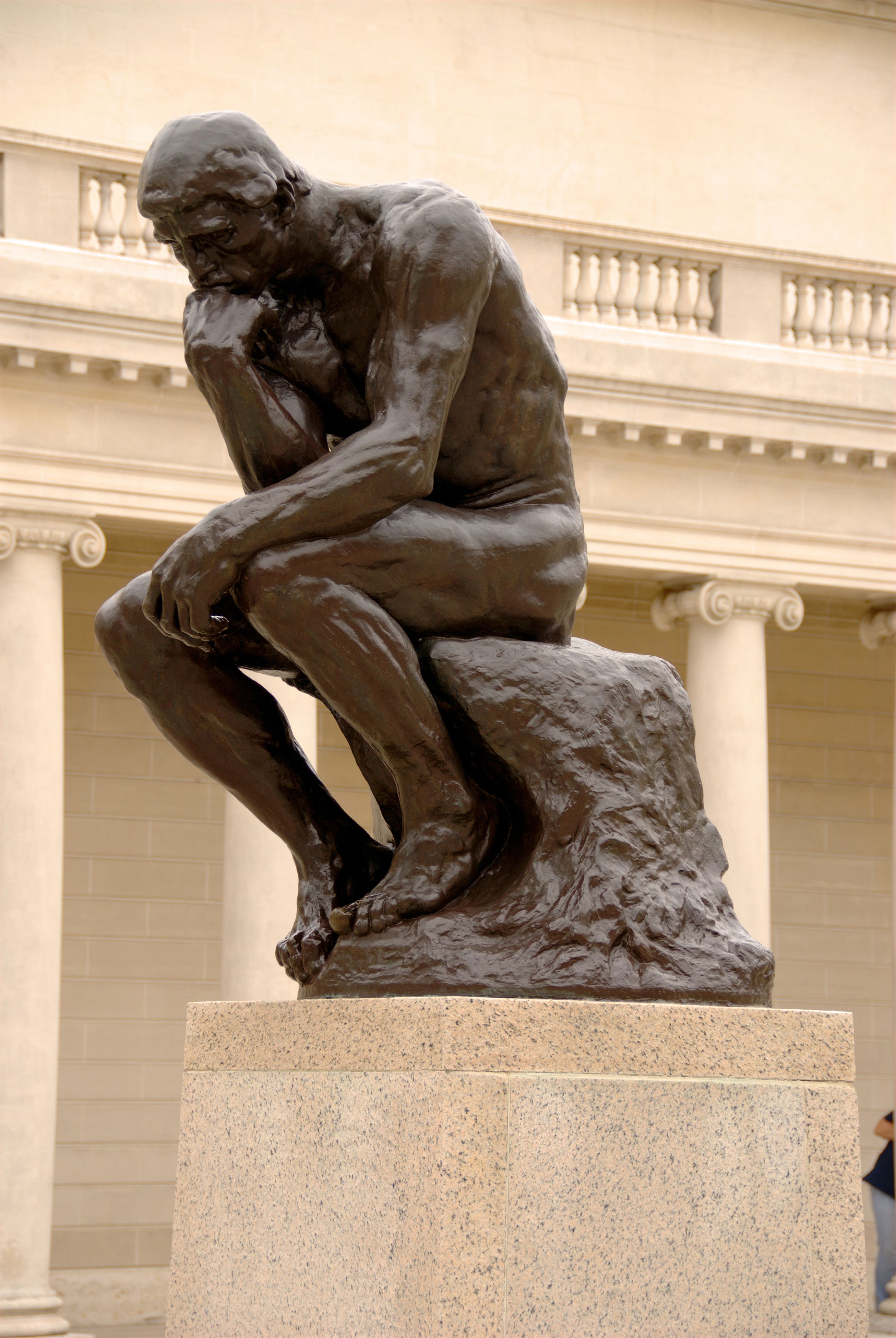
When I am “stuck” on an issue with my painting, I have two choices. Muddle through or give it time. And more often than not I will chose to give it time. Let it mature. And this means that I should “lay off”. Let it be for a while. Look at my troubled work in that typically artistic stance that is a mixture between despair and admiration for what we have done and may never repeat.

The_Thinker,_Auguste_Rodin

So my recommendation would be, let it be. Give yourself a period to rest. Forty minutes, forty hours or forty days. Fifty, fifteen, twenty or whatever you happen to feel is right, but give it time. And giving it time also means looking for silence, searching for a period to reason, contemplating, and extracting answers and further questions (after all, if anything , we have learned by now that one answer inexorably leads to a new uncertainty).

And letting it be also means going into your own desert, being tempted to do misguided stuff, and finally Bp8zdtDIUAA4JL_returning from the horrowing experience free from pressures and erronous stimuli, feeling liberated and ready to resume the correct path.

Forty something, twenty something, sixty something…it doesn´t really matter. It is all probably all pretty much the same.  It should simply be a great opportunity to stop, move away, think and maybe, just get it right.

Until the next time!

Ignacio

ignacioalperin lights4.jpg

©2016 by Ignacio Alperin Bruvera


Categories
2015 art works 2016 exhibtions Exhibitions IN ENGLISH Videos Visual Jazz

Know what I mean

I know what I mean detail2

I´m going this way, I´m going that way…

Why?…

Should I come back? I know what I mean detail3

This road, that road, any road…

Man it is hard to know the way…

It´s cold, it´s hot. It´s somewhere between.

It is where life takes us.

Know what I mean?


I know what I mean (2015) 60x80cmby IABsmf
I KNOW WHAT I MEAN (2015) by Ignacio Alperin


Until next time.

Ignacio

ignacioalperin lights4

All Texts ©2016 by Ignacio Alperin Bruvera