A personal, curatorial & bilingual Blog about: Artistic Movements, my Art, Creativity, Innovation, Design, Leadership, Empowerment, Sustainability, Science, Jazz, Movies and other cool pursuits - Blog personal y curatorial bilingüe sobre: Movimentos Artísticos, mi Arte, Creatividad, Innovación, Diseño, Liderazgo, Empoderamiento, Sustentabilidad, Ciencia, Jazz, Películas y otros temas.
This is a series of short posts presenting the artworks in “IGNACIO ALPERIN: A VISUAL JAZZ AFFAIR”, exhibition at the Watson Gallery, Naples and sponsored by the Naples Art Association together with Art Naples World Festival 2016 (Stay in May 2016). From April 28th until June 3rd, 2016.
This concert does not involve Brubeck playing since it is from 2014, but that does not detract from its brillance. This is Jazz at the Lincoln Center, with the Lincoln Center Jazz Orchestra and the great Wynton Marsalis at the helm.
They explore Brubeck’s extraordinary legacy with fresh arrangements that illuminate the breadth and scope of his work. Brubeck is credited with bringing jazz to the mainstream in the 1950s and 60s and releasing the first jazz album to sell over a million copies (from the commentary to the recording).
I just invite you to enjoy “THE LIFE AND MUSIC OF DAVE BRUBECK”
This is not the first time this album is mentioned in this blog. Furthermore, Joy Spring is my dedication to this album (Joy Spring being the fourth track on the original recording).
This influential album was recorded in 1954 and remains as the best known, and to many the very best, in the short life (two and a half years) of the Clifford Brown and Max Roach Quintet. Described by The New York Times as “perhaps the definitive bop group until Mr. Brown’s fatal automobile accident in 1956”, the band managed in its short life span to leave a mark in modern jazz.
The album (first released on vinyl in December 1954) was very well received by critics and the listening public. The album was inducted into the Grammy Hall of Fame in 1999 and it is also included in “Jazz: A Critic’s Guide to the 100 Most Important Recordings” at #34.
Why I love it so much? It is just so good. But also it is warm, sincere, very advanced for its time, and it is also a gorgeous example of exquisitely rhythmic hard bop.
Whether you are a jazz fan, you are beginning to get the taste for it, or you are simply curious, I am sure you will love this album.
So, there is really nothing further to say other than, just enjoy. And have a great Sunday!
This Sunday Concert is dedicated to a little gem I found on YouTube not long ago.
From 1957, here is the first modern pop star, the King of the cool, the jazz voice made from honey and wine. This is Frank Sinatra in concert live in Seattle.
There is nothing new I can say about Ol´Blue Eyes, so I will just invite you to get comfortable, close your eyes, imagine you are sitting there waiting for the introduction and simply enjoy one of the best at work, live!
JUMPIN´OFF A CLEF (2016) by Ignacio Alperin- Macro photography detail
For an artist, doing the sure thing, the thing one feels most comfortable with, is usually something close to what is traditionally called “the kiss of death”.
Repeating the same work over and over again has often taken artists from seemingly wonderful work into the realm of the tedious.
The same way, the “system” (to call it something) tends to force its hand by pushing artists into doing over and over again, and maybe with minor variations, those paintings by the artist which “sell”.
The end result may, although not necessarily, be a profitable return on investment, but it mostly turns a creative and artistically rich individual into a laconic, easily infuriated, and mostly frustrated artist.
I have tried my best to be as flexible as possible with the market. I will not deny that I accept that if the public likes something in my work, then it is up to me to give it to them. I accept and embrace the market. But I also make the effort to keep my art close to my heart rather than my pocket. That also means that I keep and feed the energy needed to try to produce something new every time I face blank canvas.
Jumpin´off a Clef (2016) – Detail
Those who know me and have seen me work, always mention that I quickly demystify the usual idea of the cool artist with a long brush in his or her hand, sitting in front of an easel contemplating life before every brushstroke.
Instead, I usually end up looking like a long distance cross country runner, feeling (and appearing) exhausted after a few hours of “running” free with my ideas and inspiration into a canvas. I suffer, walk, look, leave and comeback, and I work to the point of collapse.
That does not mean that the end result is better or worse, but there is a good chance that something in it will definitely be original. Most of my paintings will say one thing about me, and that is that I will not surrender to the temptation of mere repetition. I am always attempting, at the very least, to come up with something new, explore things I have not tried, and see if in the process I manage to grow, as a person and as an artist, a little bit more.
And to do this, I must jump off the proverbial cliff (or maybe at least “off a Clef”).
I believe that whenever you want to explore your talents, you must endeavor to go where you have not been before. And it does not matter if the cliff is 10 inches or 2 miles deep. The distance matters but the jump is the real key. It is feeling, at least for a moment, that there is nothing keeping you safe on the ground. It is that sensation that nothing you know will save you, so you must look into what you don´t know.
In creativity we may call that “divergent thinking” (term coined by Dr. J. P. Guilford during WWII). It is what happens when your brain faces something that for most people would mean crushing into a mountain, but you manage to come up, under pressure, with a new strategy to avoid it.
This is the experience of painting for me. It is looking for that “unknown factor” that will get my burning plane into a safe landing situation. In a simplified manner, I always say that my biggest thrill is when I manage to turn my mistakes into triumphs.
We all can do it. You just need to take a deep breath, make a quick run, and just jump off the cliff. As simple and as terrifying as that.
So, I dare you. Yes, let´s go together! Just get ready, set…
JUMPIN´OFF A CLEF by Ignacio Alperin (2016) Acrylic, inks, and oil based paints on canvas – 220cm x 130cm
My take on a classic… GROOVY (2013) by Ignacio Alperin
William “Red” Garland was born in Dallas, Texas, in 1923. He began his musical studies on the clarinet and alto saxophone but in 1940 switched to the piano.
After WWII Garland, already recognized as a very promising young musician, began to perform around Boston, NYC and Philadelphia with the likes of Billy Eckstine, Roy Eldridge, Coleman Hawkins, Charlie Parker and Lester Young.
But he was finally thrown into the spotlight when, in 1954, he joined the Miles Davis Quintet that included John Coltrane, Philly Joe Jones and Paul Chambers. Together the group recorded their famous The New Miles Davis Quintet (1954), Workin, Steamin’, Cookin’, and Relaxin’.
Garland also played on the first of Davis’s many Columbia recordings, ‘Round About Midnight (1957). Though he would continue playing with Miles, their relationship was beginning to deteriorate. In 1958 he was fired by Miles but he nevertheless returned to play in another classic record: Milestones. He continued recording until his death from a heart attack in April 1984 at the age of 60.
In 1958, after his separation from Davis´ band, Garland formed his own trio. From the period just prior to his break up with Miles, we have something really nice for you this Sunday.
It is none other than “Groovy”, recorded in 1957.
A wonderful recording with Garland, Paul Chambers and Art Taylor.
The number 40 is of great importance in Judeo-Christian tradition.
In biblical times, it was assumed that a person would die 40 days after he or she stopped breathing. The great Kings of Israel (Saul, David and Salomon) all reigned for forty years, Jonas preached for 40 days before Nineveh’s destruction, Noah’s great rains lasted 40 days and Moses received his call at 40 years of age and stayed in Sinai for 40 days. Furthermore, the chosen people lived in the desert for 40 years, while Jesus preached for 40 months, was tempted in the same desert by the devil for 40 days, disappeared from his burial place within 40 hours and appeared after resurrection, and before ascension, for exactly 40 days. And, obviously, forty days is the preparation time before Easter.
Forty was presumed to be THE number required for full transformation or renewal.
So is then forty a magical number? Probably not (I do not have the answer). It may probably be just a number, but it is definitely something else, and that is a message in a bottle.
It may simply mean “give it reasonable time”.
It may exemplify the fact that everything that is important, everything that requires a shift from an accepted paradigm, or a change of perspective, also requires a sensible time to mature and happen.
When I am “stuck” on an issue with my painting, I have two choices. Muddle through or give it time. And more often than not I will chose to give it time. Let it mature. And this means that I should “lay off”. Let it be for a while. Look at my troubled work in that typically artistic stance that is a mixture between despair and admiration for what we have done and may never repeat.
So my recommendation would be, let it be. Give yourself a period to rest. Forty minutes, forty hours or forty days. Fifty, fifteen, twenty or whatever you happen to feel is right, but give it time. And giving it time also means looking for silence, searching for a period to reason, contemplating, and extracting answers and further questions (after all, if anything , we have learned by now that one answer inexorably leads to a new uncertainty).
And letting it be also means going into your own desert, being tempted to do misguided stuff, and finally returning from the horrowing experience free from pressures and erronous stimuli, feeling liberated and ready to resume the correct path.
Forty something, twenty something, sixty something…it doesn´t really matter. It is all probably all pretty much the same. It should simply be a great opportunity to stop, move away, think and maybe, just get it right.




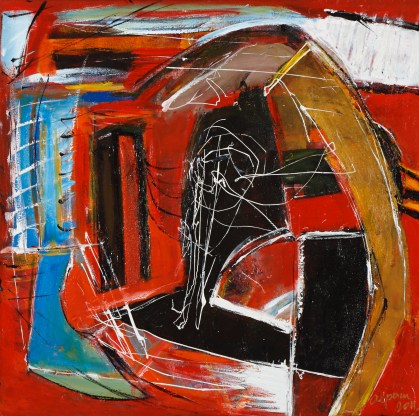



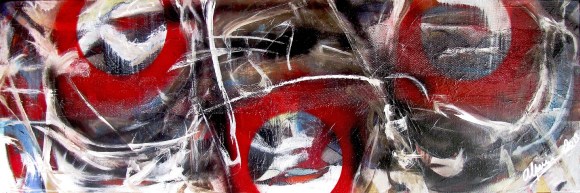


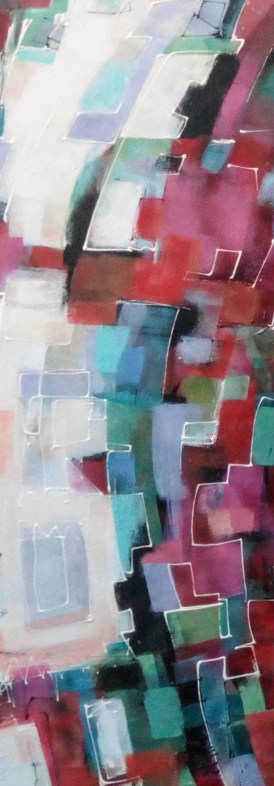


 In biblical times, it was assumed that a person would die 40 days after he or she stopped breathing. The great Kings of Israel (Saul, David and Salomon) all reigned for forty years, Jonas preached for 40 days before Nineveh’s destruction, Noah’s great rains lasted 40 days and Moses received his call at 40 years of age and stayed in Sinai for 40 days. Furthermore, the chosen people lived in the desert for 40 years, while Jesus preached for 40 months, was tempted in the same desert by the devil for 40 days, disappeared from his burial place within 40 hours and appeared after resurrection, and before ascension, for exactly 40 days. And, obviously, forty days is the preparation time before Easter.

 returning from the horrowing experience free from pressures and erronous stimuli, feeling liberated and ready to resume the correct path.
 IGNACIO ALPERIN: THE ART OF THINKING OUT LOUD / EL ARTE DE PENSAR EN VOZ ALTA