A personal, curatorial & bilingual Blog about: Artistic Movements, my Art, Creativity, Innovation, Design, Leadership, Empowerment, Sustainability, Science, Jazz, Movies and other cool pursuits - Blog personal y curatorial bilingüe sobre: Movimentos Artísticos, mi Arte, Creatividad, Innovación, Diseño, Liderazgo, Empoderamiento, Sustentabilidad, Ciencia, Jazz, Películas y otros temas.
I remember buying Jazz records when I was a kid in Melbourne, going through the Monash University Record shop when I had no lectures, seeing if I could find something new. My whole life is a long quest about “finding something new”, I guess.
When I found something I had never heard before, I always used to look for the lineup to see who made up this band. If Steve Gadd was on drums, it would be a sign that these guys were probably very good. Chick Corea said of Mr. Gadd: “all the drummers want to play like Gadd because he reaches perfection”.
He has played with Simon and Garfunkel, Steely Dan, James Taylor, Joe Cocker, Grover Washington Jr., Chick Corea, Lee Ritenour, Frank Sinatra, Al Jarreau, Eric Clapton, Chet Baker, Michel Petrucciani, The Bee Gees, Michael McDonald and many others. In addition, he is the leader of his own band, with which he also won the 2019 Grammy for Best Contemporary Instrumental Album.
This was recorded at Jazz San Javier. I hope you enjoy one of the best drummers in the history of Jazz.
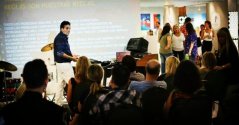
In my lectures I always mention at some point something that the great Hans Rosling has said or done.
We sadly lost him (by we, I mean humanity) in February of 2017. But his teaching and his thinking processes survive, and hopefully will do so for a long time.
For those of you who do not know of him, he was a Swedish physician, academic, statistician, and public speaker. He was the Professor of International Health at the Karolinska Institute and was also the co-founder and chairman of the Gapminder Foundation, which developed Trendalyzer software.
He has written wonderful books which have been read by, and inspired, millions.
To me at least, his most wonderful gift was as a statistician. And he always had something interesting to distill from information that both you and me would have considered unremarkable.
As an example of his genius, here he is presenting his view that world population cannot possibly exceed 11 billion. It is a view that runs contrary to what has been generally accepted. You may agree with him or not, but it is a good exercise to let him takes us through his process.
I hope this tempts you to look for more about him.
I started painting when I was 12 years old. Obviously before then I drew and painted like any other boy, but around that age I decided to “PAINT”. My parents bought me a couple of canvasses, brushes and oil paints, and the first of my oeuvre was reproducing the image of the Church where we went to Mass every Sunday. Until a while ago I still kept it, although we moved so many times (to date I am counting 32 times and 6 countries…) that I would not be surprised if next time I look ,I find that I lost it somewhere.
At that time, my inspiration and my desire to paint had emerged due to the fact that, my parents, had taken me to visit the most important museums in Europe, and as happens many times when we are children, that generated an outburst between playful and artistic that invited me to paint without complexes. I came back full of admiration and with my head twirling between the works of Picasso, Van Gogh, Kandinsky, Leonardo, Pollock, Rothko, and all that wonderful art and creativity. Art that changed my way of seeing life forever.
It’s been a while (let’s say) since that time. Keeping that child always alive within us is one of the artist’s mandates, because that freedom and all that lack of conditioning that we have as children, if it is maintained over time, is largely what allows us to explore a little further each time.
I grew up, and I painted accompanied by music (sometimes very loud). I can still hear my mother telling me off (and the complaints from my downstairs neighbor). At that time, we were already living in Australia, on the first floor of a Victorian house in the Toorak neighborhood, in Melbourne. Like many of those older houses, it had hardwood floors, and every step – no matter how cushioned one might try to make them with rugs – could be heard below. Imagine what it would be like for the poor neighbor, to hear John Coltrane’s sax at full volume and at any time of day. Sorry Thomas! (It is said that it is never to late to say I am sorry…).
Years later, as my work became a better known, people began to ask me if I admired the great Wassily Kandinsky (Russian artist who graduated as a genius in Paris), because my art apparently had certain reminiscences of his work, particularly some forms and colors.
I confess that, on the one hand, it filled me with pride that someone would think of Kandinsky when looking at my work, but at the same time – and many of you will understand this – it annoyed me, because I felt they were asking me if I was somehow copying him. I admired his work (I still do), but I did not consciously copy it. Likewise, I never denied my admiration for him, and I even thought at some point that unconsciously, perhaps, there were things that inspired me about his work, and from there was born this similarity that generated all these questions.
In all truth, there were some common traits. We both – strangely for artists – studied law, we liked architectural drawing, we got into graphic design, and we both took up painting -professionally that is- quite late in life. Yet decades separated our existences. But it was a few years ago that I discovered the other point of contact we had with my “friend” Wassily.
He always said that he painted music. Over the years, scientists came to understand that what he meant was that he was synesthetic, that little gift that nature gives some of us (quite a few actually because it is estimated that there are at least between 3% to 4% of the population of the planet that experiences it). This neuronal condition allows sensory experiences through sound. For some it produces flavors (words or sounds “taste” of something), and for others, it allows us to “see” in our minds shapes and colors through sounds.
It turned out to be the case, that I discovered that I was also synesthetic, and that then those colors and some of those shapes that we had in common, could be perfectly explained as a product of our shared synesthesia. A lawyer would be saying next: “we found the smoking gun”.
This ability allows us to see beyond what is visible. Needless to say, human visual capabilities are limited, but seeing sound is closer to something we would assign to bats. But that is not what we see, it is not a radar that we have. It is a generator of shapes and colors associated particularly with certain sounds that, very commonly, are musical. In my case, this led to -some years ago- a well-known US newspaper to publish a very nice article about an exhibition of mine, which was titled it “A painter gifted with the art of listening” – A painter gifted with the art of listening | Naples Florida Weekly –.
And from what I see it is a subject that is always passionate because now I find out, thanks to my dear friend Fernanda Akian, that the prestigious La Nación newspaper in Buenos Aires, just published an excellent article on Kandinsky and his ability to “see” music. While Google just launched an experiment to see if anyone, through an app, can somehow tie what Kandinsky was listening to with his work.
Clearly, it is a recurring subject because it seems so unusual. Already 5 years ago, something that was mentioned un that article, I began to place next to each of my works, a QR code with a link that allows anyone to listen to the song that most inspired each work, while that inspiration is also reflected in the title of each painting, as each one generally bears the name of the song that most influenced it.
On that occasion, as at other times, the result was wonderful, as people came to see the exhibition which was large (about 45 works, some large size), and then they returned, sometimes more than once, with a cellphone or tablet and headphones in hand, to spend an hour or two with my work listening to the songs, and trying to see what happened to them when they heard the music and explored what I had painted. The experience was worth it. And the feedback from the public was a big surprise, as some discovered that, perhaps, they too were synesthetes but had never realized it.
Of course, I don’t have Google’s resources, but as you already saw, I have started doing something similar through here on my blog and social media. I am generating short videos of each work and as a background, the music that inspired it. I would love for you to see (and listen) and tell me what it is that you feel when experiencing that combination of images and sounds. I hope you like it and that you share it with your friends.
Ignacio Alperin nació en Argentina, creció en Australia y vivió temporariamente en varios países alrededor del mundo. Posee una experiencia internacional extensa, y diversa, obtenida en una carrera profesional alejada de lo lineal. Hoy en día es Profesor de Entrepreneurship en los MBAs de la Universidad Católica Argentina (UCA), Profesor de Creatividad e Innovación (Grado) en UCA Internacional, es un Emprendedor serial, consultor, orador en eventos nacionales e internacionales, y artista plástico.
Ignacio Alperin was born in Argentina, grew up in Australia and lived temporarily in several countries around the world. He has extensive and diverse international experience, obtained in a professional career far from the linear. Nowadays he is a Professor of Entrepreneurship in the MBAs of the Argentine Catholic University (UCA), Professor of Creativity and Innovation (Degree) in UCA International, a serial Entrepreneur, consultant, speaker in national and international events, change evangelist, and an artist.
SARATOGA SPRINGS - CIRCA 1982: Photo of Roy Haynes performing in Saratoga Springs, New York. Circa 1982 (Photo by Tom Copi/Michael Ochs Archives/Getty Images)
Roy Haynes Quartet – Live at Blue Note Jazz Club, Jazz Festival NYC (June 12, 2019) Roy Haines is a living legend of world jazz. Born March 13, 1925. Boston, Massachusetts.
He has played with Lester Young, Louis Armstrong, Charlie Parker, Thelonious Monk, Sarah Vaughn, Miles Davis, John Coltrane, Dizzy Gillespie, Bud Powell, Ella Fitzgerald, Stan Getz, Chick Corea, Pat Metheny, and this is not a complete list .
He is now 95 years of age and still going. Roy is still full of energy and love of music. Worth a look just to dream of being able to do the same. And please, do not miss him doing some rap!
Band: Jaleel Shaw: alto, soprano sax – Martin Bejerano: keyboards – David Wong: bass – Roy Haynes: drums
SET: 1. Bemsha Swing (Monk) 2. James (Metheny) 3. Green Chimneys (Monk) 4. Question And Answer (Metheny)
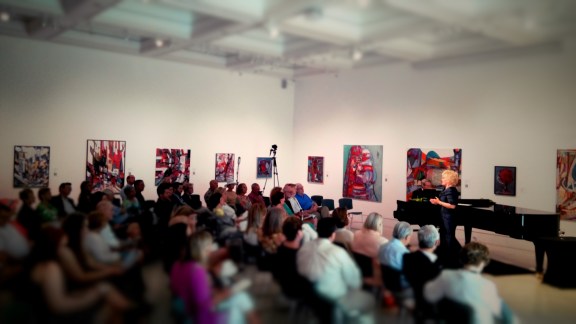
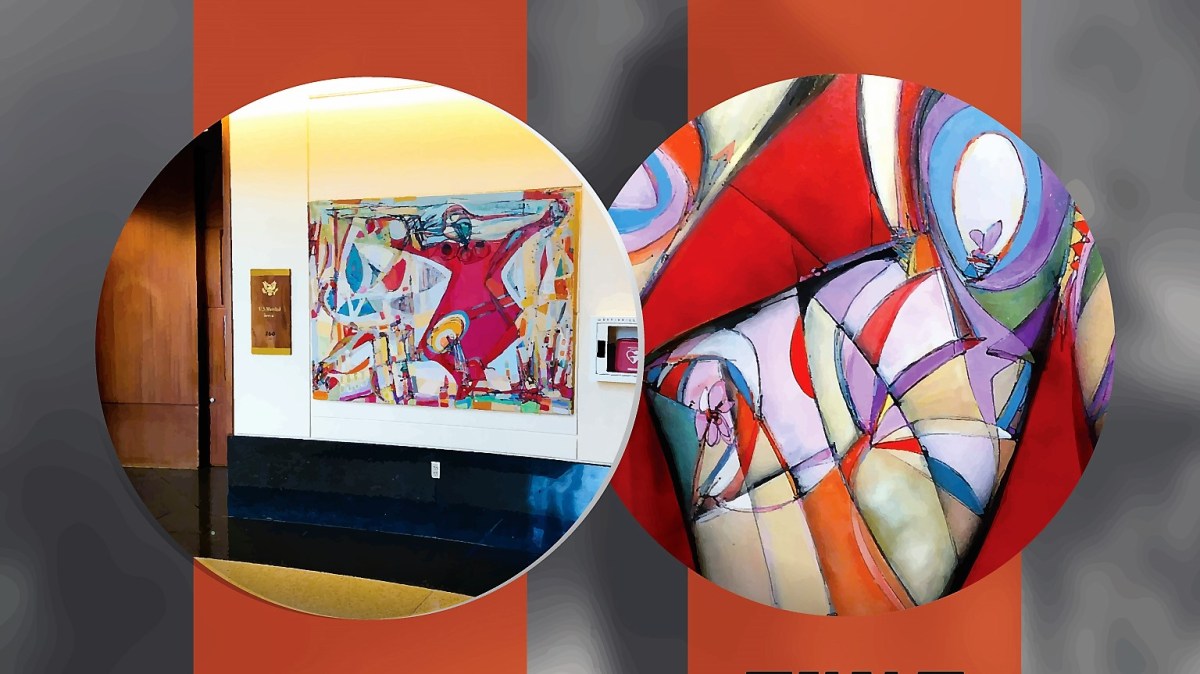
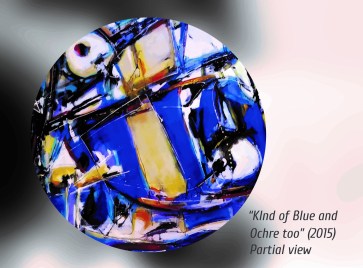
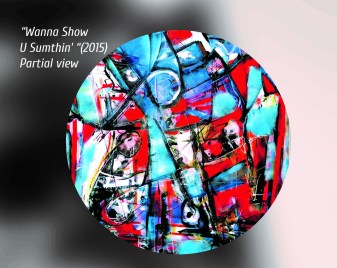
Ignacio Alperin´s art takes viewers on an energetic journey through the joy and harmony of abstract movement.
Using brushes, water, spray cans, oil paint, emulsified inks, and charcoal he gives splendid forms and chapes to musical compositions, with all their complex rhythms, spatial dynamics and layering.
Ignacio Alperin nació en Argentina, creció en Australia y vivió temporariamente en varios países alrededor del mundo. Posee una experiencia internacional extensa, y diversa, obtenida en una carrera profesional alejada de lo lineal. Hoy en día es Profesor de Entrepreneurship en los MBAs de la Universidad Católica Argentina (UCA), Profesor de Creatividad e Innovación (Grado) en UCA Internacional, es un Emprendedor serial, consultor, orador en eventos nacionales e internacionales, y artista plástico.
Ignacio Alperin was born in Argentina, grew up in Australia and lived temporarily in several countries around the world. He has extensive and diverse international experience, obtained in a professional career far from the linear. Nowadays he is Professor of Entrepreneurship in the MBAs of the Argentine Catholic University (UCA), Professor of Creativity and Innovation (Degree) in UCA International, a serial Entrepreneur, consultant, speaker in national and international events, and an artist.
I run into people, every now and again, that want to see my workshop, just to get the feeling of what goes through my mind while I paint.
I always tell them that it is a bit of a mess, and they are kind of surprised. Yet, disorder is helpful when trying to think and act creatively. The same way that creativity involves putting together ideas and concepts in a new fashion, the mere messiness of an artist’s lair helps in that process. One can fin connections that in an orderly room would never appear by themselves. Artists are mostly visual beings, so seeing two (or 10) things together that should have never been together, helps us more rapidly with the process of doing something new.
Obviously, this is not exclusive to me. Quite the contrary, it is more like the rule than the exception in the art world. Just to solidify this concept, I made this little video which shows many great and well known artists (from the present and the past) creating in their own personal little messes.. I hope you enjoy it.
Ignacio Alperin nació en Argentina, creció en Australia y vivió temporariamente en varios países alrededor del mundo. Posee una experiencia internacional extensa, y diversa, obtenida en una carrera profesional alejada de lo lineal. Hoy en día es Profesor de Entrepreneurship en los MBAs de la Universidad Católica Argentina (UCA), Profesor de Creatividad e Innovación (Grado) en UCA Internacional, es un Emprendedor serial, consultor, orador en eventos nacionales e internacionales, y artista plástico.
Ignacio Alperin was born in Argentina, grew up in Australia and lived temporarily in several countries around the world. He has extensive and diverse international experience, obtained in a professional career far from the linear. Nowadays he is Professor of Entrepreneurship in the MBAs of the Argentine Catholic University (UCA), Professor of Creativity and Innovation (Degree) in UCA International, a serial Entrepreneur, consultant, speaker in national and international events, and an artist.
(Artículo publicado originalmente en Pulse by Linkedin)
A mi me pasa como a Uds. Estamos cansados y estresados. El encierro, la incertidumbre, las malas noticias por una enfermedad que no terminamos de poner bajo control y encima de todo eso, la necesidad/imposición de trabajar y estudiar desde casa. Esto último se traduce, en muchos casos, en agendas repletas de reuniones por zoom. Esto se extiende hasta para las reuniones familiares, o los “encuentros” con amigos. Zoom es hoy parte de nuestras vidas (algo para lo que no había sido diseñado) y pareciera ser que como sea, y no importa con qué programa lo hagamos – Zoom, Blue Jeans, Facebook, Duo, Webex, etc.- esto va a seguir siendo así, en mayor o menor medida, hacia el futuro.
Por un lado, es una bendición. Podemos trabajar o estudiar sin movernos de casa. Es productivo, porque no perdemos tiempo en viajes, tránsito, estacionamientos, esperas y atrasos (no sé si notaron, pero estamos todos mucho más puntuales desde que utilizamos estas plataformas). Podemos utilizar mejor nuestro tiempo definitivamente, incluyendo que vestirnos para una reunión implica “de la cintura para arriba”. Hoy no es inusual el look el saco y camisa, sobre shorts y zapatillas de correr. En el verano, informal sobre traje de baño es definitivamente el look. En otras palabras, mucho menos trabajo.
Pero no todo es positivo. Desde ya, una encuesta realizada en los EEUU hacia fines del pasado año reveló que la mayoría de la gente que trabajó de manera remota durante 2020 consideraba que, en lugar de trabajar menos, habían agregado al menos 6 horas más de trabajo semanal. Es esa relación entre sentirnos liberados, y darnos cuenta que aparecieron de la nada cadenas que antes no estaban allí.
Pero hay un tema más importante. Lo que se ha dado por denominar “Fatiga de Zoom”. Un año después, ya no nos parece tan divertido como al principio. Nos cuesta concentrarnos, a algunos les cuesta mantener, y por sobre todas las cosas, en general nos estresa de sobremanera. Esto es lo que considera el profesor de Stanford Jeremy Bailenson en un reciente trabajo (“Nonverbal overload: A theoretical argument for the causes of Zoon fatigue” publicado en Technology, Mind and Behaviour). Él agrega que no solamente cansa y estresa. Dice también que afecta nuestro cerebro generando reacciones inusuales entre las que se encuentra esta fatiga tecnológica.
De hecho cataloga algunas causas primordiales para esta reacción. La primera sorprende, pero cuando uno lo piensa mejor, tiene todo el sentido del mundo. Bailenson argumenta que entrar a una reunión por Zoom a las 9 de la mañana activa nuestro sentido de “pelear o volar -o escapar-” (fight or flight en inglés). Esta es una reacción muy normal que tiene todo ser humano ante situaciones de peligro.
Argumenta que si uno a la mañana llega al trabajo y se sube a un ascensor con mucha gente, lo que naturalmente hace es mirar hacia abajo o bien hacia arriba. De esa manera se evita la vista directa y cercana del resto de los ocupantes, algo que de otra manera el cerebro interpretaría como intuitivamente confrontativa. De no ser así, esas miradas fijas dispararían nuestro instinto de “pelear o volar”.
Sin embargo, en una reunión de Zoom, digamos que en el mismo horario, esas miradas son imposibles de evitar. Generalmente estamos frente a 1, 5, o 20 personas que aparentan mirarnos fijamente en la cuadrícula. Y por ende, nos estresamos y muchas veces, o nos ponemos más agresivos que de costumbre, o estamos desesperados por irnos. En otros casos, y para evitar la confrontación, no prestamos atención (que sería el equivalente a mirar hacia abajo). El resultado esencial, es mayor estrés.
Otro tema que nos agota, es el hecho de que se torna muy difícil entender las señales no verbales en una pantalla. En un ámbito social, intuitivamente y por aprendizaje, tenemos una caja de herramientas a disposición que nos permiten “leer” el lugar y las pequeñas diferencias expresivas no verbales que se producen en nuestros interlocutores. En una pantalla se puede hacer mucho de esto, pero requiere de un aprendizaje (la policía de todo el mundo tiene analistas que miran continuamente videos en busca de pequeñas señales no verbales que delaten situaciones). Pero es un hecho que la mayoría de nosotros no estamos acostumbrados a hacerlo, ni contamos con esa formación.
El resultado son enojos injustificados, malas interpretaciones de situaciones inocentes, o inocentes interpretaciones de situaciones poco agradables y por sobre todas las cosas, la necesidad de poner un mayor esfuerzo para armar la “foto” final luego de una reunión. A eso podemos agregar que en el ámbito de la interpretación verbal, hay inconvenientes también. El estudio concluye que la gente habla 15% más fuerte (mayor volumen) cuando interactúa por video que cuando lo hace en persona. Esto es una mezcla de estrés y de temor a no ser escuchado del otro lado. Pero una reunión nos cansa también porque encima de todo lo anterior, a veces sentimos que nos gritaron por 40 minutos.
Otro tema que estresa, aunque el narciso que tenemos adentro sea fuerte, es el hecho de vernos en cámara constantemente. Bailenson dice “imaginen tener una persona que nos sigue todo el día con un espejo”… es algo así. Pero en este caso es algo que se produce como un proceso natural relacionado a cada reunión. Yo tengo la tendencia a apagar la cámara luego de presentarme y prenderla sólo cuando quiero tomar la palabra. Siento que estresa menos a mi interlocutor. Pero es un hecho que en muchos casos, eso no es posible (o bien por respeto, o por reglas como en el colegio o la universidad).
Está perfectamente comprobado, que dado el estrés que nos generan todas esas caras mirándonos desde la pantalla, otra tendencia para escaparle a la intimidación de todas esas miradas es desviar la vista hacia el cuadradito en el que está nuestra propia imagen y analizar cómo nos vemos. Desde si la sonrisa se ve real, a si esta mañana nos levantamos con más ojeras, o si las arrugas se ven, o si cada vez se nota más que tenemos menos pelo. Cualquiera fuera la razón, el resultado es evitar un estrés para reemplazarlo por otro.
Esta constante autoevaluación de nuestra apariencia -a lo que se le agrega que nos hablamos a nosotros mismos al no mirar a los demás- , es una importante fuente de ansiedad. Está también demostrado por estudios empíricos, que ese estrés es mayor en mujeres que en hombres. De hecho se ha comprobado durante 2020 que ese autoanálisis constante de nuestra imagen es muy contraproducente, particularmente en mujeres con tendencia a la depresión, ya que les prepara el camino para que ésta se haga presente.
Finalmente, pese a que asociamos la posibilidad de hacer reuniones virtuales con la libertad de estar en casa, cómodos y así “deshacernos” de esa reunión mensual lo más rápido posible, en la práctica, este modo de trabajar nos termina generando la sensación de sentirnos atrapados. En una reunión normal, nos movemos, caminamos, nos levantamos y nos sentamos. Físicamente cambiamos el ángulo desde donde presentamos conceptos e ideas. En una reunión virtual, debemos mantenernos dentro de los límites de la cámara y por ende, de la pantalla.
Yo siempre hablo en mis charlas de creatividad, sobre la importancia de caminar, movernos, o como se dice comúnmente, “despejarnos” para poder sacar nuevas ideas. Estas reuniones nos obligan a estar sentados por horas en posiciones muy limitadas por la tecnología. Como mucho movemos las manos o la cabeza. El resultado es frustrante, cansador, y muy poco apto para generar nuevas ideas. Como dice el estudio, este tipo de reuniones están seteadas para no permitirnos pensar por fuera de los límites tradicionales (ni de la pantalla).
Lamentablemente, vamos a seguir así, o en reuniones híbridas, de acá hacia el futuro. Pero es probable que la tecnología empiece a permitirnos algunas libertades (de movimiento para empezar), que hagan más llevadero este proceso. Mientras tanto, e profesor Bailenson tiene algunas recomendaciones en su trabajo también.
Por un lado, recomienda que tratemos de usar una cámara externa en lugar de la cámara de nuestro teléfono o notebook. La idea es vernos desde diferentes ángulos en lugar de simplemente de frente. Ya que estamos, también recomienda colapsar nuestra propia imagen en pantalla, para no vernos y no estar analizándonos minuciosamente todo el tiempo.
Otra opción que yo les propongo, es hacer lo opuesto a lo que normalmente hacemos. Por lo general, nos hemos acostumbrado a tener un lugar “Zoom”. O sea, un lugar fijo donde presentamos todas nuestras reuniones virtuales. Yo he encontrado que si cambio continuamente el lugar físico en el que me encuentro, cada dos reuniones por ejemplo, enfrento esas reuniones con otra frescura, y nuestros interlocutores también nos ven en una luz diferente, en otro ámbito, desde otro ángulo y con diferente sonido ambiente. Eso renueva lo que se ha vuelto tedioso.
Finalmente el estudio habla de algo tan simple como mezclar el tipo de reuniones. En otras palabras, hacer algunas por teléfono o WhatsApp, y otras por Zoom (o lo que usemos). Las reuniones telefónicas nos permiten caminar y relajarnos. Por lo tanto son mucho más efectivas desde el punto de vista creativo y son más efectivas para cierto tipo de discusiones.
De todos modos, lo importante aquí es comprender que está en nosotros mejorar y superar esta fatiga. Una sensación que, como habrán visto, tiene poco que ver con temas relacionados a las características personales de cada uno. Pero sí tiene raíces en las limitaciones a las que nos hemos visto empujados por las restricciones de una tecnología novedosa para el público en general, y de los requerimientos de una época inusual que ha forzado muchos cambios en nuestras vidas. Cambios que, tal vez, han llegado para quedarse.
I.A.
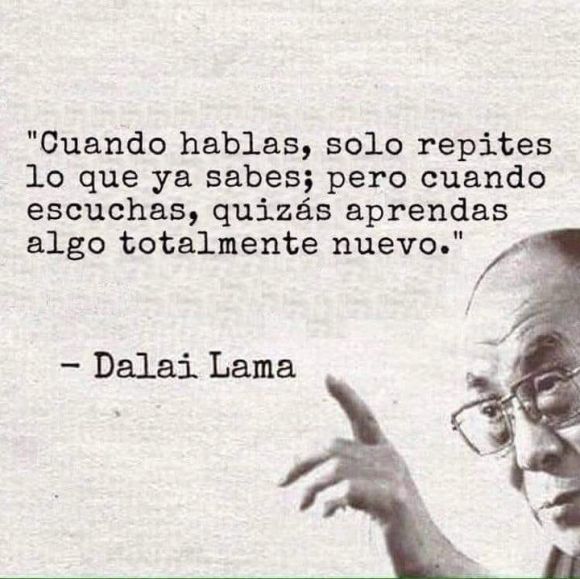
PD: Y ya que estamos, siempre recuerden esto. En persona, por teléfono, WhatsApp, Zoom o lo que usen para comunicarse…
Ignacio Alperin nació en Argentina, creció en Australia y vivió temporariamente en varios países alrededor del mundo. Posee una experiencia internacional extensa, y diversa, obtenida en una carrera profesional alejada de lo lineal. Hoy en día es Profesor de Entrepreneurship en los MBAs de la Universidad Católica Argentina (UCA), Profesor de Creatividad e Innovación (Grado) en UCA Internacional, es un Emprendedor serial, consultor, orador en eventos nacionales e internacionales, y artista plástico.
Ignacio Alperin was born in Argentina, grew up in Australia and lived temporarily in several countries around the world. He has extensive and diverse international experience, obtained in a professional career far from the linear. Nowadays he is Professor of Entrepreneurship in the MBAs of the Argentine Catholic University (UCA), Professor of Creativity and Innovation (Degree) in UCA International, a serial Entrepreneur, consultant, speaker in national and international events, and an artist.


 In my lectures I always mention at some point something that the great Hans Rosling has said or done.







 A mi me pasa como a Uds. Estamos cansados y estresados. El encierro, la incertidumbre, las malas noticias por una enfermedad que no terminamos de poner bajo control y encima de todo eso, la necesidad/imposición de trabajar y estudiar desde casa. Esto último se traduce, en muchos casos, en agendas repletas de reuniones por zoom. Esto se extiende hasta para las reuniones familiares, o los “encuentros” con amigos. Zoom es hoy parte de nuestras vidas (algo para lo que no había sido diseñado) y pareciera ser que como sea, y no importa con qué programa lo hagamos – Zoom, Blue Jeans, Facebook, Duo, Webex, etc.- esto va a seguir siendo así, en mayor o menor medida, hacia el futuro.


 IGNACIO ALPERIN: THE ART OF THINKING OUT LOUD / EL ARTE DE PENSAR EN VOZ ALTA