A personal, curatorial & bilingual Blog about: Artistic Movements, my Art, Creativity, Innovation, Design, Leadership, Empowerment, Sustainability, Science, Jazz, Movies and other cool pursuits - Blog personal y curatorial bilingüe sobre: Movimentos Artísticos, mi Arte, Creatividad, Innovación, Diseño, Liderazgo, Empoderamiento, Sustentabilidad, Ciencia, Jazz, Películas y otros temas.
I first heard of David JP Phillips through his, now famous seminar, “How to avoid death by Powerpoint”. As an avid user of PPT I really needed to see what it was all about.
Time has passed and I cannot say if it is thanks to him, but even with my heavy use of dear old Power Point, I am still alive. So just in case, thank you…
Now, he is dealing with another favorite subject of mine. Storytelling, which to me, is a way of life.
Now, why is storytelling so powerful? And how do we use it to our advantage? This TEDxStockholm talk will give you some ideas about why it works.
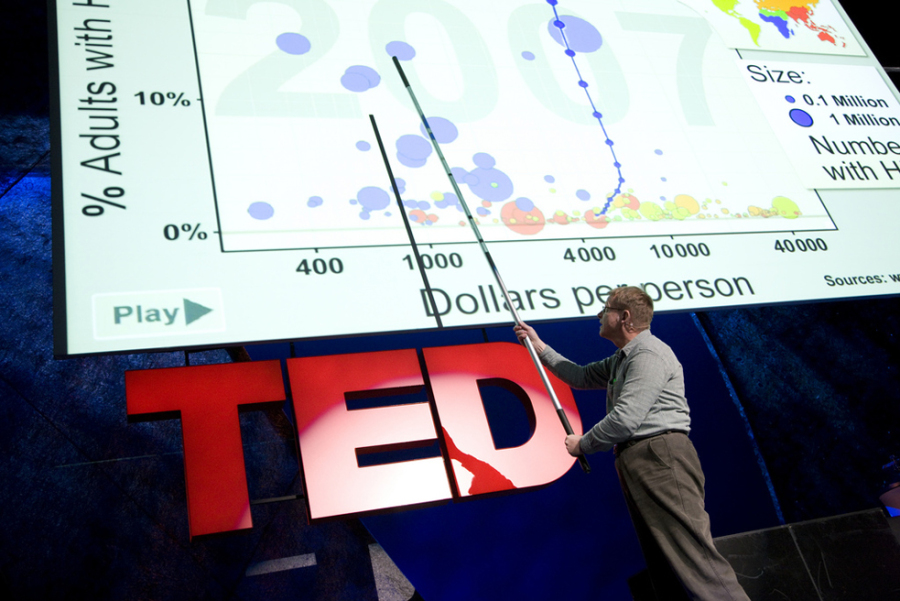
In my lectures I always mention at some point something that the great Hans Rosling has said or done.
We sadly lost him (by we, I mean humanity) in February of 2017. But his teaching and his thinking processes survive, and hopefully will do so for a long time.
For those of you who do not know of him, he was a Swedish physician, academic, statistician, and public speaker. He was the Professor of International Health at the Karolinska Institute and was also the co-founder and chairman of the Gapminder Foundation, which developed Trendalyzer software.
He has written wonderful books which have been read by, and which have inspired, millions.
To me at least, his most wonderful gift was as a statistician. And he always had something interesting to distill from information that both you and me would consider uninteresting.
As an example of his genius, here he is presenting his view that world population cannot possibly exceed 11 billion. It is a view that runs contrary to what has been generally accepted. You may agree with him or not, but it is a good exercise to let him takes us through his process.
I hope this tempts you to look for more about him.
Sometimes what is obvious in hindsight, does not seem as obvious at the time. One of the major issues we all face time and time again, is a lack of perspective that ends up complicating things rather than making us effective.
This little video touches on 2 simple life lessons that we can do well to keep in mind, always.
You will find that with so little, you will be capable of accomplishing so much.
I have been back in Argentina since 1997, after many years abroad since my childhood.
I believe I have gained through the years, a fairly deep understanding of the regional environment as an artist, lawyer, and through leadership roles in different companies and organizations over the last 20 years, as well as because of my personal and professional interest in geopolitical and cultural trends.
While sustainability and conservation have become part of the lingo in our part of the world, there is still certain superficiality and misunderstanding as to the real nature of the massive cultural and business shift that is advancing worldwide.
I am Professor of Creativity and Innovation for the MBA’s at the National Catholic University here in Buenos Aires, and I must say that I am always surprised at the little understanding of the changes that many young (and not so young) high level managers still profess at the start (and how much they change by the end).
I am proud to say that I take them through a dizzying ride of empowering course contents that are the result of my own professional and personal experience. And I am grateful at the University for its openness and excitement at trying out a novel approach to teaching. Ours is a construction, carefully intertwined, between concepts of sustainability, respect for the environment, art, creativity and innovation, sprinkled with quantum mechanics, space exploration, game theory, logarithms, relativity, laws, social responsibility, and obviously, faith.
As I always tell my students at the start of the course, the 20th Century produced amazing advancement through, amongst others, the concept of the “me society”. The positive advances achieved were, on the other hand, burdened by the misconception that the planet in general, and its biosphere in particular, could sustain any damage without long term repercussions.
I always say that the 21st Century has to become a lot less about “me” and a lot more about “us” (I call it the “WE” Century).
Creativity and innovation are no longer detached from sustainability, ecological parameters, a deeper understanding of universal laws, ethics and integrity, and from our responsibility to the community in general. Our role must be seen within a holistic approach to solutions where we must endeavor to be systemic, and therefore no one in particular, but the conjunction between the different actors in society, produce the desired results.
To do that, you need a fairly leveled playing field (or at least one with clear rules), enforcement that is real and present, and within that set of parameters, creativity and innovation that can have long term effects, may finally occur and flourish in the best possible sense.
What we see in Argentina, and in many of our neighbors, is that the rules (the lines in the playing field) are mostly there and in some cases, are very cutting edge.
Yet, in some cases, and because the concepts and rules have been taken from laws and regulations that are being applied in countries that are, either much more advanced in these areas, or at least, are more advanced in their respect for the rule of law, we find that the end result is an almost impossible practical application of many of their principles.
To that general context, we must add that the enforcement agencies have been given few “teeth” and their capabilities are quite limited, while the Judicial system is fairly slow to react. And as we know, laws without prompt and practical legal enforcement, become dead letter very soon.
To that, it is also true that there are very few regulatory incentives for businesses to take the plunge. And it is also there where change can be promoted.
On the business side, sustainability is slowly being understood by the major corporations. We have come from the mere use of “sustainable referencing language”, to slowly attempting to introduce sustainability into the DNA of each business. Many are finally working today while preparing for tomorrow, as they realize the real economic and financial benefits of sustainable growth, and the potential of adding to all that, the benefits of innovation and creativity (in regards to products, services, methods and so on).
I believe there are a great deal of opportunities in Argentina, and the region, yet to be explored. And I also believe that this may be a great time to explore them.
Conservation history teaches us that at the genesis of any movement to save a place around the world, there has always been one emotionally and ethically inspired citizen. One person who has mobilized communities, who has created engagement, and who has generated the long term constituency that will preserve change.
We know that we are facing, despite the enormous progress obtained until now, a bit of an uphill battle.
We know for a fact that, at least in the North, Millennials and the X generation are not showing the same kind of connection to traditional Parks and protected areas as Baby Boomers did. And Argentina, and South America, seem to be moving in the same direction. They cannot relate to it and they need us to make that connection.
That, instead of being a problem, may become a great opportunity.
The traditional view of separate, almost isolated, protected areas may not be the correct way as we go forward in most cases. We understand now that every preserved area is part of a larger system and must be connected to it, must be emotionally attached to the community, and must generate a constituency that will sustain it in the long run.
While many have already embraced this shift, there are in our countries many business leaders, and particularly large landowners who own areas which can be protected and made environmentally sustainable, that do not trust, or simply do not understand, neither the purported benefits of this shift in general paradigm nor the potential for the win-win situation that can be generated from it.
In the case of Argentina, at least, the problem seems to be the disbelief by many, that government (whom they do not trust because of decades of mismanagement, contradictory legislation, inflation, lack of incentives, lack of medium and long term planning, and in some cases little respect for private property) can do the job.
And that is why we need honest brokers (individuals and organizations that can present innovative solutions that are systemic and full of counterbalances (Government, Venture Capital, Multilaterals and NGOs, Technology, and obviously Business), and which can produce results that engage and with wide ranging benefits in mind.
Sustainable strategies can produce real environmental, community based positive long term results that in the case of business, can also be very profitable, and in the case of nations, become the next level of long term sustainable growth. And we know that sustainable, long term growth, is the key to strong communities, large middle classes, and the path to eliminate poverty and incorporate those who were left out until now into a wider, more inclusive society.
It is time to convince political leaders, business influencers and landowners, to aspire to become that “one person” in their impact area, that will go down in history as a promoter and the center of that change.
To make it so, and to be able to also engage and convince the new generations (from Millennials onwards), one must be where political decisions are made, where opinion makers speak and cultural trends are born and expanded. Paraphrasing the WCU, it is the “urban imperative”.
The truth is that very soon almost 60% of the world population will live in cities. And it is there, in the great capitals and in the cities where people live, the place where we can make a difference. People must make the difficult connection from their urban habitat, and to do that we must not only engage and inform, we must enamor and create our constituency. And their voice will help us convince decision makers (government and business) to come to the table.
At the center of all of it, it is about moving hearts and minds. In my class I always say that the emotional factor must never be discarded. The force of sheer scientific numbers will always impress, but it is necessary to engage people at their emotional intelligence level. Particularly in South America, where our very Latin roots make us more emotionally open.
Let´s start to make a difference, each one of us in our own area of influence. This is no longer a matter of a few enlightened or of fringe groups. It is already here and it is the new society, and the new economy, that is coming towards us (and in many cases, it is already here).
The paradigmatic change is already moving the ground from underneath our own feet. Let go of what is old, and embrace all that is good in this shift of major boundaries. And remember, that at the center of it all, it is not a matter of you making it to the other side, it is a recognition that either we make it together, or we will not make it at all.
I always find that many people, mistakenly, asume for a fact that the central characteristic of leadership is having the power to tell other people what to do and when to do it (even if that may happen at some point as part of the whole decision process). This is clearly a common confusion. And an idea about the characteristics of the role which is, very often, held by people who probably should either freshen-up their views, or reconsider being in positions of leadership.
And this is as much an issue for those people pushed into holding decision making positions when they are not suitable for them, as much as a problem related to the person or persons who put them there in the first place.
Leadership is not a natural progression in our career, or a position to be filled, or our chance to tell people off.
Leadership is a choice we make, and which often others offer us, based on our personal qualities and strengths. Much like any other career choice, it is an option which only those with the gift and qualities necessaries to be leaders may successfully engage. Unsuccessful leadership roles may not only damage a person´s career, they may also be very detrimental to an organization´s future.
Despite what others may think, or what other people may offer us, the fact is that there is nothing wrong with not taking a position of leadership if that is not what we want to do, or if we truly feel such a responsibility is not for us.
More often than not we feel obligated to take on the mantle of management as a logical step in the corporate ladder. And it takes a great deal of honesty to asses internally if a leadership role is really for us. We have been taught that successful people get to lead, and so leadership becomes synonymous with success. And while it is partially true, it may not always be so.
It is tempting. Obviously there is usually more money, more “power”, and very often a better office among all the benefits that come with the job. Leadership saves us as well, sometimes, from that part of our old jobs that used to be too repetitive or tedious. But with that comes responsibility.
I believe that the “core business” of leadership is giving those under our responsibility the space, the protection, the freedom, and the encouragement to think for themselves, to do their job in the best possible way, to help them learn from their mistakes, to take them successfully through the thought process behind decision making, to set them reasonable and clear parameters so they can be efficient, to promote common responsibilities, to make them think about “us” rather than “me”, to allow them to exploit their strengths -which is always good for morale- while helping them to deal with their weaknesses and thus improving overall results, and to make them strong but caring so, some day, some of them are able to replace us, and do and even better job than us. And that is not something that everyone can, or wants to do.
In the cases where I have had to manage larger groups of people, I have always tried to be, not only an open door manager, but I purposely have tried to actively engage each one to see how they were so as to promote honest communication, and have very often gone to see each person at their desk -rather than having them come to see me- when things did not seem right, while trying to put into context what is happening at the office (which many times, even if affecting the work environment, has nothing to do with the work and has to do with other issues outside the office).
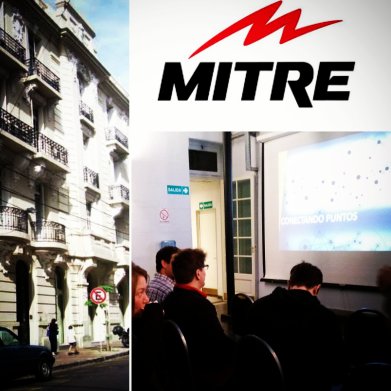
Seminar for Radio Mitre producers, journalists, and technical and administrative personnel – Buenos Aires, Argentina – 2017
While not having had a strong experience in matrixed organizations (at least in the formal sense), my experience has always being in organizations where limitations forced us, in practice, to carry more than one hat and have cross functional obligations and reporting.
At the same time, I have had to deal with organizations which were sometimes in flux, or needed a formal shake-up, or needed to go through deep restructuring and policy changes. And I have carried those transformations, which sometimes may have been quite traumatic, with my deepest commitment and honesty.
Did I make mistakes? Sure. Could I have done things differently in specific cases and/or at some point in my career? You bet! Do I have second thoughts about having accepted positions of leadership? No. It is something I am comfortable with, I enjoy it. I like nurturing, I like showing the way and I feel proud when others do well, and hopefully do better than how I did.
That and taking responsibility. Generally speaking, if we truly believe in our capacities as leaders, then our attitude should also be, as close as possible, to an old fashioned “the bucket stops here”. In other words, whenever we have to propose -or carry out- substantial changes that may be against traditional views or processes, we need to work in constant communication with our team. Final responsibility for errors of vision should normally assumed by the leadership (towards the hierarchy), while good results should be shared by the whole team.
I guess I have largely spent the last 20 years in Argentina, so it is fair to say that I have mostly worked for organizations or companies that, at some point or another (or most of the time), suffered financial limitations and obvious time restrictions (in Argentina everybody wants everything done by “yesterday”).
So when I hear complaints about budget constraints for meeting basic standards, or doing the job you set out to do in the most proper and efficient manner, I always reply that it is not a matter of money. It is, instead, a matter of commitment, of taking ownership of the specific issue, project or problem, and thus resolving it in the most efficient way.
That requires creativity, lateral thinking, reinforcement of trust and understanding of group dynamics, as well as a lot of calm. In other words, it requires real leadership qualities.
If results and success were only the realm of those with time and money instead of personal traits, then Albert Einstein working as a simple clerk at a Patent office for a meager salary, Gates or Jobs struggling in a garage, or Oprah being kicked out of TV as a young reporter for being considered “unfit for television news”, would have meant the end of their careers.
So you need to ask yourself if this is what you want to do. If you do, and you believe in yourself, then be humble, learn from others, listen, never close the door, and enjoy the ride together with those that you been given the responsibility to lead.
“Act on the unplanned with as much energy as with what is planned”
Any hard working artist will tell you that, when creating a piece, it is always the actual work the one that tells you what it needs, and what it does not.
Writers talk about characters basically writing themselves or dictating dialogue. In painting, no matter how much planning, it will also happen. Some will allow it to happen more than others (I am one of those), but it happens to all of us. Reality takes over the theory. Chance (or what we feel is just chance) takes a look and decides to be heard.
When I am asked about what do I think is my biggest strength as an artist, I always reply that I feel it is probably my capacity to turn what may have originally felt like a blunder (i.e. a deviation from my original and thought out path, at the very least), into some kind of a triumph.
I make a lot of mistakes. Like the gentleman whom, while I was doing some live painting at an event, asked me very politely what was it that I was obviously correcting when he could not see any discernible elements or recognizable figures in my work, the truth is that the difference between intent and chance is not easy to see sometimes from the outside. In fact, I may be the only one who knows that what I did was not what I intended to do. But that does not rule out the fact that for some reason I did something unpredicted to me and even unwanted at the time.
When we are learning, more often than not, we immediately correct course (in painting that means that we repaint and correct). After we start knowing what it is all about, we sometimes respect chance and follow the new course that has just been dictated by the forces of nature. I usually find that my work is a lot richer if I work on the unexpected with as much vigor and excitement as with what I had planned.
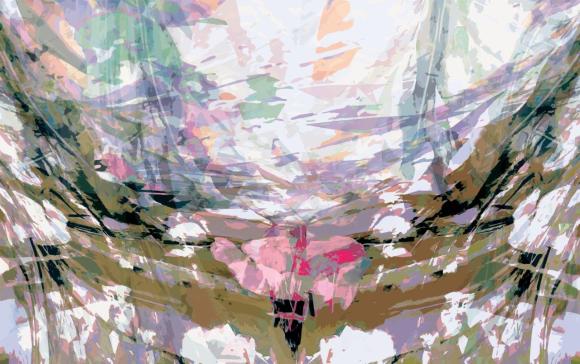
My Digital Art Series are another example. I work my drafts in digital form. Then I paint. There is a very reasonable explanation to do this, and one which I may write about in the future, but let´s just say that I test everything with my electronic pen and screen. Colors, shades, textures. Even where my emulsified ink drippings will finally land come into consideration in that digital realm.
Looking through some of my drafts last year, the very knowledgeable and hard working Jack O´Brien, who is the Director and Curator of the Watson Gallery at the Naples Art Association (he has been there for almost 20 years now), suggested I try printing my digital drafts (artwork) on metal.
Today, my ALPERIN DIGITAL art series allow me to reach a completely new public and it is an exciting way of venturing beyond paint.
I was not looking to print and my digital work was almost private. My chance conversation with Jack planted the seed. Everything else is now history.
If we want to go a little further into the theory, we could say that there is no chance, and there is no fortuitous, There is only unexpected (because it is so in reference to our expectations).
Thus, in these cases there is only that what was due to happen and we did not see coming.
Now, if you run a nuclear power plant, unexpected may not be that good. But if you are in a creative or executive position, if you are in business, or if you move in the realm of the arts, this may be your chance to add new layers to your work.
I believe everything we do in life can be explained as part of a huge (astronomical may be the word) mathematical equation. Everything is in the realm of a possibility, and in hindsight we may find the elements that explain how that possibility became a probability, and after that, a reality.
As I always say, the fact that we did not expect it only highlights the fact that we did not calculate correctly our path (and because we cannot incorporate everything into our calculation, it is also a reminder of our human limitations). Yet, if it happened, then probability theory will tell you that there was always a big chance of it happening (whatever “it” was) if certain elements finally combined in the formula. Thus those elements were always there (or within the realm of probability), and we can only see them as we reverse engineer whatever it was. Then, we usually say: “of course, it HAD to happen, how did I not see it!”
Thus treat chance as your friend. It is part of the reality that you did not expect but came knocking at your door. Fortuitous is just another way of saying, I didn´t see it coming. But it came anyway. So don´t fight it (unless it creates a major problem). Embrace it, open your mind, use it to your advantage and make good use of it, see what you can incorporate (totally or partially) to your original plan, and allow it to open new realms for you (and your art, your project, your career or your work, whatever it may be).
Because the fact is that, if it is here, then there is a very good chance that under the present circumstances, it was always supposed to be here.
Ser creativo e innovador pareciera ser un mandato social en estos días.
TALLER DE CREATIVIDAD Y LIDERAZGO EN LA INNOVACIÓN EN RADIO MITRE, BUENOS AIRES, 2017
Lo que para los artistas es en general un proceso natural, en otros ámbitos se lo ve como una consigna de supervivencia dentro de la estructura corporativa, o como una manera de mantener actividades y productos competitivos en un mundo cambiante. A nivel individual, están también los que lo toman como una necesidad de toda persona en su constante mejoramiento profesional y personal. Inclusive están aquellos que lo ven como un novedoso camino de autoayuda personal.
El problema que enfrentamos todos es que los procesos creativos, por más caóticos o disruptivos que sean, deben seguir ciertas consignas que nos permitan sacar provecho de toda esa actividad, y muchas veces, la propia esencia caótica del proceso nos hace perder de vista objetivos, o nos enamora del proceso mismo, sin dejarnos espacio para el crecimiento y la puesta en práctica de esa innovadora visión.
Ahí es donde yo puedo ayudarte.
Me presento como tu propio y personal C.I.O ( siglas en inglés significan “Chief Inspiration Officer”). Yo quiero ser la persona que te inspire para que salgas de tu rutina, encuentres los caminos que te ayuden a avanzar, y des ese pasó más allá que hoy pareciera serte tan esquivo.
Cada uno de nosotros tiene con qué hacerlo, pero muchas veces nos perdemos en nuestras propias junglas.
Mi tarea, “evangelizadora” en cierto modo, está basada en mis clases en la universidad (donde soy Profesor de Creatividad e innovación) y en mi variada experiencia profesional y personal.
El coaching creativo busca reposicionar tu visión ante una sociedad y una economía cambiante. No es, ni pretende ser, un curso de autoayuda aunque su efecto tangencial puede ser, en algunos casos, muy similar.
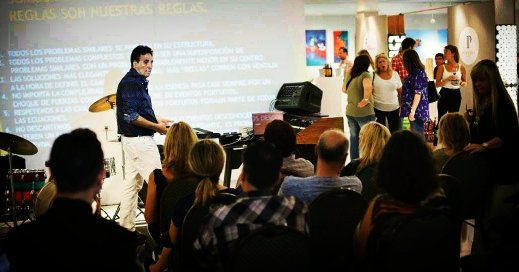
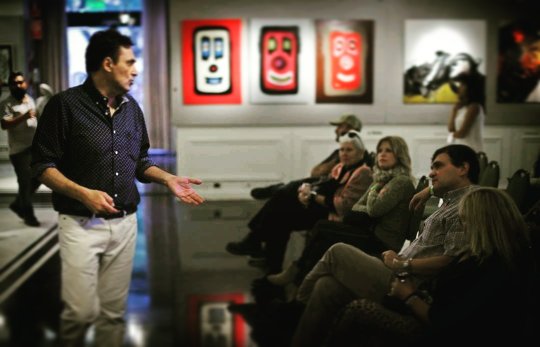
TALLER DE CREATIVIDAD – WINE & ART 2017, HIPÓDROMO ARGENTINO DE PALERMO, BUENOS AIRES, 2017
Muy por el contrario, la intención es la de alejarte del “yoismo individualista” tan preminente y llevarte a comprender tus talentos, aprovechar tu flexibilidad emocional y creativa, y ayudarte a encontrar nuevamente el rumbo que te permita efectivizar tus capacidades en beneficio propio, de tu propio entorno, y del conjunto de la sociedad.
La creatividad vista así, es una herramienta práctica y no meramente teórica. Seas artista, tengas cualquier otra profesión, o en realidad, cualquiera sea tu situación laboral, podemos analizar juntos dónde estás, a dónde querés llegar, qué te falta y como conseguirlo.
El coaching creativo puede ser individual, como también parte de un nuevo proceso en el ámbito corporativo. En lo referido a este último, puede ser un instrumento muy interesante para desarrollar nuevas ideas o productos. Tener acceso a un profesional externo, que no esté limitado por las restricciones culturales y estructurales de una organización, permite rápidamente encontrar nuevas alternativas y resolver problemas de larga data tanto en lo comercial como en lo relacionado a la dinámica de la empresa.
La propuesta es práctica y no teórica.
TOMEMOS COMO EJEMPLO UNA REUNION INICIAL CON UN ARTISTA/CREATIVO
En la reunión inicial, de 2 horas de duración, realizamos una completa revisión, evaluación y análisis de cómo estás presentando tu arte al público, al mercado y al mundo del arte en general.
Los temas cubiertos incluyen: 1. Cómo organizar y presentar tu arte de manera más efectiva tanto en línea como en la vida real 2. Evaluaciones y recomendaciones de sitios web 3. Información sobre cómo escribir sobre tu arte (para tu sitio web, declaración, anuncios, correos electrónicos, medios sociales, etc.) 4. Recomendaciones para mejorar tu perfil en línea y páginas de Social Media 5. Revisión de tus precios de venta 6. Indicaciones sobre cómo obtener una mayor exposición para tu arte 7. Formas de aumentar tus seguidores y ampliar tu audiencia 8. Opciones para vender tu arte 9. Consejos sobre cómo identificar, acercarse y hacer contacto con galerías y otros lugares para posibles espectáculos o representación 10. Consejos específicos relacionados a tu arte en particular y a tu etapa profesional actual.
Te quiero ver crecer. Quiero que te desarrolles a pleno. Y quiero que seas exitoso y sustentable en el tiempo.
Animate a probar algo diferente. Vale la pena.
Contacto y mayores informes: Ignacio Alperin, ignacio@ignacioalperin.com / FACEBOOK: AlperinCIO
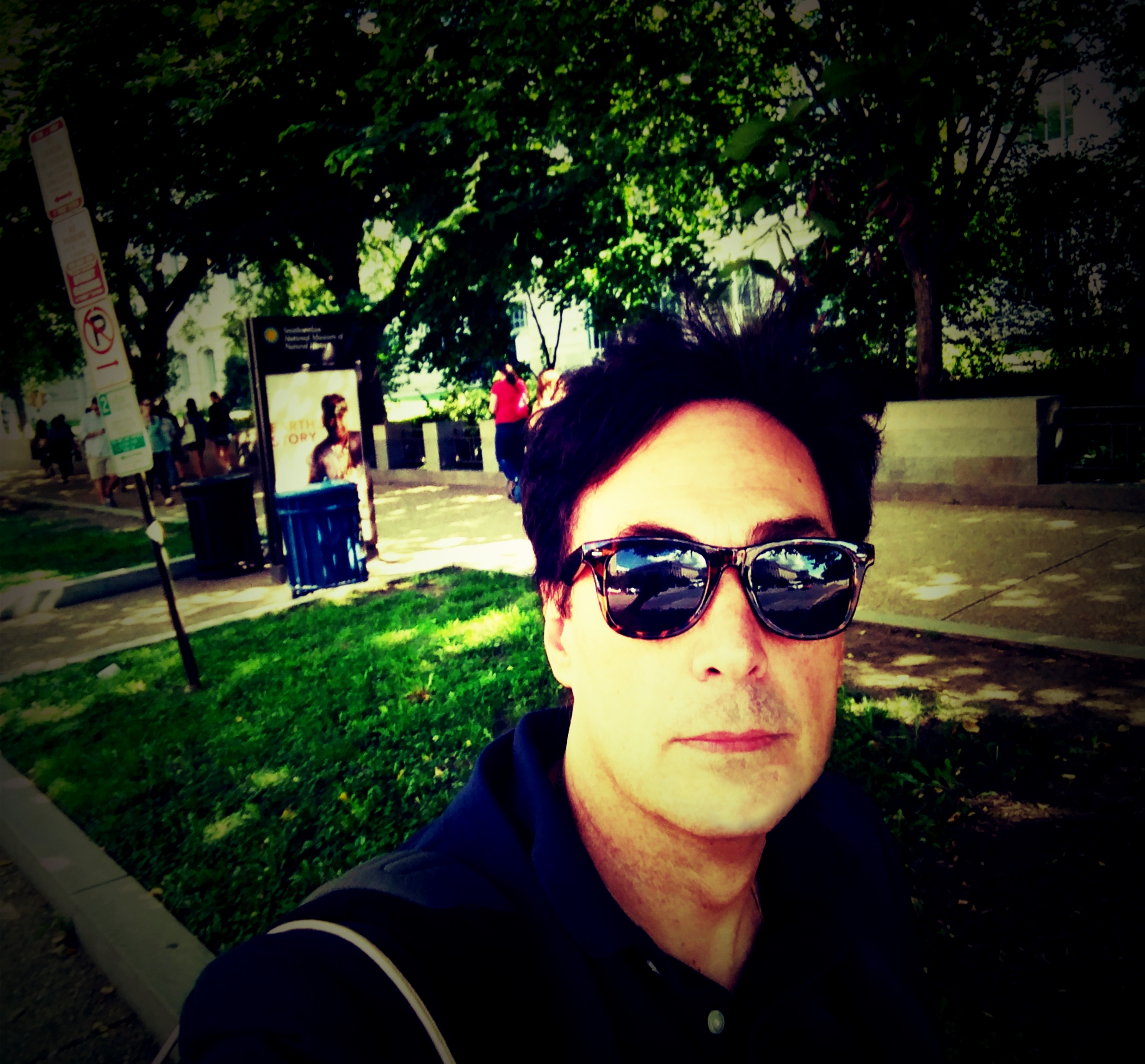
Come with me for a visit to Washington DC on a very nice Summer afternoon.
We´ll visit the National Gallery East Building, then the West Building with all its wonderful abstracts, and the National Gallery´s Sculpture Garden.
Finally, we will have a short drive around Washington DC and then we will do a short visit to the St. John Paul II National Shrine, which is within the Campus of the Catholic University of America (sister university to my Catholic University of Argentina).

 I first heard of David JP Phillips through his, now famous seminar, “How to avoid death by Powerpoint”. As an avid user of PPT I really needed to see what it was all about.
 In my lectures I always mention at some point something that the great Hans Rosling has said or done.

 The traditional view of separate, almost isolated, protected areas may not be the correct way as we go forward in most cases. We understand now that every preserved area is part of a larger system and must be connected to it, must be emotionally attached to the community, and must generate a constituency that will sustain it in the long run.


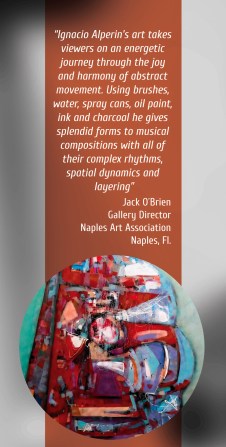 Any hard working artist will tell you that, when creating a piece, it is always the actual work the one that tells you what it needs, and what it does not.
 y ALPERIN DIGITAL art series allow me to reach a completely new public and it is an exciting way of venturing beyond paint.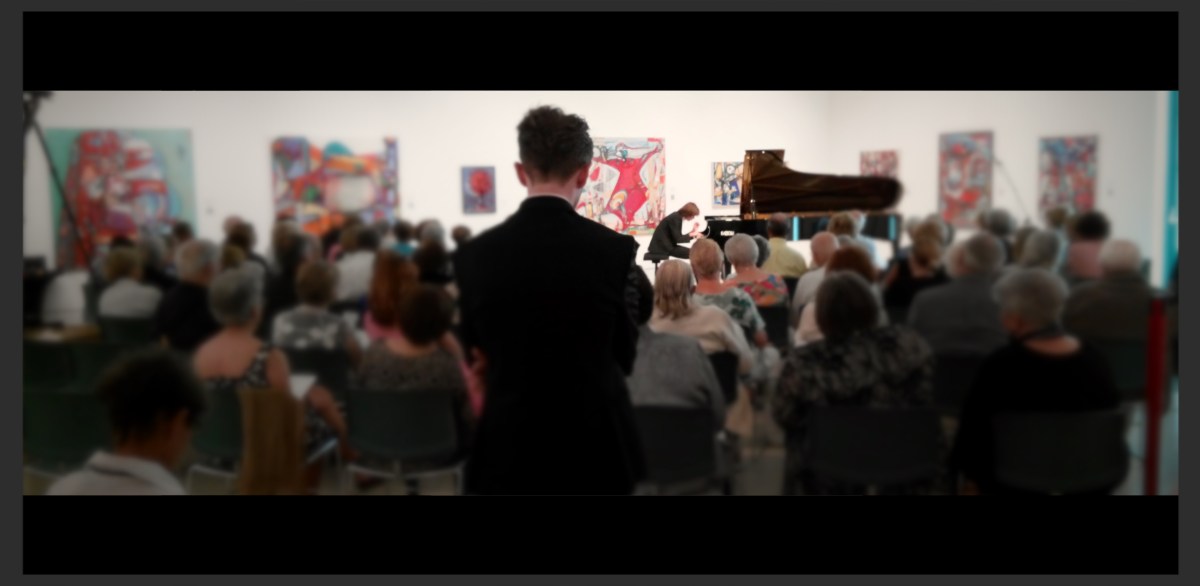
 IGNACIO ALPERIN: THE ART OF THINKING OUT LOUD / EL ARTE DE PENSAR EN VOZ ALTA