Categories
2019 Creativity Creativity / Creatividad Design Exhibitions IN ENGLISH Innovation Promoting your Art sustainability Uncategorized Videos

ABSTRACTO SOBRE LO ABSTRACTO

Como artista que mayormente trabaja en la abstracción, vivo contestando preguntas como “?¿Y qué significa esto?”, “¿En qué estabas pensando cuando pintabas esta obra?”, o más difícil aún, “¿Yo veo tal cosa, está bien?”.

Pese a que la abstracción artística existe como tal hace más de 100 años, sigue siendo un tema de discusión e interpretación aún hoy.

Una obra donde no encontramos objetos que podamos reconocer abiertamente, en la que la estructura no replica algo conocido, y donde el mensaje se encuentra en un lugar que no es fácilmente descifrable, nos obliga a reconsiderar nuestra propia concepción de la imagen.

Ahora bien, la pregunta del millón sería, por qué tenemos que cambiar nuestro concepto y abrirlo hacia espacios que no reconocemos naturalmente. La respuesta, queda claro, no es simple pero prometo que no será vaga.

Hagamos un poco de historia.

El arte no saltó de un día al otro a la abstracción. De hecho, el proceso que implica quitar definición y diluir formas, luces y sombras buscando que el público defina los rasgos y los contenidos de ciertas áreas de una obra, es ciertamente un proceso bastante antiguo.
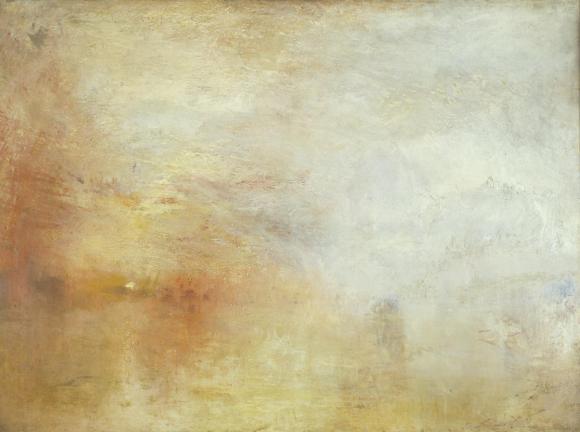
Sun Setting over a Lake c.1840 Joseph Mallord William Turner 1775-1851 Accepted by the nation as part of the Turner Bequest 1856 http://www.tate.org.uk/art/work/N04665

Podríamos ir más atrás, pero Turner en su obra “Sun setting over a Lake” (Puesta de sol sobre un lago) de 1840, nos presenta en muchos sentidos, una obra marcadamente abstracta ya que no reconocemos formas definidas ni estructuras muy utilizadas en esa época. Desde ya, es una obra muy alejada del arte “fotográfico” (por ponerle un título fácilmente comprensible y descriptivo). Otro ejemplo es el de Whistler, quien aproximadamente en 1875, resigna la fidelidad y se embarca en un espíritu abstracto con “Nocturne”. Y lo mismo podemos decir de otras obras de la época.

La llegada de la fotografía a fines del siglo XIX de la mano de Louis Daguerre -y sus luego denominados “daguerrotipos”- no afectaron en menor medida este cambio. La revolución industrial cambió la fisonomía de los centros poblacionales, y los objetos y la luz comenzaron a cambiar también a los ojos de los artistas de la época. La fotografía nos entregaba imágenes perfectas para la época y muchos artistas se preguntaban cuál sería el camino a seguir.

Claude Monet

Monet, sin lugar a dudas ayudado por su crecientes problemas de visión ya que sufría de cataratas (de hecho el gobierno Francés como parte de los honores al gran artista le “regala” en 1923 una de las primeras operaciones de cataratas de la historia), pinta en 1877 “Arribo del tren de Normandía”, una obra difusa y repleta de imágenes insinuadas. Seurat, mientras tanto, comienza a corromper la imagen al representarla de manera menos natural. Cézanne pese a una representación más realista, nuevamente “saca de foco” los objetos y simplifica sus formas, así como luces y las sombras. Mientras que Van Gogh abandona lo que existe por lo que ve e interpreta de una realidad todavía representada.

Así, y de manera gradual, la realidad comienza a deformarse y a representarse de diferentes maneras. Con la llegada del siglo XX ya todo es diferente. Picasso, Matisse, Kandinsky, Derain, Braque, Balla, o Malevich son artistas que de diferentes maneras, subvierten lo que ven y lo abstraen de la realidad obvia, arrastrándola hacia a un nuevo contexto que mezcla obviedad, con imaginación e interpretación subjetiva, y muchas veces, sentimientos espirituales o con influencias de la psicología. Otros como Duchamp se revelan ante la rigidez académica y desarrollan caminos de expresión novedosos.

Aquí es donde entra la escuela del Bauhaus, que mezcla el diseño, el arte y la arquitectura buscando un nuevo lenguaje estético. No voy a entrar en detalles sobre otras escuelas que influenciaron esta época a su manera, o que fueron influenciadas por la escuela del Bauhaus, pero lo importante es rescatar su importancia indirecta en el camino del arte hacia la abstracción en la pintura y ahora en la escultura (ver al ruso Vladimir Tatlin y sus obras como ejemplo). De hecho otro ruso, Rodchenko, declara ya en 1921, luego de sus 3 cuadrados de colores sólidos, que la representación en el arte ha muerto.

Jackson Pollock en acción

La abstracción crece y madura. Se convierte en una nueva definición de realismo para algunos, y en la segunda mitad del Siglo XX se expande en nuevos rumbos en Europa y en América. De Pollock y De Kooning, saltamos a Rauschemberg, Warhol, y luego Basquiat, Condo y hasta Jeff Koons.

Ya estamos mucho más cerca de la actualidad y es aquí donde me atrevo a mencionar un poco lo que ocurre con mi obra. La abstracción, ya crecida como concepto, estudiada como escuela, influenciada por quienes incursionan en un arte basado en el libre albedrío de las cosas (dejando caer colores donde caigan, por ejemplo), comienza a explorar la pregunta “y ahora, qué más?”. O sea, a dónde podemos ir y hasta dónde podremos llegar en nuestra exploración de la realidad, la imaginación, la forma y el color.

Esa búsqueda es la que a mi me inspiró a comenzar a pintar a los 12 años. Mi luego descubierta sinestesia colaborará en la incorporación de la música, y particularmente del Jazz, dentro de mi obra.
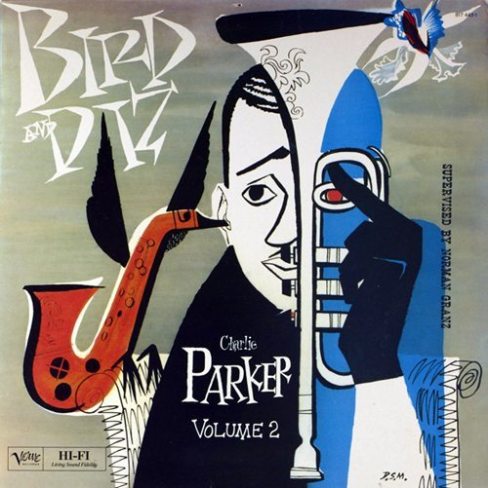
Esto no es único. De hecho el Jazz forma parte del movimiento abstracto desde hace muchas décadas, y tal vez la sinestesia también, ya que Kandinsky -por ejemplo- era también sinestésico y de hecho estudiaba “el sonido interior abstracto” de las formas.

Esa exploración es una exploración mayormente libre, pero con las bases de sustento que nos dan 200 años -o más- de desarrollo. Mondrian exploraba los colores primarios y las formas geométricas, Pollock trata de encontrar líneas de sustento artístico dentro del concepto de un libre albedrío controlado. Dentro del desarrollo del arte abstracto en la segunda mitad del Siglo XX, el Jazz asume una gran influencia dado que la improvisación es en el Jazz, paradójicamente, un concepto muy estudiado, mientras que es también una parte importantísima de la abstracción en el arte.

Mi obra, pese a que no hay intención de copia ni de repetición, es bautizada en una artículo por una bloguera norteamericana hace más de una década, como “Jazz Visual”. Ella interpreta correctamente que mi obra responde a una partitura bien aprendida pero que mi sinestesia me permite incorporar de una manera muy natural e imperceptible a primera vista las técnicas de los grandes músicos del Jazz, lo que agrega una nueva capa de improvisación -que incluye ritmo, cadencias, y movimientos- a la obra pictórica.

El resultado es muchas veces colorido, rítmico, siempre diferente pero de todos modos claramente reconocible como “mi partitura”. No importan entonces las diferencias que sobresalen de una obra a la otra, mientras hay una relación entre la emocionalidad, la musicalidad y la obra con el público, que sobrepasa los diferentes estilos de abstracción y cruza escuelas, en tanto fluye hacia resultados novedosos.

Recuerdo siempre con una sonrisa, y cierto cariño, a una señora canadiense extremadamente amable (como lo son los canadienses en general) que me habló con mucha emoción, hace ya más de 15 años, sobre una obra mía que había visto en la Web. Me contaba sobre lo fuerte que era la imagen, la cual ella me describía como mostrando al trabajador de la tierra arrastrando el duro yugo en la soledad de la tarde/noche.

Lo recuerdo vívidamente, ya que todavía hoy me cuesta entender, dónde vio a ese hombre trabajando el surco bajo el sol dentro de mi obra.

La abstracción tiene eso. Tiene un código secreto que se transmite directamente como un QR a la mente de quien lo mira. El resultado puede ser maravilloso, imaginativo, disparador de sentimientos profundos en quien observa, o simplemente puede llevarlo al desánimo que produce el no poder comprender lo que la imagen le quiere exponer a esa persona en particular.

Pero cuando el cerebro lo absorbe y lo interpreta, el artista y quien mira la obra han descubierto un camino que los une, un vehículo que los lleva a una exploración que se asemeja a la de una sonda espacial que arremete contra la nada buscando en el espacio el próximo gran descubrimiento.

Es por eso también que la abstracción es tan importante en otros rubros como la innovación tecnológica y los procesos creativos. Es un gran disparador, y como tal, un medio para explorar lo que deseemos indagar, o nos sorprende descubriendo que hay algo que investigar o aprender donde creíamos que no había ya nada más por ver.

La obra abstracta, en ese sentido, es capaz de dar siempre algo más. De hecho son constantes -y previsibles- los comentarios que recibo sobre los detalles que se van descubriendo en una obra años después de haber sido pintada. Tiene ese don tan particular de ser un nexo hacia lo que está más allá -o hacia lo que está mucho más profundamente escondido dentro nuestro-, pero siempre alejado del lugar obvio de la presencia formal.

Por esa misma razón, es muy probable que no pueda contestarles las preguntas que me hacen sobre la obra. Pero sí espero que después de leer este pequeño comentario, Uds. también busquen descubrir los mensajes que esconde la obra abstracta para cada uno de Uds. y encuentren allí mismo todas las respuestas a esas preguntas, y a las que nunca hubiesen siquiera imaginado.

Después de todo, el arte tiene ese mensaje superior. Es algo que es capaz de abstraernos del tiempo y del espacio, y de llevarnos a un plano diferente de la realidad en un viaje que merece ser disfrutado. Y es una línea del pensamiento y la creatividad humana con raíces históricas profundas que bien merecemos explorar.
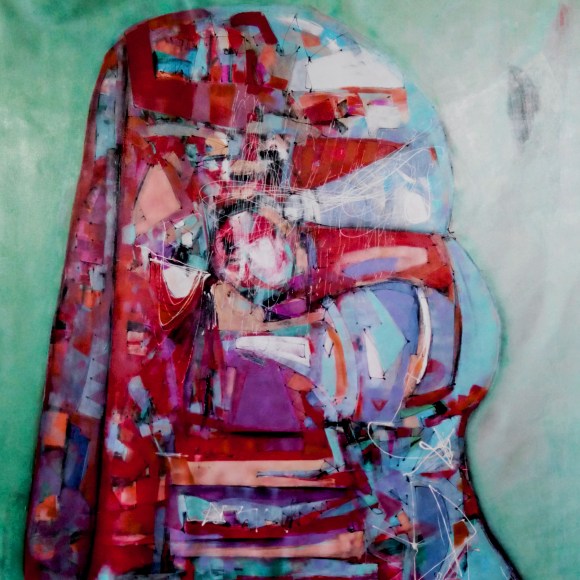
Obra “Borgianus Kafkaris” por Ignacio Alperin (2016)

©2019 by Ignacio Alperin Bruvera

(Publicado como artículo en Linkedin / Originally published as an article on Linkedin on 03/07/2019)


Hasta la próxima

Ignacio


PhotoFunia TV interference Regular 2014-08-04 01 55 05

©2019 by Ignacio Alperin Bruvera

Ignacio Alperin Art
http://www.ignacioalperin.com
http://www.theartofthinkingoutloud.com

Categories
2019 Creativity Creativity / Creatividad Design Exhibitions IN ENGLISH Innovation Promoting your Art sustainability Uncategorized Videos

WE TOO


Not long ago, as I was reading through my comments and updates on LinkedIn, I came across a commentary by an executive.

I am not going to tell you that I remember who he was, but I do remember what he wrote.

His comment came to something like this:

“In a world where people and experience are being discarded by the wayside, I am proud to say that our company, defying all odds, decided after much consideration to hire a new manager who happens to be 45 years of age, despite strong competition from younger professionals. We are proud to say that we have pushed back on age barriers and have shown the openness of our organization.”

Below, following that remark, there was a long list of a hundred or so comments (it may be more by now) basically, and on a grading scale, asking him if he was just kidding, all the way to as close to a blatant insult as Linkedin will allow on its website.

So much for showing openness and expecting gratitude.

Mind you, I am not going to go through the histrionics of anger here (nor did I do it then). In fact, I must say I did write a thoughtful and kind response -at least compared to most other comments-, about the relativity of age concepts which, I hope, was well taken by the author.

The issue, I feel, goes well beyond his comment. This little note is about a real concern in a world where we are trying to breakdown all those barriers that have made our society more intolerant and less agreeable to all.
And even though we are still plowing through many other deep inequalities, it is about time that we confirm that the next pushback will have to do with a common concern to all -men and women-.

It is obviously, age discrimination. That is the next great battle and it concerns one hundred percent of all people (I said all, not old) on the planet.

We can see it everywhere. No matter what you do.

There is a very clear hung-up on chronological age that constantly throws years of life well spent, and investments by companies and individuals on learning and experience (the kind of investment which any new company could never afford), and still tries to place all of that effort and capabilities on a bench close to a bunch of pigeons as if we were in the 1940s.

This is particularly absurd when you compare our aging population. We are not living in the eighteen hundreds where life expectancy was around 40 years of age (Mr. 45-year-old manager possibly would have been pushing up daisies then). Not even the 1950s, when the world´s average life expectancy had climbed to the amazing number of… 48 years.

In 2018, the Organization for Economic Cooperation and Development (OECD) put average life expectancy of 80.3, while there are countries like France, Singapore, Japan, Hong Kong, Switzerland, Spain and Italy (just to mention a few) where average life expectancy is well over 82.

What is most important, these are people who are active and involved and do not look like the little old lady who sold apples from Snow White (whom by the way, may have been about 37 at that time).

My great grandmother, Louise, was a French woman who came all the way to Argentina to end up marrying a blue-eyed Italian from Pinerolo (which is about 600 miles away from where she had come from). Photographs show her as a little and cute old lady at 52.

As a contrast, my engineer father, at 94, is still going to work at the office 4 times a week, and just told me that he has a new project for a technologically advanced product, and he must visit a couple of laboratories this weekend to decide how to follow up on the process.

While sometimes it is still the case that chronological and biological age will coincide, it is more and more common to see that they do not. Evolution is a wonderful thing, and as population gets older in chronological age and younger in biological age, it may be the time now -as we evolve as societies who are looking to advance- to take advantage of this wonderful byproduct of our time and always have wiser people around us (and I can tell you, there are plenty of them).

The common response would be that older people are not up-to-date and cannot handle the pressure. Yet, a fact we all know is that most 30-year-olds are not fully up-to-date either and that most of us have handled three lifetimes of work pressure by 45.

The truth is that wisdom is not merely a synonym of experience, it goes way beyond that. It is also the incredible gift of being able to predict the future (or at the very least, many future events) simply because these are people who have seen many of these events before.

This ability gives organizations the possibility of avoiding the repetition of other’s past mistakes. To put it simply, it gives them a good chance to surge ahead of the competition by jumping over many common hurdles. But older people (we´ll define them as over 45 just to make the person who kicked off this commentary happy) have more than that to give. They can link past, present, and future because they have been in two of those -and intend to be there for the third one-. They provide deep knowledge and the confidence of having fought many hard battles, while they are also able to tell the story -and point out the lessons- with plenty of detail.

This may be then, the time to start thinking -and acting- on how we can change the present and improve the future. As any “old guy -or girl- over 45” will know, we are not only here to stay. We are here to make a hell of a difference. And we are the perfect complement to any technology-based company and I would add, to any organization that wants to stay alive, and grow. We could say that we are mostly a big chunk of the heart, soul, and conscience of an evolving society.

So people, get ready.

Because we too, here we come!

(Originally published as an article on Linkedin on 2/21/2019)


Until next time

Ignacio


PhotoFunia TV interference Regular 2014-08-04 01 55 05

©2019 by Ignacio Alperin Bruvera

Ignacio Alperin Art
http://www.ignacioalperin.com
http://www.theartofthinkingoutloud.com

Categories
2019 Creativity Creativity / Creatividad Design Exhibitions IN ENGLISH Innovation Promoting your Art sustainability Uncategorized Videos

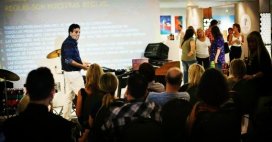
CREATIVITY BEYOND THE HYPE – LIVE AT CIEE BUENOS AIRES, 2018


Hasta la próxima

Ignacio


PhotoFunia TV interference Regular 2014-08-04 01 55 05

©2019 by Ignacio Alperin Bruvera

Ignacio Alperin Art
http://www.ignacioalperin.com
http://www.theartofthinkingoutloud.com

Categories
2018 Creativity Creativity / Creatividad Design Exhibitions IN ENGLISH Innovation Promoting your Art sustainability Uncategorized Videos

A little bit like Sherlock, a little bit like Dirk

I always like to look at pop or literature icons as a way of referencing certain interesting characteristics or conclusions. It is a short, simple, and effective way of coming across with complex ideas in ways that do not seem so complicated.

For example, whenever I teach my course or I give a lecture, I usually talk about the need of any inquisitive and creative mind to think a little bit like Sherlock Holmes.

Sherlock, the super sleuth, concentrates Socratic logic, and puts in very practical terms the impact that deep observation, careful reasoning, and the use of hypotheses will have on any issue. This method helps to open up horizons not seen until then, while paying attention to indicia and actual evidentiary proof.

As many already know, author (and physician) Sir Arthur Conan Doyle, based his character on a doctor and professor named Joseph Bell.

Bell was famous at the time for his deductive reasoning and his amazing accuracy in coming up with information about, not only his patients´ illnesses, but also their nationality, family, work, activities, customs and other personal data that was not available to him. All this from simple observation.

Conan Doyle decided that all the mystery stories that were popular at the time showed detectives which, for some non-explicated reason, would come up with clues and resolutions. He decided that it would be great for a detective to use the same techniques that Bell used, and decided to publish the investigator´s adventures.

The actual way in which the Strand´s short stories became famous is, by itself, a great example of how a new concept or idea gets accepted by a difficult market, and how a combination of doing the hard work, plus the influence exerted by a necessary dose of luck, will get you closer to success. I would also recommend you read the many articles written about this for inspiration.

But with time, and as I finetuned my understanding of facts and theories, I decided that it was not enough to be like Sherlock. Part of the answer to any conundrum will be elucidated from the diagnostic threesome that is made up by “Observe carefully, deduce shrewdly, and confirm with evidence.” But there is much more to life than that.

Amongst other things, there is a holistic approach to problem solving, or project building, or market conquering which goes beyond the closeness of solutions based on observation, no matter how accute or accurate.

That is where another, albeit lesser known, pop culture detective comes along to offer a different perspective.

Many of you may follow the adventures of “Dirk Gently, holistic detective agency” on Netflix. This is a crazy mix of mistery, philosophy, sci-fi, super powers, psychological thriller, and organic detecting which kind of rounds up a series of characteristics that the original Conan Doyle creation missed.

The basis for this crazy adventure is that there are things we do not understand, but that nevertheless, are important even without us working out what they are for, or where do they fit into our story. The reasoning is that everything seems to be connected with everything else in life. It is just a matter of time, or sleuthing, or mind opening, or a combination of those -and other characteristics and actions- which will get those unusual, almost unfitting events, to fit in.

And this combination is almost magic.

It puts Sherlocks ideas, well characterized by psychologist and journalist Maria Konnikova’s book, Mastermind: How to Think Like Sherlock Holmes (Viking), as his “natural skepticism and inquisitiveness toward the world”, and his critical, analytical, and hellbent passion to solve all those questions that seem to remain unsolved in front of him, right alongside Gently´s curiosity, his peaceful acceptance of facts that are not yet resolved, and his search for the connectors that will show how that, which he yet cannot fathom, fits into the universal grid of life.

Dirk Gently, like Sherlock, normally lacks desperation to the point of causing desperation in everyone around him. But he realizes that no matter where he is, and as satisfying as it may feel, there is always somewhere else where things will make even more sense, or perhaps, just sense. He doesn´t look for clues all the time. He realizes that sometimes, if he waits, clues will find him instead.

My recommendation then, besides brushing up on books and movies on Mr. Holmes and his bumbling companion Dr. Watson, is to also have a look at Dirk Gently (you will have fun while doing it), and give him a chance to show you how a combination of answers and alternative views will usually result in a richer and more satisfying result, than those conclusions which are reached by concentrating just on a single theory.

In any case, and as always, it is a matter of training your brain to think in new ways, to explore new concepts, to connect the dots, and to come up with logical conclusions -and some illogical ones as well-. It is a matter of accepting that life, if anything, does not always make sense right away.


https://youtu.be/URW7Sklhuew

Until next time

Ignacio


PhotoFunia TV interference Regular 2014-08-04 01 55 05

©2018 by Ignacio Alperin Bruvera

Ignacio Alperin Art
http://www.ignacioalperin.com
http://www.theartofthinkingoutloud.com

Categories
2018 Creativity Creativity / Creatividad Design IN ENGLISH Innovation Promoting your Art sustainability

You might as well leave this for later…or perhaps not

I wasn´t sure whether to write this. I thought about it and then it felt it was not the right time, or the right place. Maybe tomorrow, or later if I need to do it fast.

The truth is that we all need to mature ideas, and get them to the point of inflection where they become more than just ideas. And for that we need time. Or do we?

In any case, before we consider this, first we may need to get to that book someone recommended as a great inspirational read. Better yet, before that there is a YouTube video we can watch and which will summarize everything, opening our apetite for knowledge, no doubt.

And as long as we are talking about appetite, we may be hungry by now so why not better get something to eat and come back to this afterwards…or after a siesta perhaps?

Anyhow, even while having a bite, how about watching Tim Urban talk about the fact that procrastination doesn’t make sense, while he explains that he’s never been able to shake his habit of waiting until the last minute to get things done.

You, me, and most of us will feel in familiar ground somehow by watching this funny and insightful talk from TED Vancouver in 2016.

And if you never had a chance to have a look at this subject, let´s just say that you kept putting it off perhaps, this may be a great opportunity to get on track again.


Until next time

Ignacio


PhotoFunia TV interference Regular 2014-08-04 01 55 05

©2018 by Ignacio Alperin Bruvera

Ignacio Alperin Art
http://www.ignacioalperin.com
http://www.theartofthinkingoutloud.com
Categories
2018 Creativity Creativity / Creatividad Design IN ENGLISH Innovation Promoting your Art sustainability Visual Jazz

IF YOU THINK YOU ALREADY KNOW, LOOK AGAIN

Reality is a construction. What we see, we see through a series of “intermediaries”. Senses much like a security video camera, a concert speaker, a microphone and other electronic sensors that we already have commonly available.

As an artist I am keenly aware that color is refractive. Thus according to the amount and type of light I have in front of me, colors and shapes will change (more colors than shapes, but those will too). In other words, we redefine the world by modifying our capacity to see. We are part of an ecosystem that is constantly moving and forcing us to modify our focus with it.

It means that everything is quite relative as each one of us creates our reality based in short term memory “bursts” of schemas, photos that make up a nice little movie that will most probably, but not necessarily, become long term memory.

From the same accident scene, 10 people looking at it will “record” in their memories 10 different movies. People will incorporate things that others have not seen, and many times, things that were never there.

As a synesthetic artist, I already “see” what I hear. This TED lecture, from 2009, by Beau Lotto plays with your vision, your perceptivity of sound, other senses, and your brain, thus spotlighting what you can’t normally see: how your brain works.

I hope you enjoy this fun perception of what’s really out there.

Until next time

Ignacio


PhotoFunia TV interference Regular 2014-08-04 01 55 05

©2018 by Ignacio Alperin Bruvera

Ignacio Alperin Art
http://www.ignacioalperin.com
http://www.theartofthinkingoutloud.com
Categories
2018 Creativity Creativity / Creatividad Design IN ENGLISH Innovation Promoting your Art sustainability Visual Jazz

Why is there something instead of nothing

This is a very nice lecture by Philosopher and writer Jim Holt in which he digs into this subject, and attempts three (four, five, none?) possible explanations.

It raises many of the long-standing questions we will always have, at least until 4 or 5 Einsteins come into existence…. (you will get it later).

This is a live recorded TED lecture from 2014.


Until next time

Ignacio


PhotoFunia TV interference Regular 2014-08-04 01 55 05

©2018 by Ignacio Alperin Bruvera

Ignacio Alperin Art
http://www.ignacioalperin.com
http://www.theartofthinkingoutloud.com

Categories
2018 Creativity Creativity / Creatividad IN ENGLISH Innovation sustainability

No need to open your mouth. Your body is saying plenty

Growing up in Australia, I first heard of the term “Body Language” from this gentleman. And I was instantly knocked out.

Body language is described as a type of nonverbal communication in which physical behavior is used to express or convey information. We all do it inadvertedly. But those who can interpet it, and direction it correctly, do get some advantages when negotiating.

Many years have passed, and the dark hair man has become this grey hair legend. Allan Pease has always been very easy to listen to, very clear, and extremely entertaining.

This lecture from TEDx at Macquarie University does not dissappoint. If you never looked at this subject, this is a perfect introduction.

Until next time

Ignacio


PhotoFunia TV interference Regular 2014-08-04 01 55 05

©2018 by Ignacio Alperin Bruvera

Ignacio Alperin Art
http://www.ignacioalperin.com
http://www.theartofthinkingoutloud.com