A personal, curatorial & bilingual Blog about: Artistic Movements, my Art, Creativity, Innovation, Design, Leadership, Empowerment, Sustainability, Science, Jazz, Movies and other cool pursuits - Blog personal y curatorial bilingüe sobre: Movimentos Artísticos, mi Arte, Creatividad, Innovación, Diseño, Liderazgo, Empoderamiento, Sustentabilidad, Ciencia, Jazz, Películas y otros temas.
Argentine writer Julio Cortazar was born on a day like this, exactly 100 years ago. All over the world literary buffs and fans are celebrating this new anniversary of his birth with articles and mentions.
A prolific writer and a brilliant story teller, he left his mark in the minds and souls of the many millions who enjoyed his brilliance.
Stories like “Hopscotch” (published in 1963 and probably his most important novel), where the story can change according to the order in which the chapters of the book are read (hence the name), Cronopios and Famas, The final round, The Browl outside, and many more are highlights of his very entertaining, deeply complex, and fascinating works.
Even if you have never read him, you may have enjoyed some of his stories which have been made into movies.
The best known is, clearly, “Blow-up” (1966), a very successful adaptation of Cortazar´s short story “The Devil´s drool” (1959), directed by Michelangelo Antonioni, and starring David Hemmings, Vanessa Redgrave, and Sarah Miles. While Cortázar’s story “La autopista del sur” (“The Southern Thruway”) influenced another film of the 1960s, Jean-Luc Godard’s Week End (1967).
Cortazar´s love of boxing and Jazz is legendary. While I do not share his love of boxing, I do share his love for Jazz. One of the highlights of “Blow-up”, at least for Cortazar, was the fact that the music was written and performed by such a jazz genius as Herbie Hancock. While “The Pursuer” (1959), a short story that gives its name to a book, is losely based on the life of bebop saxofonist Charly Parker. And his constant musical references, particularly to Jazz, and in lesser extent to “Classical” music (a term that in fact he really detested), do mark his literary production.
Some years ago, a very brave journalist from the Clarin Newspaper in Argentina put me in a bind, when he compared my paintings and my passion for infusing them with the rhythm and musical cadences of Jazz, with what another Argentine, writer Julio Cortazar, had done with the literary presence of this beautiful and free form musical style in all of his writings.
I always felt almost “embarrassed” at this comparison. But on a day like this, I take it as an honor and an important legacy which in my own way, I wish to continue.
Cortazar passed away too early. It was 1984. He was buried in Paris (Montparnasse) where he lived. It was from illness, but many say that the man who always looked 20 years younger than his real age, had suddenly become old and frail from the emptiness that he felt after the passing of Carol Dunlop, from Leukemia, in 1982. She was his second wife and the love of his life.
Like many greatly creative people, all the toughness everyone saw on the outside, was just a shell which protected a highly sensitive and frail soul.
As a homage to this great mind, I would like to share with you this short video prepared by the Juan March Foundation in Spain, in which Cortazar himself talks about the relationship, almost the love affair, he had with Jazz and how it is brought forward in his works.
“Art is subjective. To each his or her own…”This was part of a comment someone wrote in response to a post I made on a social media platform some time ago.
My first reaction was…”God, how difficult! Another non-response”.
I usually call “non-responses” answers or comments which, on the one hand, cannot be answered or challenged in any possibly intelligent way –at least not without getting its proposer upset- as they are meant to be self-contained statements.
Secondly, they very often tend to veil a strict and rigid view of something under the guise of seemingly defending total freedom.
As I read it, the statement core meaning seems to be (punctuations are mine): “NO ONE can question what art is, and you MUST accept that each one can do whatever each one feels like doing, and it will be ALL art. OK?”.
But if we look at it in a different way, the statement touches on a few of the central concerns we all have.
Mind you, I do not question the fact that we are all free to do as we please, as long as we respect others and nature. Yet, whether we are artists, art lovers, curators, collectors or gallerists, we constantly ask ourselves, and question our responses, about what is the Art paradigm today, and whether we can accept that EVERYTHING anyone does and which is called “art”, can be art.
So here are some thoughts, examples, annecdotes and ideas which will hopefully spark some further debate on this subject.
1. Everything that is labelled as “Art”, is art. Now, is it?
We live in a world that criticizes criticism. As a result everything can be considered “artistic”, and seemingly it cannot be challenged, as challenging it gets catalogued as a restriction on freedom.
BUGATTI REMBRANDT VEYRON
So, I can place a Bugatti in a museum and call it art. Is it beautiful? Sure it is.
Is it art? Well…it is beautiful. And as far as car design goes, it is probably as close to art as car design can get.
But the way I see it, it is not art.
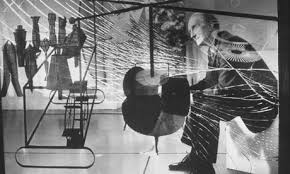
Mind you, this discussion is not new. We have to thank Marcel Duchamp for the modern concept that everything can fall into “art” (the readymade as art is one of his noted contributions), as he looked to break from the rigidity of early XXth Century art dogma.
MARCEL DUCHAMP
Thus, from Duchamp´s 1917´s urinal (Fountain) to Piero Manzoni´s feces in a can, passing by Picasso´s She-goat from 1950 (made from scrap metal he found in the garbage) and Damien Hirst´s dead animals in formaldehyde, it would seem almost anything can become art.
But the truth is that not everything is.
After almost a century, it cannot be denied that there has been change as a result of this new found freedom. But the outcome could be described as both, enriching and confusing.
The pendulum has gone full swing, and subjective reasoning has become something of a new dogma, while seemingly not leaving enough room to discuss the role of objective notions.
For example, I believe there must be an artistic intention, concept or idea, and a substantial endeavor (regardless of the fact that the end result manages to accomplish its initial objectives or not), behind something to be considered “Art”. But sometimes it is not clear how shared is that opinion today.
MERDA DÁRTISTA – PIERO MAZZONI
2. Concepts give non-artists (curators, experts, critics) the intellectual structure to write and sometimes, pontificate about art. But as far as artistic value goes, I feel “We may need a bit more than that from you! Thank you” (ah hum).
For example, when does a concept, idea or statement becomes more than just that. When does it have a chance to become “art”, and how much of a proper development is required before it can be considered art?
At the 2013 version of Buenos Aires´ArteBA (*), probably the country´s finest international art fair, the coveted ArteBA – Petrobras Award (which also carries a substantial monetary reward) was given to Argentine artist Enrique Jezik (*) for his work “Aguante”.
AGUANTE – ENRIQUE JEZIK
“Aguante”(Resistance) was a piece of performance art in which 5 rather strong men, amongst which was Mr. Jezik, held on to 5 flat pieces of rock sheet while a huge excavator tried to break them (the rock panels, not the men).
Besides the fact that this was a rather dangerous exercise, the piece was designed to show something like (I am condensing the whole concept here) “the resistance of the collective against the brute force of those with power, enlightening on the inequality that exists in the distribution of wealth”. It was so difficult to perform at the Fair that the artist simply showed a video of it.
The Jury made up of internationally respected curators, including Mexico´s Cuauhtémoc Medina and Argentina´s Jorge Macchi, found in his video performance a substantial rebellious social and artistic statement, and thus he was awarded the price of ARS$100,000 (close to US$20,000) ahead of everyone else.
Conceptual art is here to stay, but in this case, was the end product art? Was it conceptually new? And whether it was new or not, was it developed enough to become an artistic piece? Was it even inspiring? (Mind you, I am not even getting into the minefield that means comparing it to other work presented).
And I point out, I do not question Mr. Jezik´s quality as an artist. I do not even question the right of curators, critics and experts to do their work, which is of importance. And I admit those concepts are of great help to those who do not have the same sensibility that artists have (most critics, curators and experts are not artists). But if I were asked about this performance, I would feel it barely met any of those basic criteria.
Objectively, the concept was certainly nothing new, as the philosophy of resistance and revolution in art was pioneered by many, including Picasso, more than 70 years ago; the development of the idea was, to say the least, rudimentary; the performance ended up being a little more than a poorly executed video (maybe because it had to be made in a hurry as performance at the Fair was not possible), the performance seemed to leave some doubts about what was the original idea behind it (here is the link so you can judge for yourselves: https://www.youtube.com/watch?v=Vo4HA7jAHYo); and the aesthetics of it, at the very least, questionable.
Although some said that the awarded price of close to US$20,000 may have shown, in this case at least, that in regards to the current “inequality in the distribution of wealth”, he may have had a point.
JEZIK RECEIVING THE PETROBRAS AWARD
So was the price awarded more for his past accolades than for his current artistic “concept” and “performance”? Maybe. Or maybe not. And you can´t help but feel a bit sorry for Mr. Jezik and the criticism he recieved. He did not award the Price to himself. Others were responsible for that. But the fact is that it did generate (that is probably the good news) a great deal of controversy.
So much so that there was even a widely shared fake news item, which spread like wildfire amongst artists in the continent, and which said (photograph of the artists receiving the award included) that Mr. Jezik had been awarded the 2013 Price as a mistake since he had forgotten to attach his work to his award entry. It even went so far as to say that Jezik himself was surprised by the award and did not think he deserved it, as he thought he had presented nothing to the Jury (some people suspect that the fake report was initiated by disgruntled artists who also participated at that year´s award).
3. Money is evil!! (…don´t tell anyone but I love money). I tell you Money is evil!!! (…and yes, I think I would like more money).
This is an annex discussion, like a short detour, but the previous story is giving me the leeway to explore it for a minute.
And this is the issue of money, market, and the rhetoric the art world surrounds it with, so as to not sound too interested.
At the end, whether an artist likes to admit it or not, we are cogs in an economic system. And we all look forward to being able to make a nice living from our art. Yet there is this patina of revolution that “real artists” seem to need to lug on themselves since the early 1900s. And which Awards seem to love.
According to this view, art must be cutting-edge, novel, avant-garde, radical. Preferably showing some contempt for establishment, if it is to be considered “serious” art!
Yet, despite all the talk against money and the market, when we are offered good money for our work, we take it. And the more money, the better it is.
It is painful, particularly to those who really care, but the truth is that as artists we “sell-out” rather quickly. We become “establishment” and enjoy the limelight instantly, even though we may talk the talk and walk the walk of revolution.
Yet, if we think about it for a minute, it is not as contradictory as it would seem. After all, is there anything more laissez faire than saying that anybody can be an artist and everything can be art?
ANDY WARHOL
It was Pop art´s Andy Warhol who said “Art is what you can get away with”. And is there something more liberal, globalizing and representative of the process of offer & demand than that? Few things are, I imagine.
And even though many art elders may say “Don´t talk money, leave it to others” as a commandment to the young artist, supposedly benefiting artistic purity, it was the same revolutionary Warhol who also said that “Making money is art, and working is art, and good business is the best art.” While he went on to add later on in life: “I’ve decided something: Commercial things really do stink. As soon as it becomes commercial for a mass market it really stinks”.
Some may find inconsistency is these statements, but if I may unify both thoughts, he may have tried to simply say that art is a good business, but it is for the few and not for the masses, since when something becomes common place it loses that artistic quality that made it unique (Remember, he does not complain about it being commercial, only about the fact that it has become commercial for amass market).
This is very “revolutionary”, you may ironically think. But remember, being contradictory seems also to be “Art”.
4. It is art because I say so! Or because someone else said so? Ok, well, either way, as long as you buy it, it´s fine…
To most “normal” people (as compared to us, weird arty people), art to be art seems to commonly involve some kind of validation. It can be that a curator or critic has spoken about it, was shown at a gallery of some repute, the media has said something about it, it is being bought by collectors, or it has been bestowed with the golden appraisal of “Museum quality” work. Whatever the case, there is general expectation that something must happen before people will consider something to be “Art”, or even “artistic”.
Is this fair? No, it is not. The fact remains that there are artists creating something every second, every day. But even if it were completely subjective, as my interlocutor asserted in the phrase at the beginning of this article, is it still all art?
Maybe a great portion of it is art. Now, is it any good? Probably only 30% is of some reasonable quality, and a small percentage of that is what could be referred to as good art. And even then, some of what is good may also happen to be beautiful, intriguing, mesmerizing, and even “cool” (as you know, a word I love).
Amongst the art works which may qualify as beautiful, there may be some which have also gained public validation, and some which may have not.
Today, being in the “public eye”, in the old-fashioned artistic sense, is not a necessary condition for artists and for art. There are some circuits that we can create as artists and which do not require of the traditional gallery presence or show. There are private circuits of artists, admirers, investors and collectors, both real and virtual, that work mostly out of the limelight and do so very successfully.
Then, is validation a necessity? No, it is not. But If it is there, it does help. Is it a guarantee? No, it is not either. There is a lot of bad art being validated, and a lot of good art not receiving any of the accolades one expects. But that is just life. The truth is that not everyone gets what they deserve, whether good or bad.
I am one of those who have shun away from going full-on traditional. I have done gallery shows and fairs, but not necessarily in the expected fashion. Maybe it has been my way of managing my artistic timing, or simply that I have seen the advantages of mixing non-traditional marketing tools, like social media, the internet in general, word-of mouth and private gallery shows for collectors, with the more standard fare.
But validation is still important, even for those like me who have moved quite strongly into virtual promotional tools.
A work of mine was recently acquired by a local collector. He has a very impressive collection of works by some of the best 20th century Argentine masters. Usually, upon a sale, I don’t see where the painting will be ultimately hanged.
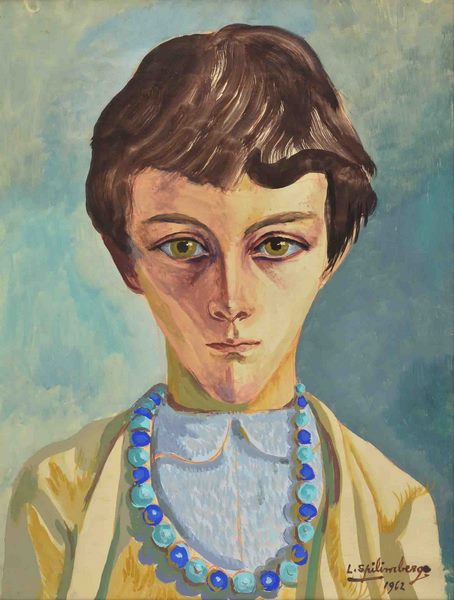
But in this case, I was asked if I could take it to his home. And when I delivered the painting I was asked if I could help hang it on a wall. A wall where a portrait painted by the great Argentine master Lino Eneas Spilimbergo (*) had been hanging minutes before (Spilimbergo´s piece was already on the floor and inclined on the wall).
I felt honored, and at the same time, it felt a little like the changing of the guard. It was a most humbling experience and a validation as to how my work is seen today.
Yet, does this validation guarantee the value of my work? No, it does not. It is a hint. It is a small arrow pointing the right way (and my way in this case) but that is all. Does it mean anything about the old master´s current monetary value or the quality of his work? It certainly does not.
CARA DE NIÑA – SPILIMBERGO
5. Redoing what has already been done is not the same as rediscovering it. So the easy applause may soon die. There… it´s dead.
Well, we all strive for originality. We all dream of discovering something new, a new concept, a new way of doing things. But the fact is that very few will manage to do it. Ignorance (particularly in terms of the history of art) is the great ally of artists, both from an artistic perspective and from the perspective of the public.
I see, for example, artists who are currently on the limelight and who work on Junk Art (scrapped metal, garbage, discarded articles, recycled materials, and so on). People who have never seen this type of art are mesmerized, and its popularity grows.
CARLOS REGAZZONI
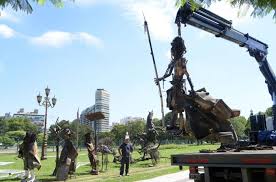
In Buenos Aires, for example, there is a growing controversy amongst critics because of the amount of public space, particularly in centrally located parks, which local BA artist Carlos Regazzoni (*) has recently been allotted.
Mind you, I don´t know him. Both curators in his gallery are dear friends and I like them very much, and I find him an artistic force in certain respects.
But the argument which has become quite vocal in the local art world (including agitated exchanges by the artist with journalists on local radio), is in regards to the originality and quality of the work, and so the –substantial- amount of recreational areas which are now covered by his metallic structures has come under closer scrutiny.
Now, Regazzoni acquired certain popularity in the last few years because of his fringe gallery, which is placed in the middle of disused railway tracks. There people, enjoying the kind of reverse snobbism fringe galleries usually generate, eat in the tradition of the old fashioned “bodegones” (working class eateries of the 1930´s and 40´s). Simultaneously, he shows his work and that of up and coming artists, hanging on the typical tin walls of the railway work yards and lit by common light bulbs, while people stroll on the dirty broken floors.
PICASSO´S SHE GOAT – 1950
The truth is that the fringe and factory gallery movement, where he finds inspiration for his own gallery and eatery, is more than 40 years old, at the very least. And what is commonly known as “junk art” can be traced back to the work of artists from the early 1900´s onwards. Great artists like the already mentioned Duchamp, Schwitters, Picasso, Tatlin, Archipenko, Laurens, Taebuer-Arp, Janco, Miró, Breton, Rauschemberg, Smith, Soto, Martin, Javacheff, Arman, Cesar, Chamberlain, Beuys, Kienholz, de Saint-Phalle and many more (this is just to mention the most famous which come to mind) who have, in many cases, done extraordinary things or opened up this field.
Furthermore, if one Googles the phrase “junk art”, the result is over 61 million links which cover from the masters to the tens of thousands of artists worldwide who currently practice this artistic style.
So, the originality argument will hardly stand.
The quality argument can also be questionable. Compared to past works in this field, and even current work around the globe, one could argue with certain objective backing, that Mr. Regazzoni´s current series (mind you, I do not question him as a sculptor) can unfortunately only be described as just average.
Yet he has achieved popularity as an artist and as an artistic host.
Someone said that “popularity” is the kiss of death to most artists. Popularity is very close to Warhol´s “massification”, and it does not necessarily imply quality or artistic merit. In many cases it could be said that it implies a combination of commercial mass market hysteria with certain outside factors, amongst which illiteracy from the public, or in this case, about the history of this type of sculptural work in particular, can add to the equation.
And unfamiliarity in art is a great equalizer.
When the public is not that aware of those who came before, it provides an artist with an openly fertile ground to grow. The old (and the repetitive) can feel new and that can be a fantastic environment for an individual. But I feel it is overall a bad thing. What is produced is soon unmasked, as it cannot stand to comparisons.
Ultimately, the creations may feel like mirages, rather than miracles.
And art, from my own perspective, should always aim to be a miracle.
PLACING REGAZZONI´S IRON PIECES IN THE PALERMO AREA, BUENOS IRES
So, is the public space justified?
Probably not in objective terms, but popularity is a great magnet to politicians, no matter the ideology or the nationality. And this is popular art, and it is accessible, although not that original. So it is easy to be tempted to give it a bigger stage, deservedly or not.
What is also happening is that the questioned artist seems to be demonstrably upset with those who have reservations about his current work. He feels like a “one off” and with a fairly long career behind him, he does not relish having to explain himself at his age.
The problem is that all artists, Regazzoni and myself included, dream with the moment when it can be said that we have generated some new paradigm, or that there is some novelty in what we do. That is the art equivalent to a genetically modified spider bite. It suddenly produces in us super power like changes. “Powers” that we need to learn to use correctly.
And as an added bonus to that, this kind of recognition not only should lower the level of resistance that our work may encounter, it also magically allows us to get the financial support that we need to get our larger projects done.
6. So, where is the originality? Where is the ground breaking? Where…? it’s here, it´s just me.
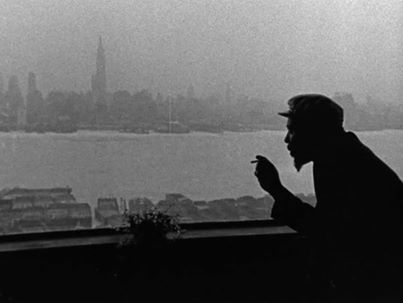
MONK and NYC
As I said before, we want to be remembered as an “original”, and thus beyond questioning. And even if we are lucky enough to briefly achieve it, it may not last, as everything “new” quickly becomes part of the collective unconscious.
The things that influence us are so many, that creating something new for an artist becomes a huge exercise in abstraction from the surrounding environment. So much so that it usually takes so many artists to the edge of something comparable to madness.
In my case, I have a slight synesthesia. It is a benign condition, so benign that until a few years ago it was impossible to diagnose correctly, and nobody cared!
BURT, DAVID AND DUKE
Basically it is something that happens to some of us while still inside the womb, where a tiny section in the brain´s frontal lobe does not develop exactly as it should. Quite an important percentage of the world´s population has it, but most just don´t even know it. Again, it is nothing bad. Quite the contrary, I take is as a wonderful gift.
Synesthesia simply allows us to “feel” somehow the unusual resulting effects of certain neuronal connections (I apologize to any doctor for my very basic description). For example, some people may taste different flavors as a result of hearing singing. That´s just a simple example.
In my case, my slight case simply allows me to “see” shapes and colors when I hear certain sounds, particularly music. I have found that with Jazz, and then Classical music (may be the way they are structured is what helps) this works best.
While I was growing up as an artist, I would try to “control” these impulses. I did my best to keep them far away from my art. I guess I did not want to divert too much from my formal training. I wanted my art to be “understood” and “accepted”.
One day (I was barely 17), I went by to visit a little gallery close to the corner of Melbourne´s posh Toorak and Orrong Roads. I lived only a few blocks away on Toorak Road and I had walked by it several times going and returning from school.
Taking a leap of faith, I went in and asked the lady who owned it if I could show her some of my paintings, as I wanted an opinion.
She gladly said yes, and so breaming with joy I ran all the way home, picked-up some of my “best” paintings and took them back to her gallery. She saw me come in and said, with the serious tone of someone who knows, “Ok, show me what you have”.
As I started placing my paintings in front of her, I saw her from the corner of my eye as she stood up and, with her right index finger unequivocally showing me the door, she said in a very stern voice: “Please! Just take this out of my sight!”
Besides the fact that no one should do this to a young aspiring artist, the episode as traumatic as it was, taught me something.
SOUP DE CRAYONS DU JOUR
As time went by, I realized that what made me different (I am not saying original) was the fact that my brain could see and transform sound, and allow me to express it pictorially.
My sources of inspiration were greatly enriched, as they were not only a response to standard visual, aural, and emotional stimulus like everyone else. Instead my brain kept adding abstract shapes and colors produced by its response to music. And the resulting combination was full of nuances that only I could interpret.
That is how I learned that my interest in being “formal” had deprived my work, until then, of that elusive spark that had been there all along. And that same decision had also kept my artistic practice from the sheer enjoyment, and the feeling of freedom, that taking advantage of all of life´s gifts could provide.
7. Another Short Detour Ahead (Just long enough to pick up the pieces of what made us artists)
Like with the point about money, this is also an annex discussion triggered by the previous point. Yet it is worth looking at it for a minute before finishing.
Sometimes, as artists, we tend to intellectualize our work too much. I have been known for making that mistake.
We get caught up in this web of validation. Out of logical interest, or sometimes out of simple fear, we tend to provide hooks and ladders all over the place so as to help those who must discuss our endeavors. That is all good and valid.
Yet sometimes, that conceptual exercise becomes conceptual madness, permeating into our real work. We become prisoners of complex concepts. They do not simply explain what we do, they tell us “what” to do.
As a result, we forget the essence of what has made us artists and our work something special.
Going back to basics is the rule there if we want to save our art. And once again, I am going to be (I apologize) self-referential.
Art involves, as we have seen, many issues. But in its essence, if I may be so blunt, it is basically a structure where we can place shapes and colors in a harmonious, individual, and unique manner.
My synesthesia has helped me in this regards. It allows me to incorporate shapes and colors in a very unusual fashion. Thus it has given be the chance to keep the “basics” very close to my work. The essence is not lost. Quite the contrary, it is always very much up front.
And then everything else must be put in the mix.
In my case, the intention that it be art was always there. The search for something visual that distinguished my work was always the preferred path. I did not stop there. I studied formally, and afterwards on my own, so I could learn on the shoulders of those geniuses I was trying to stand on. I looked at their triumphs and I particularly explored their failures.
Yet those steps, enhanced by life little gifts, allowed me to maintain the essential concepts within a complex cocktail of objective and subjective notions that accompany me in my everyday exploration.
The result is that my work may have become objectively richer over time (at least that is my hope), or maybe simply more exciting.
After all, originality does not necessarily require that something be broken. Instead, it can start from the modest and necessary step of allowing who we are, warts and all, to come through our artistic expression.
We are all unique, and letting that uniqueness show in our art, counts a long way into the originality stakes.
I am still learning as I keep moving forward. Our own Art is something that may last more than a lifetime. And if we are lucky enough, it may even become our legacy. The echo of our footsteps which may still resound for years after we are gone.
8. Viva la Revolución!!!!! Ouch!
As we looked at a few of the questions that are so common to the art world, I endeavored to challenge the concept that art is purely subjective. I think I have, at the very least, established the possibility that certain objective parameters must surround all the subjectivities that art does have as well.
Furthermore, I hope it is becoming patent that the purely subjective stance, very often, can also become something very close to a copout for us, artists. A subterfuge that allows us to put a stop to any questions regarding our artistic quality and, basically, to avoid what we may feel as judgment.
And I know personally how painful for us artists judgment feels. But I also know that from that pain we learn and grow.
Like the popular saying goes, we all learn from our mistakes. And if my goal is to keep learning, I know that what I should keep doing is to take risks, and thus make more mistakes.
Without objective judgment, there is very little to stop us from just conforming. And most of us may just end up doing “arty things” which we might feel deserve accolades they don´t. All this while we do not face the necessary inner questioning, and experience the intellectual insecurity, that can help us drive our art to new levels.
Maybe it all comes back to the fact that becoming true artist is really all about being revolutionaries. But the revolution must be, above all, about ourselves.
As artists, being revolutionaries means being non conformists. It means being prepared to challenge our own standardizations and attack our own artistic weaknesses. It implies resistance to the “average” and mediocre, and a continuous search to artistically exploit what makes us unique individuals and artists. It eventually means questioning our own limits all the time, and pushing the envelope at each turn.
In our own world, that may well be the ultimate objective, and subjective, artistic revolution.
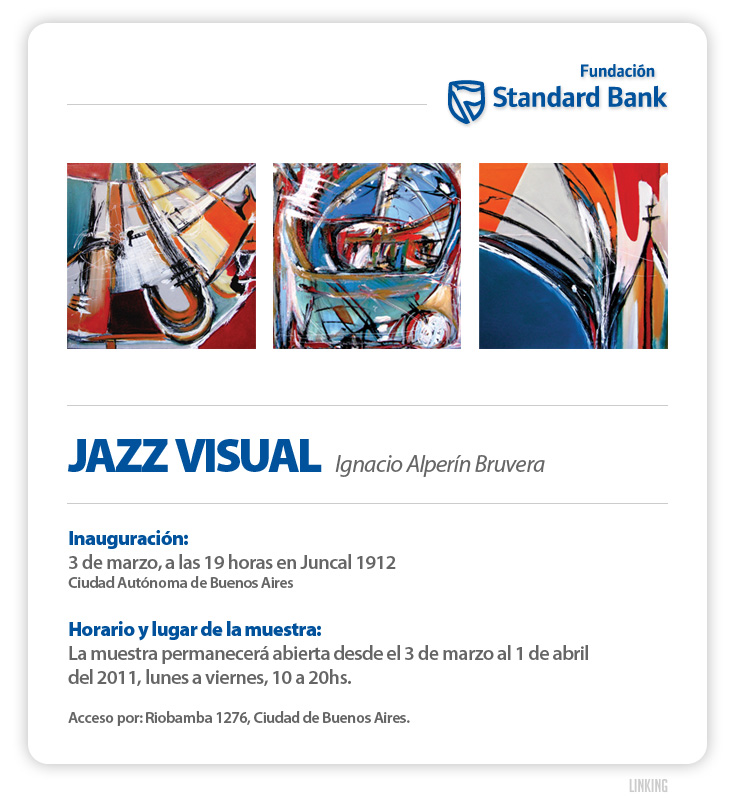
Many people ask me why I have chosen to base my current series on the sounds of Jazz.
There are many reasons. On the one hand, I simply love that sound. It can be simple or complex, uplifting or romantic, funky or full of swing, cool or pacific, but it always manages to delve somewhere deep and lift me up to places I didn’t know before.
Another reason is that Jazz for me is simply another way of saying freedom. In jazz the score is just the excuse to show each musician’s luster and skills, as well as their love for sound that is rich, expressive and unique. Since its birth, this musical manifestation has been a part of all movements that wanted to articulate people’s liberty to express themselves.
And that is want I want to do on a canvas. I want to free myself to utter what is happening to me with the score, to allow me to be deceptively wild, to look for unorthodox ways of making you feel something different, and yet to allow you also the independence to see what I see in your own way, and in your own time and leisure.
There are many stories about the importance of Jazz in the fight for freedom. Not only musical but also as an expression of liberty of thought.
One of those well known stories involves the Benny Goodman Band and their first trip to the USSR in the 1950’s. Firstly, Mr. Goodman was incredibly surprised by the huge crowds which followed him in spite of one of the toughest environments for personal freedom in the second half of the XX Century.
Here was an American icon and his sound, allowed to play in Russia just as an excuse to show openness to the outside world, and at the same time people were not being allowed to listen to his kind of “foreign capitalist corrupt music”.
His second surprise was the fact that people came to him and kept telling him how they loved his work in terms of “we love CL7943 or CL8726”.
Goodman didn’t know what they were talking about. Until someone explained to him that because his works were prohibited by the government, people referred to them by their recording label number, as a way to avoid censorship and prohibition.
He thus found that, incredibly, there were very few people as knowledgeable of all Jazz music as the Russian fans.
That in a small way was both a declaration of another triumph of the people to free themselves from an overbearing government, but also it was another triumph for Jazz music, a sound which after WWII became the music of freedom.
I don’t know if I can say that my art will one day represent as much, but I know that my aim is to make it a clear expression of the lack of restrictions I feel as I put my art across, of ideas reworked into shapes and colors without boundaries, of joy and pain and thought all intertwined into vivid and abstract melodies.
I don’t always manage to do it, but rest assured that with my Visual Jazz I am always looking for new ways to convey that improvised musicality, that different sound that strikes as offbeat first, but which with time simply becomes… just so cool.
I had a very interesting conversation yesterday with a very well-known and prestigious attorney, someone who is also a dear friend. Our conversation shifted at one point towards art and the different characteristics of artistic expression. At one point he said to me, more or less, “I got stuck in classical figurative painting as something like a definition of what is art (he is something of a collector). I would love to understand more, but right now I have to admit that I find it too difficult to grasp or understand abstractions, expressionism, and other forms of avant-garde artistic expression”.
And in reference to my work, he added “I can see there is an intention in what you do, I can see that there is deliberate work in placement, shapes and colors. I even like some of it because I find the shapes or colors agreeable to me, but I can’t see what it is …do you see something when you paint? Are you following a picture or a pattern?…I imagine you do but I can’t grasp it…”
Obviously the first thing that came into my mind is my friend imagining a happy chimp throwing painting on a canvas…which is obviously not what he meant, but one can only wonder if in the minds of many, and after so many years of exploring the boundaries of artistic expression, there is still an established image of elephants painting with their trunks and chimps throwing and eating paint as part of the abstract movement.
I admit that, even if a great deal has been written over the years, it is still difficult to explain to someone what abstraction is all about, even if the word is pretty self-explanatory.
My work is mostly, music inspired abstract expressionism, although some figurative interpretations filter in every now and again. In that regards, expressionism as an artistic form is a little easier to convey. For a start, the word itself implies a certain “intention” in what one does. Even if sometimes that same purpose may be obscure to most except the author, there is a primary objective of “expressing” something, be it feelings, textures, experiences, colors and so on. It can also be said that all art is an expression but that in itself, will only make my task even harder so I better not digress!
But abstraction can be anything. A blank canvas is abstraction as much as one with hundreds of hours of work on it.
There are obviously many formal definitions of abstraction as a concept. One of the most widely used would go basically like this: “Abstraction (from the Latin abs, meaning away from and trahere, meaning to draw) is the process of taking away or removing distinctive traits from something in order to reduce it to a set of essential characteristics.”
The fact is that what is essential can be 99.9999999% of the original idea as much as 0.000000000001% (or less) of that same concept. So it is still a very wide notion and open to millions of interpretations.
A more philosophical description could be that abstraction is the thought process wherein ideas are distanced from objects.
“Abstraction uses a strategy of simplification, wherein formerly concrete details are left ambiguous, vague, or undefined; thus effective communication about things in the abstract requires an intuitive or common experience between the communicator and the communication recipient. This is true for all verbal/abstract communication.”(Wikipedia)
I have had the wonderful experience of studying philosophy and I find this problem a great example of how difficult it is for us humans to accommodate to new paradigms (I am being very generous by calling abstract expressionism something new, but still it generates almost as much controversy today as when it first appeared as a mainstream form of artistic expression so many years ago).
I have always loved that mental adventure that is finding the proverbial “Gordian knot” to every issue. So if I may, I am going to try to contribute to enlighten this rich and wonderful controversy (although most probably I will only add more complications to it!).
If I may, I would simply say that for a figurative artist, his drawing of a certain scene, let us say one of the classical English hunting scenes made popular in the 18th and 19th Centuries, is in itself the end of the creative process. He or she will then work on his sketch, reproducing the colors, the shadows, the expressions of hunters, dogs, sky, fox and birds into a combination that will take you there as if you had been participating of that moment in time. His or her skills are amazing and the techniques used are a wonderful example of human ingenuity and artistic prowess.
For an abstract painter who looks at the same scene, there may even be an initial sketch of similar characteristics. But that sketch, instead of being the final rendition prior to giving it life with his or her paints, it is just the starting point from where that painting and the painter are going. He or she will work from there into a new scene that may be devoid of many of the details, that may just rescue some shapes and colors, or simply express something devoid of form but which makes the viewer generate, for example, adrenaline and fear.
And that may be the artist’s whole point. Wishing, perhaps, to generate in the viewer exclusively the emotions felt by the hunters and their horses, and perhaps the terror of the poor fox being chased in the woods. That also takes imagination, skill and a different set of techniques that will allow only the essence the artist is looking for to be left on the canvas, leaving everything else for you to explore and invent in your own mind.
I don’t know if my explanation helps in any way, but I will ask my friend and I will let you know!
So, to my work now.
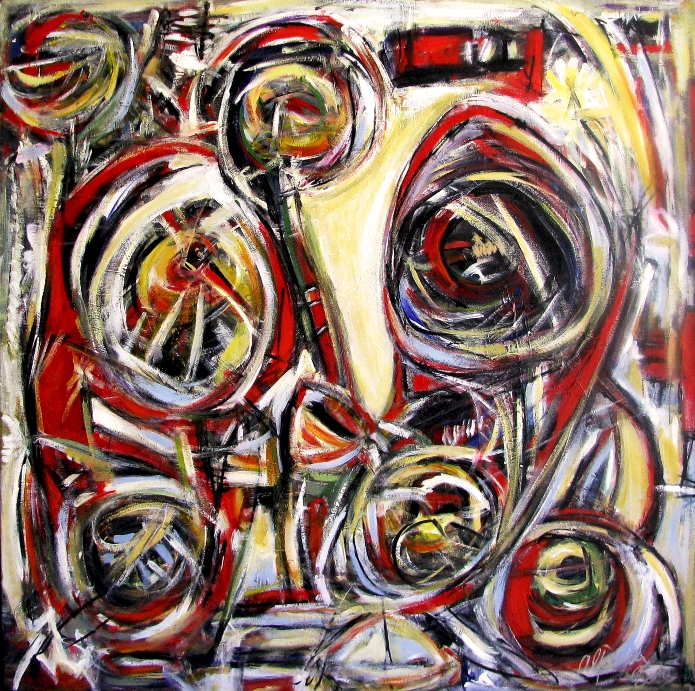
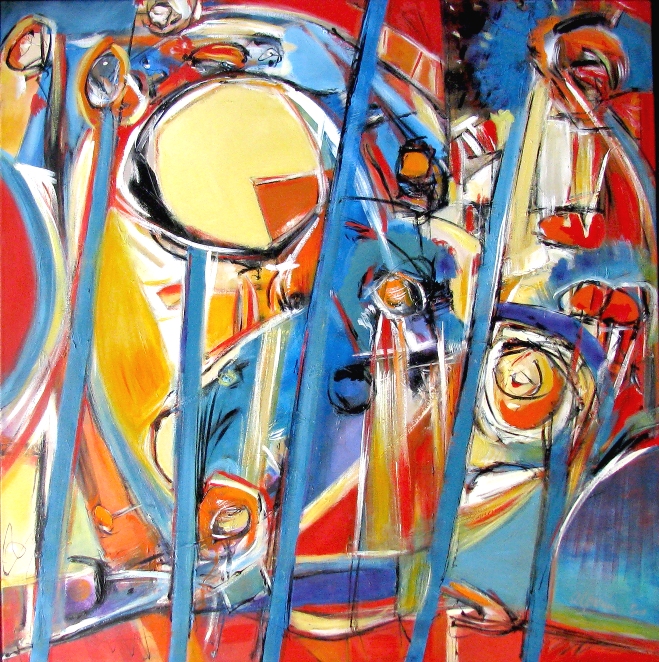
Here are 2 of my final works of 2011, both of them of the same size. As a matter of fact they do have a lot of detail compared to many of my more abstract expressions so it is very fitting that they are shown here within this conversation about abstraction and figurative painting.
The first one was started in 2010 and finished in 2011, and it is called “A winter flower garden”.
A 100cm x 100cm painting that I like very much. The second one is also lovely and it has a different feel to it, it is more like a scene after a spring shower went through it. It is also from 2011 and it is called “What a difference a day makes”, and it is based on Dinah Washington’s version of that wonderful song with the same title. You will see many things in common between both which were not really intentional, but make both paintings into a nice pair.
I hope you enjoy them both, and the conversation that preceded them.
The story says that Cézanne was turned down by the prestigious École des Beaux-Arts when he applied for entrance. He kept going, and admired as he was by many of his contemporaries, he only managed to have his first individual exhibition in 1895, when he was fifty-six years old (at the famous Gallerie Vollard, a shop on the Rue Laffitte, in Paris).
In 1999, “Rideau, crouchon et compotier”, painted in between 1893 and 1894 was sold for a staggering US$60.5 million. A fitting price for a post impressionist painter considered, by most, as the father of modern painting.
This little, yet powerful story, serves as an appropriate preamble for what I am about to say about the role of criticism into an artist’s development.
Many of my friends have gone through this and I go through it every day. As artists we need the critical view (both positive and negative) of our artistic expression. After all, art is to be viewed by others, not kept between closed doors. Critics are everywhere as each view entails a criticism of some sort (there is even the old show business adage about the fact that “everyone is a critic”). And the fact is that all who participate of the art experience will have an opinion, and if given the chance, will impart their views to whomever wishes to hear them.
And that is fine. Criticism is good. Even criticism generated from greed, envy, bad blood, or even ignorance…it is all good because it allows us to see things from other perspectives than our own. And for an artist, this is like a gold mine. A source of feelings, new to ourselves, that should lead to more creativity.
But as I have said so many times before, the soul of an artist cracks easily, hurts more than most, and heals only with love and kindness.
That is the reason why rejection, because of its harshness, tends to be one of the worst forms of criticism for an artist. It is as valid as many others, but still, it is the most hurtful because, as we tend to be to critical of ourselves and too sensitive for our own good, it feels final, with shades of a dead end and brushstrokes of questions about our own artistic and personal prowess. And so it damages the most.
Yet, rejection is an intricate part of our maturing process, and of becoming deeper and more sensitive artists.
The key is knowing that rejection is never final. It is not even a detour. It is simply a crossroad where we have taken a certain road for the wrong reasons, or too soon for us or for others to understand where we are going. Knowing that simple fact allows us to push into other parallel roads, look for other ways, or review our own reasons so as to find, within ourselves and within others, that little extra quality, emotion, or explanation, that will open a door which now seems closed or open doors we had not considered as unlocked to us before.
Cézanne is a clear example of this because he simply never gave up on his own convictions. Time was never a real issue (otherwise he would have reconsidered his career). He may have modified and changed as time went by, but he never gave up on his idea that what he was doing was what his heart, and soul, were telling him. And that was nothing more, and nothing less, than painting his own path into a new expression of what he saw and felt.
Unfortunately, as happened with him and with so many other artists throughout history, we may not reap all the benefits or the public recognition of our own artistic endeavors. If we are lucky, that may be something that only time will tell. But we must know that for that to happen, the eyes of future critics will have to change, sometimes mature, or in other cases simply open up into seeing our own personal ways of perception as making a difference, or having a peculiarity that future generations can appreciate.
But whether the formality of history judges us kindly, or none at all, for us the value of what we do must not reside there.
It must lie within us rather than outside ourselves. And we will only reach the summit of our own genius (and I do believe that we all have the spark of genius within us) if, after learning each and every lesson, we break through the pain and barrage of circumstantial opinion and forge ahead in our individual paths.
The truth is that we were given our talents to be exploited to the fullest of our abilities. And we will be judged by ourselves, others, history, God or simply time, by what we have done with those gifts.
Thus, it is not in playing a blame game that the answer will be found. At the end, the fact remains that as harsh as it may sound, we cannot blame anything or anyone other than ourselves for not doing everything in our power to “invest and multiply” those talents. And in that multiplication we may find the “spark”, that artistic moment of brilliance that will make a difference in our lives and in the lives of others. And that will be our legacy, our tiny or giant footstep (that does no matter) into the long path of human civilization.
Art can be anything you want it to be, and can be found anywhere you want to see it. That also means that you always have new choices and alternatives in front of you as to what you want to do as an artist, and in the ways you want to develop your artistic expression.
In my own particular case, I have always felt moved by music and it has been that sensibility that has pushed me into my forms and manners of expressing those artistic needs.
Jazz has always been a big part of my life and hence was born my Visual Jazz series, but it has not been the only one. From classical, to hip hop and rap, stepping through pop, rock, tango, aboriginal music, Japanese music, movie themes, and so on, I have always healthily envied the power of music to motivate us and transport us into a different level of sensory perceptions.
Even then I have always made choices. In my particular case I have always felt that there is enough sadness & decadence out there, easily found, so as to also make it an intricate part of my artistic expression. That does not mean that there is no melancholy, or references to the deep inequalities that are always present in our world that are also visible in my art, but I am always looking to express that special “musical quality” that I just mentioned, and that will help elevate our spirits into a superior consciousness that will provide the peace, happiness and energy that is needed to revert all that is wrong.
This is a personal choice. No one will ever find me condemning anyone who wishes to thread into the specific road of expressing the decadence and conflict that surrounds us in a more direct or reflective fashion. Furthermore, if there is an ingredient that is required for our expressions to become artistic, is the need for our art to be freely expressed directly from our innermost feelings and sensibilities.
It is just that in my case, my wish is to inspire from a different posture. I hope that what I do uplifts those who view it. My desire is to leave those who look at my paintings, and my other artistic works, with a feeling of being hugged and caressed by color, movement, cadences and textures. I want them to experience a certain happiness and energy that leads them to leave with the positive belief that we can do whatever we want to do with our lives and with our societies, and with the world as a whole, and try to get it right.
And it is not being shallow, the same way that the other path is not being negative. They are, most of the times, just different ways to arrive to the same principle from different places. It is a recognition of our brevity as living beings and of our limited, yet strong capabilities, to act as individuals in the preservation of life at every level of cellular complexity, and of our interest in caring for this beautiful little blue planet that is the host of an ephemeral (in universal terms) human civilization. A civilization that feels so often all conquering, and yet does not seem capable of resolving matters essential to its very survival as hunger, inequality and environmental sustainability.
In my case my art, perhaps in its own humble way, aims to find an approach to recognizing that no matter how bad things can get, we have also the enormous God-given power to do good, and to change our lives and help others, by example or by direct or indirect action. And to realize that life is an extraordinary gift, and that it is more fulfilling when we give our best, when we show and share our love & affection with others, and when we are forgiving, discarding what is bad and saving all that is good in each one of us, because it is from there that we can build a better society and a better world for all of us.
Art for me, as grandiloquent as it may sound, means hope. It is a complex yet simple manner of showing that we have a soul. Sharing that nakedness of spirit is one of the ways that allows us to get closer to each other, and thus, become better human beings.
If we look throughout history, art has always been one of the saving graces of every passing civilization. Art has always been a redemptive feature of great, as well as small and even destructive civilizations, and art will also be one of our conduits to salvation. As art in its every shape and manner will always be a part of what takes a society out of darkness and, once again, into the light.
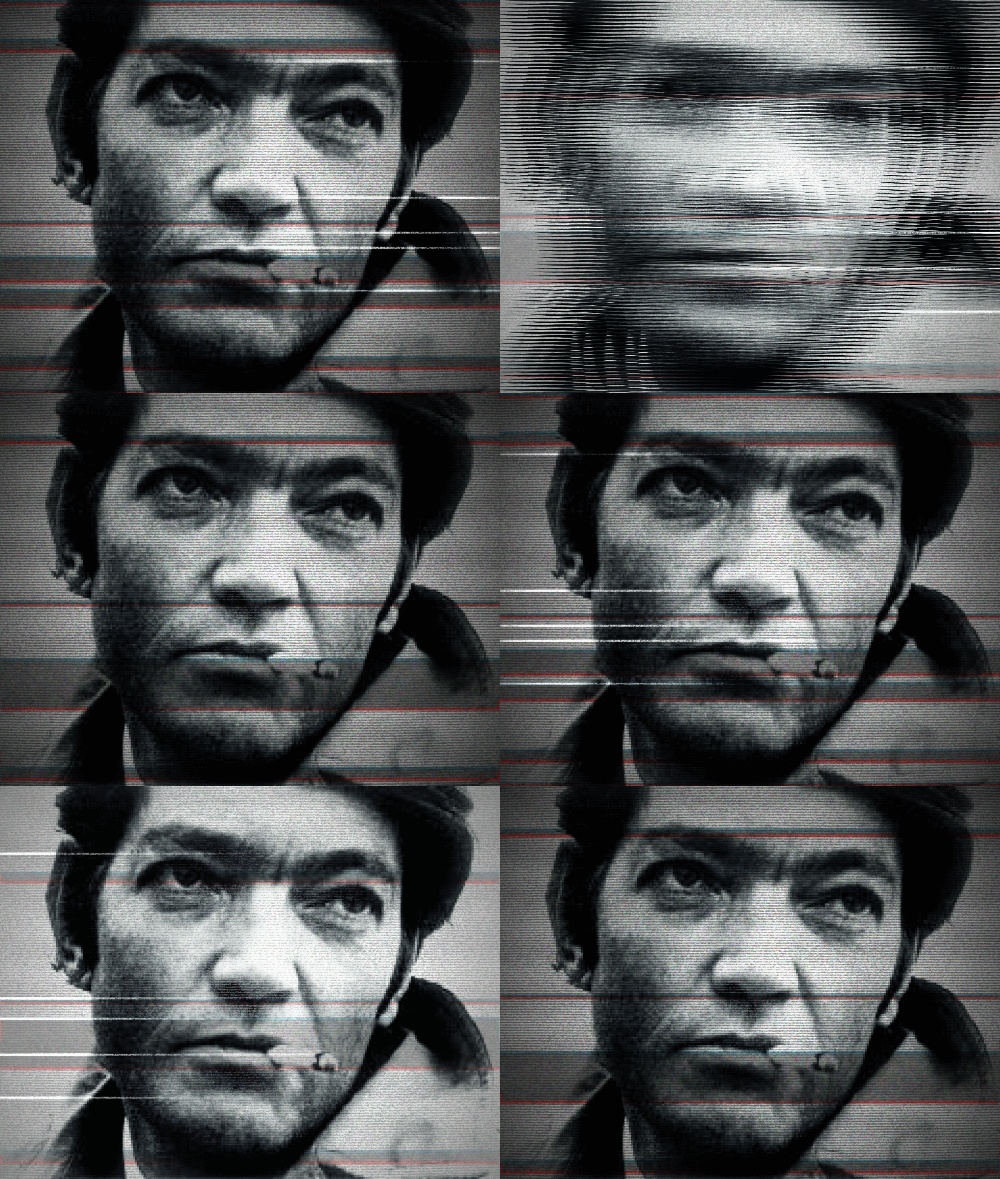
 Argentine writer Julio Cortazar was born on a day like this, exactly 100 years ago. All over the world literary buffs and fans are celebrating this new anniversary of his birth with articles and mentions.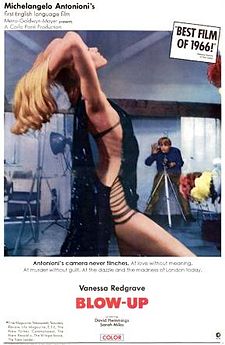
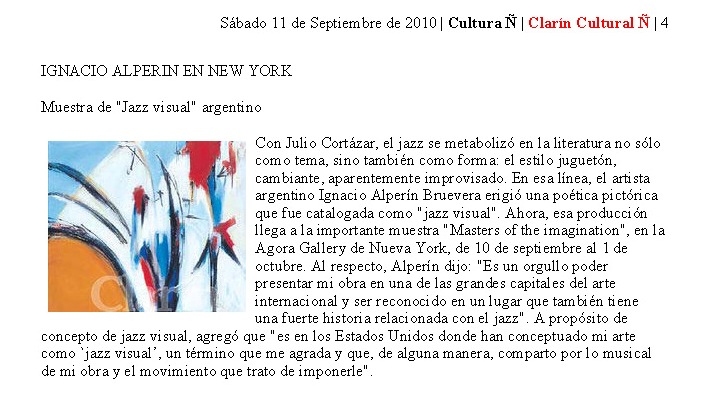 I always felt almost “embarrassed” at this comparison. But on a day like this, I take it as an honor and an important legacy which in my own way, I wish to continue.










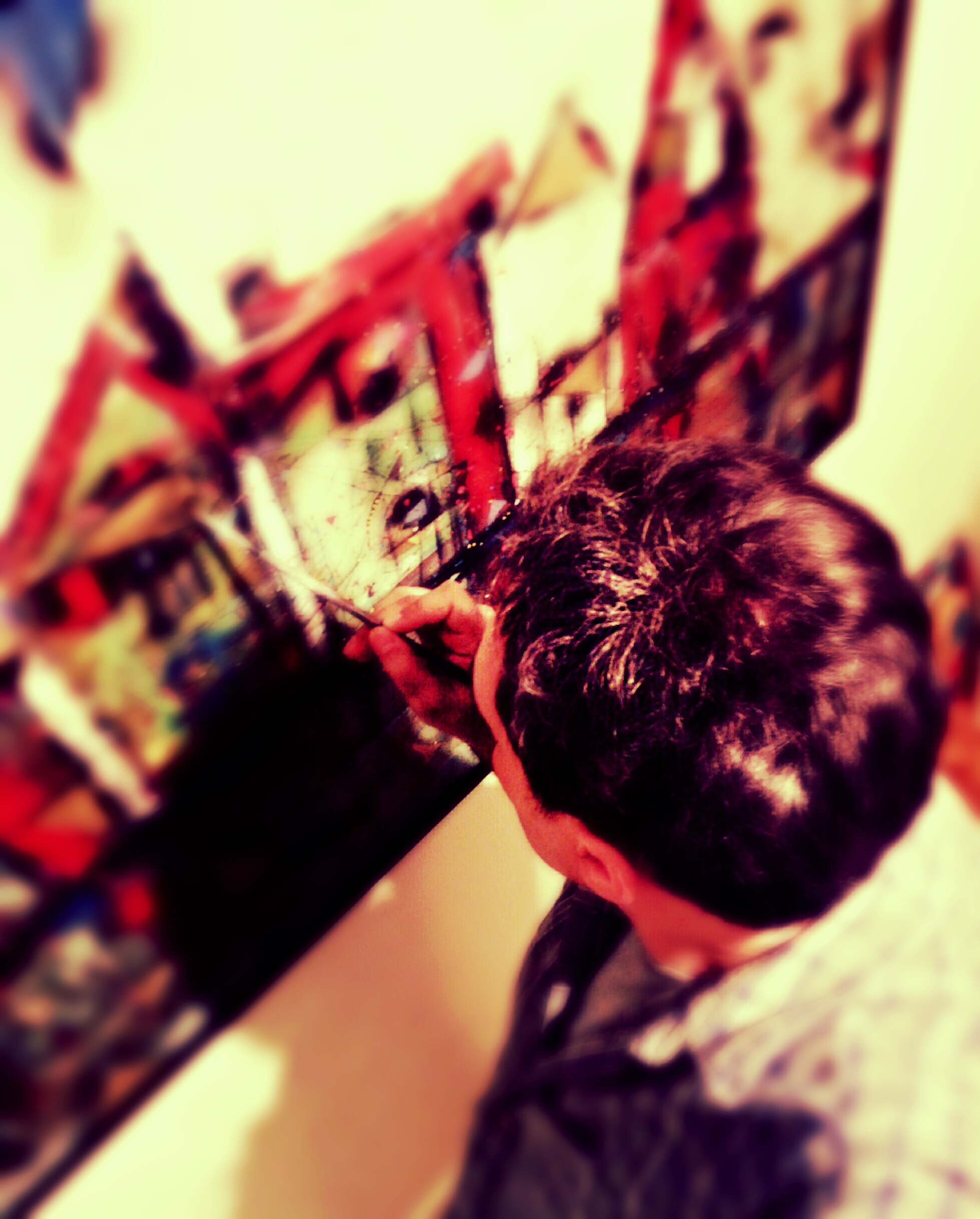




 IGNACIO ALPERIN: THE ART OF THINKING OUT LOUD / EL ARTE DE PENSAR EN VOZ ALTA