A personal, curatorial & bilingual Blog about: Artistic Movements, my Art, Creativity, Innovation, Design, Leadership, Empowerment, Sustainability, Science, Jazz, Movies and other cool pursuits - Blog personal y curatorial bilingüe sobre: Movimentos Artísticos, mi Arte, Creatividad, Innovación, Diseño, Liderazgo, Empoderamiento, Sustentabilidad, Ciencia, Jazz, Películas y otros temas.
After landing in Naples Monday morning, Tuesday April 26th has been a busy day. With NAA Curator Jack O¨Brien at the helm of a talented team, the preparations for the exhibiton “IGNACIO ALPERIN: A VISUAL JAZZ AFFAIR”, which is sponsored by the Naples Art Association and Art Naples World Festival 2016 (Stay in May) are at full swing. Grand opening nextThursday April 28th and general opening April 29th.
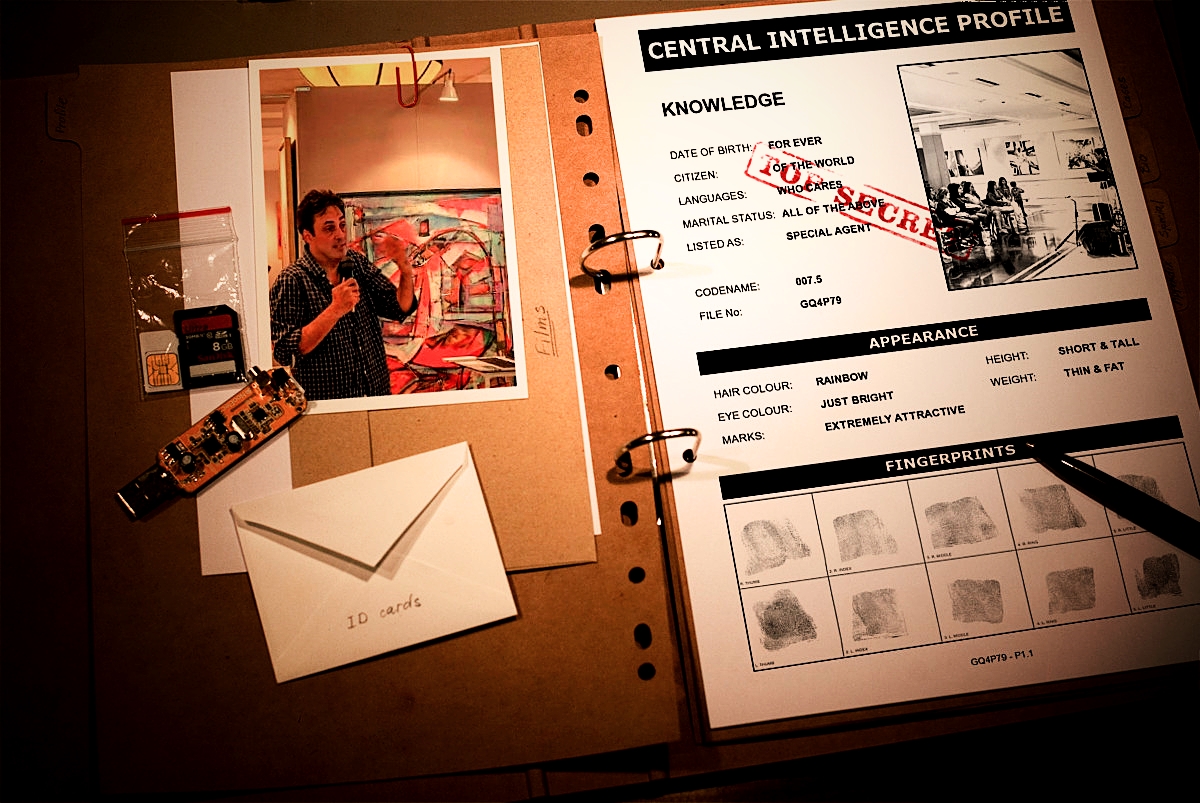
Later on the same day I had the opportunity to visit Ave Maria University and enjoyed immensely the opportunity to share a creativity lecture with a group of smart and receptive students (Thank you Jennifer Nodes and everyone at AMU).
Luego del desembarco en Naples el lunes, primer día de trabajo y preparativos para la apertura de la muestra “Ignacio Alperin: A visual Jazz Affair” en la Watson Gallery de Naples, auspiciado por la Naples Art Association y Art Naples Wold Festival 2016. El próximo jueves 28 de abril.
The whole concept behind every one of my short lectures, seminars and curses on creative and innovative thinking, working productively in groups, art and other connected subjects, is to engage the imagination and the interest of newcomers to the subject and knowledgeable individuals alike.
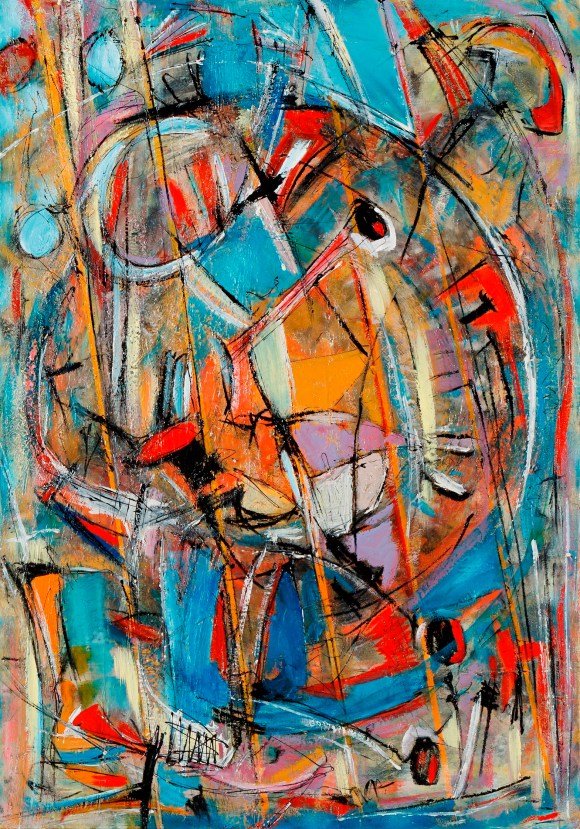
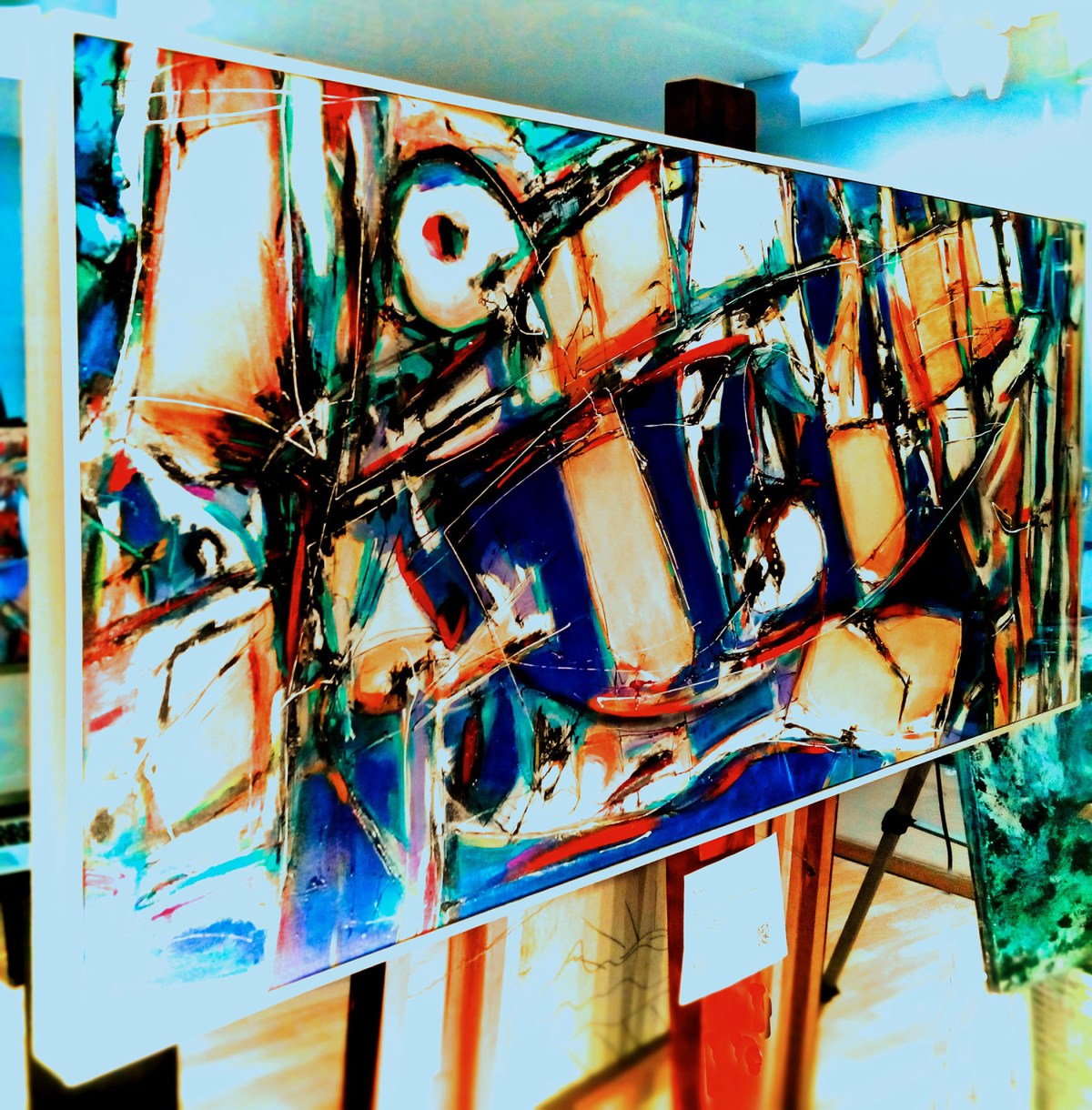
THE HEART OF THE MATTER (2016) by Ignacio Alperin
It is very common to hear these days about people feeling unhappy with work, and very often with their life choices as well. The end result is an evident tension at home and at the work place, few new ideas, lack of energy to pursue other options, and a general feeling that things are not flowing for them.
Sometimes this has to do with family pressures, sometimes with limitations we set ourselves. Most of the time there is a feeling that we have been given a series of talents and “gifts”, as I call them, and we are not taking advantage of them. There is this numb sensation that life goes on without us doing anything to change our reality and that one day we may realize, maybe even too late, that we did not follow our dreams and that opportunity has knocked on our door, and left forever.
The idea is to deconstruct many of these preconceptions about being creative members of society, resolve common perceptions based on fears, disinformation or social pressures, and open hearts and minds to the immense possibilities of freeing our creative juices, be it for our own benefit, the people we work with, and our community in general.
Attendees should leave these lectures armed with “tools”, concepts (and concrete ways to put them into use) that will help them to be more effective, work better with others, and be more productive in general.
Finally, these lectures and seminars are not about “self-help”. Quite the contrary, they are about recognizing that to be happy and active members of society, things must be less about “me” and a lot more about “us”.
Depending on what is required, and the level of detail, they all can range from 30 minutes + Q&A to 2 hours + Q&A each.
Aimed specially (but not exclusively) at: Students, creative professionals, artists, CEOs/Managers of creative enterprises or corporate areas, and anyone interested in creative activities.
These are single lectures, but they can also be mixed and matched in terms of contents, or converted into full seminars. Any company, group, NGO, or government office interested in any one of these lectures can contact Luz at luzpages@ignacioalperin.com for more information.
Everyone who has explored his or her creative gifts has found that inspiration cannot be kept tied to one single form of expression. The fact is that many painters sing or act, some actors cook or paint, even some dancers are singers or sculptors. The choices and variations are almost limitless.
As you all know, I paint. It is my preferred expressive outlet. I love what I do, I feel I am constantly growing and I love exploring my artistic leanings through color and form. I know that I also have other God given talents. For example, I sing, although my shyness has gotten the best of me. My baritone voice is today a rough expression of a natural gift and it will probably remain so for the foreseeable future; I have also studied acting and I love it. But yet again, I never managed to get that “break” that seems to be necessary to make something of it and that has been that, at least until now.
For a lateral thinker like me, creativity can take on many guises. Cooking was one of the earlier ones, together with painting. My old school buddies still remember me in the kitchen “creating” grape sorbets and crazy cookies when we were just 10 or 12. Today, I probably cook as much as I paint, and I know my friends enjoy coming to visit, see what I’m working on a canvas, and later enjoy a full meal prepared by me while we chat.
For those who are afraid of cooking, let me tell you, it is one of the most creative and freeing exercises you can find. It is quite simple to grasp once you know some of the basic concepts (ALL of them so obviously logical and sensible that you will wonder why you didn’t learn them before).
Food is something to be shared. Both at the preparation stage (with your family, your kids, your wife, girlfriend, or boyfriend or just with friends) and obviously as you all enjoy the end result. It is also a great way to become even more creative.
So, my recommendation would be: Let´s go cooking!
And as long as we are talking about cooking, how about if we look now at some cooking of mine, but of a different kind.
This is Cooking with Art´s Chili Pepper (and a taste of Art Pepper´s Chili Peppers right after it).
Enjoy!
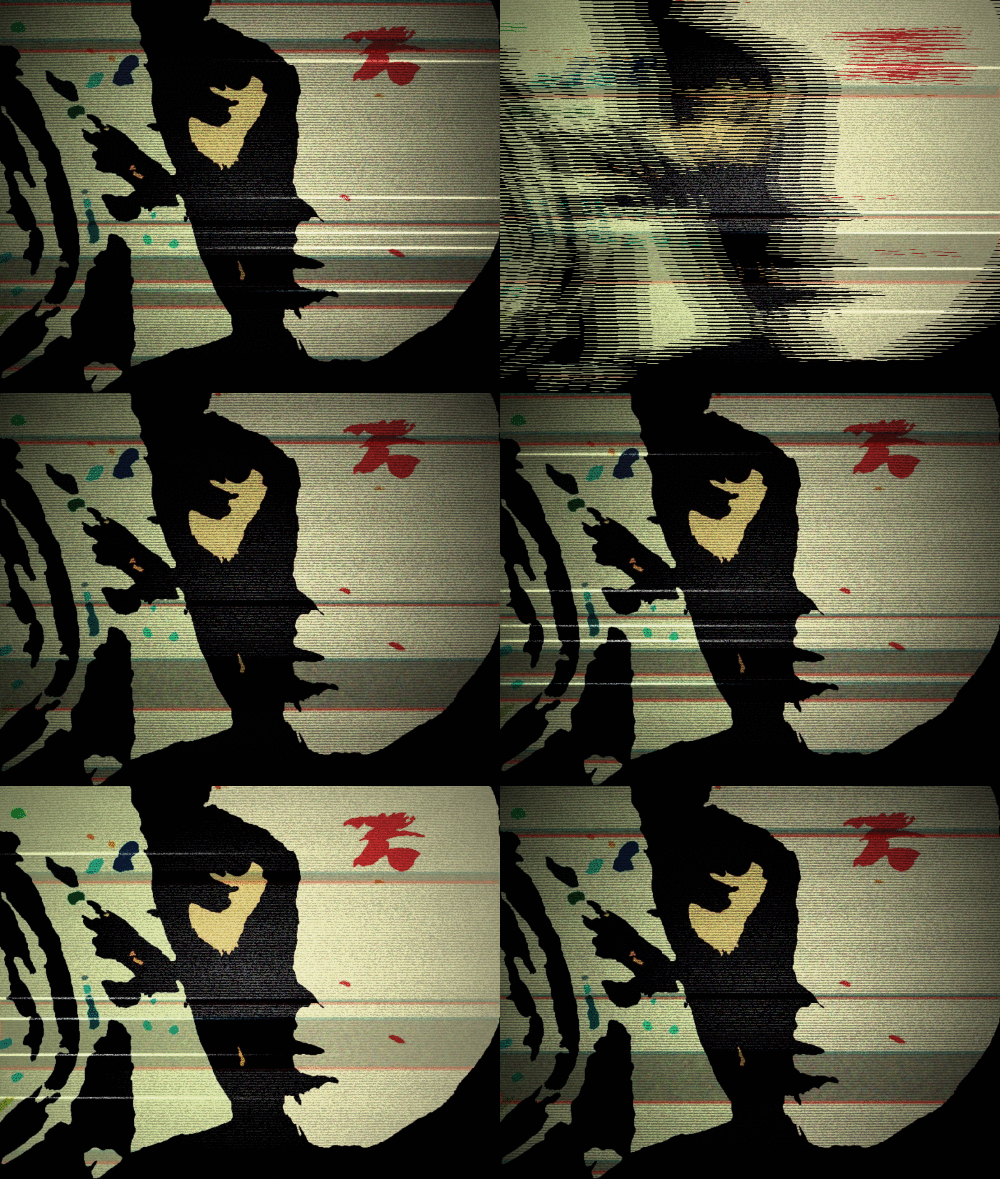
COOKING WITH ART´S CHILI PEPPER (2012) by Ignacio Alperin
There is an old movie called Galaxy Quest, about a group of actors who, having enjoyed better days (professionally and in their personal lives), still perform together occasionally at Mall Openings and conventions. Their common bond is the fact that, long ago, they all starred in a successful TV Sci-fi show (of the same name as the title).
The movie has its moments, particularly at the start when they are kidnapped by an alien race and get embroiled in the middle of a war with a planet of lizards. It is a simple case of mistaken identity.
It seems that the aliens picked-up the TV signals in space and thought that the crappy TV show episodes were in fact historical documents about a group of invincible warriors who saved planets from extinction, while in fact we know they were a bunch of semi-retired second rate actors doing weekly shows in front of cardboard sets.
This movie always comes to mind, not because it is anything outstanding, but because almost every time I give a lecture about creativity or art I get asked by professionals, artists and university students alike, about what are in my mind the most important aspects that help in building a successful career.
Success is many things to many people, and I am not going to try to define it here. Suffice to say that I am assuming that we are talking about attaining some of what we search in life (it may be recognition, love, a family, money, power, a career, and so on).
Furthermore, I am in favor of defining success and failure in every aspect of our lives if we wish, and as we wish. In my case, I let others run races set by someone else. I run my own.
THE QUESTION IS: WHAT IS SUCCESS TO YOU?
And that may be the first point. You are the master of your own life. You set your destination, and it is up to you to decide how you wish to go about it. I am a great believer that the power of “we” is far superior to the power of “me”, but I have to know where I am going before I can invite others to tag along, or join up with others in their journey.
Many concepts can be added on from there – creativity, solidarity, positive thinking, conscience, ethics, hard work, intelligence, responsibility, self-discipline, clairvoyance of sorts, and so on -, but there is one that is a must. One which to me is so important that it may help to bring you over the other side even when you lack some of those qualities.
In “Galaxy Quest” they keep repeating the catch phrase of the show, which happens to be “Never give up! Never surrender!”. In fact the whole movie is based on this very premise. Not giving up and not surrendering (no matter how ridiculous, scary, or ridiculously scary the situation may be). What they are talking about is nothing more than “resilience”.
Merrian-Webster defines the concept of resilience in general as “the capability of a strained body to recover its size and shape after deformation caused especially by compressive stress”.
That, translated to a human capacity, refers to a quality that allows some people to absorb pressure and failure, and convert it into something positive. The old fashion “taking on the knocks and coming back stronger than ever” attitude.
Some people innately have this quality. Yet for others, it is a matter of learning. Psychologists have identified some of the factors that will categorize someone as resilient.
The most common seems to be optimism. It does not mean blindness to reality. It just means having a positive attitude even after being burned down. It means doing a Phoenix like flip and rising from the ashes. It means taking on apparent failure and turning it into a lesson on the way to success. It makes people capable of adapting intelligently and quickly to change, adjusting their outlook promptly and soldiering on.
Resilience is at the essence of very successful people (whether they are at the top of the corporate heap or are just a great mum or dad). It is what keeps us going our way when everyone else is also telling us to go, but away.
Sometimes, hitting the proverbial wall has to do with schemas, pre-formatted ideas people have about how things “should” be (many companies also have them and they show up, for example, when seeking new personnel). Sometimes there are other issues and we should always revise our own attitudes as well (it is not a matter of simply placing blame somewhere else either).
But that adaptability, resistance, aptitude and attitude is what allows us to take in responses from others that feel, very often, like a slap in the face and comeback with the best scorecard we have ever done. It means jumping over, letting go by, or simply ignoring the negatives along the way so we can make it to where we want to go.
One great example of this was recently given by Jack Ma. He said: “I failed 3 times in college. I applied 30 times to get a job but I have always been rejected. When KFC came to China for the first time, we were 24 to apply and I was the only one to be dismissed. I wanted to go into the police and out of 5 postulants, I was the only one not to be accepted. I applied 10 times to return to Harvard and I was rejected. Never give up because you failed once, twice…just understand that failure is only how we are shown another way to reach our intended route”.
Just in case you don´t know, Jack Ma is the founder of Alibaba, which together with Amazon are the two largest e-commerce websites in the world. He is also the 22nd richest person in the world with $29.8 billion dollars, according to Forbes.
So…just never give up, never surrender. Learn, adapt, spring back, and find your way to your own kind of success.
El Universo entero es producto de un proceso de creación y modificación constante.
Mientras que nuestra civilización siempre ha intentado, de alguna manera u otra, ejercer – o aparentar ejercer- el control sobre la naturaleza y el universo mismo, la experiencia nos enfrenta con una realidad algo diferente.
TIME REMEMBERED (2015) by Ignacio Alperin
Nuestra propia existencia como raza humana ha dependido siempre de una serie de eventos que obedecen en parte a lo que generen nuestras propias acciones, y en una importante proporción a una serie de eventos absolutamente fortuitos.
Dentro de lo que denominamos eventos fortuitos, algunos se producirán dentro de los ecosistemas familiares, profesionales y comerciales que nosotros mismos generemos, mientras otros tendrán que ver con hechos relacionados a las acciones de otros, y en la mayoría de los casos, al funcionamiento del universo mismo.
Nuestra supervivencia global e individual se basa en gran medida, entonces, en nuestra propia adaptabilidad y creatividad en cada momento de nuestras vidas, y en cómo compartimos ese aprendizaje a lo largo y ancho de las generaciones.
Aunque no nos percibamos como seres creativos y especulemos con que, alternativamente, sí hay personas específicamente creativas que han heredado genéticamente ese don, la realidad nos indica lo contrario.
Dizzy & Duke
Mientras es innegable que hay gente diferente, tanto en lo relacionado a ciertas vocaciones individuales, como a genialidades esporádicas que sí pueden obedecer a características excepcionales, y también como producto de rasgos heredados, ya sea genéticamente o a través de mandatos familiares o sociales; es igualmente cierto que todos sin excepción tenemos la capacidad de, intuitivamente de base y constructivamente a través del aprendizaje y la comprensión, ser creativos miembros de la sociedad y de utilizar esa creatividad más allá de nuestro ámbito personal y familiar.
Fragmento de Creativos en la era de la creatividad
Arte y Jazz – Algunos Conceptos y Propuestas (Tercera Revisión)
Hacia fines de 2015 tuve la fortuna de participar del evento Wine & Art, en el marco de la semana Buenos Aires Deli & Polo en el Hipódromo Argentino de Palermo.
Organizado por Art Work, con la gentil, creativa y esmerada Ligia Janeiro a la cabeza, fui invitado a presentar , en versión acotada, uno de de mis ya clásicos seminarios titulados “The Crash Flash Boom Creative Afternoon”.
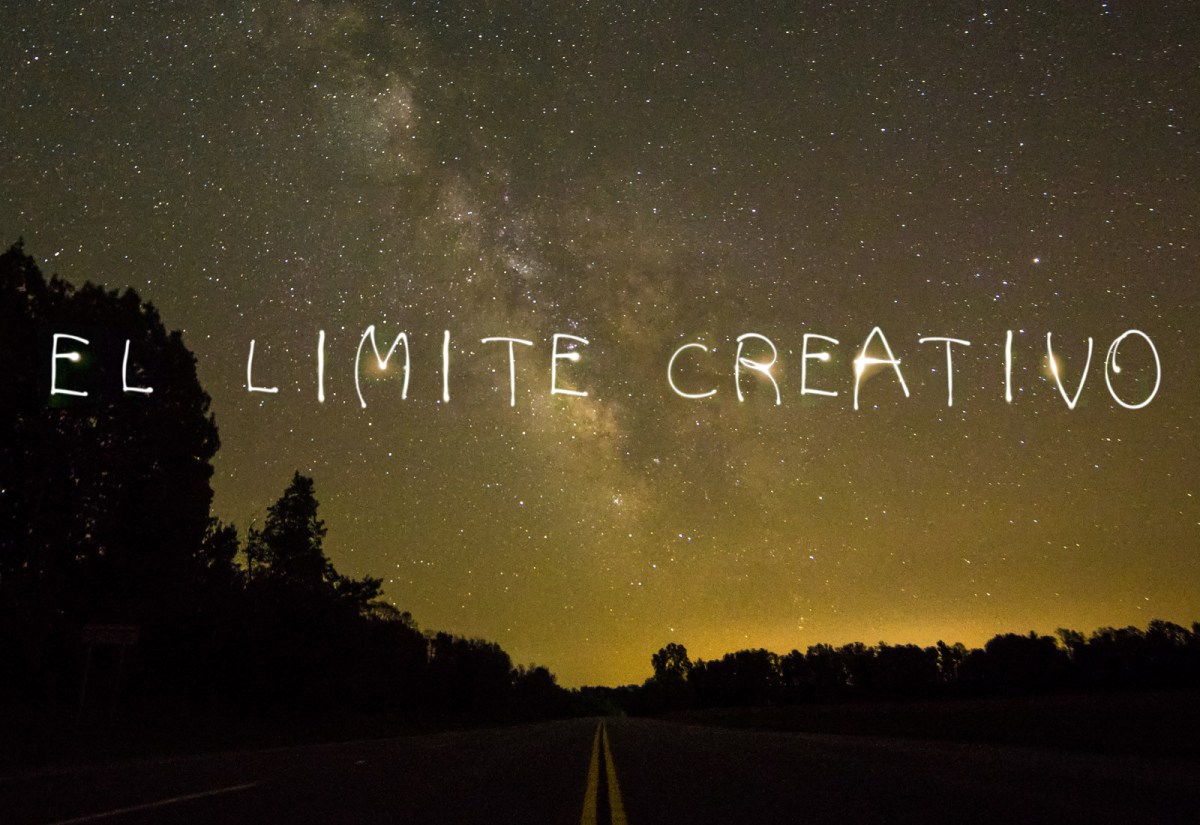
Con una nutrida concurrencia de artistas y creativos, dedicamos un poco más de dos horas a indagar el por qué de estos procesos, y a comprender que podemos domarlos, alejándonos de lo imprevisto y de lo fortuito, convirtiéndolos así en nuestras armas de uso intensivo.
Quiero agradecer nuevamente a todos los que se acercaron, a los que tuvieron palabras muy generosas para conmigo, a todo el personal de Art Work, y particularmente a Ligia Janeiro por su generosidad y excelente buena onda.
(English)
At the end of 2015 I was generously invited to the event “Wine & Art”, held within the Buenos Aires Deli & Polo week, at the posh Palermo Racetrack in Buenos Aires.
Organized by Art Work, with Ligia Janeiro at the helm, I was invited to present one of my “The Crash, Flash Boom, Creative afternoon” seminars (in a shorter 2 hour version).
I had a wonderful time, and I was very flattered by the participation of some many artists and creatives, for the kind words afterwards, and for Ligia´s kind invitation and superb energy and care.
Creativity does not have to be something untamed. If we understand how it works and the mental processes that make it up, we can leave behind the “fortuitous event of the creative flash” and use simple tools to get our creative reasoning and thinking to work to our own benefit, in a concerted effort with others, while capitalizing on all of its potential.
In a world where information is being sent to us at incredible speed and with unconceivable depths; where we are also producing, inadvertently, data beyond our understanding; in a civilization that is advancing technologically beyond what the educational system can cope with; at a time when the knowledge of how things work is in more and more hands; and the technology which allows us to make them is in less and less hands; the role of the creative mind must evolve as well.
Now, evolving does not necessarily mean going freaky! It does not inevitably mean developing at the same speed the ability to digest all that is thrown to us, as well as rehashing it in new ways.
In fact, it may mean something completely different.
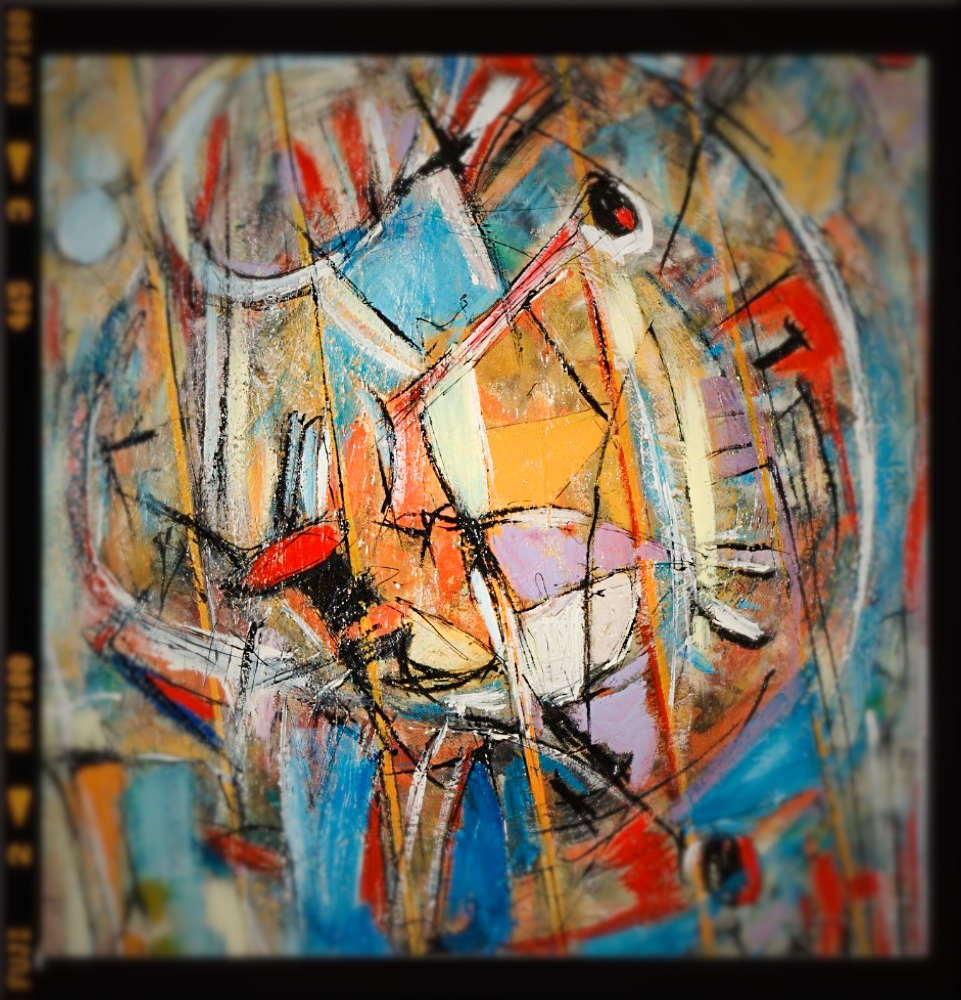
KIND OF BLUE (AND OCHRE TOO) -2014- by Ignacio Alperin
One of the biggest misconceptions on the theory of evolution, just to bring this point forward, is that the mechanism of natural selection – central to the theory – and which may result in improved abilities to survive and reproduce, should necessarily mean that the outcome is progressive.
As it happens, this is clearly not so.
What is called natural selection under the theory, does not produce organisms perfectly suited to their environments, as it is commonly misinterpreted. What it means, really, is that these organisms through different traits and skills are “good enough” to survive.
So evolving may mean, in simple terms, adapting survival characteristics which may be new, or even reacquiring qualities and attributes that were useful before, were lost for one or more generations due to environmental or social changes, and now have become of importance once again.
So how does this translate to the information age?
Well, it means for a start that the role of a creative professional is not to keep up with the speed of change but with change itself. In sporting terms, the creative thinker may be more like a long distance runner than a sprinter.
Secondly, being creative means being open to novelty and interested in everything. I always call myself “an encyclopedia of useless information”, this said with a glint in my eye, as I know very well that I gather information that most will discard for a good reason. To me, it is never useless.
But I must learn to choose what I digest. So the other evolutive step for a XXIst Century creative mind, may be then going back rather than forward. Specifically, to XIXth Century London and perhaps pay a visit to a certain sleuth who lived at 221b Baker Street.
Sir Arthur Conan Doyle created the great detective, Sherlock Holmes, based on a doctor named Joseph Bell whom Doyle admired for his quick logical interpretation as a physician, as well as for his “Method” of deductive reasoning (“Observe carefully, deduce shrewdly, and confirm with evidence”).
Bell turned detective became, in late 1886 and thanks to the pen of Conan Doyle, none other than the great Sherlock.
The role of the creative individual is very similar to the role of the detective. It involves keen observation, careful deduction, asking the right questions, having the correct basic knowledge, and above all, connecting all the dots (coming up with a hypothesis that is not necessarily constricted by a traditional structure).
In a world where information surpasses us, while technology seems to be speeding up way ahead, becoming like the road runner may be the wrong approach.
It may be that I enjoy going against the wave, but if everything speeds up, I usually slow down (and vice versa). Creative reasoning and creative thinking in a slow moving environment allows for swiftness. While if everybody rushes, our role is to slow down.
Like Neo in the Matrix, our advantage is that of being capable of decelerating everything down to the point where we are actually so cognitively enhanced that, in reality and for everyone else for that matter, we are indeed ahead of the curve.
And to do that, a bit of XIXth Century deductive reasoning may be the thing. Evolution may mean in this case, for example, simply slowing down; perhaps taking on a musical instrument – and not necessarily a violin -; or being involved in long periods of apparent daydreaming. In that mental estate, your mind will be doing its best detective work, and your deductive skills will allow you to see and connect the dots that no one else has managed to yet perceive.
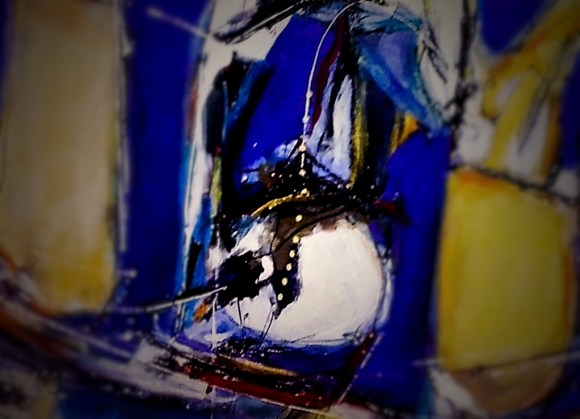
Connecting the dots… KIND OF BLUE (AND OCHRE TOO) – 2014 – Detail –
I know I am going to get myself in trouble for writing this.
Furthermore, I am probably going to get a lot of mails from artists who have come to my “Flash, Crash, Boom, Creative afternoon” lectures.
I like talking about the importance, for an artist – any artist – of being conscious of the significance of the “mythological” aspect of his or her story. I have always argued that the “selling point “ is as much the artist as the art.
Let´s take van Gogh as an example.
A painting he may have given in exchange for rent (100 bucks worth perhaps) has remained intact. It is always the same painting. It hasn´t gotten better with time. It is not wine – it isn´t that it has “aged well” -. It has not acquired flavors, or details in this case, which were not there before.
What has changed in our appreciation of the artist. It is van Gogh himself who has aged well. We have come to appreciate his story, his ways, his dramas, and his techniques better with time. And as a result, everything he has done has become something else. Each one of his paintings have become “a van Gogh”. His “mythology” has overpassed the painter and the flawed human being. And that is where the difference rests.
I always make the point of qualifying this view by pointing out that, by mythology, I do not mean becoming, or asking to be treated, like a “god” –although many colleagues do fall into this trap- , and neither do I mean that you should lie about your history.
It has to do with, simply put, being consciously aware that an artist´s story
This “may be” Banksy – who has built his own mythology by being secretive to the point of not ever showing his face –
is as much part of the process behind the growth in value of an artist work, as is the quality of work produced. People, more often than not, “buy” – engage, become interested, admire, or simply like – the artist first, and then they become interested in the art to the point of deciding to make a purchase (particularly when the price of a painting is above impulse purchase price).
This is so normal, that when in a newspaper we read that a famous painting is sold at a record price, for example, it is generally the case that the title usually implies that it is the artist who has been sold, while in the follow through we learn about the painting, sculpture or whatever it is really behind the news.
We “buy” Picasso, Van Gogh, Rauschenberg or Pollock. And we get – assuming we had the money – whatever painting is available at the time. The reason is twofold. On the one hand we understand there are market forces behind all these sales, as we are talking about investment grade painters and paintings after all. So whatever is available must be worth our while.
And secondly, we are talking about paintings that resist, endure, and grow in appreciation during a long period of time. And these facts usually have a common thread. In fact, each one of these works represent, in pictorial terms, an intricate part of the artist´s life.
We are talking, then, about art that is a visible section of an artist´s passion. And that is also central to this equation. We are buying a piece of an artist´s identity, a piece of his artistic soul. Or at least that which will endure the passage of time. No matter what embelishments the artist may have made to his own story, what survive are the vestiges of his true self.
This is all very personal stuff. We are talking about an artist´s spirit, his or her heart, and in the case of those already gone, the legacy of work that is left behind and provides the artists with that desired immortality of sorts.
Yet many artists, in their desire to get to that special plateau, become mere caricatures of themselves. They make up stories, take on looks that are more for the benefit of others than a symbol of whom they are, and fictionalize their lives to the point of becoming like characters in a pantomime.
They confuse “a personality” with “personality”, they make-up a stereotype of an artist rather than being true to their history and letting others judge and decide. They feed us with fiction, while true art is as real as it gets.
True art is about a naked person being shown and exposed; it is a soul being revealed; it is a heart discovered in its most intimate detail.
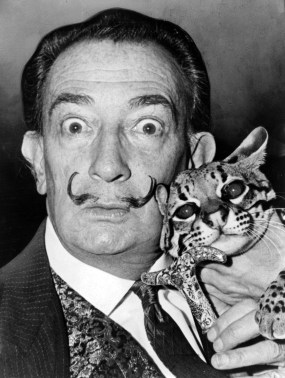
Salvador Dali
Many have “put on an act”. Dali was brilliant at this. But the key word here is “brilliant”. He built an engaging public persona around his personal quirkiness. And all of this pointed towards two ends. On the one hand his renowned love of money, and secondly it was probably his way of exorcising his own childhood demons.
Did we see the real Dali in action? Probably not, but was it a fake personality or was it based on his very real and eccentric nature and life history.
This was the second son of a family who had lost their first child, also named Salvador, only nine months earlier. He looked so much like his dead brother that his mother suspected that he was actually their previous dead child reborn, and it is believed to have acted accordingly. On top of that, and from all accounts, he was quite the sadist as a child. Even to the point of considering that pleasure and pain were pretty much the same mechanism. He used to attack people for no apparent reason, and it is said that he even threw a dear friend off a bridge “just because” (his friend was badly hurt as a result).
So, was he putting on an act or was the act an embellishment – a mythology of sorts– of his own life story and personality? You can decide if there is a difference between this and the fictional character. But keeping in mind Dali´s story, is then the fictional character many artists envelop themselves with, something wrong?
This slideshow requires JavaScript.
Some will argue that, whether truth, embellishment, or pure fiction, in all cases this is just marketing. And if as such it increases your sales, it is ok. And it may well be so. But the fact remains, and my experience corroborates this assumption, that many artists do end up believing they are this phony façade. They end up playing out the character in their real lives, and to a certain level, they end up getting lost in their own concoction.
So what is the point then?
Very simply: Whatever you do, be true to yourself, or at the very least, try your utmost to keep true to yourself. You are an artist. You are someone whom, by definition, will follow what your heart dictates. And that does not mean you cannot work on your own mythology. If you think about it, your life –any life for that matter – is rich and therefore plentiful in “workable material”.
Your beginnings, your family, your place of birth, your life experience, your ideological bents, your personal attributes and your personal agonies. They all have contributed to your present YOU. Your life is the source of your own mythology, and it is also the fountain from which your artistic endeavors spout.
It needs to be put into an attractive order. It needs to become your life story almost in cinematographic terms. It needs that attractiveness that makes your story something to be consumed, in the good sense, like a good novel. In short, it needs to become a story that people can engage to and become close to, and by doing so, they will begin to know you, and will become closer to you and your art.
There is an old saying in marketing about not falling on the trap of basing your decisions on your own marketing. One thing is what you sell, which necessarily enhances your virtues in detriment of your weaknesses. Something else is believing in your own “enhancements”.
Falling into the trap of that “fictitious character” is part of the learning process. I see many who do fall and never get out of that hole. In the short term it may be fine and it may potentially be profitable as well. But in most cases it will not last. And what is worst, it will take you astray from your true self, which is in the end, where your art is coming from.




 be more productive in general.


 college. I applied 30 times to get a job but I have always been rejected. When KFC came to China for the first time, we were 24 to apply and I was the only one to be dismissed. I wanted to go into the police and out of 5 postulants, I was the only one not to be accepted. I applied 10 times to return to Harvard and I was rejected. Never give up because you failed once, twice…just understand that failure is only how we are shown another way to reach our intended route”.


 Con una nutrida concurrencia de artistas y creativos, dedicamos un poco más de dos horas a indagar el por qué de estos procesos, y a comprender que podemos domarlos, alejándonos de lo imprevisto y de lo fortuito, convirtiéndolos así en nuestras armas de uso intensivo.
 and creatives, for the kind words afterwards, and for Ligia´s kind invitation and superb energy and care.





 story almost in cinematographic terms. It needs that attractiveness that makes your story something to be consumed, in the good sense, like a good novel. In short, it needs to become a story that people can engage to and become close to, and by doing so, they will begin to know you, and will become closer to you and your art.
 IGNACIO ALPERIN: THE ART OF THINKING OUT LOUD / EL ARTE DE PENSAR EN VOZ ALTA