Categories
2014 Art works IN ENGLISH Promoting your Art Videos Visual Jazz

Cool is Kul is “Cool”

BpzZP0oIQAIgphT

What makes something or someone “cool”?

The whole concept has become blurred by so many personal interpretations that to some, it may have even lost meaning.

Bp075HZIUAADCwu

I keep hoping, at the very least, that it maintains a certain conceptual dignity in true reference to its roots.

According to the Oxford dictionary, it was originally an African-American usage that became popular in the 1930´s as a general term of approval, meaning something akin to admirable or excellent, combined with certain aloofness that is meant to give it an aura of mystery.

Yet some have concurrently developed the idea that the concept of “cool” originally developed from the Swedish word for “fun”, kul, which sounds very much like cool.
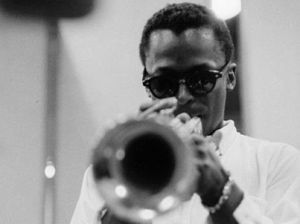
1320_10151563914742424_963542533_nWhen one thinks about it, it is a nice idea to join both competing interpretations, as “cool” was popularized among jazz musicians and enthusiasts in the late 1940s to describe the music, art and scene that evolved with the great American Jazz revolution.

Cool to me is still that.

Cool is excellence, aloofness, and fun. And all of these terms relate perfectly to Jazz.

What I try to do as an artist is also “cool” in its own way.

My light synesthesia has embraced my most creative instincts around jazz. I consider jazz to be the best example we have of a creative community. Forget about brain storming sessions. Just think of Miles Davis and his band in 1958/61.

Wayne Shorter, Herbie Hancock, Miles Davis, Ron Carter, and Tony Williams, in Amsterdam, 1964.This is the perfect combination of extremely creative individuals combining to make something sublime, without losing the characteristics of each musician. It is the perfect example of cool.

My art feeds on that brilliance. I admit my talent would not be able to show itself in the same way without musical creative geniuses like these.

And it is my hope that my art reflects that same aura of coolness.

Charade_(2014)_90x130
CHARADE (2014) 130CM X 90CM ACRYLIC, INK AND OIL BASED PAINTS ON WOOD. Copyright 2014 Ignacio Alperin

Art that is fun, intellectually challenging, and aloof enough to make the path to its full discovery, something interesting and worth doing.

I leave you with a Miles Davis Quintet full concert, from 1967. Enjoy.

Until the next time.

Ignacio

iab_suit&tie_edited3

©2014 by Ignacio Alperin Bruvera


Categories
2013 Art works 2013 Exhibitions Exhibitions IN ENGLISH Promoting your Art Videos Visual Jazz

An afternoon with Mr. Evans (and if it is in Paris, even better…)

billevanscoverBill Evans is one of those artists who are constantly present in my work.

This great piano genius was born in New Jersey, in 1929. He passed away in 1980 from health complications related to his hepatitis and his cocaine drug abuse, in what was described by a close colleague as “the longest suicide in history”.

At the height of his career, Evans was as emblematic to jazz and his instrument (piano) as Miles Davis was to the movement and trumpet playing.

He is seen as the main reformer of the harmonic language of jazz piano and was influenced by impressionist composers such as Debussy and Ravel. His versions of jazz standards, as well as his own compositions, always featured thorough changes to their original harmonies.  Musical features included added tone chords, modal inflections, unconventional substitutions, and modulations.

From Wikipedia:

Above is an example of Evans’s harmonies. The chords feature extensions like 9ths and 13ths, are laid around middle C, have smooth voice leading, and leave the root to the bassist. Bridge of the first chorus of Waltz for Debby (mm.33-36). From the homonymous album of 1961.

One of Evans’s distinctive harmonic traits is abandoning the inclusion of the root in his chords, leaving this work to the bassist, played on another beat of the measure, or just left implied. “If I am going to be sitting here playing roots, fifths and full voicings, the bass is relegated to a time machine.” This idea had already been explored by Ahmad Jamal, Erroll Garner, and Red Garland. In Evans’s system, the chord is expressed as a quality identity and a color. Most of Evans’s harmonies feature added note chords or quartal voicings.

Thus, Evans created a self-sufficient language for the left hand, a distinctive voicing, that allowed the transition from one chord to the next while hardly having to move the hand. With this technique, he created an effect of continuity in the central register of the piano. Laying around middle C, in this region the harmonic clusters sounded the clearest, and at the same time, left room for contrapunctal independence with the bass. Evans’s improvisations relied heavily in motivic development, either melodically or rhythmically.Motives may be broken and recombined to form melodies. Another characteristic of Evans’s style is rhythmic displacement. His melodic contours often describe arches.Other characteristics include sequenciation of melodies and transforming one motive into another.

Beyond his brilliance as a pianist and musician, and his technical excellence, Evans managed to imbue his music with a such warmth and melancholy that listening to him playing, even today, generates a deep emotional vibration.

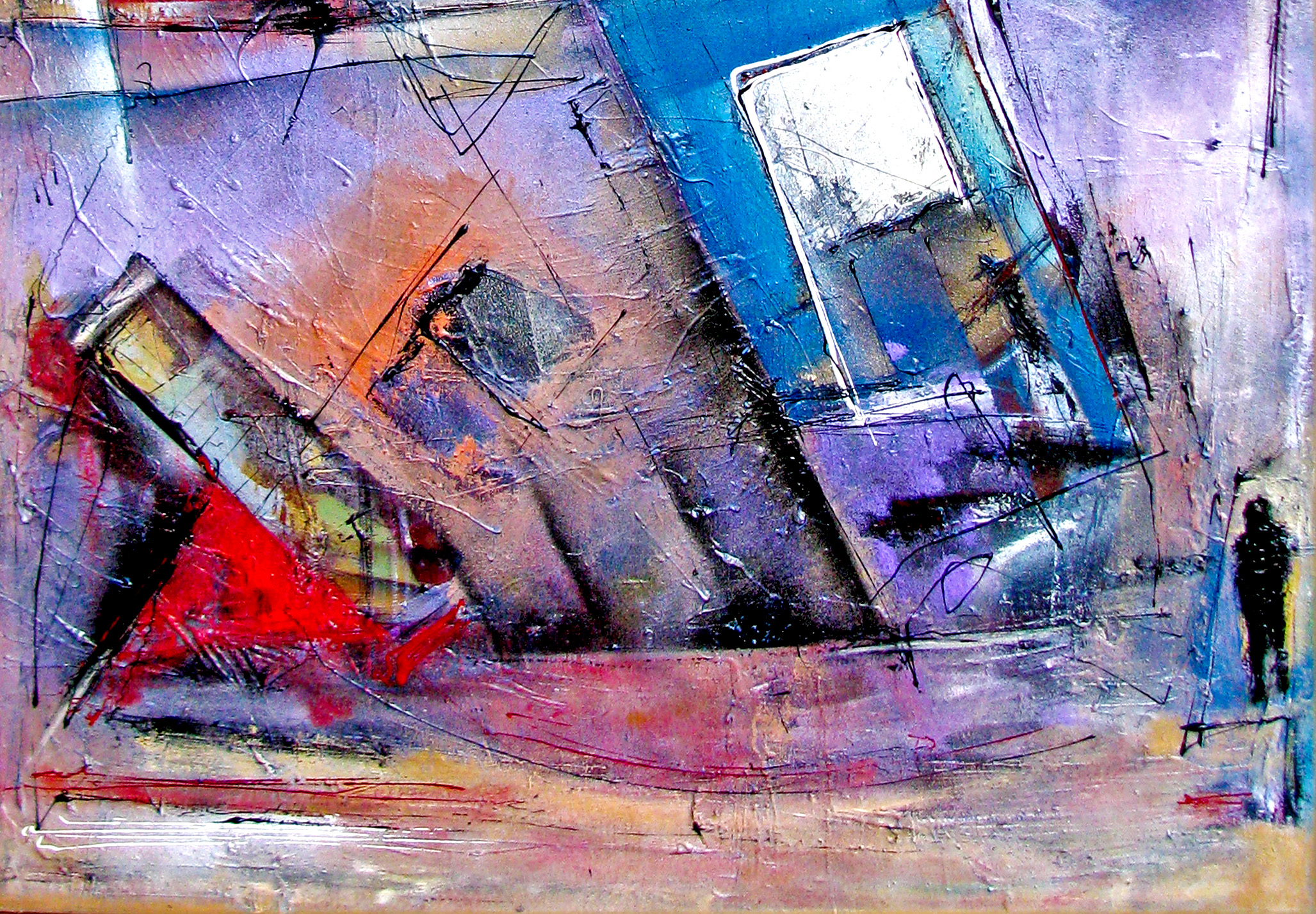
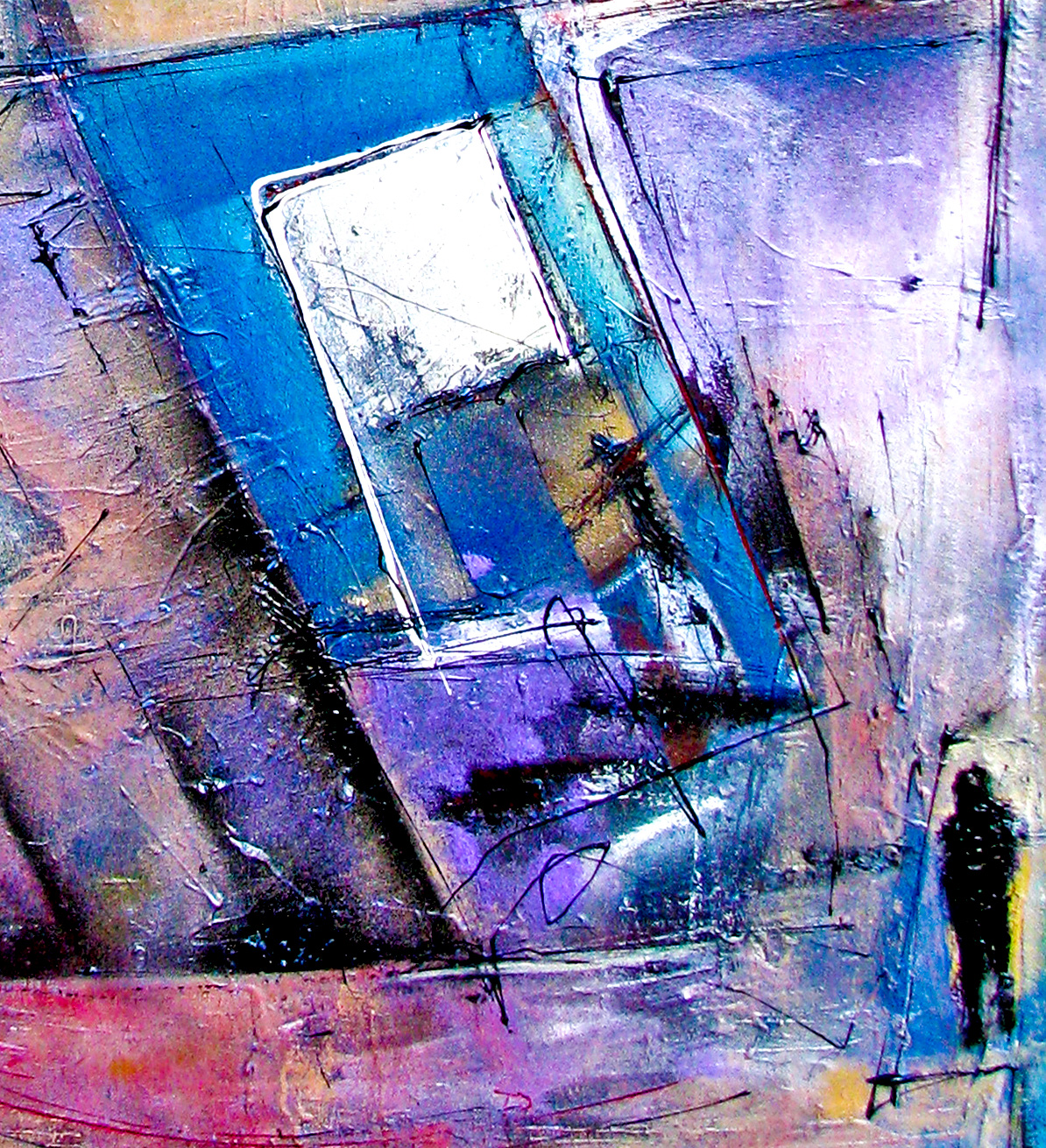
This new work of mine, from 2013 and simply called “An afternoon with Mr. Evans” is one more of the many jazz and Evans inspired works in my own artistic repertoire.

An afternoon with Mr. Evans_2013_50x65 b
AN AFTERNOON WITH MR. EVANS (2013), ACRILYC, INK AND OIL BASED PAINTS ON CANVAS, 50CM X 65CM, c Copyright 2013 Ignacio Alperin

I leave you while I hope you enjoy these next few minutes listening of this genius playing live in 1972 .

See you next time.

Ignacio

Awesome_1369282416164_edited1


©Copyright 2014 Ignacio Alperin


Categories
2012 art works 2012 Exhibitions 2013 Exhibitions IN ENGLISH previous works by the same artist Uncategorized Videos Visual Jazz

LET´S GET AWAY FROM IT ALL

Let´s get away from it all 100x100 (2012)
LET´S GET AWAY FROM IT ALL (2012) by Ignacio Alperin


City life gets to be too hectic sometimes so, isn’t it nice when we can get our selves freed from everything, and just let go, do something crazy like freeing some colorful balloons in a park and seeing them rise,  or simply grab a loved someone by the waste and just like a superhero, point towards the sky and just shout… Let’s get away from it all!… and just fly away (I admit, that is definitely the difficult part).

Well, I know, none of it is as easy as it sounds, but you can certainly look at this painting hanging on your wall and think…I can do that.. 🙂

See you next time!

Ignacio

1369790554799

Categories
2013 Art works 2013 Exhibitions Exhibitions IN ENGLISH Videos Visual Jazz

FINDING MY WAY BACK TO YOU

IAB_Finding my way to you_2013_60x80cm

A new painting from 2013, “Finding my way back to you” is a multi layered story that rings true on many levels.  We have all probably felt at some point in our lives that strange feeling of loneliness that can permeate everything.

Sometimes it is just a simple need, a longing for some solitude in the middle of our hectic lives. But sometimes it is something much more complex.

IAB_Finding my way to you_2013_60x80cm_edited1Perhaps a realization that we have strayed from our purported paths and we are now alone, facing our worst fears and a dark, sometimes scary road that may, or may not, allow us to get back to where we feel happiest and most satisfied with life and ourselves.

A lost love may take us there, or a seemingly lost life in which we have made some bad or mistaken decisions and where we feel lost, lonely, and in a place where everything feels just wrong.IAB_Finding my way to you_2013_60x80cm_edited3

Whatever the reason, we stand alone at the portal of this individual purgatory.

Hell is somewhere close…we can feel the heat and see the glare of the brazing flames, but we are not yet there.

It all feels uncomfortable and yet we know deeply in our hearts that there is a path that will take us back, and it will be up to us to find it or lose our way all together.

We are paralyzed as we prepare to enter. We stay there and look around, just thinking about everything IAB_Finding my way to you_2013_60x80cm_edited5while we try to get the strength to move forward into this land of contrasts, where the choices may be a far away, and yet very real, fall into everlasting pain; or instead a complex search for self awareness, redemption and truth.

The stairs to salvation are up there somewhere. The setting is asking us to change, to transfigure, to become IAB_Finding my way to you_2013_60x80cm_edited4something else and yet stay the same. Perhaps, it is just asking us to return to our essence.

The location of the entrance to this connecting tunnel is just there for us to find.

The price of our endeavor is high, but finding the peaceful feeling of being back on the true path, the warmth knowledge of feeling true love once more and the reunion with a heartfelt smile, makes it all worth every step, every risk, and every tear.

As always, let’s not finish before we get some music to accompany this new work. It is a great song from Eric Clapton, and it kind of talks about a personal purgatory and his own way of getting back to the warmth of his love. As I said at the beginning, there are many reasons we go through this, and many ways to express those feelings.

Enjoy!

See you next time.

Ignacio

Awesome_1369282416164_edited1

Categories
2013 Art works 2013 Exhibitions IN ENGLISH Promoting your Art Videos Visual Jazz

Abandoned Garden

This smooth vocal Jazz album  by Michael Franks, and particularly the song that inspires it, was also the inspiration for this painting of mine from early this year.

It had been a sad period, with the passing of my dear Zamba, my darling 9 year old Golden Retriever, at the hands of a very unusual illness.

IAB_ABANDONED GARDEN_110X50CM_(2013)
ABANDONED GARDEN (2013) by Ignacio Alperin


When I am sad, my painting reflects it. In my case colors go a little deeper, rather than darker, and the circular motion takes over. It may have to do with reflecting over the cycle of life, or the circularity that in itself is the reflective period behind every traumatic experience that we go through. Reflecting means looking at the image that is returned to us, but also means going back, and returning, over and over.

I love this painting. it is abandoned from the human perspective of being free to do as it pleases and of no longer being controlled, but it is not an abandoned scene from the perspective of being alone or not taken care of. There are flowers growing, although they may look a little sad. And there is light, and the hint of water, and deep and changing reds that reflect the deep emotion that surrounds the scene.

I invite you to listen to the song and share with me the experience of walking through this “Abandoned Garden”.

Until next time,

Ignacio

©2013 by Ignacio Alperin Bruvera

Categories
2011 Exhibitions 2012 art works 2012 Exhibitions Videos Visual Jazz

Visual Jazz 2 (2012)

Another compilation video prepared for my 2012 Exhibitions in London. In them I combine details of my art with the great music that inspires it. The end result is a combination of great singers and jazz perfomances together with some very lively and exciting work.

Categories
2010 art works 2011 art works 2012 art works 2012 Exhibitions Exhibitions Promoting your Art Videos Visual Jazz

Visual Jazz 1 (part of the promotion for my UK Exhibitions in 2012)

The first of the videos prepared to accompany my work in my exhibitions happening this year in London, starting with Parallax Chelsea in May 2012, and following closely in July with the Blue Period organized Exhibit in Chiswick.

It is a compilation of some of my best known work together with jazz songs, videos and performances which have inspired this highly colorful and movement filled Visual Jazz series. 

I hope you enjoy it! 🙂

Categories
2012 art works 2012 Exhibitions Promoting your Art Videos Visual Jazz

Up high

Inspiration is a funny thing. It can happen at any time, for any reason, and take any form. But for this rain of inspiration to be succesful, it also must find a fertile ground and the seeds of creation somewhere within it.

This is basically what happened last week. Looking to generate the mood for my previous blog entry ( A jazzy and colorful Lisbon Spring), I got caught in the beauty of a live performance by Michel Legrand and Stephan Grappelli of “How high the Moon” , recorded in Concert in London more than 25 years ago. So much so that I chose that song to accompany my entry and my painting “Water in the Moon” (featured there and part of my Lisbon Exhibit), over Duke Ellington’s “Misty Moon”, which was the song which had inspired that work of mine some time ago.

The song got stuck in my head, and the more I played it, the more I felt that I had to explore on canvas all the things that tune made me feel.

And so was born “How high the Moon”, a 50cm x 50cm painting, mixed media on canvas (acrylic, printing and Indian inks, on canvas), from March 2012. This painting has a connection of sorts with another reacent painting of mine entitled “Toulouse” ( La ville rose) and it is showing a new development in the way I am expressing my art.

HOW HIGH THE MOON, Mixed media on canvas, 50cm x 50cm (2012) by Ignacio Alperin Bruvera

As I said before, this painting was inspired by a very particular rendition of a Morgan Lewis’ tune, but since it is already a part of my previous entry, I thought of accompanying this new piece by a different version of the same song.

So here are the great Lester Young and the revolutionary Miles Davis playing their own version of this classic, live in West Germany, in 1956! I hope you enjoy it.

Until the next storm of inspiration catches me unaware!

Ignacio