A personal, curatorial & bilingual Blog about: Artistic Movements, my Art, Creativity, Innovation, Design, Leadership, Empowerment, Sustainability, Science, Jazz, Movies and other cool pursuits - Blog personal y curatorial bilingüe sobre: Movimentos Artísticos, mi Arte, Creatividad, Innovación, Diseño, Liderazgo, Empoderamiento, Sustentabilidad, Ciencia, Jazz, Películas y otros temas.
I know I am going to get myself in trouble for writing this.
Furthermore, I am probably going to get a lot of mails from artists who have come to my “Flash, Crash, Boom, Creative afternoon” lectures.
I like talking about the importance, for an artist – any artist – of being conscious of the significance of the “mythological” aspect of his or her story. I have always argued that the “selling point “ is as much the artist as the art.
Let´s take van Gogh as an example.
A painting he may have given in exchange for rent (100 bucks worth perhaps) has remained intact. It is always the same painting. It hasn´t gotten better with time. It is not wine – it isn´t that it has “aged well” -. It has not acquired flavors, or details in this case, which were not there before.
What has changed in our appreciation of the artist. It is van Gogh himself who has aged well. We have come to appreciate his story, his ways, his dramas, and his techniques better with time. And as a result, everything he has done has become something else. Each one of his paintings have become “a van Gogh”. His “mythology” has overpassed the painter and the flawed human being. And that is where the difference rests.
I always make the point of qualifying this view by pointing out that, by mythology, I do not mean becoming, or asking to be treated, like a “god” –although many colleagues do fall into this trap- , and neither do I mean that you should lie about your history.
It has to do with, simply put, being consciously aware that an artist´s story
This “may be” Banksy – who has built his own mythology by being secretive to the point of not ever showing his face –
is as much part of the process behind the growth in value of an artist work, as is the quality of work produced. People, more often than not, “buy” – engage, become interested, admire, or simply like – the artist first, and then they become interested in the art to the point of deciding to make a purchase (particularly when the price of a painting is above impulse purchase price).
This is so normal, that when in a newspaper we read that a famous painting is sold at a record price, for example, it is generally the case that the title usually implies that it is the artist who has been sold, while in the follow through we learn about the painting, sculpture or whatever it is really behind the news.
We “buy” Picasso, Van Gogh, Rauschenberg or Pollock. And we get – assuming we had the money – whatever painting is available at the time. The reason is twofold. On the one hand we understand there are market forces behind all these sales, as we are talking about investment grade painters and paintings after all. So whatever is available must be worth our while.
And secondly, we are talking about paintings that resist, endure, and grow in appreciation during a long period of time. And these facts usually have a common thread. In fact, each one of these works represent, in pictorial terms, an intricate part of the artist´s life.
We are talking, then, about art that is a visible section of an artist´s passion. And that is also central to this equation. We are buying a piece of an artist´s identity, a piece of his artistic soul. Or at least that which will endure the passage of time. No matter what embelishments the artist may have made to his own story, what survive are the vestiges of his true self.
This is all very personal stuff. We are talking about an artist´s spirit, his or her heart, and in the case of those already gone, the legacy of work that is left behind and provides the artists with that desired immortality of sorts.
Yet many artists, in their desire to get to that special plateau, become mere caricatures of themselves. They make up stories, take on looks that are more for the benefit of others than a symbol of whom they are, and fictionalize their lives to the point of becoming like characters in a pantomime.
They confuse “a personality” with “personality”, they make-up a stereotype of an artist rather than being true to their history and letting others judge and decide. They feed us with fiction, while true art is as real as it gets.
True art is about a naked person being shown and exposed; it is a soul being revealed; it is a heart discovered in its most intimate detail.
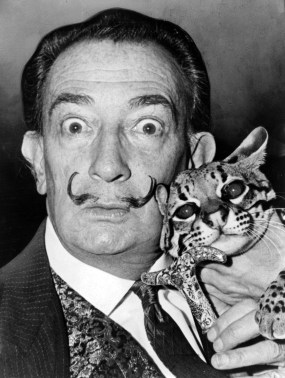
Salvador Dali
Many have “put on an act”. Dali was brilliant at this. But the key word here is “brilliant”. He built an engaging public persona around his personal quirkiness. And all of this pointed towards two ends. On the one hand his renowned love of money, and secondly it was probably his way of exorcising his own childhood demons.
Did we see the real Dali in action? Probably not, but was it a fake personality or was it based on his very real and eccentric nature and life history.
This was the second son of a family who had lost their first child, also named Salvador, only nine months earlier. He looked so much like his dead brother that his mother suspected that he was actually their previous dead child reborn, and it is believed to have acted accordingly. On top of that, and from all accounts, he was quite the sadist as a child. Even to the point of considering that pleasure and pain were pretty much the same mechanism. He used to attack people for no apparent reason, and it is said that he even threw a dear friend off a bridge “just because” (his friend was badly hurt as a result).
So, was he putting on an act or was the act an embellishment – a mythology of sorts– of his own life story and personality? You can decide if there is a difference between this and the fictional character. But keeping in mind Dali´s story, is then the fictional character many artists envelop themselves with, something wrong?
This slideshow requires JavaScript.
Some will argue that, whether truth, embellishment, or pure fiction, in all cases this is just marketing. And if as such it increases your sales, it is ok. And it may well be so. But the fact remains, and my experience corroborates this assumption, that many artists do end up believing they are this phony façade. They end up playing out the character in their real lives, and to a certain level, they end up getting lost in their own concoction.
So what is the point then?
Very simply: Whatever you do, be true to yourself, or at the very least, try your utmost to keep true to yourself. You are an artist. You are someone whom, by definition, will follow what your heart dictates. And that does not mean you cannot work on your own mythology. If you think about it, your life –any life for that matter – is rich and therefore plentiful in “workable material”.
Your beginnings, your family, your place of birth, your life experience, your ideological bents, your personal attributes and your personal agonies. They all have contributed to your present YOU. Your life is the source of your own mythology, and it is also the fountain from which your artistic endeavors spout.
It needs to be put into an attractive order. It needs to become your life story almost in cinematographic terms. It needs that attractiveness that makes your story something to be consumed, in the good sense, like a good novel. In short, it needs to become a story that people can engage to and become close to, and by doing so, they will begin to know you, and will become closer to you and your art.
There is an old saying in marketing about not falling on the trap of basing your decisions on your own marketing. One thing is what you sell, which necessarily enhances your virtues in detriment of your weaknesses. Something else is believing in your own “enhancements”.
Falling into the trap of that “fictitious character” is part of the learning process. I see many who do fall and never get out of that hole. In the short term it may be fine and it may potentially be profitable as well. But in most cases it will not last. And what is worst, it will take you astray from your true self, which is in the end, where your art is coming from.
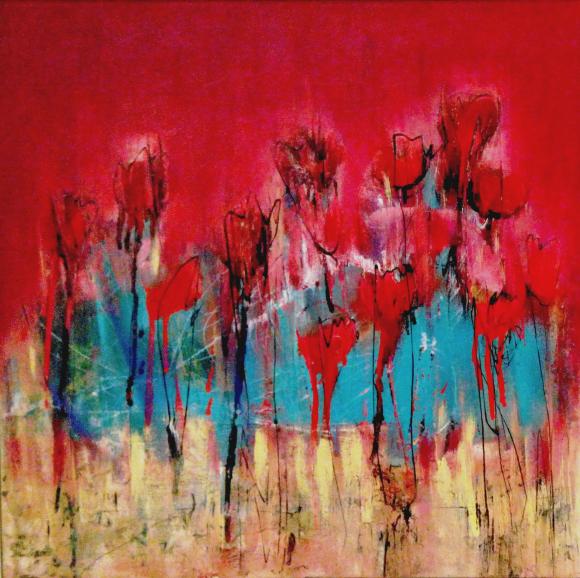
“Not only roses are red” (2015) by Ignacio Alperin
FAR-OFF, most secret, and inviolate Rose,
Enfold me in my hour of hours; where those
Who sought thee in the Holy Sepulchre,
Or in the wine-vat, dwell beyond the stir
And tumult of defeated dreams; and deep
Among pale eyelids, heavy with the sleep
Men have named beauty. Thy great leaves enfold
The ancient beards, the helms of ruby and gold
Of the crowned Magi; and the king whose eyes
Saw the pierced Hands and Rood of elder rise
In Druid vapour and make the torches dim;
Till vain frenzy awoke and he died; and him
Who met Fand walking among flaming dew
By a grey shore where the wind never blew,
And lost the world and Emer for a kiss;
And him who drove the gods out of their liss,
And till a hundred moms had flowered red
Feasted, and wept the barrows of his dead;
And the proud dreaming king who flung the crown
And sorrow away, and calling bard and clown
Dwelt among wine-stained wanderers in deep woods:
And him who sold tillage, and house, and goods,
And sought through lands and islands numberless years,
Until he found, with laughter and with tears,
A woman of so shining loveliness
That men threshed corn at midnight by a tress,
A little stolen tress. I, too, await
The hour of thy great wind of love and hate.
When shall the stars be blown about the sky,
Like the sparks blown out of a smithy, and die?
Surely thine hour has come, thy great wind blows,
Far-off, most secret, and inviolate Rose?
William B. Yeats (1865 – 1939)
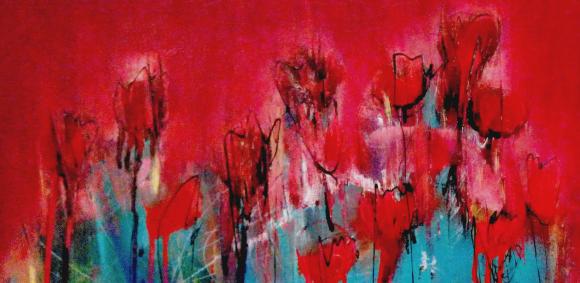
“Not Only Roses are Red” (2015) by Ignacio Alperin – detail –
I have been watching Jerry Seinfeld´s Comedians in Cars Getting Coffee since it was first on. From the beginning I liked the concept and most importantly, the way it was done.
The first thing I thought was “Mr. Seinfeld is probably right. We like coffee, we like cars, and comedians are funny. So, what´s not to love?”.
But many doubted. It was online, it was long, it was kind of weird (albeit, it was my kind of weird), and there was no real script. It was the ultimate show about nothing in particular with people who didn´t exactly know what they were doing there.
So the coffee bit was essential. Coffee, even more than cars, was the tree from which Seinfeld and friends could hang branches to leap around.
The initial response you heard on the grapevine was that it wasn´t going to work. I have been around enough internet specialists and executives to know that their view is that the average attention span of an internet viewer is about 5 minutes. So an online show of between 15 and 25 minutes was just not going to make it.
And yes ladies and gentlemen, do not be surprised. The people who feed us the virtual information we voraciously eat like Soilent Green think we are all internet dodos. It seems we generally have the attention span of a fly as well as the need to touch and move things around like chimpanzees.
But there is where Seinfeld and Co. hit the right note. They provided us, simians of the information age, with a tree and branches! And we all just jumped at the opportunity of enjoying ourselves before someone came along with the need for us to move along.
And so, six seasons on, we are still hanging around. Doing a bit of a “hoo hoo haa haa” while clinching to a banana peel and enjoying some friendly banter.
In the last episode of December 2015, Jerry had a very special guest: President Barack Obama. I urge you to watch this episode in the same way I urge you to watch all episodes. This one is surprisingly fresh and uncomfortably relaxed, and on top of that, it hit a right note at a time when I was in the middle of writing my last Blog article.
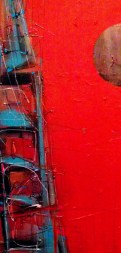
Tower of Power – the title of this article – is also the name of a painting of mine from early 2015. It is made in acrylic, inks, and oil based paints on canvas, and it is only 50cm wide by 70cm in height (not very large), but very powerful and intense. It is dedicated to the great R&B, Soul and Jazz band of the same name, from California, which has been around for more than 50 years and which has survived many changes in its composition.
TOWER OF POWER (2015) by Ignacio AlperinToP (2015) – detail –
And it is not only a great band (and a pretty powerful painting), it is also a way of referring to that ivory tower, or that isolated presidential palace to which so many people aspire, harnessed by money, political clout, or even circumstantial public support. It is same place that once clinched, they usually don´t want to leave.
The tower – my tower – is chaotic, energetic, a little unstable, and reminiscent of Babel´s, with an orange –furious- sky behind.
“Power tends to corrupt, while absolute power corrupts absolutely”, so says the famous quote from John Emerich Edward Dalberg-Acton, 1st Baron Acton, KCVO, DL. Or as you probably know him, Bob (or most likely, Lord Acton). He also said that “Great men are almost always bad men”.
President Obama refers very candidly, in his coffee laden chat with Jerry Seinfeld, to how nutty many world politicians get after holding on to power for too long.
Watching Obama with Seinfeld, and even admitting his “Well, I´m a cool President” line (you´ll see it in the full versión of the show), one cannot escape thinking that we are in the presence of one of the most powerful men in the world (in fact, these are two very powerful men chatting with each other).
So in light of Lord Acton´s phrase, would he qualify as bad, but charming? Or is it, as he says, that he may have saved himself -for now- from the perils of power just because he loves his job? And does this make him a good gage of what surrounds him?
Well, be it as it may, Obama´s explicit mention of world leaders who have “simply lost it” must have sent shivers down the spine of many seemingly powerful, self-conscious, mirror loving politicians the world over – both current and former -. It is uncomfortably funny to watch as well.
The truth is that, no matter where you live in the world, you can probably think of many examples. I was born in Argentina and we have a long history of nuts at the helm. But don´t be too hasty to laugh. This is something all nations share. I lived in several countries around the world and I can think of many politicians who qualify in this league. Power seems to have a tendency to corrupt no matter where you were born, how smart or pretty you are, or how well you talk or look on TV.
Tower of Power (2015) by Ignacio Alperin – detail –
On the positive side, sooner or later, we pass through these self-centered eccentrics and thugs, just like we pass any painful gall bladder stone, and we go on living (and peeing) with joy.
And as long as we are going to go on living –and peeing-, I would sugest that good music be always present. Here is then a great concert from Tower of Power, an impressive and powerful band, playing live in Lugano (Switzerland) in 2010.
Distance. We always need distance. “20/20 vision in hindsight” says the refrain. Being in the middle of whatever it is we are trying to clarify, solve, understand… is always a challenging place to be. That is why so few can become strong decision makers. Being able to make decisions in the middle of the storm is something that is in the purview of a good ship´s captain. And we know that not everyone has what it takes to make it there.
So for most mortals, looking back may be one of the ways in which we learn. It is a way to really “see” and better understand what happened, and what we must do to avoid the negatives and make even better all the positives.
Bill Mays plays “Looking Back”
The problem here is that for nearly everyone, looking back would mean admitting mistakes, maybe some bad decisions, or the existence of opportunities that may have been mistakenly lost or left unattended. So we revisit scenes on our own. It is mostly a private affair. Almost as peering through a half open door and watching a scene from a movie that feels familiar.
It is like home schooling for grown-ups. Only when we test it against others, we may find out whether it really worked or not. In the meantime, we keep going. We keep looking back. We keep seeing better and better, even if most often than not, a little while too late.
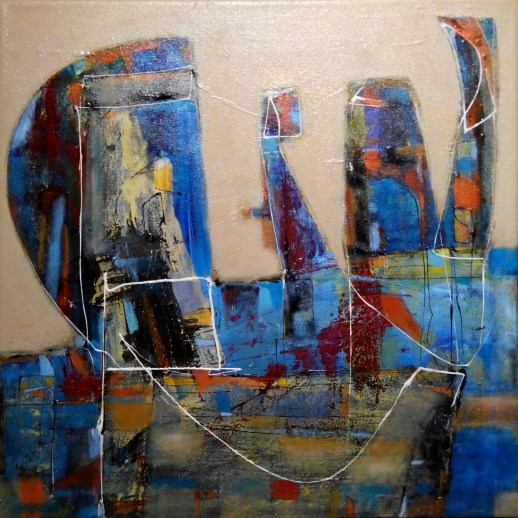
Looking Back (2015), By Ignacio Alperin Bruvera
She is looking back, hiden amongst her own blues and attempting to become a Captain of her own ship. Only those who really care will see her, pondering, about what was left behind. Looking back…
Acrylic, Ink, and Oil based paints on Canvas. 50cm x 50cm
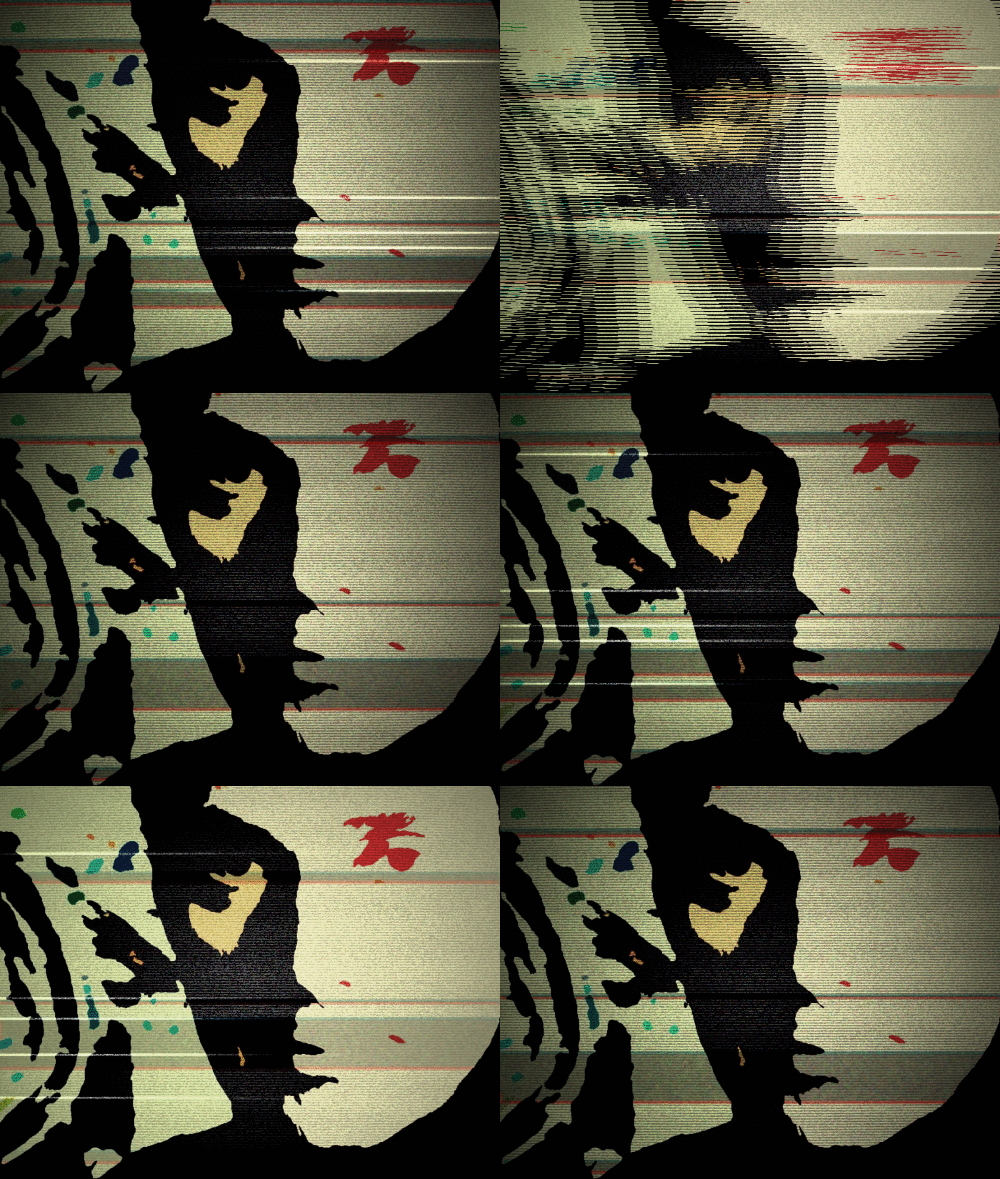
In more detail, some macro photography of the same painting.
And finally…there “she” is, just in case you want to know…. barely sketched but, just like “her”, if we look back at the painting and at a distance, we will see.
Lo que hoy entendemos por un año es simplemente una marca temporal imaginada por nuestra civilización para marcar el paso del tiempo. Como todo lo que intentamos hacer, en algún punto, es siempre un intento para “controlar” y “regular” nuestro paso por el Universo y todo lo que nos rodea. Al final de cada año, así como al principio del siguiente, intentamos hacer un balance de lo que sucedió hasta ese momento, y de lo que quisiéramos que suceda de allí en más. Pensar en cada año como el final de un trayecto, y al siguiente como el inicio de otro, nos ayuda a ordenar mejor nuestros proyectos y nuestros pensamientos, pero es también una manera de cerrar y abrir ámbitos que no deberían ser controlados por un hecho que, en la práctica, es meramente administrativo.
El amor, los sueños, los deseos, la buena voluntad, el respeto, la ética vista como un marco de convivencia entre los seres humanos, el respeto por la naturaleza, el derecho a sorprendernos como niños ante cada paso y sorpresa que nos devela esta magnífica creación son sentimientos que no se limitan a particiones temporales, son parte de una manera de vivir “en continuado” y una manera de actuar como sociedad que nos lleva a mejores lugares.
Por ello, y pese a ello, al finalizar este espacio temporal y antes de celebrar el ingreso al siguiente, quiero desearle a cada uno de Uds. que la vida les de amor y les permita disfrutar del amor de otros y de Dios; que sigan teniendo sueños, y que esos sueños se hagan realidad de vez en cuando (y cuanto más seguido mejor); que los deseos se conviertan en hechos (particularmente cuando involucran y benefician también a otros); que la buena voluntad se siga traduciendo en buenas acciones; que el respeto implique que nos respetan y que respetamos; que la ética no sea una filosofía perdida en el tiempo si no una manera de vivir, solidaria y considerada de los otros y de todo lo que nos rodea; y que como parte de ello sigamos aprendiendo que cuidar la naturaleza es cuidar a los demás y a nuestros hijos y nietos; y finalmente, que entendamos que fuimos también en algún momento (y si Dios quiere todavía lo somos) hijos y nietos, que fuimos niños, y que seguimos necesitando de la mirada más inocente que nos acompaña en algún lugar de nuestro ser, para ser personas más completas, más felices, más productivas, y posiblemente también, más buenas.
Que tengan un hermoso 2016 y una gran vida “en continuado”!
IGNACIO ALPERÍN BRUVERA: EL ARTISTA ARGENTINO QUE LOGRÓ LLEVAR EL ESPÍRITU DEL JAZZ A LA PINTURA
DE JOHN COLTRANE Y THELONIOUS MONK A KANDINKSI Y EL DON DE LA SINESTESIA/DEL SAXO AL ÓLEO/ENTREVISTA A UN ARTISTA ARGENTINO QUE SORPRENDE CON SU OBRA INSPIRADA POR EL JAZZ/SUS MUESTRAS EN EUROPA Y ESTADOS UNIDOS/”EL JAZZ PRODUCE ALGO MUY PODEROSO”/POR SANTIAGO ENEAS CASANELLO
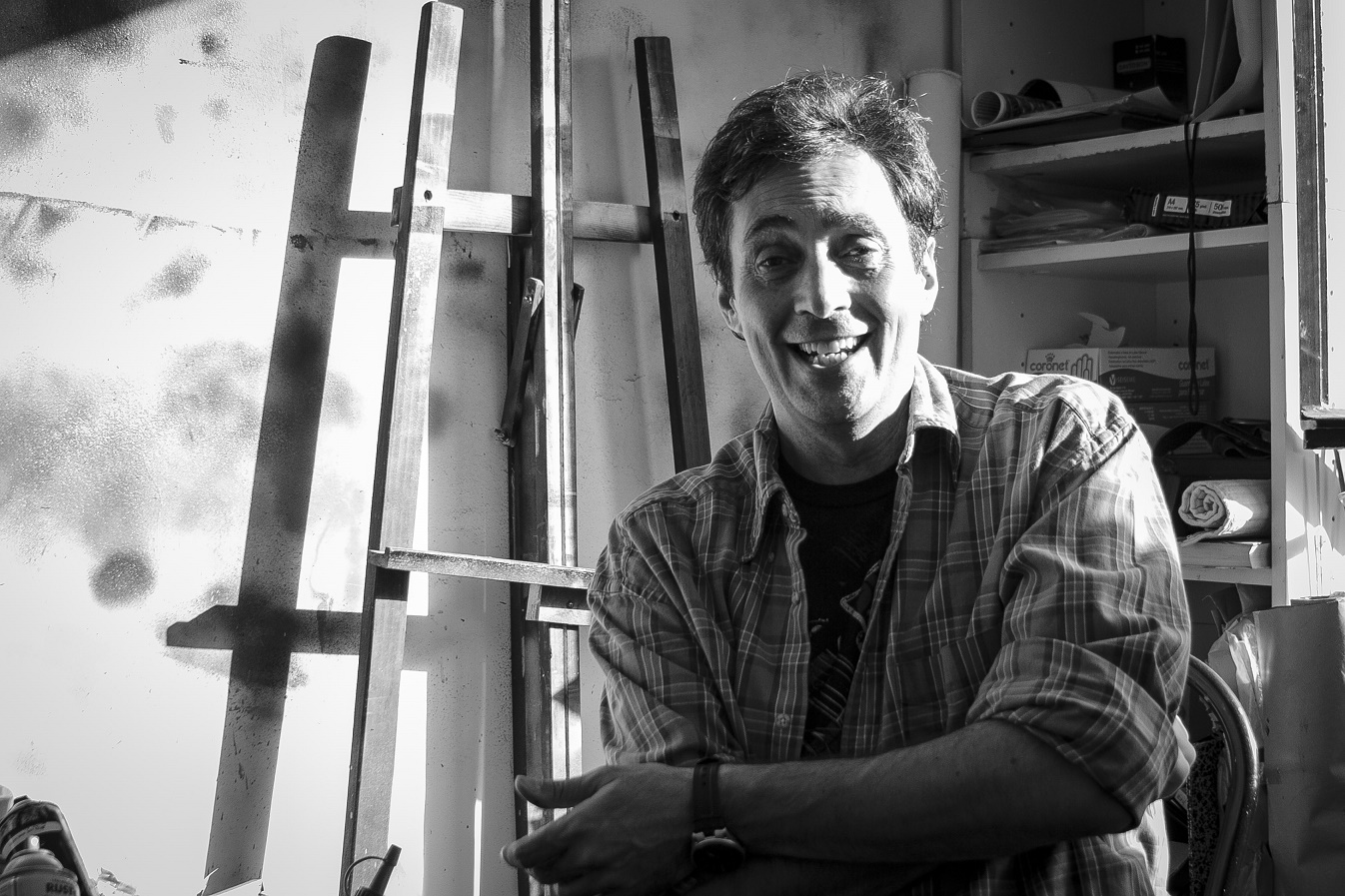
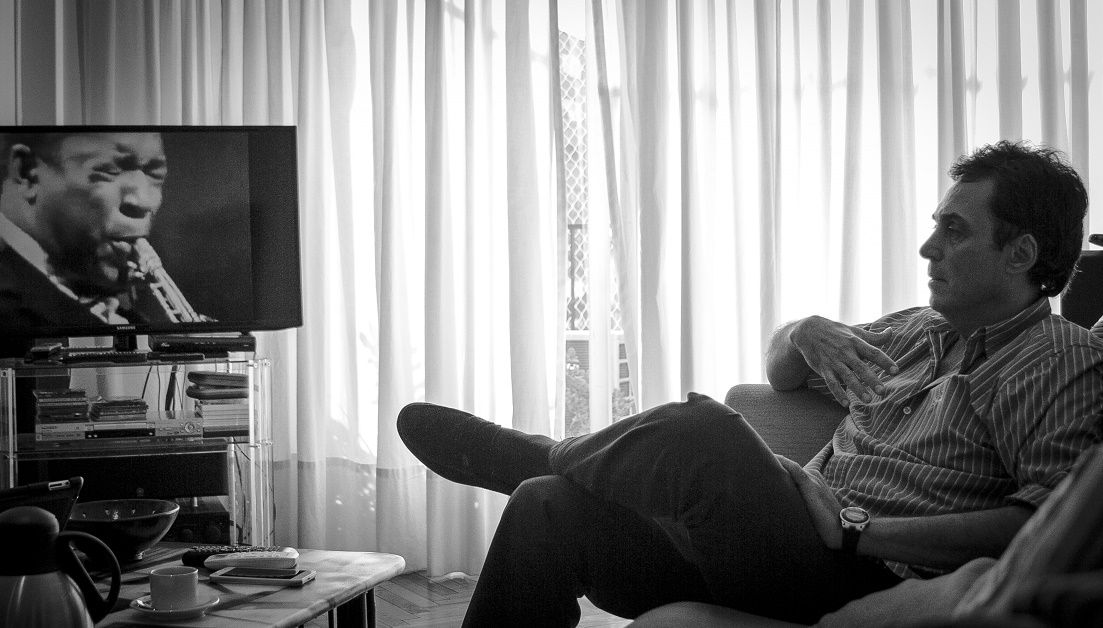
IGNACIO ALPERÍN BRUVERA: EL ARTISTA QUE LOGRÓ LLEVAR EL ESPÍRITU DEL JAZZ A LA PINTURA / POR SANTIAGO ENEAS CASANELLO. FOTOS: JACINTO FREIXAS.
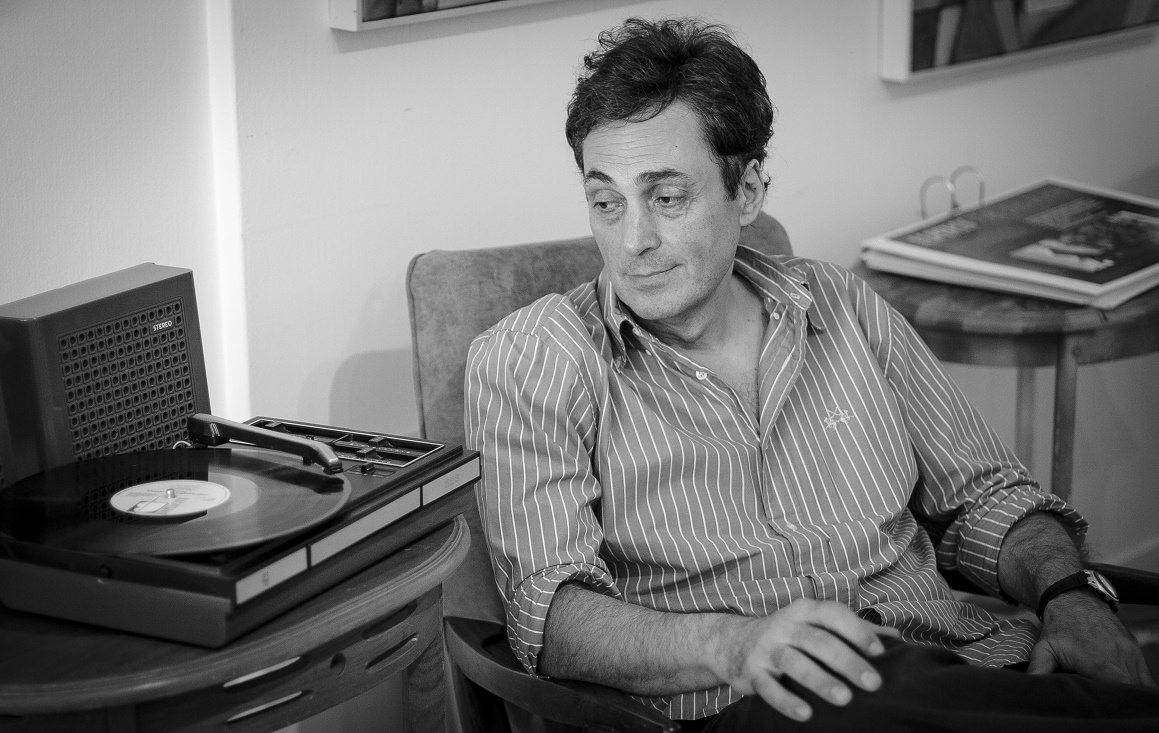
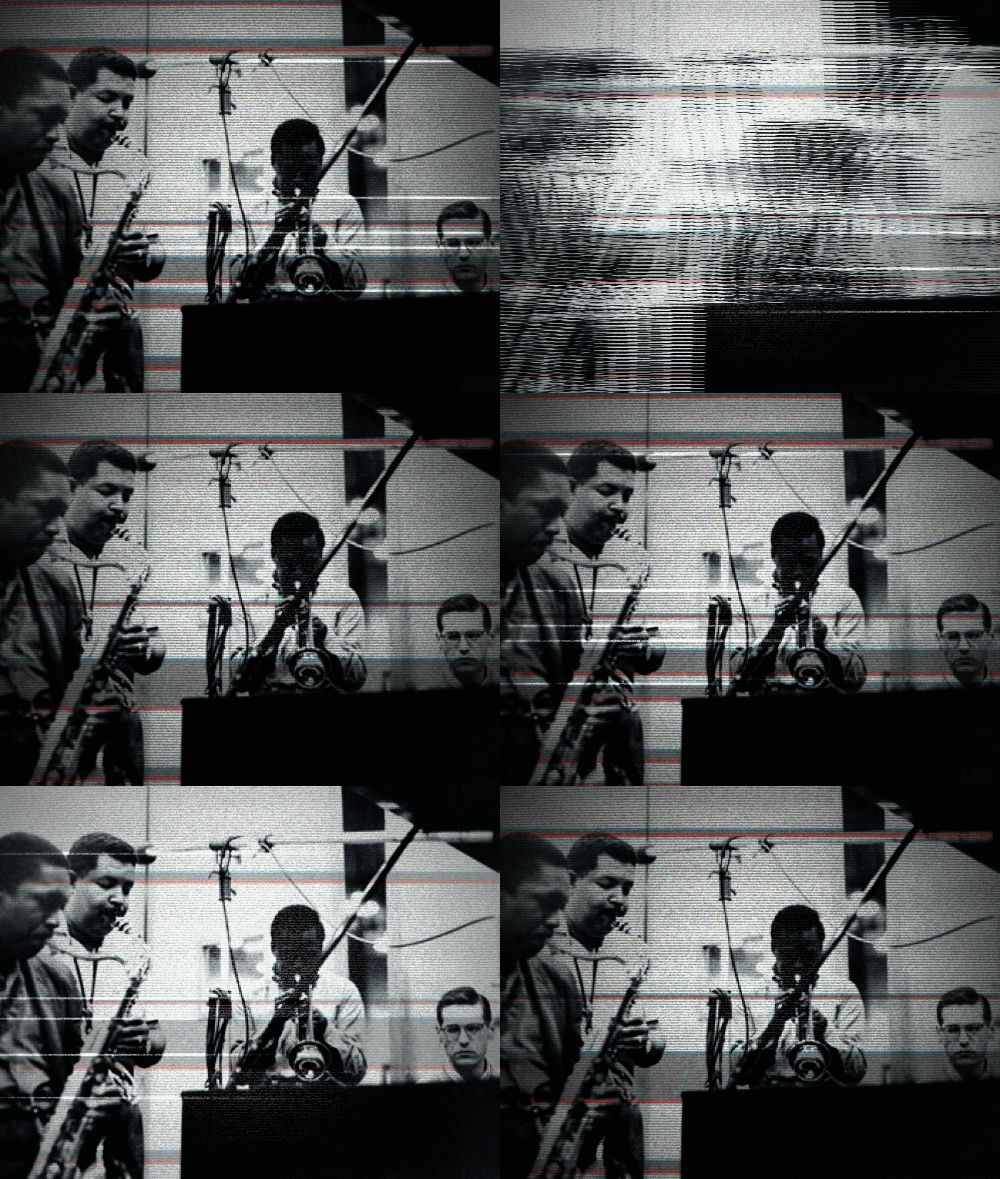
Afuera, el ruido del tránsito y el estrés. Pero adentro, en su taller en un departamento de Retiro, Ignacio Alperín Bruvera puede pasarse tres días recostado en un sillón escuchando jazz. Miles Davis, John Coltrane, Bill Evans, entre muchos otros músicos de ese género que tanto lo conmueve y que le genera “algo muy poderoso”. Desde que siendo adolescente vivía en Australia, y el padre de una de sus mejores amigas, jazzista, lo introdujo en el ambiente jazzero de Melbourne. “Pero no es que tengo la mejor vida del mundo y cuando estoy así escuchando música no hago nada”, le aclara a MALEVA: “yo en ese tiempo estoy trabajando, en esos días se me pueden ocurrir cinco obras”. Ignacio Alperín Bruvera es un artista de Buenos Aires, criado en Australia (“me queda el humor australiano”), que no pinta escenas de jazz, pero pinta casi siempre bajo la influencia del jazz. Su obra, en general abstracta y de una precisión técnica notable, sorprende y es un éxito en el mundo. Realizó muestras en el país, en Estados Unidos (New York, Miami, Fort Lauderdale), y en Europa (Berlín, Lisboa, Londres). Sus influencias: Kandinsky, Pollock, Picasso, pero sobre todo la melancolía de un saxo de Nueva Orleans o una improvisación hipnótica de la época de oro del jazz. Todo eso lo plasma en el lienzo. Jazz visual, así lo define. Él, sus pinceles, son la vía conductora.
¿Qué tipo de jazz son tus cuadros?
Yo diría que el jazz es mi principal fuente de inspiración pero también hay música clásica y otros estilos que aparecen, pero el jazz a mí siempre me gustó mucho. En Australia, en donde viví 16 años, e hice toda la secundaria y la universidad, era amigo de una chica que era hija de un jazzista llamado Steve Gibbons, músico de jazz y el hacía música muy de New Orleans. Con ella yo aprendí a conocer el ambiente del jazz australiano. Yo pinto desde los 12 años y eso solidificó mi enamoramiento con el jazz. Desde que tengo 14 años que ponía la música a todo volumen en mi casa y me encerraba para pintar. Un médico me dijo que tengo sinestesia que es una condición neuronal benigna que se produce en el momento de gestación y que tiene el dos por ciento de la población de la tierra, aunque no sabe que la tiene. La sinestesia es una condición neuronal inusual que conecta sentidos. El jazz me toca algo interno muy poderoso. El que tenía sinestesia era Kandinski que también decía inspirarse por el jazz y la música, y da la casualidad que muchos años después encontré un video muy poco conocido de Kandinski dibujando y recuerdo haberlo visto y me fui a buscar entre las cosas que yo dibujaba y veo que habíamos hecho un dibujo muy parecido.
Es cierto que hay algo “kandiskeano” en tu obra.
Sí, me lo dice mucha gente, pero soy de ver pocos artistas para no influenciarme demasiado. Pero de golpe entendí que lo que tenemos en común tiene más que ver con la sinestesia que otra cosa.
“Yo pinto desde los 12 años y eso solidificó mi enamoramiento con el jazz. Desde que tengo 14 años que ponía la música a todo volumen en mi casa y me encerraba para pintar. Un médico me dijo que tengo sinestesia que es una condición neuronal benigna que conecta sentidos.”
¿Encontrás patrones cuando escuchas jazz y pintás? ¿Por ejemplo que ciertos músicos te provoquen determinados colores?
Te diría que no. Pero Bill Evans ahora que lo pienso me tira a azules verdosos, pero porque su estilo no está basado en una demostración enorme de cualidades con los diez dedos sino en como manejaba los silencios dentro de su obra.
¿Cómo empieza el proceso creativo, vos decís voy a pintar o voy a escuchar música?
Si no pinto me estreso, para mí pintar es una necesidad. Tengo una enorme colección de música, y me puedo pasar tres días tirado en un sillón escuchando música pero no es que tengo una gran vida sino que estoy trabajando, en esos tres días tal vez me surgieron 5 obras. Por lo general no trabajo una obra por mes sino que voy comenzando obras y a medida que voy avanzando elijo el momento de hacia donde voy yendo con la obra. Obras grandes haré 15 al año.
¿Revelás que músico está detras de tus obras o es algo que queda en vos?
Le suelo dedicar el nombre de la obra al tema que más me impactó del disco.
“Miles Davis, Bill Evans, Thelonious Monk, John Coltrane, todos ellos me inspiran pero la lista es enorme…”
Mencioname cinco músicos que para vos hayan sido claves en la producción de tu obra.
Miles Davis, Bill Evans, Thelonious Monk, John Coltrane y después una lista enorme. ¿Qué te pasa con el silencio? ¿Podés pintar en silencio?El silencio me permite ordenar la obra.¿Pero te inspiraste alguna vez sin música?Sí. También tengo obras semi figurativas. Yo empecé con mi padre que es ingeniero en las mesas de dibujo, y me enseñaba la línea de horizonte, las perspectivas, trabajar con reglas, con los ángulos. Empecé con óleos, pasé a acrílicos y ahora es un mix. Mi obra hoy tiene de todo, tinta, spray, alambres, todo.
“También tengo obras semi figurativas. Yo empecé con mi padre que es ingeniero en las mesas de dibujo, y me enseñaba la línea de horizonte, las perspectivas, trabajar con reglas, con los ángulos. Empecé con óleos, pasé a acrílicos y ahora es un mix. Mi obra hoy tiene de todo, tinta, spray, alambres, todo.”
¿Y pretendes transmitir algún mensaje, alguna consigna con tu arte?
Lo cierto es que el artista a lo largo de la historia estaba adosado a la iglesia o a la monarquía, el artista que cuestiona es novedoso. Yo tengo mil cosas que cuestionar de la sociedad actual pero no lo plasmo en mi arte. Aunque sí hay una conexión con lo que entiendo que es la vida. Exploro desde la tragedia personal hasta los triunfos. Aparece la esperanza en un punto trágico y si estoy en un momento fantástico exploro la idea de que todo puede cambiar. Eso en definitiva es la vida.
¿Qué momento disfrutás más de la creación?
Lo que puedo decir que el comienzo de la obra para mí nunca es fácil, comienzo con una idea. Pero el inicio no es fácil. Al finalizar el primer día miro y casi siempre estoy muy disconforme con lo que he hecho. Soy muy crítico de mi propia obra. Una vez me apuraron para una muestra y largué una obra que todavía no estaba lista y la curadora se dio cuenta y la expuso separada. Y esa obra la tuve guardada por un año y pico. La realidad es que el artista para adentro te va admitir sus errores, pero para afuera no podés. La obra es imperfecta y parte de lo lindo de la obra es que así lo sea.
Sos politólogo, trabajaste en empresas, sos docente de creatividad (en la Universidad Católica). ¿Cómo conjugás todos esos perfiles con tu faceta de artista?
Justamente, yo a mis alumnos les digo que ya pasó la época en la que la gente sentía que ser empleado de una empresa, trabajar 50 años e irte con un reloj de oro era una realización. Acercarse a la búsqueda de la felicidad tiene que ver con aprovechar todos los talentos que tenemos.
“Si no pinto me estreso, para mí pintar es una necesidad. Tengo una enorme colección de música, y me puedo pasar tres días tirado en un sillón escuchando música pero no es que tengo una gran vida sino que estoy trabajando, en esos tres días tal vez me surgieron 5 obras.”
¿Tocás algún instrumento?
No, pero es algo que en algún momento aprenderé. Me gusta el saxo pero intuyo que me será más fácil aprender el piano.
¿Qué conexión encontrás entre el jazz y la creatividad, que es la disciplina que enseñás?
El jazz es música de burdel y pega un cambio a fines de los cuarenta cuando empiezan a aparecer todos estos tipos que venían de estudiar en academias de música y el jazz empieza a alejarse del jazz de las grandes orquestas de veinte tipos y mucho ritmo de Nueva Orleans y empieza a parecerse más al cuarteto de música clásica, y esa para mí es la etapa de oro, la que más me gusta. Del 40 al 65 para mí es una etapa de oro. Todos tipos que vienen a improvisar dentro de la complejidad de sus partituras. Son fantásticos ejemplos de creatividad e innovación grupal en la música y en todo.
¿A qué hora te gusta despertarte?
Yo a veces pinto a las cuatro de la mañana, por eso soy de despertarme tarde.
¿A qué le dirías basta?
Me sacan el egoísmo y el resentimiento. También la violencia. Pero el egoísmo, insisto, me parece un pecado capital.
¿Con quién te tomarías un whisky?
No con artistas porque pienso que sus obras hablan por ellos.
¿Primer síntoma que tendrías si no pudieras ser más artista?
Se pueden hacer otras ochenta mil cosas creativas. Buscaría otras maneras de expresarme. Pero estaría muy frustrado. O canalizaría para que otra gente exprese lo que querría expresar yo.
Comparto con Uds. el prefacio de un trabajo de mi autoría que lleva como título “Creativos en la era de la Creatividad : Arte y Jazz – Algunos Conceptos y Propuestas (Tercera Revisión)”
Este trabajo, relacionado a mis clases como Profesor de Creatividad e Innovación en los MBAs de la Facultad de Economía de la Pontificia Universidad Católica Argentina (UCA), busca entrelazar conceptos relacionados a la actividad creativa en el Siglo XXI.
Espero que sea de interés.
Prefacio
Los estudios formales sobre creatividad comienzan sustancialmente hace casi un siglo. En el transcurso de estos casi 100 años mucho hemos aprendido sobre nuestra naturaleza, sobre nuestra manera de pensar y de imaginar las cosas, y sobre los métodos y herramientas que nos han hecho una civilización exitosa.
La búsqueda, como muchas de las búsquedas humanas, ha tenido el ojo puesto en encontrar la solución integral, el libro de oro, el santo grial de la creatividad que le dé respuesta a todo y resuelva todas nuestras necesidades creativas.
Sin embargo, y por suerte, no solo no lo hemos encontrado (más allá de convicciones temporarias), si no que exitosamente hemos ido comprendiendo que las respuestas no son siempre las mismas, que “leer el libro” no nos exime de pensar, que un sabio nos deje conceptos brillantes no nos exime de tomar decisiones, y que las respuestas en un mundo cambiante son también cambiantes y no necesariamente consecuentes con soluciones a problemas similares en otros momentos.
En otras palabras, hemos comprendido que el proceso creativo es creativo en sí mismo. Es cambiante, modificable, divertido y frustrante a la vez. Y hemos aprendido también que se trata de un proceso grupal y no individual.
La creatividad y la innovación, desde el punto de vista del desarrollo, es un proceso que nos involucra, nos obliga a abrirnos hacia los demás y hacia sus ideas y conceptos, nos hace reconocer la importancia del conjunto y no solo del individuo.
Se podría describir como un proceso casi comunitario. La solución, como en la vida en general, no proviene de una persona circunstancialmente iluminada, sino del correcto destilado de ideas, conceptos y sueños de un grupo de personalidades muchas veces complementarias y otras simplemente diferentes, trabajando parcialmente en conjunto y otras veces sin conocimiento el uno del otro, incorporando opiniones externas, y con el agregado de un porcentaje importante de hechos fortuitos pero que interpretados y utilizados correctamente, nos llevan a generar respuestas novedosas e innovadoras.
Hasta la visión de la persona que parece iluminada está conformada, por debajo de la superficie, por una enorme cantidad de conceptos, ideas, fracasos y aprendizajes de otras personas.
En definitiva, la creatividad vive y explota en cada momento de nuestras vidas y convive con nosotros. Y nuestro rol, diferente en cada ocasión y como parte de una foto más macro y compleja, es el de colaborar a encauzarla temporariamente en pos de un resultado.
Como veremos, existen soluciones muy probadas que pueden ser más y menos estructuradas, y más o menos exitosas.
En términos corporativos, por ejemplo, las soluciones que emanan de una estructura o formato probado por otras empresas – sistemas o procesos basados en programas (software) y un paquete de experiencias, ejemplos y soluciones pre-digeridas por ejemplo – son normalmente las preferidas.
La razón es que un “paquete” que ya fuera adoptado por otros es más fácil de vender para el originador, y es más justificable internamente a la hora de ser adquirido. Pero inclusive sin cuestionar el éxito relativo de cada una de estas propuestas, en el mejor de los casos éstas tienden a ser una posible solución de relativamente alto costo, y es solo accesible para las grandes organizaciones.
Solo entre un 10 y un 20% de la población activa que trabaja en estos temas, en el mejor de los casos, tendrá acceso a estas soluciones de manera directa o indirecta solo por el simple hecho de tratarse de soluciones costosas.
El resto trabajará en una gran empresa para luego independizarse, otros serán profesionales independientes toda la vida, otros generarán sus propios emprendimientos en soledad o asociados a otras personas, y otros trabajarán en relación de dependencia en una o más industrias a lo largo de su existencia. Y en todos los casos, sus experiencias laborales, profesionales y empresariales serán variadas, tanto en lo que refiere a los resultados como a las industrias.
Para estas personas que deben enfrentar cada día un mundo cambiante es que están dirigidos estos conceptos. Una manera de graficar esta realidad es comprender que a lo largo de nuestras vidas tendremos en promedio entre 5 y 6 trabajos (nuestros hijos entre 6 y 9), y que pese a que hemos sido entrenados clásicamente, el ecosistema económico ha dejado de obedecer esas reglas tradicionales y nos enfrenta con la necesidad de, inclusive, adaptarnos a profesiones o tareas inexistentes cuando ingresamos inicialmente al mercado laboral.
Es un hecho que las escuelas secundarias en el primer mundo acomodan hoy sus programas de estudio para darles a los estudiantes las herramientas que le permitan lidiar con trabajos, profesiones y vocaciones que sus profesores hoy desconocen ya que no existen como tales.
Hace un tiempo un profesional de unos 50 años, muy ofuscado, me preguntó “por qué en la empresa me insisten en que debo cambiar y ser más creativo, cuando he llegado a donde he llegado gracias a que soy como soy”. Y la respuesta no es fácil de digerir.
Nosotros, que venimos armados con un bagaje educativo mucho más clásico que los chicos que están terminando sus estudios y a punto de ingresar al mercado laboral, ya estamos debiendo enfrentar estos excitantes pero difíciles retos que indican que es probable que para el año 2030 (perfectamente dentro de nuestra vida laboral), cerca del 50% de los trabajos y profesiones actuales ya no serán necesarios y serán calificados como “obsoletos”i .
Ser creativos, entonces, tiene que ver con reconocernos como tales, y ser flexibles y adaptables a las nuevas necesidades laborales y tecnológicas. En el fondo es ser, en términos individuales y de manera consciente, lo mismo que ya hemos sido como civilización de manera evolutiva e intuitiva. Y desde ya, abrazar estos conceptos pasa también por comprender que no está escrito que porque la suerte nos haya acompañado hasta ahora, esa va a seguir siendo necesariamente la regla en nuestra vida profesional hasta que digamos basta. Ni más ni menos.
Por eso es que la visión vanguardista de la creatividad es la de colaborar en la creación de sistemas configurables y dúctiles como la vida misma. Es dotar a cada uno de una caja de herramientas y mostrarle las maneras en las que esas herramientas pueden ser utilizadas. No podemos ya confiar que en un libro, que en una teoría, o que en un sistema está La respuesta definitiva.
Hay una valiosísima experiencia investigativa acumulada y es necesario que se conozca, se interprete, y se respete. Al mismo tiempo hay que acompañar en el proceso de discernimiento, particularmente en relación a toda la información que fluye en el mar de datos que nos rodea, entre lo que es realmente importante para nuestras necesidades, y lo que no lo es.
Promover la adquisición de competencias que permitan enhebrar y relacionar toda esta información de manera productiva, y colaborar a mejorar la satisfacción individual de cada persona dentro de este ámbito es, entonces, nuestro objetivo.





 story almost in cinematographic terms. It needs that attractiveness that makes your story something to be consumed, in the good sense, like a good novel. In short, it needs to become a story that people can engage to and become close to, and by doing so, they will begin to know you, and will become closer to you and your art.











 IGNACIO ALPERIN: THE ART OF THINKING OUT LOUD / EL ARTE DE PENSAR EN VOZ ALTA