A personal, curatorial & bilingual Blog about: Artistic Movements, my Art, Creativity, Innovation, Design, Leadership, Empowerment, Sustainability, Science, Jazz, Movies and other cool pursuits - Blog personal y curatorial bilingüe sobre: Movimentos Artísticos, mi Arte, Creatividad, Innovación, Diseño, Liderazgo, Empoderamiento, Sustentabilidad, Ciencia, Jazz, Películas y otros temas.
“Blue in Green” is the third tune on Miles Davis’ 1959 album, Kind of Blue. One of two ballads on the LP. (the other being “Flamenco Sketches“).
As an aside here (and something that may earn you points in one of those “did you know?” kind of games), it has been said that the second ballad which appears on the record as “Flamenco Sketches” is in fact the song “All Blues” and vice versa. Yes, the argument is that somebody may have switched them by mistake and that they only realized it when the records were already printed and so were the covers, and as a result one simply became the other.
At the very least this is what Jeremy Yudkin argues (also as an aside point) in his scholarly article Miles Davis Kind of Blue, which you can read on the Oxford University Press Music Quarterly Journal. He correctly points out that “Flamenco Sketches” fits more logically with the strumming mid-tempo of the song which appears as “All Blues”, while the title “All Blues” fits much better with the last, very slow song that is known as “Flamenco Sketches” (If you ask me, the easiest thing would be to simply check the original copyright registry of both scores…but no one is asking me…I know).
In any case, the spirit behind “That other day” is a little bit more complex, and less romantic, than “That Day”.
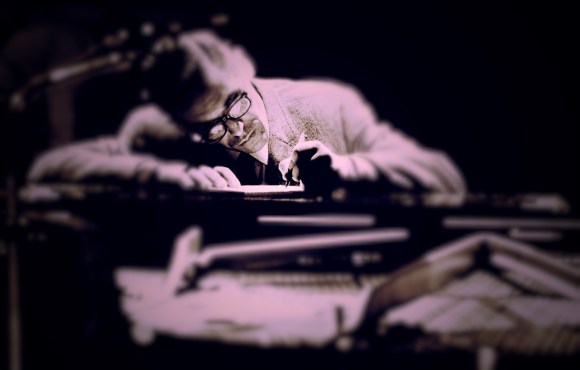
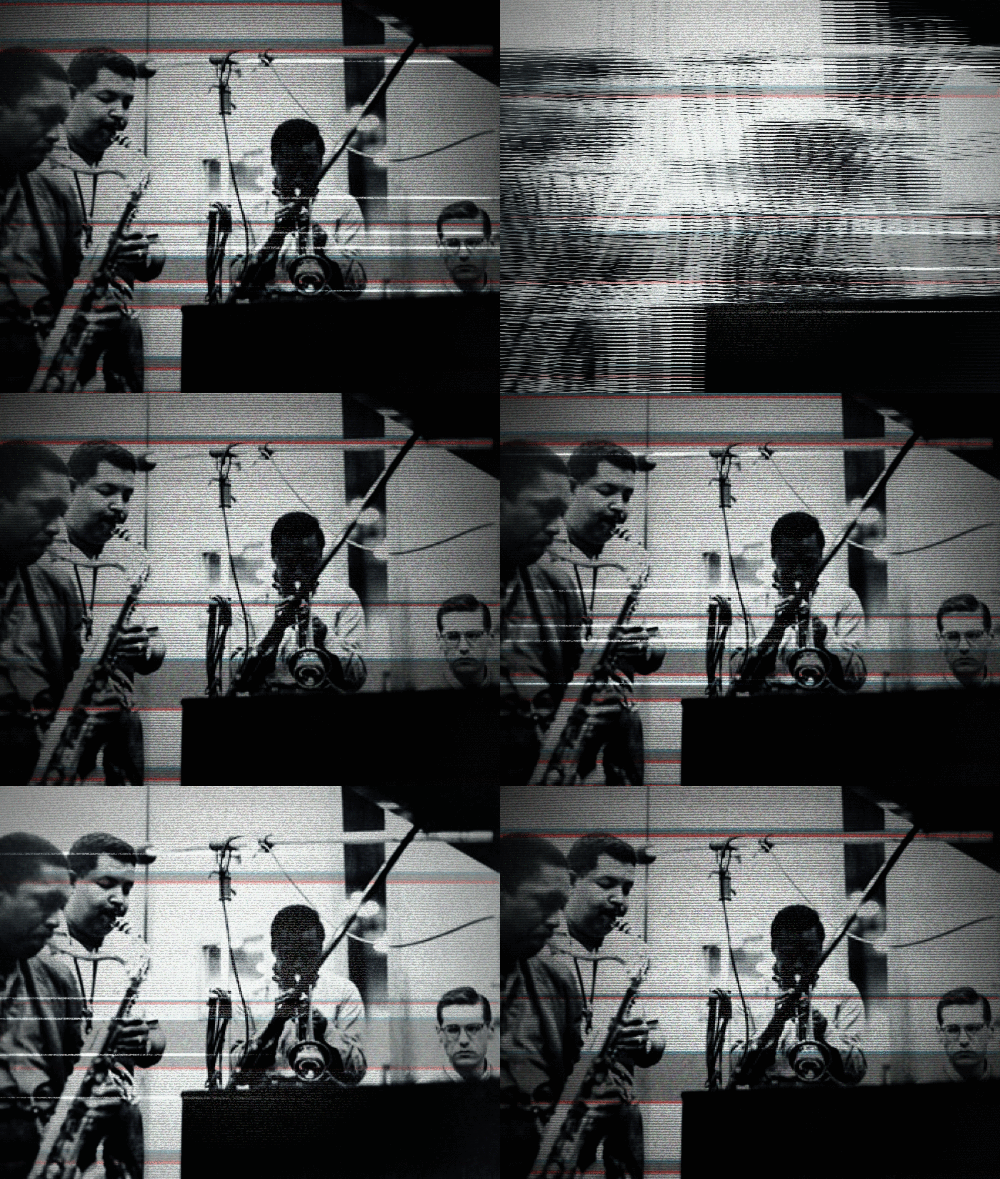
One of the most beautiful songs in that masterpiece album is “Blue in Green“, with its mainly modal melody. Recorded on March 2nd, 1959, in New York City, and in the same session where “So what” – another classic – was also recorded, it was the result of combining the talents of some of the best musicians of its time: Julian “Cannonball” Adderley, Miles Davis, Jimmy Cobb, Bill Evans on piano, and Paul Chambers on bass.
Even though the song appeared in the original record as written by Davis, it has long been speculated that pianist Bill Evans had, at the very least, a hand in it (the credits for the Evan´s trio Album “Portrait in Jazz”, in which there is a version of “Blue in Green”, attribute the song to ´Davis-Evans´)
Some go as far as to say that Evans actually wrote it. This is the case of producer Earl Zindar, whom in the Fall 1993 issue of a magazine called Letter from Evans , said that he knew perfectly well that Evans had actually penned it himself. He said “I know that it is [100-percent Bill (Evan)’s] because he wrote it over at my pad where I was staying in East Harlem, 5th floor walkup, and he stayed until 3 o’clock in the morning playing these six bars over and over.”
On the opposite side of the street we find Miles Davis asserting, in his autobiography, that he alone composed all the songs on Kind of Blue. Confirming this is the writer and poet Quincy Troupe, co-author of one of the best know Davis biographies -, who said in an interview and in regards to this issue:
“Miles talked about being back in Arkansas, and he was walking home from church. And the people in the backwoods were playing these really bad, really great gospels. He couldn’t see the people but he heard these gospels coming in through the trees and over the trees. And it was dark and he was about six years old, and he was walking with his cousin. So he said that gospel, and that music, and also he had been listening to the music from the Guinean Ballet, the finger piano, so all of that fused and came back to him with this feeling that he heard playing when he was walking through the back roads of Arkansas.
And he started remembering what that music sounded like and felt like. He said that feeling was what I was trying to get close to in Kind of Blue. That feeling had got in my creative blood, my imagination, and I had forgotten it was there. I wrote these blues to try to get back to that feeling I had when I was six years old, walking with my cousin down that dark, Arkansas road.”
The end result is that, sadly, we will never know the whole truth. Over the last 20 years the song appears mostly now as a “Davis-Evans” composition. It is sometimes difficult to know what goes on in the mind of brilliantly creative people to get stuck, at one point, over something like this and never settle the issue. I guess, it is that exception that everyone talks about when reaffirming a certain opposite rule.
The issue became so heated between both musicians that Zindar himself, in another interview conducted by Win Hinkle, recalled the 1978 Evans NPR interview in which he asserts his authorship of the song, and recalls –with certain humor and disdain – writing to Miles with the suggestion that he should be entitled to a percentage of royalties, to which Miles apparently responded with an envelope that had a check for twenty-five dollars in it.
I am no musician, but I can distinctly see Evans hand in this. Miles was also a wizard, so doubts persist. I guess the best way to go about it is to just enjoy their brilliance and accept that for once, these two geniuses showed their flaws and pettiness for all of us to see. An exceptional blemish for two men who had dazzling musical careers that no one can refute or argue with.
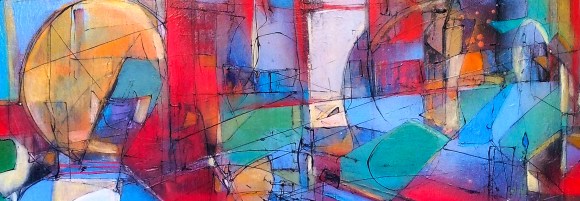
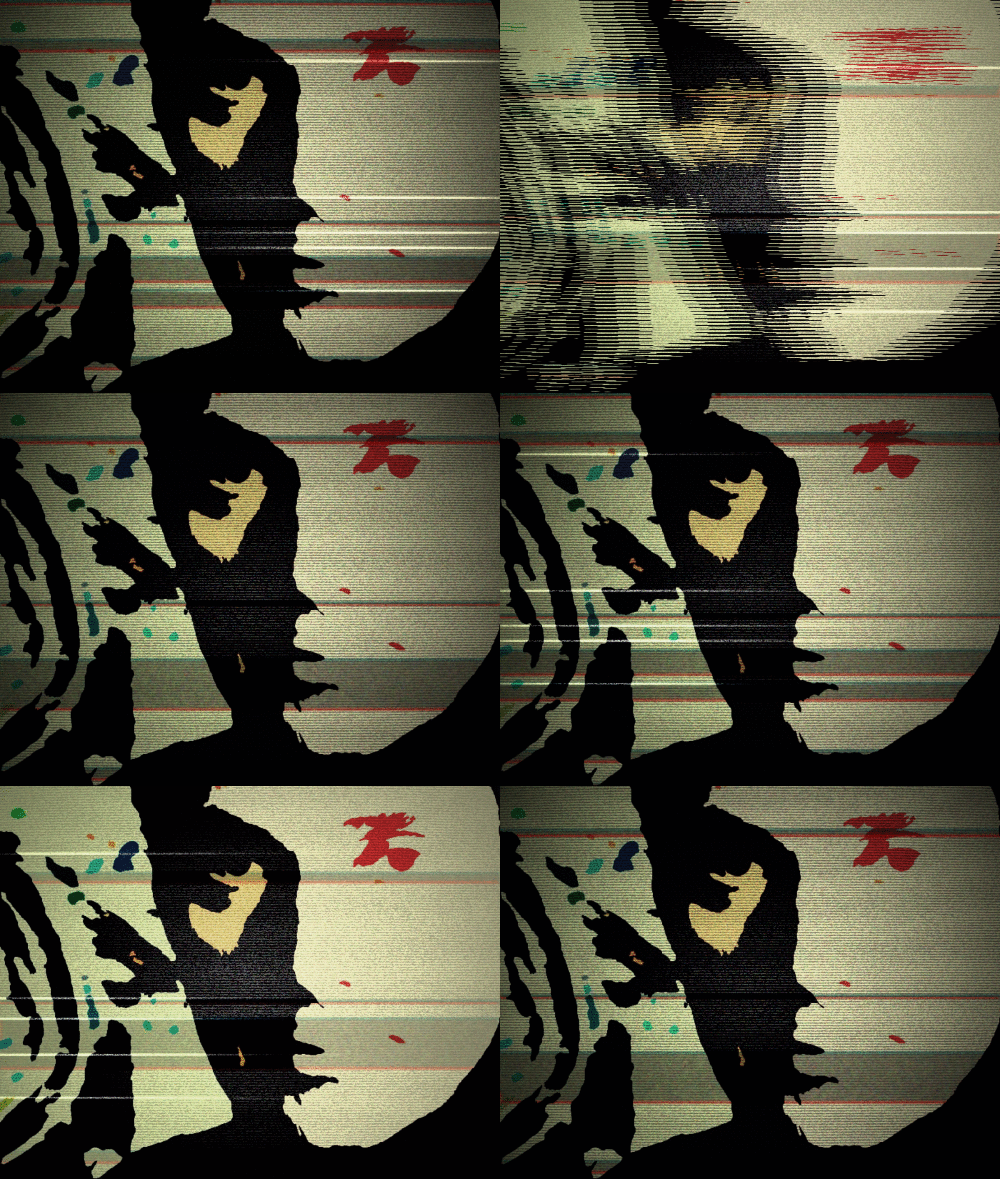
Here is my pictorial version of “That Other Day”. That nonetheless beautiful day – the music still moves us the same way it did before – but it is also the day in which these two egos collided. More complex than the original painting, but maintaining its spirit and stressing the superposed opinions of Bill and Miles.
It was a rainy morning that had turned into a lovely afternoon. You know the sort of day I mean. Wet streets that reflect the sunlight with enriched tones, trees with rain water droplets hanging from every leave. The air, cleared by nature and perfumed by the ozone coming from the warm wet grass of the park next door, while the cleansing wind felt slightly cooler from caressing the surface of all the wet buildings that surrounded us.
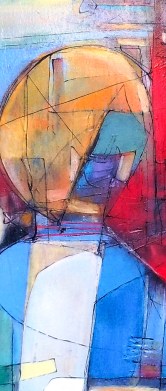
THAT DAY (2014) – detail – by Ignacio Alperin
As usual, I was painting and listening to some jazz.
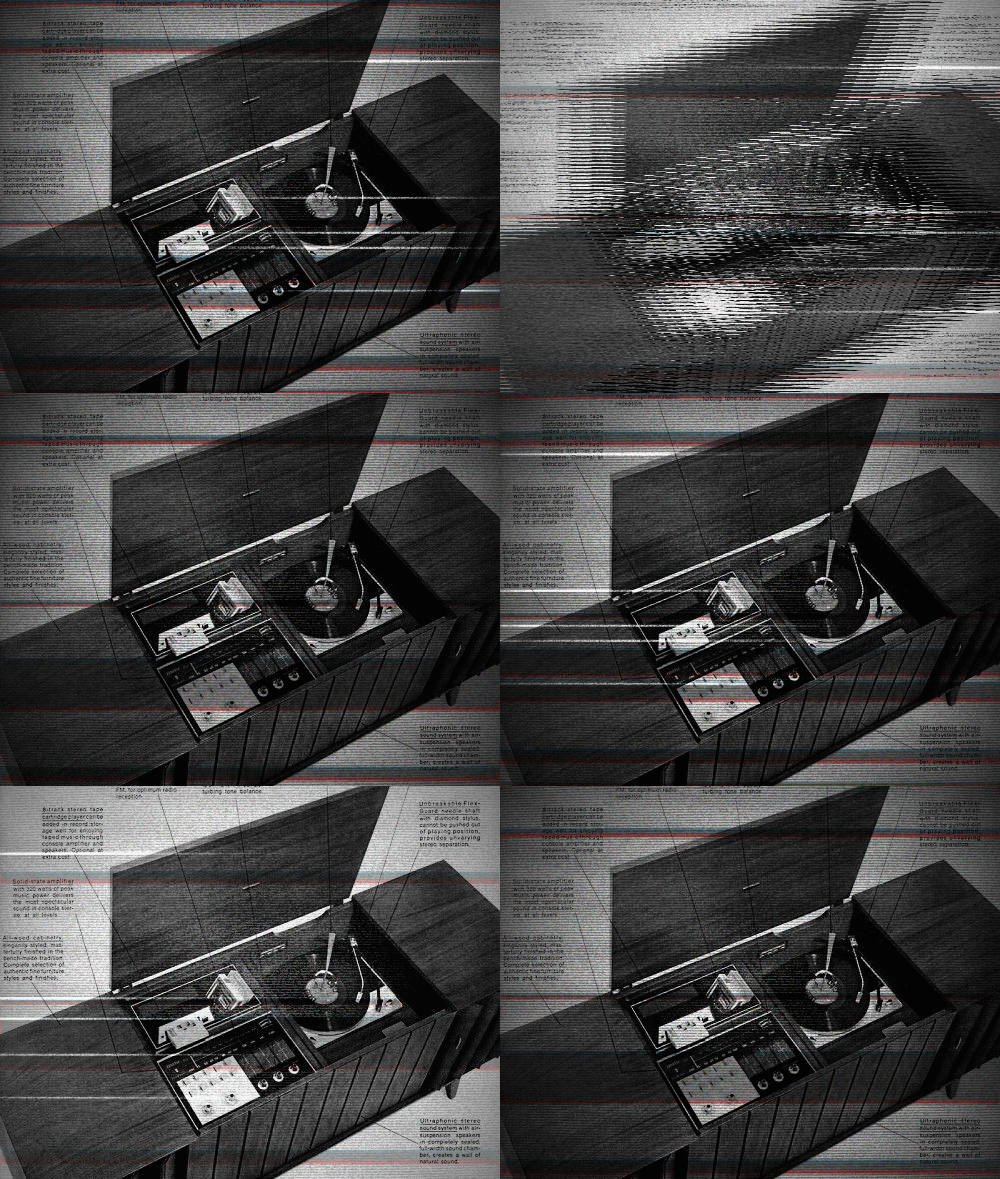
It was Kind of Blue, in vinyl, playing this time on an old record player rather than my usual garb. A gift from my late dear aunt Frances whom, after passing away, had left for me to enjoy.
I remember sill that at first I could not get it to work. It was a portable Phillips record player in bright red which packs like a little suitcase. Very cute, very shiny, and very silent.
I thought to myself, “Where will I be able to find someone to fix this?”
THAT DAY – Detail
It was, after all, more than 40 years old. So I gave it a try myself. As it happens, and as I fiddled with it for a while, I realized that it didn´t work simply because it had never been plugged in since purchased. It was brand new, seals untouched, warranty still in the box. Simply the contacts had rusted over the years from inaction.
A bit of cleaning and suddenly, I was off and running. The slightly tinny sound of the small speakers did not bother me. I had my huge Yamahas for everything else. This was the right sound for special moments.
And this was one of those special moments. As artists, we all – consciously or not – try to achieve some kind of immortality. Or at the very least, surpass our own life time by leaving behind something that may allow us to achieve a kind of “longevity” of sorts through our artistic works.
I envy – in a manner that is more healthy admiration – the fact that movie actors and musicians through image and sound can achieve this much more easily than us.
To me, listening to any of these recordings is like being in my house one moment, then I turn Kind of Blue on, and next thing I know, I am pushed into some type of time travelling gizmo. All of a sudden I am in 1959, standing in a corner of a studio while these guys, most of them long gone in 2016, come suddenly to life.
They look at each other, some smile, others concentrate while puffing smoke, others chew gum and read their music. Suddenly the voice behind the glass taps and says “Take one!”, and off they go. As I listen they are alive, they are immortal, they are playing “live” for me once again and they are great at it.
It is that very personal, very emotional connection, the one I use in my painting. It is a combination of admiration, melancholy, and happiness. My synesthesia helps along the way, and it all translates into colors and shapes, and hopefully feelings transmitted at a distance.
So I was painting and I thought to myself “This day” is “That day”. The wet trees, the sun coming through, Miles´ trumpet pushing the clouds, Evans keyboard giving a soundtrack to the wind, Cannonball and Coltrane caressing the grass, Chambers putting rhythm to the bounce of every rain drop, and Cobb simply reminding us of the summer storm that was quickly receding in the background.
And here is “That Day”.
The result of that beautiful rainy morning, and sunny afternoon, in which a great “live” band and myself just spent the time painting together.
THAT DAY (2014) by Ignacio Alperin 60cm x 80cm Acrylic, oil based paints and sprays, and inks on canvas
I know I am going to get myself in trouble for writing this.
Furthermore, I am probably going to get a lot of mails from artists who have come to my “Flash, Crash, Boom, Creative afternoon” lectures.
I like talking about the importance, for an artist – any artist – of being conscious of the significance of the “mythological” aspect of his or her story. I have always argued that the “selling point “ is as much the artist as the art.
Let´s take van Gogh as an example.
A painting he may have given in exchange for rent (100 bucks worth perhaps) has remained intact. It is always the same painting. It hasn´t gotten better with time. It is not wine – it isn´t that it has “aged well” -. It has not acquired flavors, or details in this case, which were not there before.
What has changed in our appreciation of the artist. It is van Gogh himself who has aged well. We have come to appreciate his story, his ways, his dramas, and his techniques better with time. And as a result, everything he has done has become something else. Each one of his paintings have become “a van Gogh”. His “mythology” has overpassed the painter and the flawed human being. And that is where the difference rests.
I always make the point of qualifying this view by pointing out that, by mythology, I do not mean becoming, or asking to be treated, like a “god” –although many colleagues do fall into this trap- , and neither do I mean that you should lie about your history.
It has to do with, simply put, being consciously aware that an artist´s story
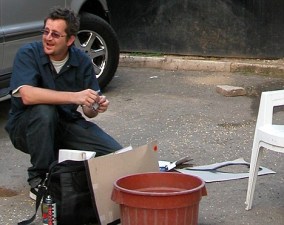
This “may be” Banksy – who has built his own mythology by being secretive to the point of not ever showing his face –
is as much part of the process behind the growth in value of an artist work, as is the quality of work produced. People, more often than not, “buy” – engage, become interested, admire, or simply like – the artist first, and then they become interested in the art to the point of deciding to make a purchase (particularly when the price of a painting is above impulse purchase price).
This is so normal, that when in a newspaper we read that a famous painting is sold at a record price, for example, it is generally the case that the title usually implies that it is the artist who has been sold, while in the follow through we learn about the painting, sculpture or whatever it is really behind the news.
We “buy” Picasso, Van Gogh, Rauschenberg or Pollock. And we get – assuming we had the money – whatever painting is available at the time. The reason is twofold. On the one hand we understand there are market forces behind all these sales, as we are talking about investment grade painters and paintings after all. So whatever is available must be worth our while.
And secondly, we are talking about paintings that resist, endure, and grow in appreciation during a long period of time. And these facts usually have a common thread. In fact, each one of these works represent, in pictorial terms, an intricate part of the artist´s life.
We are talking, then, about art that is a visible section of an artist´s passion. And that is also central to this equation. We are buying a piece of an artist´s identity, a piece of his artistic soul. Or at least that which will endure the passage of time. No matter what embelishments the artist may have made to his own story, what survive are the vestiges of his true self.
This is all very personal stuff. We are talking about an artist´s spirit, his or her heart, and in the case of those already gone, the legacy of work that is left behind and provides the artists with that desired immortality of sorts.
Yet many artists, in their desire to get to that special plateau, become mere caricatures of themselves. They make up stories, take on looks that are more for the benefit of others than a symbol of whom they are, and fictionalize their lives to the point of becoming like characters in a pantomime.
They confuse “a personality” with “personality”, they make-up a stereotype of an artist rather than being true to their history and letting others judge and decide. They feed us with fiction, while true art is as real as it gets.
True art is about a naked person being shown and exposed; it is a soul being revealed; it is a heart discovered in its most intimate detail.
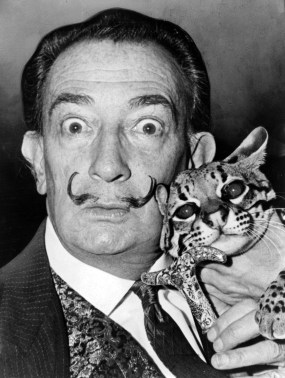
Salvador Dali
Many have “put on an act”. Dali was brilliant at this. But the key word here is “brilliant”. He built an engaging public persona around his personal quirkiness. And all of this pointed towards two ends. On the one hand his renowned love of money, and secondly it was probably his way of exorcising his own childhood demons.
Did we see the real Dali in action? Probably not, but was it a fake personality or was it based on his very real and eccentric nature and life history.
This was the second son of a family who had lost their first child, also named Salvador, only nine months earlier. He looked so much like his dead brother that his mother suspected that he was actually their previous dead child reborn, and it is believed to have acted accordingly. On top of that, and from all accounts, he was quite the sadist as a child. Even to the point of considering that pleasure and pain were pretty much the same mechanism. He used to attack people for no apparent reason, and it is said that he even threw a dear friend off a bridge “just because” (his friend was badly hurt as a result).
So, was he putting on an act or was the act an embellishment – a mythology of sorts– of his own life story and personality? You can decide if there is a difference between this and the fictional character. But keeping in mind Dali´s story, is then the fictional character many artists envelop themselves with, something wrong?
This slideshow requires JavaScript.
Some will argue that, whether truth, embellishment, or pure fiction, in all cases this is just marketing. And if as such it increases your sales, it is ok. And it may well be so. But the fact remains, and my experience corroborates this assumption, that many artists do end up believing they are this phony façade. They end up playing out the character in their real lives, and to a certain level, they end up getting lost in their own concoction.
So what is the point then?
Very simply: Whatever you do, be true to yourself, or at the very least, try your utmost to keep true to yourself. You are an artist. You are someone whom, by definition, will follow what your heart dictates. And that does not mean you cannot work on your own mythology. If you think about it, your life –any life for that matter – is rich and therefore plentiful in “workable material”.
Your beginnings, your family, your place of birth, your life experience, your ideological bents, your personal attributes and your personal agonies. They all have contributed to your present YOU. Your life is the source of your own mythology, and it is also the fountain from which your artistic endeavors spout.
It needs to be put into an attractive order. It needs to become your life story almost in cinematographic terms. It needs that attractiveness that makes your story something to be consumed, in the good sense, like a good novel. In short, it needs to become a story that people can engage to and become close to, and by doing so, they will begin to know you, and will become closer to you and your art.
There is an old saying in marketing about not falling on the trap of basing your decisions on your own marketing. One thing is what you sell, which necessarily enhances your virtues in detriment of your weaknesses. Something else is believing in your own “enhancements”.
Falling into the trap of that “fictitious character” is part of the learning process. I see many who do fall and never get out of that hole. In the short term it may be fine and it may potentially be profitable as well. But in most cases it will not last. And what is worst, it will take you astray from your true self, which is in the end, where your art is coming from.
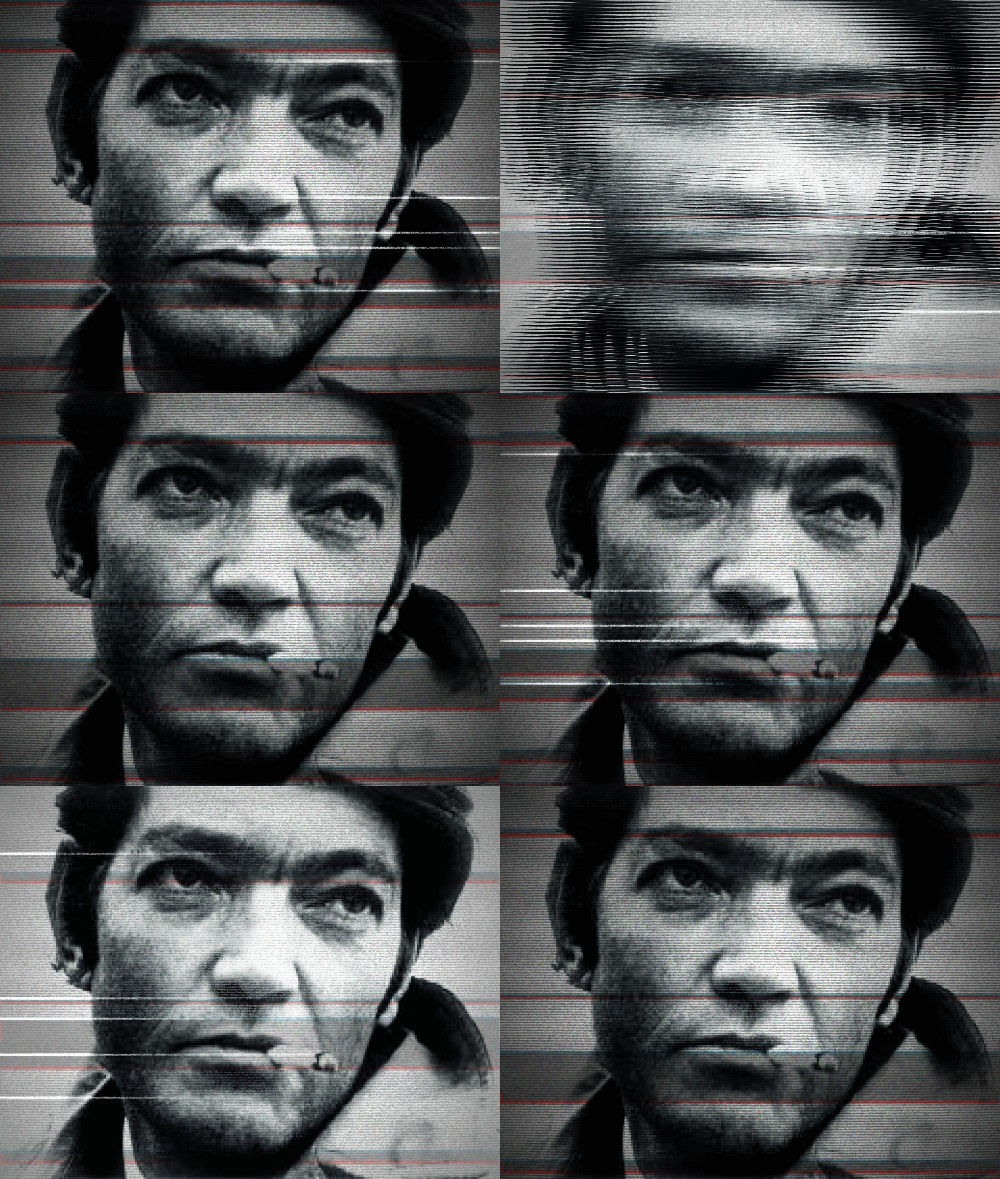
Argentine writer Julio Cortazar was born on a day like this, exactly 100 years ago. All over the world literary buffs and fans are celebrating this new anniversary of his birth with articles and mentions.
A prolific writer and a brilliant story teller, he left his mark in the minds and souls of the many millions who enjoyed his brilliance.
Stories like “Hopscotch” (published in 1963 and probably his most important novel), where the story can change according to the order in which the chapters of the book are read (hence the name), Cronopios and Famas, The final round, The Browl outside, and many more are highlights of his very entertaining, deeply complex, and fascinating works.
Even if you have never read him, you may have enjoyed some of his stories which have been made into movies.
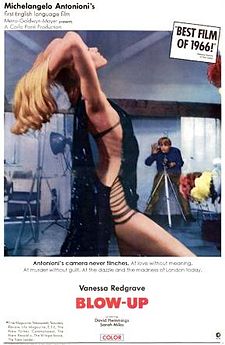
The best known is, clearly, “Blow-up” (1966), a very successful adaptation of Cortazar´s short story “The Devil´s drool” (1959), directed by Michelangelo Antonioni, and starring David Hemmings, Vanessa Redgrave, and Sarah Miles. While Cortázar’s story “La autopista del sur” (“The Southern Thruway”) influenced another film of the 1960s, Jean-Luc Godard’s Week End (1967).
Cortazar´s love of boxing and Jazz is legendary. While I do not share his love of boxing, I do share his love for Jazz. One of the highlights of “Blow-up”, at least for Cortazar, was the fact that the music was written and performed by such a jazz genius as Herbie Hancock. While “The Pursuer” (1959), a short story that gives its name to a book, is losely based on the life of bebop saxofonist Charly Parker. And his constant musical references, particularly to Jazz, and in lesser extent to “Classical” music (a term that in fact he really detested), do mark his literary production.
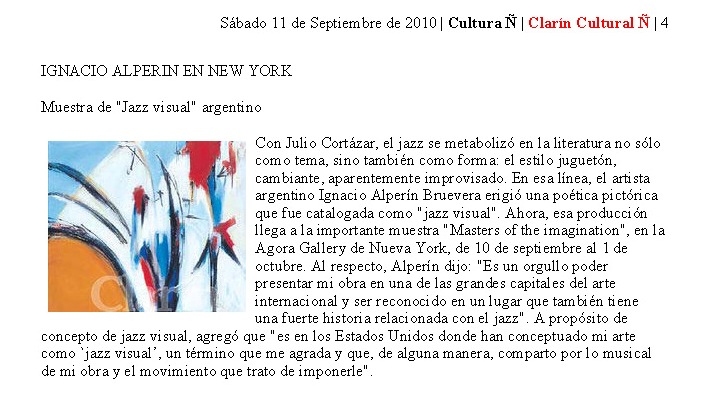
Some years ago, a very brave journalist from the Clarin Newspaper in Argentina put me in a bind, when he compared my paintings and my passion for infusing them with the rhythm and musical cadences of Jazz, with what another Argentine, writer Julio Cortazar, had done with the literary presence of this beautiful and free form musical style in all of his writings.
I always felt almost “embarrassed” at this comparison. But on a day like this, I take it as an honor and an important legacy which in my own way, I wish to continue.
Cortazar passed away too early. It was 1984. He was buried in Paris (Montparnasse) where he lived. It was from illness, but many say that the man who always looked 20 years younger than his real age, had suddenly become old and frail from the emptiness that he felt after the passing of Carol Dunlop, from Leukemia, in 1982. She was his second wife and the love of his life.
Like many greatly creative people, all the toughness everyone saw on the outside, was just a shell which protected a highly sensitive and frail soul.
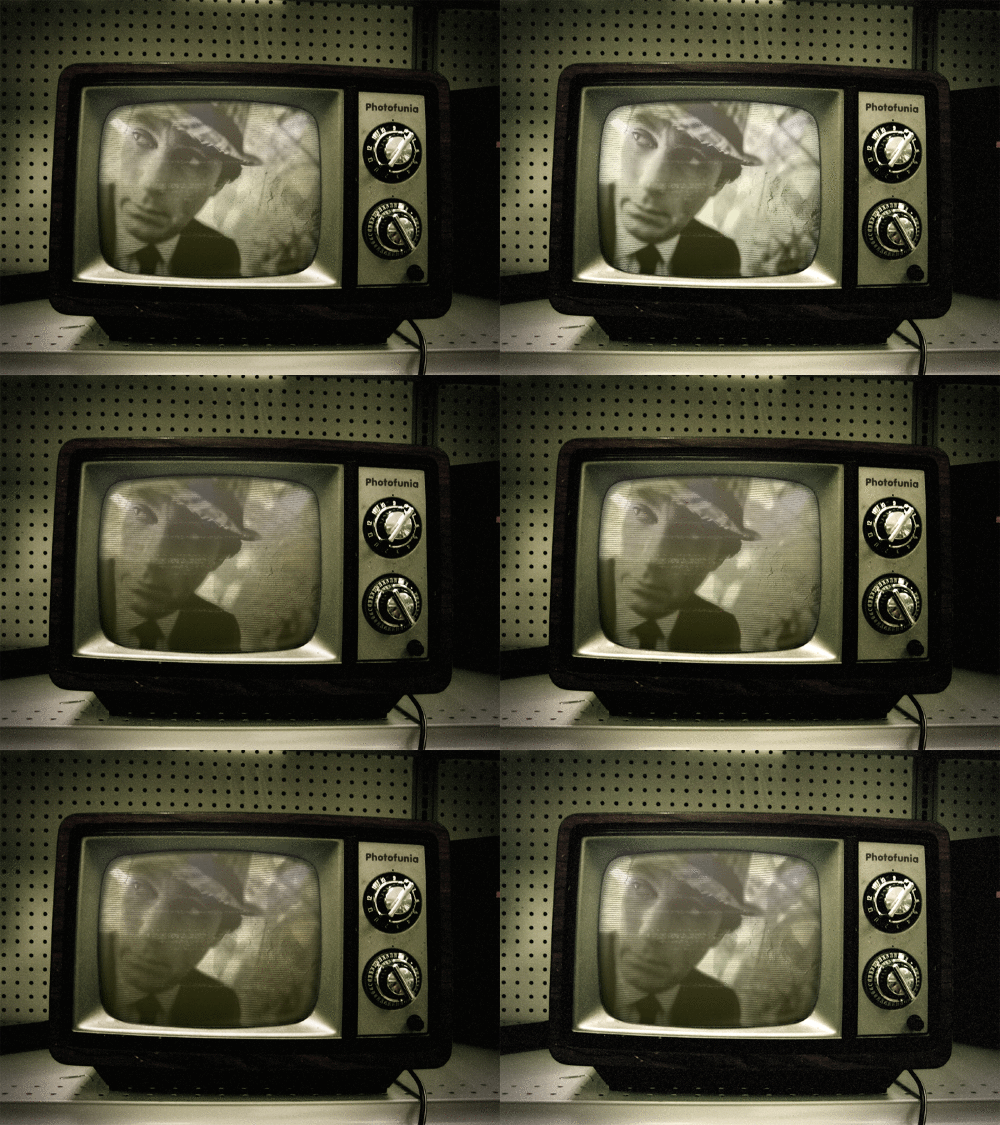
As a homage to this great mind, I would like to share with you this short video prepared by the Juan March Foundation in Spain, in which Cortazar himself talks about the relationship, almost the love affair, he had with Jazz and how it is brought forward in his works.
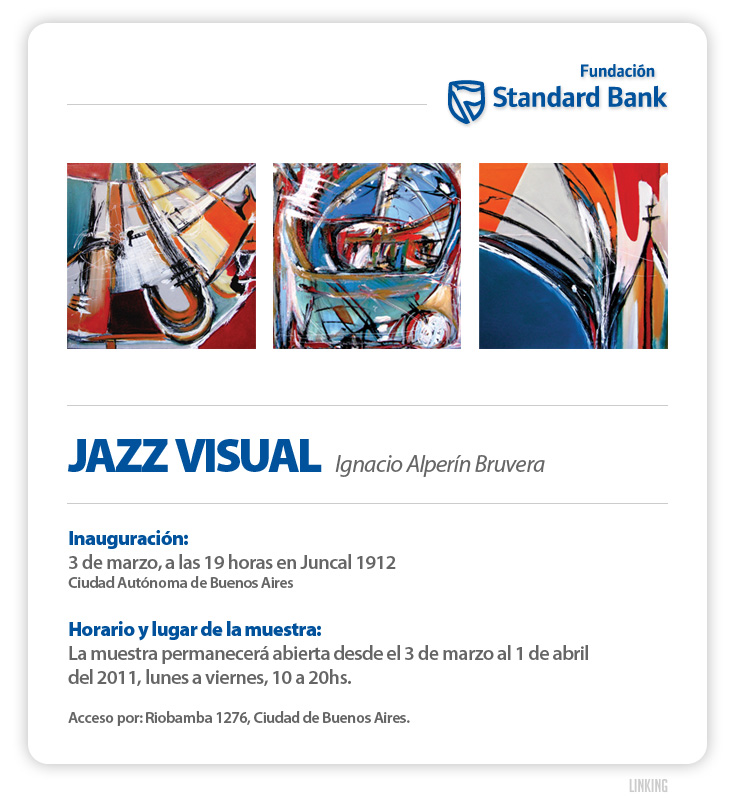
El artista plástico Ignacio Alperín ha ganado notoriedad a nivel nacional e internacional con su arte movedizo y rítmico, conectado fuertemente al Jazz y a una movida marcadamente personal.
Por Cecilia Tvrdoñ
Cuando uno lee los comentarios sobre la obra del artista plástico Ignacio Alperín, uno nota que expertos y no expertos coinciden en ciertas frases: movimiento, ritmo, cadencia, color. Son todas palabras que buscan relatar de lo que se trata su obra, la cual por su fuerza y estilo tan personal, es difícil de encajonar en referencias clásicas definidas. Es fresca, intuitiva, innovadora y desde ya, muy alejada de lo que uno supondría al escuchar su historia.
¿Cuánto tiempo viviste en el extranjero?
Nací en la Argentina. Pero parte de mi infancia, y toda mi adolescencia y juventud, la viví en Australia, donde también estudié. Los que más me conocen dicen que soy un poquito Aussie. Además de Australia, y por razones laborales de mis padres, pude viajar mucho, e inclusive residir temporariamente en países como Singapur, Malasia, Francia e Italia. Volví a la Argentina en 1990 por curiosidad más que necesidad, y duré poco tiempo. Me “bañé” de realidad y me fui tambaleando como esos boxeadores que entran al ring sin estar preparados. Di vueltas por Inglaterra, Francia, Italia y retorné al país en 1997.
Finalmente te adaptaste.
No realmente. Pero tal vez ahora estoy como esos boxeadores a los que les pegaron tanto que ya no le importa (risas). En serio, lo que sucede si uno viene de crecer en un país anglosajón y pasa a nuestra cultura, es que hay diferencias fundamentales que cuestan congeniar. Más allá de que cuando volví a la Argentina hablaba castellano con un poco de acento gringo, creo que lo que me pasa tiene que ver con los códigos. Estoy muy feliz en mi país, pero tal vez se entienda si te digo que afuera extrañaba nuestra calidez humana, eso de ser familieros a toda costa (muy tano) y nuestro sentido del humor; mientras que estando acá extraño el respeto por los demás, el sentido de justicia social, y las reglas claras y similares para todos, que son las pautas con las que crecí en Australia.
¿Tu formación es puramente artística?
Se podría decir que el arte me acompaña desde que nací, ya que vengo de una familia muy abierta al arte y al diseño. Mi madre es una excelente dibujante que dejó de lado su pasión para formar una familia, pero nunca dejó de enseñarnos todo lo que sabía. Mi padre es un ingeniero con una carrera internacional que ha tenido muchos contactos con movimientos de vanguardia, tanto arquitectónicos como artísticos. Por todo ello mi primera formación fue más cercana al dibujo. En Australia, como parte de mi formación general, estudié artes visuales, e hice cursos y talleres. Pero en algún momento decidí encaminar mi propia exploración y allí es donde todavía me encuentro hoy.
¿Te dedicaste siempre al arte?
Pese a que el arte es la gran constante de mi vida, como considero que el ser humano debe responder con acciones a todas las necesidades intelectuales que se presentan (hacer algo con los dones que Dios nos ha dado sería una frase que siempre me inculcaron y que se me viene a la mente ahora) también estudié, entre otras cosas, Derecho, Ciencias Políticas, Relaciones Internacionales, y algo de Economía y Marketing.
Nada que ver con el arte… Sos el abogado pintor.
(Sonríe) Mirá, pinto, en el sentido más formal del concepto, desde los 12 años. Es algo que me ha acompañado siempre. Vendí mi primer cuadro en Australia a los 20 años, lo que marcaría el comienzo de mi carrera profesional de artista. Como también estudié otras profesiones, mi arte debió competir con otras responsabilidades, muchas veces ocupando el lugar de acompañante permanente y bálsamo para el alma. Y desde hace ya más de 10 años, la de artista es mi profesión principal.
¿Nos contás un poco más de tu alter ego profesional?
Para los que me conocen por primera vez, siempre les pregunto si quieren que hable como Bruce Wayne o como Batman (se ríe nuevamente). A simple vista parecen ser actividades muy alejadas entre sí. Pero la realidad es que hay un hilo conductor, y es que en todos yo soy yo. La vida hoy es muy compleja y en términos objetivos, es más larga. Ya la idea de pertenecer a una empresa toda tu vida y retirarte con el reloj de oro, pese a ser muy admirable, es casi imposible. El dinamismo del mercado, los altibajos económicos, y las presiones emocionales ligadas a un mundo donde todo es “ya”, hacen que los cambios laborales y profesionales no sólo sean casi inevitables, sino que hasta podrían considerarse muy sanos porque son como brisas de aire fresco que renuevan el “ambiente interior”. Pero no todo es fantástico. Admitamos que los momentos en los que algo terminó y lo nuevo no termina de concretarse, son momentos duros para todos. Pero creo fervientemente que la solución está casi siempre en nosotros mismos.
Perfecto, pero ¿y tu vida como Bruce Wayne?
(Se endereza) Tengo que tener el phisique du role para contestar. Estudié y estudio siempre. Tanto profesiones clásicas como en lo relacionado al arte (inclusive estudié teatro). Tengo el extraño honor de ser el primer argentino en la historia de Australia en recibirse de abogado. Hice una práctica en un estudio internacional en Melbourne y de allí me fui directo a trabajar en una empresa. Me desarrollé laboralmente en diferentes empresas y en diferentes países. Llegué a ser Gerente General de una S.A. y de mi propia empresa, Director Ejecutivo del Colegio de Abogados de la Ciudad de Buenos Aires, y Socio Gerente de un estudio extranjero entre otras cosas. Y hoy, en paralelo a mi arte, sigo dando charlas y conferencias sobre los procesos creativos, el arte y la creatividad en general, enfocado a empresas, profesionales y artistas. En fin… Muy Bruce Wayne.
Y mientras tanto el arte acechaba…
Yo diría que el arte ha sido y es mi compañero fiel de toda la vida. Dónde iba, mi arte iba conmigo. Y hoy en día es un trabajo full time, de 7 días a la semana.
¿Cómo definirías tu arte?
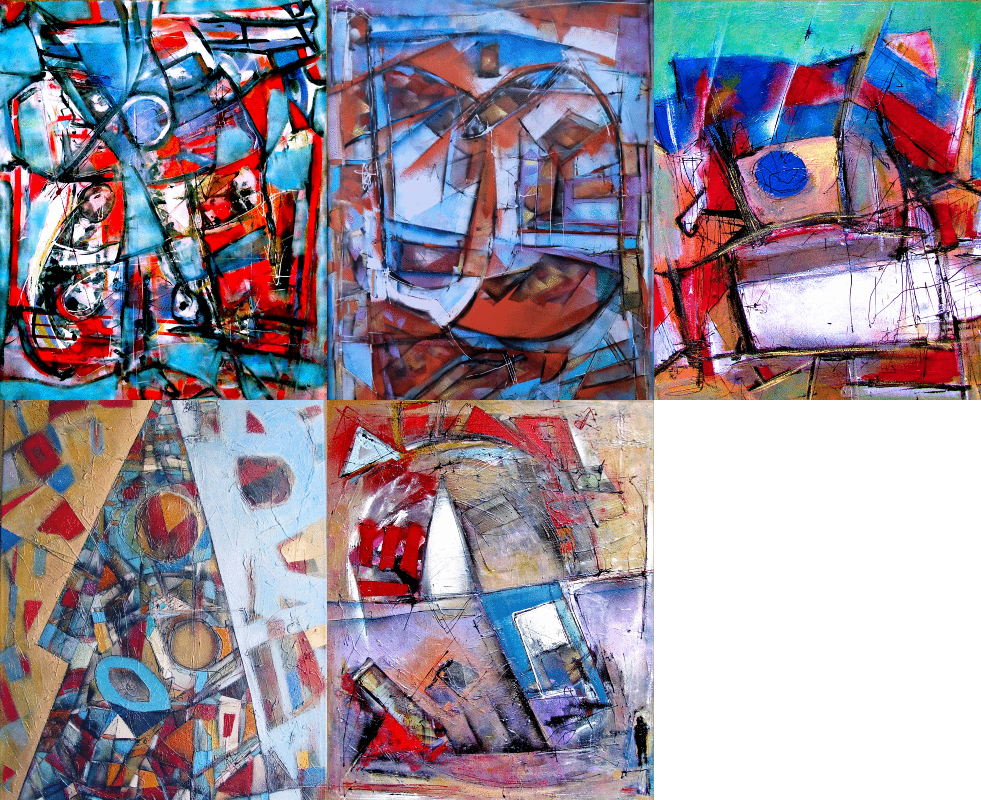
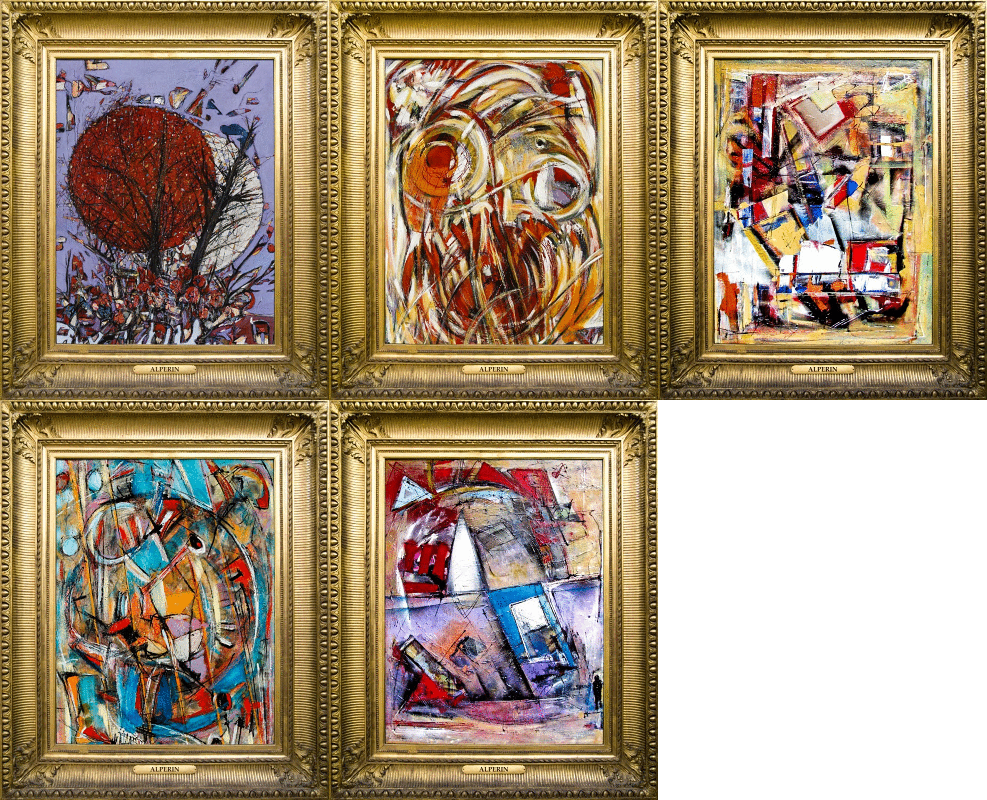
Si queremos darle un nombre tradicional, mi arte podría encuadrarse dentro de lo expresionista y abstracto. Mis series son generalmente basadas en el jazz particularmente, y en la música en general. Lo de Jazz Visual, o Visual Jazz, que es como se le conoce más popularmente aquí y afuera, responde a la denominación que le dio a mi obra una periodista norteamericana la primera vez que expuse en New York. Y la verdad es que me gustó porque de manera muy sintética, plasma lo que yo trato de generar como artista.
¿Qué tiene de diferente tu trabajo con la música, comparado a lo que hacen otros artistas, muchos de los cuales escuchan música también mientras trabajan?
Yo tengo sinestesia. No es algo malo, y para los que no la conocen, es una condición tan benigna del lóbulo frontal del cerebro que hasta hace algunos años no se podía diagnosticar fehacientemente y a nadie le importaba.
Inclusive hay un porcentaje importante de la población mundial que lo tiene y, algún médico me corregirá, se produce durante el proceso de gestación, dónde cierta característica del lóbulo frontal no se desarrolla o se desarrolla tal vez de otra manera a lo que se consideraría “normal”.
El resultado es que se producen conexiones neuronales fuera de lo común. Por ejemplo, hay personas que cuando escuchan ciertos sonidos se les generan sabores específicos (do es chocolate, re es frutilla… por dar un ejemplo simplificado).
En mi caso, mi sinestesia es leve, pero me permite “ver” formas y colores cuando escucho ciertos sonidos, particularmente música. En particular, encuentro que el Jazz y la música denominada “Clásica” genera los resultados más importantes. Y como amo el Jazz desde pequeño, es mi inspiración principal.
Esta cualidad, ¿estuvo siempre presente en tu obra?
Cuando era un joven artista me resistía a estos impulsos y no los plasmaba en mi obra. Los ignoraba ya que mi educación era más formal, y deseaba lo que muchos deseamos, que es ser aceptado.
Pero con el tiempo me di cuenta que lo que me hacía diferente (no digo original) era el hecho de que mi cerebro pudiese “ver” cosas que otros no veían. La inspiración no llegaba solamente a través de impulsos visuales, o puramente emocionales, sino que también a través de ondas que producía mi cerebro al verse estimulado por el sonido.
Ahí comprendí, que el respetar la “formalidad” le quitaba a mi trabajo, por un lado, esa elusiva característica individual que todos buscamos, y a mi vida de artista el disfrute de crear de una manera que me hacía verdaderamente feliz.
Y así fue como comencé, de a poco, a experimentar lo que hoy ya es una característica de mi obra. Logré así unir mi impronta, y mi capacidad de trabajo, con las posibilidades que este don me genera, y encontré la manera de fusionarlos y aprovecharlos artísticamente.
Y se nota en la vitalidad, los movimientos y el ritmo que hay en tu obra.
Esa “visión” de movimientos, formas y colores creo que hoy se plasman claramente en mi trabajo pese a ser marcadamente abstracto. Si no me equivoco, el comentario que más he escuchado sobre mi obra, sea de expertos (artistas, curadores, etc) como del público en general, es que se ven plasmados los ritmos, los movimientos, y las cadencias de la música de manera muy clara.
Me ha llevado años, pero igualmente, me hace muy feliz escucharlo.
Tal vez la reputación de tu obra ya me esté dando la respuesta, pero ¿encontrás que la obra abstracta es aceptada y valorada en nuestro país como en el extranjero?
Creo que la obra abstracta tiene su mercado en todo el mundo. La abstracción pictórica existe desde principios del siglo XX y va a seguir existiendo. Y sinceramente, tampoco creo que sea un problema que haya personas a las que no les guste la abstracción. Es más, están en todo su derecho. Y creo que es un tema que no pasa necesariamente por la educación, aunque comprenderla seguramente allana el camino para disfrutarla. Más bien intuyo que en general es un tema de gustos.
Igualmente te cuento que en la Argentina las obras abstractas tienen muchos adeptos, particularmente entre los coleccionistas de mediana edad y jóvenes, y eso claramente es muy bueno.
¿Manejás tu obra de manera personal?
El mercado del arte es muy complejo. Creo haber tenido la suerte de que mi obra haya sido resaltada en medios nacionales y extranjeros. Eso es fantástico desde el punto de vista de la validación externa que necesita el público que se acerca a la obra. Algunos curadores recomiendan mi obra y eso también es muy bueno. Pero no lo es todo.
Participo de eventos y ferias, generalmente por invitación, y elijo dónde participar. La elección no se basa en la fama de la feria o muestra necesariamente, pero en lo que en el momento también pueda resultar beneficioso para mi arte. Eso sí, nunca le digo que no a los eventos a beneficio.
También mantengo mi presencia a través de mi Sitio personal; de mi Blog; de un grupo, una Fan Page y una página personal en Facebook; de presencia en LinkedIn donde contribuyo con artículos en 7 grupos de arte. Tengo una substancial masa de seguidores en Twitter también, y todo ello requiere de tiempo y planificación.
Siempre que uno habla de la Red pareciera ser que no requiere trabajo. Se publica y listo. Pero creo que con lo que acabo de contar queda claro que, por un lado, promocionarse por Internet es un trabajo como como cualquier otro y requiere de tiempo, constancia y cierta precisión. Y la pata tradicional también lleva tiempo y esfuerzos.
Recordemos que además de todo eso, pinto, planifico, trabajo en mis objetos y diseños, y coordino la representación de mis obras. Es realmente un trabajo full-time.
¿Proyectos?
Proyectos y realidades siempre. Hoy, en paralelo a mi arte, sigo dando charlas y conferencias sobre los procesos creativos, el arte y la creatividad en general, enfocado a empresas, profesionales y artistas. No soy de los que anuncian sus proyectos futuros con asiduidad. Siento que la presión positiva que se genera al trabajar silenciosamente, pese a las ganas de contarlo a los cuatro vientos, es muy frágil. Se disipa fácilmente si uno genera expectativas y “desinfla” esa presión interior. Digamos simplemente que creo en el futuro, mío y en el del país, y estoy apostando para que podamos hacer grandes cosas juntos.
Si querés ver a Ignacio Alperín en acción, mirá la nota en YouTube, en el canal arteztvfull o bien en la fan page Artez Teve Programa de Televisión.
Pricing art is not an easy task. Everyone has a story to tell, an issue to contend with, or even an encounter with an unscrupulous individual to remember.
Emerging artists feel that is impossible to set a reasonable price. They are happy when they sell, but they also think it is unfair what they get for their art (more often than not, managing to barely cover the costs of materials but not their artistic work). When they go to fairs or those who are lucky enough to be contacted by galleries, they have to pay just to be there and if they sell, they can see that anywhere between 10% and 50% of the price will end-up elsewhere.
It is better for established artists. Even though costs remain high, and commissions more so. Yet the construction of a solid price for an artist´s work is, generally speaking, a complex and time consuming task even for someone with a history of good strong sales.
Serious galleries, curators, and a variety of experts, make appraisals. But appraisals can also be wrong. Particularly when an artist´s work is just beginning to see the light. The word appraisal in itself has a diffuse meaning. As it is based on past performance (if it exists), on objective and subjective values, and on projections of current and future value. Very difficult in itself, and even more so if the artist is not that well known.
I want to tell you a little bit about my own story, and what I have learned so far. Maybe my experience will be of use. I can happily say that prices for my art have grown exponentially in the last few years, and this has to do with a series of steps I have taken, added to a complex equation that I have worked out over time.
But before I get to that, it may be good to start by delving a little into the past, so we can set the scene.
As many of you may already be familiar with, I have been working for a long time on what I call “Visual Jazz”. This is a combination of my brain´s response to music (I am synesthetic, just like Kandinsky, another artist who also interlaced his art and his “gift”) and I work particularly with jazz. Thus the name.
I remember when I first started exhibiting my new work more openly, I came across a great deal of resistance, mostly because the infusion of color and movement that I constantly explore through my series was not the “in thing” at the time.
Not only was I not getting the prices I hoped, I was also getting the cold shoulder from many curators and critics as they found my art, and my way of expressing it, either unattractive or in some cases, not conceptual enough.
It was almost impossible to get a review, while art competitions would just shun me out, and people would look at it with an expression of “I just don’t understand it”.
Until one day a journalist decided fortuitously (the luck factor) that my work should be used as the “differential” in an article she wrote on the new artistic trends that were coming from South America. This was as part of a review she did on a group exhibition (I was just one of the artists) that was being held at a Gallery, in Chelsea, NY. A Gallery which happened to be, or at least that is how I felt, the only one prepared to open its walls to my art.
I never met the journalist. I still don’t know how she placed my “Visual Jazz” in the midst of a “trend” as I was mostly (truly) lonely and on my own, just trying to get my work noticed. But in any case, she noticed. And that is the important point.
I remember even feeling a little lost at the South American branding. I was born in Argentina and mostly reside there these days, but I grew up in Australia and lived in many countries before settling back, so I always felt a bit out of place. I even feel that my art is a little more universal than the general local art, which has a tendency to be more self-referential.
But in any case, I was obviously not going to argue with it. Quite the contrary, I embraced it.
This first validating article gave me a little push. Soon major newspapers started briefly mentioning my “Visual Jazz” as something different to see. As my work began to grow and the pieces started multiplying. The sheer volume and, hopefully, the quality of work began to change minds. One thing is to see 1 or 2 pieces, something else is to see 50.
When you have good volumen of work, the public and the critics hopefully begin to notice where you are going with your art. As with most abstractions, they may also find their brains slowly accommodating to the different paradigms which are being proposed. And suddenly, the fact that they did not understand it before, becomes less important than the fact that they unexpectedly seem to be enjoying the aesthetics of it. And out of the blue (or red, or yellow, or green), one day they do understand. One day they finally “see it”.
And so, as approval began to grow, prices also began to rise.
Even now I am at the threshold and not even close to my ceiling. Hopefully I will never know what my work’s value ceiling is, or at least that is what I hope.
Yet, as I look back and try to extract reasonable advice that can apply to everybody’s work, I see certain common threads related to all the work done to generate value. And I feel, and hope, that these simple points (and I mean simple, not easy) will take you far:
1. There is no replacing quality, ingenuity, emotion, and hard work.
2. Furthermore, there is no replacing YOU in your work. YOU are the original. It is just a matter of letting YOU into your art.
3. Luck is a factor in your success. But luck doesn’t walk around looking for your door. You have to be “out there” (whatever your “out there” may be) so luck can find you.
4. You may start with a price that reasonably represents the amount of work & artistic effort that went into your piece. But Price is value, and value is a construction. Put a brick at a time. Like my father used to say (he is an engineer), “You cannot start a beautiful building from the top floor. First you have to get your hands dirty and dig”.
5. Don´t expect a set value. Don´t expect your prices to be maintained if you don´t respect them. Be flexible & sensible, but defend the value you have created so far.
6. Price/Value is something that you build with your buyers. Make them part of your project. Get them to defend their investment as much as you defend your price. Then you may have something.
7. Be responsive to your public and let your art go. In other words, sell when the opportunity arises!
8. Your work is your best ad, but the ad must be published somewhere in order to work, so make sure that your art is hanging somewhere far away from you, & where it can keep getting YOU to new audiences.
9. Learn to be intellectually alert about your art. Study, become your art´s own encyclopedia, learn to explain your motivations in ways that engages those who listen to you. Explain the complexities of your work in terms that people can understand, but also admire. Read and explore the history of art. Look at those who came before you. Learn, learn, and learn. And above all, be sincere about your motivations. This simple exercise creates value.
10. Do not confuse being intellectually alert with conceptualizing your work. “Concept” in art has become very important because it is of great help to curators, critics, and agents. Amongst other things, because it helps them write and talk about your art. But it is not your art. At most, let the concept “explain” (for others) and “guide” (for you), but never “dictate”.
And now to my magic equation, which is:
(My end work) x (My effort) x (my time) x (My creativity) x (My costs) = $0 (zero)
Yes. It is that sad. But don´t lose hope. It is a stepping stone and I will explain why.
For a start. There is no better place to base your pricing strategy than in reality.
Getting the right price is understanding that your work is worth a lot to you. It may be beautiful, extraordinary, and it may even represent a brand new branch of the arts, but all that value is only felt by you and those who love you.
When you look at the market value (a different kettle of fish altogether), your work (my work for that matter) is worth zero, zilch, nada….until someone is prepared to pay something for it.
It is worth more when 2 or more are willing to do that, and the sky is the limit once people move in numbers to pay for your work. At that point you may increase what you ask for your work, and the market will probably respond (in my experience) positively because everybody loves a winner, and everybody wants to make a great deal (in art, the great deal is that your work is cheaper now than later). The best news is that the incrementals may be limitless.
When you pretend that your prices mimic your love for what you do, you will fall flat on your face. More so if you don’t do the “work” (I refer you back to my 10 points). Because the market is many things, but mostly, it is absolutely heartless.
But if you can engage your market both emotionally and intellectually, it may ultimately respond, and at that point, you may have a winner.
That is why it is so important to work towards increasing the value of your work by giving it meaning, by promotion, by your own intellectual attractiveness in describing what you do, how you do it, and why you do it. Basically letting your uniqueness come through your art.
The rest is up to your talent (and yes, a little bit of luck).
“Art is subjective. To each his or her own…”This was part of a comment someone wrote in response to a post I made on a social media platform some time ago.
My first reaction was…”God, how difficult! Another non-response”.
I usually call “non-responses” answers or comments which, on the one hand, cannot be answered or challenged in any possibly intelligent way –at least not without getting its proposer upset- as they are meant to be self-contained statements.
Secondly, they very often tend to veil a strict and rigid view of something under the guise of seemingly defending total freedom.
As I read it, the statement core meaning seems to be (punctuations are mine): “NO ONE can question what art is, and you MUST accept that each one can do whatever each one feels like doing, and it will be ALL art. OK?”.
But if we look at it in a different way, the statement touches on a few of the central concerns we all have.
Mind you, I do not question the fact that we are all free to do as we please, as long as we respect others and nature. Yet, whether we are artists, art lovers, curators, collectors or gallerists, we constantly ask ourselves, and question our responses, about what is the Art paradigm today, and whether we can accept that EVERYTHING anyone does and which is called “art”, can be art.
So here are some thoughts, examples, annecdotes and ideas which will hopefully spark some further debate on this subject.
1. Everything that is labelled as “Art”, is art. Now, is it?
We live in a world that criticizes criticism. As a result everything can be considered “artistic”, and seemingly it cannot be challenged, as challenging it gets catalogued as a restriction on freedom.
BUGATTI REMBRANDT VEYRON
So, I can place a Bugatti in a museum and call it art. Is it beautiful? Sure it is.
Is it art? Well…it is beautiful. And as far as car design goes, it is probably as close to art as car design can get.
But the way I see it, it is not art.
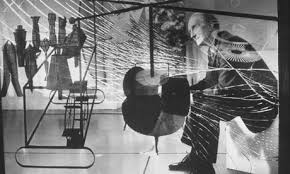
Mind you, this discussion is not new. We have to thank Marcel Duchamp for the modern concept that everything can fall into “art” (the readymade as art is one of his noted contributions), as he looked to break from the rigidity of early XXth Century art dogma.
MARCEL DUCHAMP
Thus, from Duchamp´s 1917´s urinal (Fountain) to Piero Manzoni´s feces in a can, passing by Picasso´s She-goat from 1950 (made from scrap metal he found in the garbage) and Damien Hirst´s dead animals in formaldehyde, it would seem almost anything can become art.
But the truth is that not everything is.
After almost a century, it cannot be denied that there has been change as a result of this new found freedom. But the outcome could be described as both, enriching and confusing.
The pendulum has gone full swing, and subjective reasoning has become something of a new dogma, while seemingly not leaving enough room to discuss the role of objective notions.
For example, I believe there must be an artistic intention, concept or idea, and a substantial endeavor (regardless of the fact that the end result manages to accomplish its initial objectives or not), behind something to be considered “Art”. But sometimes it is not clear how shared is that opinion today.
MERDA DÁRTISTA – PIERO MAZZONI
2. Concepts give non-artists (curators, experts, critics) the intellectual structure to write and sometimes, pontificate about art. But as far as artistic value goes, I feel “We may need a bit more than that from you! Thank you” (ah hum).
For example, when does a concept, idea or statement becomes more than just that. When does it have a chance to become “art”, and how much of a proper development is required before it can be considered art?
At the 2013 version of Buenos Aires´ArteBA (*), probably the country´s finest international art fair, the coveted ArteBA – Petrobras Award (which also carries a substantial monetary reward) was given to Argentine artist Enrique Jezik (*) for his work “Aguante”.
AGUANTE – ENRIQUE JEZIK
“Aguante”(Resistance) was a piece of performance art in which 5 rather strong men, amongst which was Mr. Jezik, held on to 5 flat pieces of rock sheet while a huge excavator tried to break them (the rock panels, not the men).
Besides the fact that this was a rather dangerous exercise, the piece was designed to show something like (I am condensing the whole concept here) “the resistance of the collective against the brute force of those with power, enlightening on the inequality that exists in the distribution of wealth”. It was so difficult to perform at the Fair that the artist simply showed a video of it.
The Jury made up of internationally respected curators, including Mexico´s Cuauhtémoc Medina and Argentina´s Jorge Macchi, found in his video performance a substantial rebellious social and artistic statement, and thus he was awarded the price of ARS$100,000 (close to US$20,000) ahead of everyone else.
Conceptual art is here to stay, but in this case, was the end product art? Was it conceptually new? And whether it was new or not, was it developed enough to become an artistic piece? Was it even inspiring? (Mind you, I am not even getting into the minefield that means comparing it to other work presented).
And I point out, I do not question Mr. Jezik´s quality as an artist. I do not even question the right of curators, critics and experts to do their work, which is of importance. And I admit those concepts are of great help to those who do not have the same sensibility that artists have (most critics, curators and experts are not artists). But if I were asked about this performance, I would feel it barely met any of those basic criteria.
Objectively, the concept was certainly nothing new, as the philosophy of resistance and revolution in art was pioneered by many, including Picasso, more than 70 years ago; the development of the idea was, to say the least, rudimentary; the performance ended up being a little more than a poorly executed video (maybe because it had to be made in a hurry as performance at the Fair was not possible), the performance seemed to leave some doubts about what was the original idea behind it (here is the link so you can judge for yourselves: https://www.youtube.com/watch?v=Vo4HA7jAHYo); and the aesthetics of it, at the very least, questionable.
Although some said that the awarded price of close to US$20,000 may have shown, in this case at least, that in regards to the current “inequality in the distribution of wealth”, he may have had a point.
JEZIK RECEIVING THE PETROBRAS AWARD
So was the price awarded more for his past accolades than for his current artistic “concept” and “performance”? Maybe. Or maybe not. And you can´t help but feel a bit sorry for Mr. Jezik and the criticism he recieved. He did not award the Price to himself. Others were responsible for that. But the fact is that it did generate (that is probably the good news) a great deal of controversy.
So much so that there was even a widely shared fake news item, which spread like wildfire amongst artists in the continent, and which said (photograph of the artists receiving the award included) that Mr. Jezik had been awarded the 2013 Price as a mistake since he had forgotten to attach his work to his award entry. It even went so far as to say that Jezik himself was surprised by the award and did not think he deserved it, as he thought he had presented nothing to the Jury (some people suspect that the fake report was initiated by disgruntled artists who also participated at that year´s award).
3. Money is evil!! (…don´t tell anyone but I love money). I tell you Money is evil!!! (…and yes, I think I would like more money).
This is an annex discussion, like a short detour, but the previous story is giving me the leeway to explore it for a minute.
And this is the issue of money, market, and the rhetoric the art world surrounds it with, so as to not sound too interested.
At the end, whether an artist likes to admit it or not, we are cogs in an economic system. And we all look forward to being able to make a nice living from our art. Yet there is this patina of revolution that “real artists” seem to need to lug on themselves since the early 1900s. And which Awards seem to love.
According to this view, art must be cutting-edge, novel, avant-garde, radical. Preferably showing some contempt for establishment, if it is to be considered “serious” art!
Yet, despite all the talk against money and the market, when we are offered good money for our work, we take it. And the more money, the better it is.
It is painful, particularly to those who really care, but the truth is that as artists we “sell-out” rather quickly. We become “establishment” and enjoy the limelight instantly, even though we may talk the talk and walk the walk of revolution.
Yet, if we think about it for a minute, it is not as contradictory as it would seem. After all, is there anything more laissez faire than saying that anybody can be an artist and everything can be art?
ANDY WARHOL
It was Pop art´s Andy Warhol who said “Art is what you can get away with”. And is there something more liberal, globalizing and representative of the process of offer & demand than that? Few things are, I imagine.
And even though many art elders may say “Don´t talk money, leave it to others” as a commandment to the young artist, supposedly benefiting artistic purity, it was the same revolutionary Warhol who also said that “Making money is art, and working is art, and good business is the best art.” While he went on to add later on in life: “I’ve decided something: Commercial things really do stink. As soon as it becomes commercial for a mass market it really stinks”.
Some may find inconsistency is these statements, but if I may unify both thoughts, he may have tried to simply say that art is a good business, but it is for the few and not for the masses, since when something becomes common place it loses that artistic quality that made it unique (Remember, he does not complain about it being commercial, only about the fact that it has become commercial for amass market).
This is very “revolutionary”, you may ironically think. But remember, being contradictory seems also to be “Art”.
4. It is art because I say so! Or because someone else said so? Ok, well, either way, as long as you buy it, it´s fine…
To most “normal” people (as compared to us, weird arty people), art to be art seems to commonly involve some kind of validation. It can be that a curator or critic has spoken about it, was shown at a gallery of some repute, the media has said something about it, it is being bought by collectors, or it has been bestowed with the golden appraisal of “Museum quality” work. Whatever the case, there is general expectation that something must happen before people will consider something to be “Art”, or even “artistic”.
Is this fair? No, it is not. The fact remains that there are artists creating something every second, every day. But even if it were completely subjective, as my interlocutor asserted in the phrase at the beginning of this article, is it still all art?
Maybe a great portion of it is art. Now, is it any good? Probably only 30% is of some reasonable quality, and a small percentage of that is what could be referred to as good art. And even then, some of what is good may also happen to be beautiful, intriguing, mesmerizing, and even “cool” (as you know, a word I love).
Amongst the art works which may qualify as beautiful, there may be some which have also gained public validation, and some which may have not.
Today, being in the “public eye”, in the old-fashioned artistic sense, is not a necessary condition for artists and for art. There are some circuits that we can create as artists and which do not require of the traditional gallery presence or show. There are private circuits of artists, admirers, investors and collectors, both real and virtual, that work mostly out of the limelight and do so very successfully.
Then, is validation a necessity? No, it is not. But If it is there, it does help. Is it a guarantee? No, it is not either. There is a lot of bad art being validated, and a lot of good art not receiving any of the accolades one expects. But that is just life. The truth is that not everyone gets what they deserve, whether good or bad.
I am one of those who have shun away from going full-on traditional. I have done gallery shows and fairs, but not necessarily in the expected fashion. Maybe it has been my way of managing my artistic timing, or simply that I have seen the advantages of mixing non-traditional marketing tools, like social media, the internet in general, word-of mouth and private gallery shows for collectors, with the more standard fare.
But validation is still important, even for those like me who have moved quite strongly into virtual promotional tools.
A work of mine was recently acquired by a local collector. He has a very impressive collection of works by some of the best 20th century Argentine masters. Usually, upon a sale, I don’t see where the painting will be ultimately hanged.
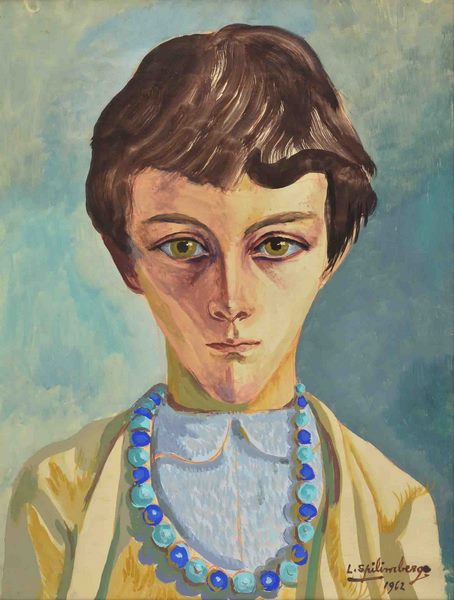
But in this case, I was asked if I could take it to his home. And when I delivered the painting I was asked if I could help hang it on a wall. A wall where a portrait painted by the great Argentine master Lino Eneas Spilimbergo (*) had been hanging minutes before (Spilimbergo´s piece was already on the floor and inclined on the wall).
I felt honored, and at the same time, it felt a little like the changing of the guard. It was a most humbling experience and a validation as to how my work is seen today.
Yet, does this validation guarantee the value of my work? No, it does not. It is a hint. It is a small arrow pointing the right way (and my way in this case) but that is all. Does it mean anything about the old master´s current monetary value or the quality of his work? It certainly does not.
CARA DE NIÑA – SPILIMBERGO
5. Redoing what has already been done is not the same as rediscovering it. So the easy applause may soon die. There… it´s dead.
Well, we all strive for originality. We all dream of discovering something new, a new concept, a new way of doing things. But the fact is that very few will manage to do it. Ignorance (particularly in terms of the history of art) is the great ally of artists, both from an artistic perspective and from the perspective of the public.
I see, for example, artists who are currently on the limelight and who work on Junk Art (scrapped metal, garbage, discarded articles, recycled materials, and so on). People who have never seen this type of art are mesmerized, and its popularity grows.
CARLOS REGAZZONI
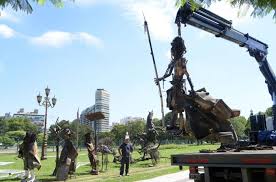
In Buenos Aires, for example, there is a growing controversy amongst critics because of the amount of public space, particularly in centrally located parks, which local BA artist Carlos Regazzoni (*) has recently been allotted.
Mind you, I don´t know him. Both curators in his gallery are dear friends and I like them very much, and I find him an artistic force in certain respects.
But the argument which has become quite vocal in the local art world (including agitated exchanges by the artist with journalists on local radio), is in regards to the originality and quality of the work, and so the –substantial- amount of recreational areas which are now covered by his metallic structures has come under closer scrutiny.
Now, Regazzoni acquired certain popularity in the last few years because of his fringe gallery, which is placed in the middle of disused railway tracks. There people, enjoying the kind of reverse snobbism fringe galleries usually generate, eat in the tradition of the old fashioned “bodegones” (working class eateries of the 1930´s and 40´s). Simultaneously, he shows his work and that of up and coming artists, hanging on the typical tin walls of the railway work yards and lit by common light bulbs, while people stroll on the dirty broken floors.
PICASSO´S SHE GOAT – 1950
The truth is that the fringe and factory gallery movement, where he finds inspiration for his own gallery and eatery, is more than 40 years old, at the very least. And what is commonly known as “junk art” can be traced back to the work of artists from the early 1900´s onwards. Great artists like the already mentioned Duchamp, Schwitters, Picasso, Tatlin, Archipenko, Laurens, Taebuer-Arp, Janco, Miró, Breton, Rauschemberg, Smith, Soto, Martin, Javacheff, Arman, Cesar, Chamberlain, Beuys, Kienholz, de Saint-Phalle and many more (this is just to mention the most famous which come to mind) who have, in many cases, done extraordinary things or opened up this field.
Furthermore, if one Googles the phrase “junk art”, the result is over 61 million links which cover from the masters to the tens of thousands of artists worldwide who currently practice this artistic style.
So, the originality argument will hardly stand.
The quality argument can also be questionable. Compared to past works in this field, and even current work around the globe, one could argue with certain objective backing, that Mr. Regazzoni´s current series (mind you, I do not question him as a sculptor) can unfortunately only be described as just average.
Yet he has achieved popularity as an artist and as an artistic host.
Someone said that “popularity” is the kiss of death to most artists. Popularity is very close to Warhol´s “massification”, and it does not necessarily imply quality or artistic merit. In many cases it could be said that it implies a combination of commercial mass market hysteria with certain outside factors, amongst which illiteracy from the public, or in this case, about the history of this type of sculptural work in particular, can add to the equation.
And unfamiliarity in art is a great equalizer.
When the public is not that aware of those who came before, it provides an artist with an openly fertile ground to grow. The old (and the repetitive) can feel new and that can be a fantastic environment for an individual. But I feel it is overall a bad thing. What is produced is soon unmasked, as it cannot stand to comparisons.
Ultimately, the creations may feel like mirages, rather than miracles.
And art, from my own perspective, should always aim to be a miracle.
PLACING REGAZZONI´S IRON PIECES IN THE PALERMO AREA, BUENOS IRES
So, is the public space justified?
Probably not in objective terms, but popularity is a great magnet to politicians, no matter the ideology or the nationality. And this is popular art, and it is accessible, although not that original. So it is easy to be tempted to give it a bigger stage, deservedly or not.
What is also happening is that the questioned artist seems to be demonstrably upset with those who have reservations about his current work. He feels like a “one off” and with a fairly long career behind him, he does not relish having to explain himself at his age.
The problem is that all artists, Regazzoni and myself included, dream with the moment when it can be said that we have generated some new paradigm, or that there is some novelty in what we do. That is the art equivalent to a genetically modified spider bite. It suddenly produces in us super power like changes. “Powers” that we need to learn to use correctly.
And as an added bonus to that, this kind of recognition not only should lower the level of resistance that our work may encounter, it also magically allows us to get the financial support that we need to get our larger projects done.
6. So, where is the originality? Where is the ground breaking? Where…? it’s here, it´s just me.
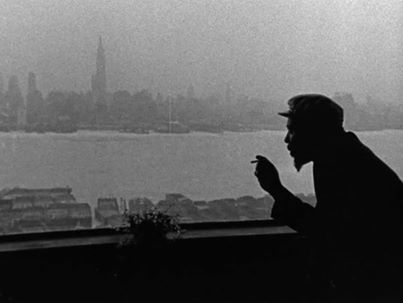
MONK and NYC
As I said before, we want to be remembered as an “original”, and thus beyond questioning. And even if we are lucky enough to briefly achieve it, it may not last, as everything “new” quickly becomes part of the collective unconscious.
The things that influence us are so many, that creating something new for an artist becomes a huge exercise in abstraction from the surrounding environment. So much so that it usually takes so many artists to the edge of something comparable to madness.
In my case, I have a slight synesthesia. It is a benign condition, so benign that until a few years ago it was impossible to diagnose correctly, and nobody cared!
BURT, DAVID AND DUKE
Basically it is something that happens to some of us while still inside the womb, where a tiny section in the brain´s frontal lobe does not develop exactly as it should. Quite an important percentage of the world´s population has it, but most just don´t even know it. Again, it is nothing bad. Quite the contrary, I take is as a wonderful gift.
Synesthesia simply allows us to “feel” somehow the unusual resulting effects of certain neuronal connections (I apologize to any doctor for my very basic description). For example, some people may taste different flavors as a result of hearing singing. That´s just a simple example.
In my case, my slight case simply allows me to “see” shapes and colors when I hear certain sounds, particularly music. I have found that with Jazz, and then Classical music (may be the way they are structured is what helps) this works best.
While I was growing up as an artist, I would try to “control” these impulses. I did my best to keep them far away from my art. I guess I did not want to divert too much from my formal training. I wanted my art to be “understood” and “accepted”.
One day (I was barely 17), I went by to visit a little gallery close to the corner of Melbourne´s posh Toorak and Orrong Roads. I lived only a few blocks away on Toorak Road and I had walked by it several times going and returning from school.
Taking a leap of faith, I went in and asked the lady who owned it if I could show her some of my paintings, as I wanted an opinion.
She gladly said yes, and so breaming with joy I ran all the way home, picked-up some of my “best” paintings and took them back to her gallery. She saw me come in and said, with the serious tone of someone who knows, “Ok, show me what you have”.
As I started placing my paintings in front of her, I saw her from the corner of my eye as she stood up and, with her right index finger unequivocally showing me the door, she said in a very stern voice: “Please! Just take this out of my sight!”
Besides the fact that no one should do this to a young aspiring artist, the episode as traumatic as it was, taught me something.
SOUP DE CRAYONS DU JOUR
As time went by, I realized that what made me different (I am not saying original) was the fact that my brain could see and transform sound, and allow me to express it pictorially.
My sources of inspiration were greatly enriched, as they were not only a response to standard visual, aural, and emotional stimulus like everyone else. Instead my brain kept adding abstract shapes and colors produced by its response to music. And the resulting combination was full of nuances that only I could interpret.
That is how I learned that my interest in being “formal” had deprived my work, until then, of that elusive spark that had been there all along. And that same decision had also kept my artistic practice from the sheer enjoyment, and the feeling of freedom, that taking advantage of all of life´s gifts could provide.
7. Another Short Detour Ahead (Just long enough to pick up the pieces of what made us artists)
Like with the point about money, this is also an annex discussion triggered by the previous point. Yet it is worth looking at it for a minute before finishing.
Sometimes, as artists, we tend to intellectualize our work too much. I have been known for making that mistake.
We get caught up in this web of validation. Out of logical interest, or sometimes out of simple fear, we tend to provide hooks and ladders all over the place so as to help those who must discuss our endeavors. That is all good and valid.
Yet sometimes, that conceptual exercise becomes conceptual madness, permeating into our real work. We become prisoners of complex concepts. They do not simply explain what we do, they tell us “what” to do.
As a result, we forget the essence of what has made us artists and our work something special.
Going back to basics is the rule there if we want to save our art. And once again, I am going to be (I apologize) self-referential.
Art involves, as we have seen, many issues. But in its essence, if I may be so blunt, it is basically a structure where we can place shapes and colors in a harmonious, individual, and unique manner.
My synesthesia has helped me in this regards. It allows me to incorporate shapes and colors in a very unusual fashion. Thus it has given be the chance to keep the “basics” very close to my work. The essence is not lost. Quite the contrary, it is always very much up front.
And then everything else must be put in the mix.
In my case, the intention that it be art was always there. The search for something visual that distinguished my work was always the preferred path. I did not stop there. I studied formally, and afterwards on my own, so I could learn on the shoulders of those geniuses I was trying to stand on. I looked at their triumphs and I particularly explored their failures.
Yet those steps, enhanced by life little gifts, allowed me to maintain the essential concepts within a complex cocktail of objective and subjective notions that accompany me in my everyday exploration.
The result is that my work may have become objectively richer over time (at least that is my hope), or maybe simply more exciting.
After all, originality does not necessarily require that something be broken. Instead, it can start from the modest and necessary step of allowing who we are, warts and all, to come through our artistic expression.
We are all unique, and letting that uniqueness show in our art, counts a long way into the originality stakes.
I am still learning as I keep moving forward. Our own Art is something that may last more than a lifetime. And if we are lucky enough, it may even become our legacy. The echo of our footsteps which may still resound for years after we are gone.
8. Viva la Revolución!!!!! Ouch!
As we looked at a few of the questions that are so common to the art world, I endeavored to challenge the concept that art is purely subjective. I think I have, at the very least, established the possibility that certain objective parameters must surround all the subjectivities that art does have as well.
Furthermore, I hope it is becoming patent that the purely subjective stance, very often, can also become something very close to a copout for us, artists. A subterfuge that allows us to put a stop to any questions regarding our artistic quality and, basically, to avoid what we may feel as judgment.
And I know personally how painful for us artists judgment feels. But I also know that from that pain we learn and grow.
Like the popular saying goes, we all learn from our mistakes. And if my goal is to keep learning, I know that what I should keep doing is to take risks, and thus make more mistakes.
Without objective judgment, there is very little to stop us from just conforming. And most of us may just end up doing “arty things” which we might feel deserve accolades they don´t. All this while we do not face the necessary inner questioning, and experience the intellectual insecurity, that can help us drive our art to new levels.
Maybe it all comes back to the fact that becoming true artist is really all about being revolutionaries. But the revolution must be, above all, about ourselves.
As artists, being revolutionaries means being non conformists. It means being prepared to challenge our own standardizations and attack our own artistic weaknesses. It implies resistance to the “average” and mediocre, and a continuous search to artistically exploit what makes us unique individuals and artists. It eventually means questioning our own limits all the time, and pushing the envelope at each turn.
In our own world, that may well be the ultimate objective, and subjective, artistic revolution.
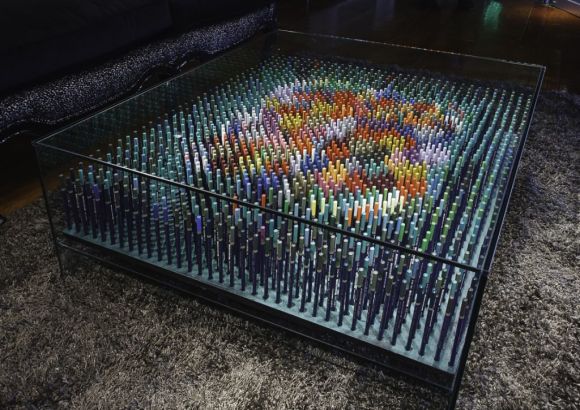
In 2013 I had the pleasure of participating in the 20th anniversaty celebrations of Buenos Aires famous Buenos Aires Design Shopping Mall. As part of these events I took part in Art Deco, an exhibition of furniture intervened by artists, where I presented my “Crystal Coffee Table (a le crayons).
Yet it took me a whole year to return to it and prepare a short video showing the photographs I had taken as I built it. A behind the scenes look, if you wish, on the work I had done.
Even though it does not show the process that went into thinking of it, planning it and any of the other details, I think it shows the complexity and at the same time, simplicity, of preparing this piece.
It also shows how the artistic object changes dramatically as it gets introduced in the cristal table which if anything, is bland and quite non specific.
There is a before and an after on the piece, and the video makes it very clear how the combination of two apparently unconnected ítems generates something new and much more powerful. They generate a completely new object of design, useful and at the same time, artistic


 On the opposite side of the street we find Miles Davis asserting, in his autobiography, that he alone composed all the songs on Kind of Blue. Confirming this is the writer and poet Quincy Troupe, co-author of one of the best know Davis biographies -, who said in an interview and in regards to this issue: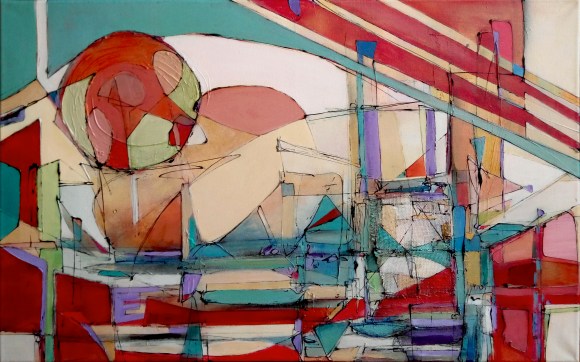






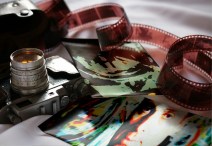 story almost in cinematographic terms. It needs that attractiveness that makes your story something to be consumed, in the good sense, like a good novel. In short, it needs to become a story that people can engage to and become close to, and by doing so, they will begin to know you, and will become closer to you and your art.

















 IGNACIO ALPERIN: THE ART OF THINKING OUT LOUD / EL ARTE DE PENSAR EN VOZ ALTA