Categories
EN ESPAÑOL previous works by the same artist Promoting your Art Videos Visual Jazz

UNO EN MILES

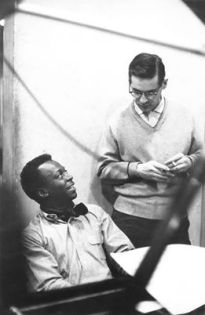
No way to run detail2Ganador de 9 Grammy Awards y considerado una de los músicos más influyentes del Siglo XX, Miles Dewey Davis III (más conocido como Miles Davis, o simplemente “Miles”) continúa aún hoy, décadas después de su muerte, ejerciendo su influencia en ámbitos propios y ajenos.

Desde médicos investigadores de la Universidad John Hopkins, a diseñadores de la D-School de la Universidad de Stanford, la música de Davis, y su trabajo en cuartetos y quintetos basados en una alta dosis de brillante inspiración y, por sobre todas las cosas, de perfecta improvisación, genera estudios y teorías sobre las neurociencias y su aplicación en áreas creativas.

Como artista plástico, la música de Miles me ha acompañado desde los 12 años, edad en 1236305_10151883675027941_1673098507_nque descubrí sus dotes casi “mágicos”. Durante muchos años ignoraba que una parte de mis dones creativos se debían a una sinestesia aplicada a mi obra. Mi ignorancia temporal, igualmente marcada por una certeza creativa, le dieron entonces al Jazz, y particularmente a Davis y sus contemporáneos como Evans, Coltrane, Monk, Hawkins, Jamal, Brubeck, Basie, Roach, y Clark (solo por nombrar a algunos) una faceta inspiradora y un poder milagroso sobre mi arte.

Sobre los hombros de estos genios musicales yo sentía que mis propias creaciones se alzaban hacia alturas insospechadas. Con el tiempo supe que mi interpretación sinestésica le daba una explicación más “terrenal” a mi característico uso pictórico de movimientos, ritmos, cadencias, y explosiones tonales. Pero el tiempo también me dio la razón sobre el aspecto inspirador de la música de Davis y su influencia sobre quienes la escuchamos con amor y admiración.

Hoy en día el ojo de las ciencias está puesto sobre las creaciones de estos genios de la música que lograron utilizar sus poderes y procesos creativos de una manera poco vista hasta entonces. Su obra nos enseña, tal vez particularmente hoy en día que estamos finalmente comprendiendo el funcionamiento de nuestros cerebros de manera más concreta, que nuestras capacidades pueden ser entrenadas para improvisar grupalmente, para trabajar en equipo de manera ordenada, fluida, y natural. Y esos procesos pueden tener, a la vez, la intimidad sensorial así como la explosión grupal de un tema de Davis.

Mi obra hoy sigue volando sobre las alas de estos genios creativos. Mi “Visual Jazz”, como lo bautizara una periodista norteamericana, sigue plasmando sobre lienzos, maderas, objetos y estructuras las cadencias y los ritmos de un estilo de Jazz que me continúa guiando y exigiendo, y por ello agradezco cada día. Un Jazz que, a la vez, ha pasado a convertirse en uno de los legados culturales más importantes que nos ha dejado el Siglo XX.

Y sobre todo, sigo agradeciendo al único y genial Miles, por haberse atrevido a mostrarnos el camino desde siempre.

Hasta la próxima!

Ignacio

entrevista2014

©2015/2016 por Ignacio Alperin Bruvera (Publicado anteriormente en el Blog claudiopignataro.com bajo http://claudiopignataro.com/2015/07/07/la-musica-de-miles-davis-que-inspira-a-los-artistas/ )

Categories
2015 art works 2015 Exhibitions 2016 exhibtions IN ENGLISH Videos Visual Jazz

It is Only a Paper Moon

Paper Moon (2015) 46x60 IABsmf
“Paper Moon” (2015) by Ignacio Alperin

Say, it’s only a paper moon
Sailing over a cardboard sea
But it wouldn’t be make-believe
If you believed in me

Yes, it’s only a canvas sky
Hanging over a muslin tree
But it wouldn’t be make-believe
If you believed in me


Without your love
It’s a honky tonk parade
Without your love
It’s a melody played in a penny arcade

It’s a Barnum and Bailey world
Just as phony as it can be
But it wouldn’t be make-believe
If you believed in me

Say, it’s only a paper moon
Sailing over a cardboard sea
But it wouldn’t be make-believe
If you believed in me

Yes, it’s only a canvas sky
Hanging over a muslin tree
But it wouldn’t be make-believe
If you believed in me


Without your love
It’s a honky-tonk parade
Without your love
It’s a melody played in a penny arcade

t’s a Barnum and Bailey world
Just as phony as it can be
But it wouldn’t be make-believe
If you believed in me

It’s phony it’s plain to see
How happy I would be
If you believed in me.


Songwriters
ROSE, BILLY/HARBURG, E.Y./ARLEN, HAROLD

Published by
Lyrics © Warner/Chappell Music, Inc., Universal Music Publishing Group, SHAPIRO BERNSTEIN & CO. INC., S.A. MUSIC

Painting: Paper Moon (2015) by Ignacio Alperin. Done in a reverse painting technique, under acrylic cristal, with oil based paints, inks and acrylics. ©2015 by Ignacio Alperin Bruvera.

PhotoFunia TV interference Regular 2014-08-04 01 53 31

Categories
2015 art works 2015 Exhibitions IN ENGLISH Videos Visual Jazz

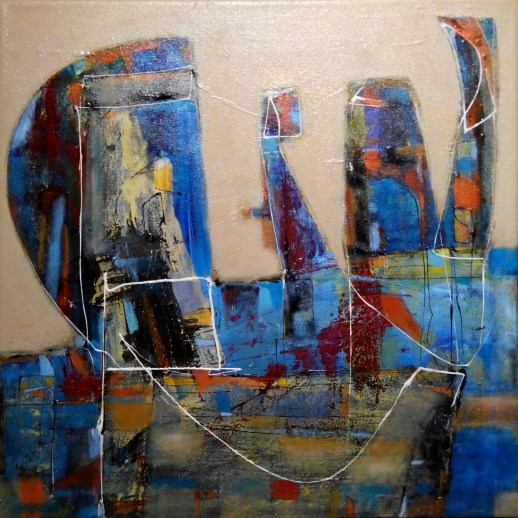
Looking Back

Looking Back (2015) 50x50IAB_editedlong
Looking Back (2015) by Ignacio Alperin – detail-

Distance. We always need distance. “20/20 vision in hindsight” says the refrain. Being in the middle of whatever it is we are trying to clarify, solve, understand… is always a challenging place to be. That is why so few can become strong decision makers. Being able to make decisions in the middle of the storm is something that is in the purview of a good ship´s captain. And we know that not everyone has what it takes to make it there.

So for most mortals, looking back may be one of the ways in which we learn. It is a way to really “see” and better understand what happened, and what we must do to avoid the negatives and make even better all the positives.


Bill Mays plays “Looking Back”


The problem here is that for nearly everyone, looking back would mean admitting mistakes, maybe some bad decisions, or the existence of opportunities that may have been mistakenly lost or left unattended. So we revisit scenes on our own. It is mostly a private affair. Almost as peering through a half open door and watching a scene from a movie that feels familiar.

It is like home schooling for grown-ups. Only when we test it against others, we may find out whether it really worked or not. In the meantime, we keep going. We keep looking back. We keep seeing better and better, even if most often than not, a little while too late. 

Looking Back (2015), By Ignacio Alperin Bruvera

She is looking back, hiden amongst her own blues and attempting to become a Captain of her own ship. Only those who really care  will see her, pondering, about what was left behind. Looking back…

Looking Back (2015) 50x50IAB

Acrylic, Ink, and Oil based paints on Canvas. 50cm x 50cm

In more detail, some macro photography of the same painting.

And finally…there “she” is, just in case you want to know…. barely sketched but, just like “her”, if we look back at the painting and at a distance, we will see.

Nelbxiab20151

Until next time!

Ignacio

sombras nada mas arteba mod3ochreB

©2016 by Ignacio Alperin Bruvera


Categories
2014 Art works IN ENGLISH Videos Visual Jazz

Science Funktion, a tribute to the late Donald Byrd

untitled (90)I recently published one of my new paintings (Joy Spring) which is, somehow, also a tribute to the great musician Clifford Brown, particularly in his pairing with drummer Max Roach in the album titled Clifford Brown & Max Roach.

This new painting coincidentally pays homage to another fantastic horn player and musician, and one which many consider one of the finest hard bop trumpeters of the post-Clifford Brown era.

Science Funktion (2014) is a 65cm x 60 cm painting, made in acrylic, printing & Chinese inks, and oil based paints on wood. As you know my art is influenced by music, particularly jazz. While the translation process of rythms and sounds gets a helping hand from my synesthesia. In this case, it is loosely based on the song of the same title, which was made famous by none other than Donaldson Toussaint L’Ouverture Byrd II, or as everyone knew him, Donald Byrd.

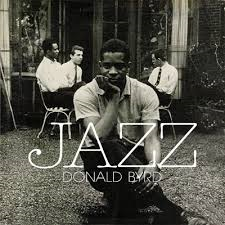
Born in 1932, Donald Byrd was an American jazz and rhythm & blues trumpeter. A sideman and a band leader from the 1950´s until very late in his life (he sadly passed away in February 2013), he was regarded as an influential voice amongst jazz musicians. Not only did he manage to move effortlessly between bebop, hardbop, funk, soul, rhythm & blues and electronic fusion jazz (influenced by Miles Davis move in the late 60´s). He was also an important influence in the early career of such greats as keyboard player and composer Herbie Hancock.

donaldbyrdHe played, amongst others, with Art Blakey‘s Jazz Messengers, John Coltrane, Sonny Rollins, Thelonious Monk, and his once protegé,  Herbie Hancock.

Science Funktion is one of the best known tracks in his álbum Caricatures, which he recorded in 1976 for the Blue Note label. Jazz purists don´t particularly like this phase of Byrds career, as he moves into electronic and funk in a fusion with jazz. But Funk, Soul and R&B fans consider this period as magnificent, and his mastery of the instrument is maintained thoughout. His Jazz roots are always there to be heard and enjoyed, and his love for all musical languages cannot be denied.

So here are Science Funktion, the song and the painting (and a slide show with details of the same painting).

I hope you enjoy them all.

Science Funktion (2014) - Alperin - 60cmx65cm
SCIENCE FUNKTION (2014) by Ignacio Aperin

https://www.youtube.com/watch?v=l2oi3MpreWg

This slideshow requires JavaScript.

Until next time,

Ignacio

PhotoFunia TV interference Regular 2014-08-04 01 55 05


Categories
IN ENGLISH Uncategorized Videos Visual Jazz

JOY SPRING THEN, JOY SPRING NOW

Brown-Roach-AlbumThe Clifford Brown & Max Roach quintet was a top band of the 50´s with a line-up that included at different times, top session musicians like Sonny Stitt, Teddy Edwards, Carl Perkins, George Bledsoe, Harold Land, Richie Powell and Sonny Rollins.

In 1955 the band recorded a jazz album which would be recognized as one of the most influential of all time.

Clifford Brown & Max Roach, as the album was very unimaginatively called, had nevertheless more imagination and power within its tracks than most records up to that time.

Their quintet was described by The New York Times as “perhaps the definitive bop group until Mr. Brown’s fatal automobile accident in 1956”, which cut short the bands successful life (only two and a half years), while this album was finally inducted into the Grammy Hall of Fame in 1999.

Even if the sound is very East Coast, only two of the tracks were recorded at Capitol Records New York studios, while the rest were recorded in California.

I recommend anyone interested in good music, and particularly great jazz, to get a copy of this album. It is pure joy.

As a homage I felt inspired to paint my latest work based particularly on one of the tracks, and another delight, “JOY SPRING”, which was written by Clifford Brown as a tribute to his wife Joy.

So here are both. Brown & Roach´s original rendition of the song of the same title, so you can discover or re-discover this little gem as well. And my latest painting, “JOY SPRING” (2014), 80cm x 90cm and obviously part of my “VISUAL JAZZ SERIES”. It is painted in acrylic, printing ink and oil based paints on canvas.

But wait, there is more. Below my painting, you will also find a second version of this wonderful song. This time played live many years later by the great Freddy Hubbard. As always, Hubbard´s playing is magnificent.

https://www.youtube.com/watch?v=g8kvsLBoGWM


Joyspring_IAB_(2014)_ 80x90
JOY SPRING (2014) by Ignacio Alperin


I hope you enjoyed it all.

Until next time.

Ignacio

Categories
2014 Art works IN ENGLISH previous works by the same artist Videos Visual Jazz What is Art

A “Hopscotch” between Literature, Art and Jazz

untitled (78)Argentine writer Julio Cortazar was born on a day like this, exactly 100 years ago. All over the world literary buffs and fans are celebrating this new anniversary of his birth with articles and mentions.

A prolific writer and a brilliant story teller, he left his mark in the minds and souls of the many millions who enjoyed his brilliance.

Stories like “Hopscotch” (published in 1963 and probably his most important novel), where the story can change according to the order in which the chapters of the book are read (hence the name), Cronopios and Famas, The final round, The Browl outside, and many more are highlights of his very entertaining, deeply complex, and fascinating works.

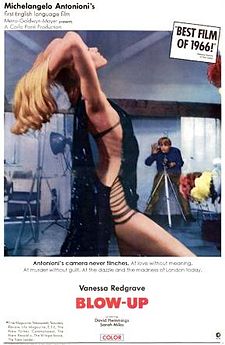
Even if you have never read him, you may have enjoyed some of his stories which have been made into movies.225px-Blowup_poster

The best known is, clearly, “Blow-up” (1966), a very successful adaptation of Cortazar´s short story “The Devil´s drool” (1959), directed by Michelangelo Antonioni, and starring David Hemmings, Vanessa Redgrave, and Sarah Miles. While Cortázar’s story “La autopista del sur” (“The Southern Thruway”) influenced another film of the 1960s, Jean-Luc Godard’s Week End (1967).

Cortazar´s love of boxing and Jazz is legendary. While I do not share his love of boxing, I do share his love for Jazz. One of the highlights of “Blow-up”, at least for Cortazar, was the fact that the music was written and performed by such a jazz genius as Herbie Hancock. While “The Pursuer” (1959), a short story that gives its name to a book, is losely based on the life of bebop saxofonist Charly Parker. And his constant musical references, particularly to Jazz, and in lesser extent to “Classical” music (a term that in fact he really detested), do mark his literary production.

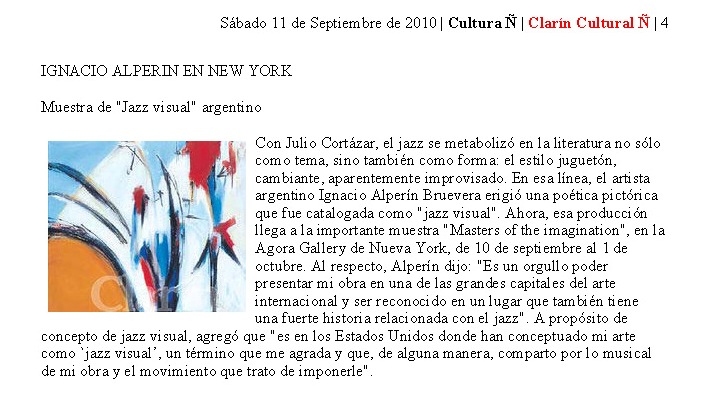
Some years ago, a very brave journalist from the Clarin Newspaper in Argentina put me in a bind, when he compared my paintings and my passion for infusing them with the rhythm and musical cadences of Jazz, with what another Argentine, writer Julio Cortazar, had done with the literary presence of this beautiful and free form musical style in all of his writings.

Nota Aislada de la Página 4 _ Page 4 Article by itselfI always felt almost “embarrassed” at this comparison. But on a day like this, I take it as an honor and an important legacy which in my own way, I wish to continue.

Cortazar passed away too early. It was 1984. He was buried in Paris (Montparnasse) where he lived. It was from illness, but many say that the man who always looked 20 years younger than his real age, had suddenly become old and frail from the emptiness that he felt after the passing of Carol Dunlop, from Leukemia, in 1982. She was his second wife and the love of his life.

Like many greatly creative people, all the toughness everyone saw on the outside, was just a shell which protected a highly sensitive and frail soul.

As a homage to this great mind, I would like to share with you this short video prepared by the Juan March Foundation in Spain, in which Cortazar himself talks about the relationship, almost the love affair, he had with Jazz and how it is brought forward in his works.

See you next time!

Ignacio

Categories
2014 Art works Design EN ESPAÑOL previous works by the same artist Promoting your Art Videos Visual Jazz

Interview/Entrevista: Derecho al Arte

DERECHO AL ARTE

El artista plástico Ignacio Alperín ha ganado notoriedad a nivel nacional e internacional con su arte movedizo y rítmico, conectado fuertemente al Jazz y a una movida marcadamente personal.

Por Cecilia Tvrdoñ

Cuando uno lee los comentarios sobre la obra del artista plástico Ignacio Alperín, uno nota que expertos y no expertos coinciden en ciertas frases: movimiento, ritmo, cadencia, color. Son todas palabras que buscan relatar de lo que se trata su obra, la cual por su fuerza y estilo tan personal, es difícil de encajonar en referencias clásicas definidas. Es fresca, intuitiva, innovadora y desde ya, muy alejada de lo que uno supondría al escuchar su historia.
PhotoFunia Very Old Telly Regular 2014-07-30 10 30 25¿Cuánto tiempo viviste en el extranjero?

Nací en la Argentina. Pero parte de mi infancia, y toda mi adolescencia y juventud, la viví en Australia, donde también estudié. Los que más me conocen dicen que soy un poquito Aussie. Además de Australia, y por razones laborales de mis padres, pude viajar mucho, e inclusive residir temporariamente en países como Singapur, Malasia, Francia e Italia. Volví a la Argentina en 1990 por curiosidad más que necesidad, y duré poco tiempo. Me “bañé” de realidad y me fui tambaleando como esos boxeadores que entran al ring sin estar preparados.  Di vueltas por Inglaterra, Francia, Italia y retorné al país en 1997.

Finalmente te adaptaste.

No realmente. Pero tal vez ahora estoy como esos boxeadores a los que les pegaron tanto que ya no le importa (risas). En serio, lo que sucede si uno viene de crecer en un país anglosajón y pasa a nuestra cultura, es que hay diferencias fundamentales que cuestan congeniar. Más allá de que cuando volví a la Argentina hablaba castellano con un poco de acento gringo, creo que lo que me pasa tiene que ver con los códigos. Estoy muy feliz en mi país, pero tal vez se entienda si te digo que afuera extrañaba nuestra calidez humana, eso de ser familieros a toda costa (muy tano) y nuestro sentido del humor; mientras que estando acá extraño el respeto por los demás, el sentido de justicia social, y las reglas claras y similares para todos, que son las pautas con las que crecí en Australia.

¿Tu formación es  puramente artística?

Se podría decir que el arte me acompaña desde que nací, ya que vengo de una familia muy abierta al arte y al diseño. Mi madre es una excelente dibujante que dejó de lado su pasión para formar una familia, pero nunca dejó de enseñarnos todo lo que sabía. Mi padre es un ingeniero con una carrera internacional que ha tenido muchos contactos con movimientos de vanguardia, tanto arquitectónicos como artísticos. Por todo ello mi primera formación fue más cercana al dibujo. En Australia, como parte de mi formación general, estudié artes visuales, e hice cursos y talleres. Pero en algún momento decidí encaminar mi propia exploración y allí es donde todavía me encuentro hoy.

¿Te dedicaste siempre al arte?IAB_SELFI1retocada

Pese a que el arte es la gran constante de mi vida, como considero que el ser humano debe responder con acciones a todas las necesidades intelectuales que se presentan (hacer algo con los dones que Dios nos ha dado sería una frase que siempre me inculcaron y que se me viene a la mente ahora) también estudié, entre otras cosas, Derecho, Ciencias Políticas, Relaciones Internacionales, y algo de Economía y Marketing.

Nada que ver con el arte… Sos el abogado pintor.

(Sonríe) Mirá, pinto, en el sentido más formal del concepto, desde los 12 años. Es algo que me ha acompañado siempre. Vendí mi primer cuadro en Australia a los 20 años, lo que marcaría el comienzo de mi carrera profesional de artista. Como también estudié otras profesiones, mi arte debió competir con otras responsabilidades, muchas veces ocupando el lugar de acompañante permanente y bálsamo para el alma. Y desde hace ya más de 10 años, la de artista es mi profesión principal.

¿Nos contás un poco más de tu alter ego profesional?

Para los que me conocen por primera vez, siempre les pregunto si quieren que hable como Bruce Wayne o como Batman (se ríe nuevamente). A simple vista parecen ser actividades muy alejadas entre sí. Pero la realidad es que hay un hilo conductor, y es que en todos yo soy yo. La vida hoy es muy compleja y en términos objetivos, es más larga. Ya la idea de pertenecer a una empresa toda tu vida y retirarte con el reloj de oro, pese a ser muy admirable, es casi imposible. El dinamismo del mercado, los altibajos económicos, y las presiones emocionales ligadas a un mundo donde todo es “ya”, hacen que los cambios laborales y profesionales no sólo sean casi inevitables, sino que hasta podrían considerarse muy sanos porque son como brisas de aire fresco que renuevan el “ambiente interior”. Pero no todo es fantástico. Admitamos que los momentos en los que algo terminó y lo nuevo no termina de concretarse, son momentos duros para todos. Pero creo fervientemente que la solución está casi siempre en nosotros mismos.

Perfecto, pero ¿y  tu vida como Bruce Wayne?

(Se endereza) Tengo que tener el phisique du role para contestar. Estudié y estudio siempre. Tanto profesiones clásicas como en lo relacionado al arte (inclusive estudié teatro). Tengo el extraño honor de ser el primer argentino en la historia de Australia en recibirse de abogado. Hice una práctica en un estudio internacional en Melbourne y de allí me fui directo a trabajar en una empresa. Me desarrollé laboralmente en diferentes empresas y en diferentes países. Llegué a ser Gerente General de una S.A. y de mi propia empresa, Director Ejecutivo del Colegio de Abogados de la Ciudad de Buenos Aires, y Socio Gerente de un estudio extranjero entre otras cosas. Y hoy, en paralelo a mi arte, sigo dando charlas y conferencias sobre los procesos creativos, el arte  y la creatividad en general, enfocado a  empresas, profesionales y artistas. En fin… Muy Bruce Wayne.

Y mientras tanto el arte acechaba…

Yo diría que el arte ha sido y es mi compañero fiel de toda la vida. Dónde iba, mi arte iba conmigo. Y hoy en día es un trabajo full time, de 7 días a la semana.

¿Cómo definirías tu arte?

Si queremos darle un nombre tradicional, mi arte podría encuadrarse dentro de lo expresionista y abstracto. Mis series son generalmente basadas en el jazz particularmente, y en la música en general. Lo de Jazz Visual, o Visual Jazz, que es como se le conoce más popularmente aquí y afuera, responde a la denominación que le dio a mi obra una periodista norteamericana la primera vez que expuse en New York. Y la verdad es que me gustó porque de manera muy sintética, plasma lo que yo trato de generar como artista.

¿Qué tiene de diferente tu trabajo con la música, comparado a lo que hacen otros artistas, muchos de los cuales escuchan música también mientras trabajan?PhotoFunia TV interference Regular 2014-08-03 02 35 54
Yo tengo sinestesia. No es algo malo, y para los que no la conocen, es una condición tan benigna del lóbulo frontal del cerebro que hasta hace algunos años no se podía diagnosticar fehacientemente y a nadie le importaba.
Inclusive hay un porcentaje importante de la población mundial que lo tiene y, algún médico me corregirá, se produce durante el proceso de gestación, dónde cierta característica del lóbulo frontal no se desarrolla o se desarrolla tal vez de otra manera a lo que se consideraría “normal”.
El resultado es que se producen conexiones neuronales fuera de lo común. Por ejemplo, hay personas que cuando escuchan ciertos sonidos se les generan sabores específicos (do es chocolate, re es frutilla… por dar un ejemplo simplificado).
En mi caso, mi sinestesia es leve, pero me permite “ver” formas y colores cuando escucho ciertos sonidos, particularmente música. En particular, encuentro que el Jazz y la música denominada “Clásica” genera los resultados más importantes. Y como amo el Jazz desde pequeño, es mi inspiración principal.

Esta cualidad, ¿estuvo siempre presente en tu obra?

Cuando era un joven artista me resistía a estos impulsos y no los plasmaba en mi obra. Los ignoraba ya que mi educación era más formal, y deseaba lo que muchos deseamos, que es ser aceptado.
Pero con el tiempo me di cuenta que lo que me hacía diferente (no digo original) era el hecho de que mi cerebro pudiese “ver” cosas que otros no veían. La inspiración no llegaba solamente a través de impulsos visuales, o puramente emocionales, sino que también a través de ondas que producía mi cerebro al verse estimulado por el sonido.
Ahí comprendí, que el respetar la “formalidad” le quitaba a mi trabajo, por un lado, esa elusiva característica individual que todos buscamos, y a mi vida de artista el disfrute de crear de una manera que me hacía verdaderamente feliz.
Y así fue como comencé, de a poco, a experimentar lo que hoy ya es una característica de mi obra. Logré así unir mi impronta, y mi capacidad de trabajo, con las posibilidades que este don me genera, y encontré la manera de fusionarlos y aprovecharlos artísticamente.
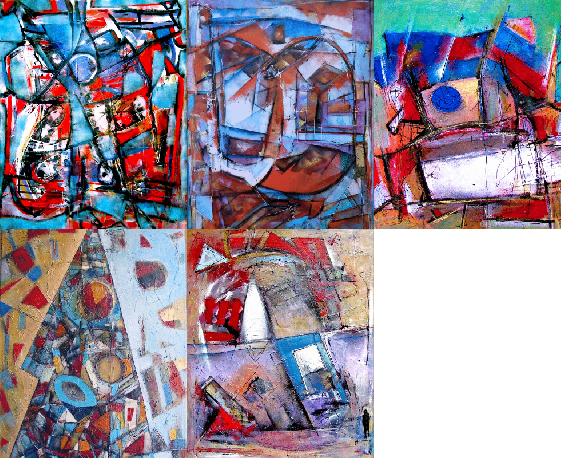
PhotoFunia Animator Regular 2014-07-30 12 49 27Y se nota en la vitalidad, los movimientos y el ritmo que hay en tu obra.

Esa “visión” de movimientos, formas y colores creo que hoy se plasman claramente en mi trabajo pese a ser marcadamente abstracto. Si no me equivoco, el comentario que más he escuchado sobre mi obra, sea de expertos (artistas, curadores, etc) como del público en general, es que se ven plasmados los ritmos, los movimientos, y las cadencias de la música de manera muy clara.
Me ha llevado años, pero igualmente, me hace muy feliz escucharlo.

Tal vez la reputación de tu obra ya me esté dando la respuesta, pero ¿encontrás que la obra abstracta es aceptada y valorada en nuestro país como en el extranjero?

Creo que la obra abstracta tiene su mercado en todo el mundo. La abstracción pictórica existe desde principios del siglo XX y va a seguir existiendo. Y sinceramente, tampoco creo que sea un problema que haya personas a las que no les guste la abstracción. Es más, están en todo su derecho. Y creo que es un tema que no pasa necesariamente por la educación, aunque comprenderla seguramente allana el camino para disfrutarla. Más bien intuyo que en general es un tema de gustos.
Igualmente te cuento que en la Argentina las obras abstractas tienen muchos adeptos, particularmente entre los coleccionistas de mediana edad y jóvenes, y eso claramente es muy bueno.

¿Manejás tu obra de manera personal?

El mercado del arte es muy complejo. Creo haber tenido la suerte de que mi obra haya sido resaltada en medios nacionales y extranjeros. Eso es fantástico desde el punto de vista de la validación externa que necesita el público que se acerca a la obra. Algunos curadores recomiendan mi obra y eso también es muy bueno. Pero no lo es todo.
Participo de eventos y ferias, generalmente por invitación, y elijo dónde participar. La elección no se basa en la fama de la feria o muestra necesariamente, pero en lo que en el momento también pueda resultar beneficioso para mi arte. Eso sí, nunca le digo que no a los eventos a beneficio.
También mantengo mi  presencia a través de mi Sitio personal; de mi Blog; de un grupo, una Fan Page y una página personal en Facebook; de presencia en LinkedIn donde contribuyo con artículos en 7 grupos de arte. Tengo una substancial masa de seguidores en Twitter también, y todo ello requiere de tiempo y planificación.
Siempre que uno habla de la Red pareciera ser que no requiere trabajo. Se publica y listo. Pero creo que con lo que acabo de contar queda claro que, por un lado, promocionarse por Internet es un trabajo como como cualquier otro y requiere de tiempo, constancia y cierta precisión. Y la pata tradicional también lleva tiempo y esfuerzos.
Recordemos que además de todo eso, pinto, planifico, trabajo en mis objetos y diseños, y coordino la representación de mis obras. Es realmente un trabajo full-time.

¿Proyectos?

Proyectos y realidades siempre. Hoy, en paralelo a mi arte, sigo dando charlas y conferencias sobre los procesos creativos, el arte  y la creatividad en general, enfocado a  empresas, profesionales y artistas.  No soy de los que anuncian sus proyectos futuros con asiduidad. Siento que la presión positiva que se genera al trabajar silenciosamente, pese a las ganas de contarlo a los cuatro vientos, es muy frágil. Se disipa fácilmente si uno genera expectativas y “desinfla” esa presión interior. Digamos simplemente que creo en el futuro, mío y en el del país, y estoy apostando para que podamos hacer grandes cosas juntos.

Si querés ver a Ignacio Alperín en acción, mirá la nota en YouTube, en el canal arteztvfull o bien  en la fan page Artez Teve  Programa de Televisión.

http://www.revistainiciar.com.ar/nota/277/derecho-al-arte/

Categories
2013 Art works 2013 Exhibitions 2014 Art works Design Exhibitions IN ENGLISH previous works by the same artist Uncategorized Videos Visual Jazz

A look back at my Crystal Coffee table (a le Crayons)

In 2013 I had the pleasure of participating in the 20th anniversaty celebrations of Buenos Aires famous Buenos Aires Design Shopping Mall. As part of these events I took part in Art Deco, an exhibition of furniture intervened by artists, where I presented my “Crystal Coffee Table (a le crayons).

IABCRYSTALTABLE2013-4

Besides having the piece covered by BA´s largest newspapers, I wrote a couple of articles on it and I invite you to check them out. The most recent being “Art, Suit and Tie” (https://ignacioab.wordpress.com/2013/05/17/art-with-suit-tie/ ).

Yet it took me a whole year to return to it and prepare a short video showing the photographs I had taken as I built it. A behind the scenes look, if you wish, on the work I had done.

Even though it does not show the process that went into thinking of it, planning it and any of the other details, I think it shows the complexity and at the same time, simplicity, of preparing this piece.
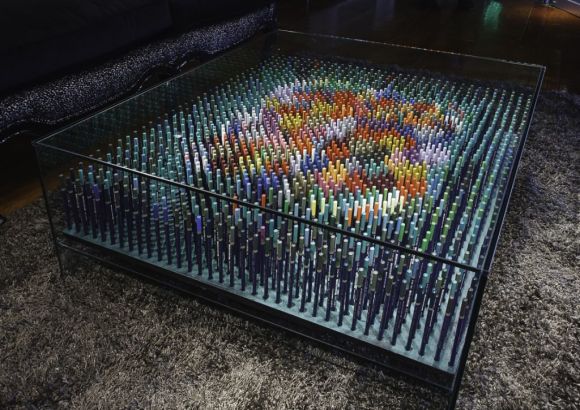
It also shows how the artistic object changes dramatically as it gets introduced in the cristal table which if anything, is bland and quite non specific.

There is a before and an after on the piece, and the video makes it very clear how the combination of two apparently unconnected ítems generates something new and much more powerful. They generate a completely new object of design, useful and at the same time, artistic

I hope you enjoy it.

See you next time!

Ignacio