Categories
2015 art works 2015 Exhibitions 2016 art works 2016 exhibtions Creativity / Creatividad IN ENGLISH Promoting your Art Visual Jazz What is Art

NEVER GIVE UP. NEVER SURRENDER.

There is an old movie called Galaxy Quest, about a group of actors who, having enjoyed better days (professionally and in their personal lives), still perform together occasionally at Mall Openings and conventions. Their common bond is the fact that, long ago, they all starred in a successful TV Sci-fi show (of the same name as the title).

The movie has its moments, particularly at the start when they are kidnapped by an alien race and get embroiled in the middle of a war with a planet of lizards. It is a simple case of mistaken identity.

It seems that the aliens picked-up the TV signals in space and thought that the crappy TV show episodes were in fact historical documents about a group of invincible warriors who saved planets from extinction, while in fact we know they were a bunch of semi-retired second rate actors doing weekly shows in front of cardboard sets.

This movie always comes to mind, not because it is anything outstanding, but because almost every time I give a lecture about creativity or art I get asked by professionals, artists and university students alike, about what are in my mind the most important aspects that help in building a successful career.

Success is many things to many people, and I am not going to try to define it here. Suffice to say that I am assuming that we are talking about attaining some of what we search in life (it may be recognition, love, a family, money, power, a career, and so on).

Furthermore, I am in favor of defining success and failure in every aspect of our lives if we wish, and as we wish. In my case, I let others run races set by someone else. I run my own.

artnetwrk
THE QUESTION IS: WHAT IS SUCCESS TO YOU?

And that may be the first point. You are the master of your own life. You set your destination, and it is up to you to decide how you wish to go about it. I am a great believer that the power of “we” is far superior to the power of “me”, but I have to know where I am going before I can invite others to tag along, or join up with others in their journey.

Many concepts can be added on from there – creativity, solidarity, positive thinking, conscience, ethics, hard work, intelligence, responsibility, self-discipline, clairvoyance of sorts, and so on -, but there is one that is a must. One which to me is so important that it may help to bring you over the other side even when you lack some of those qualities.

In “Galaxy Quest” they keep repeating the catch phrase of the show, which happens to be “Never give up! Never surrender!”. In fact the whole movie is based on this very premise. Not giving up and not surrendering (no matter how ridiculous, scary, or ridiculously scary the situation may be). What they are talking about is nothing more than “resilience”.

Merrian-Webster defines the concept of resilience in general as “the capability of a strained body to recover its size and shape after deformation caused especially by compressive stress”.

That, translated to a human capacity, refers to a quality that allows some people to absorb pressure and failure, and convert it into something positive. The old fashion “taking on the knocks and coming back stronger than ever” attitude.

Some people innately have this quality. Yet for others, it is a matter of learning. Psychologists have identified some of the factors that will categorize someone as resilient.

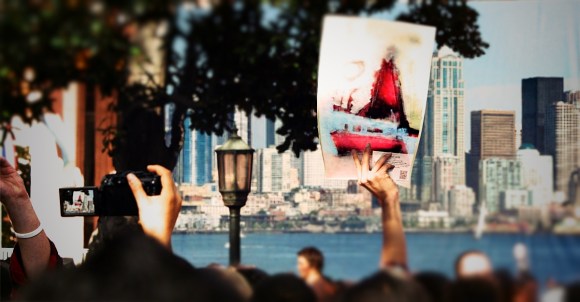
The most common seems to be optimism. It does not mean blindness to reality. It just means having a positive attitude even after being burned down. It means doing a Phoenix like flip and rising from the ashes. It means taking on apparent failure and turning it into a lesson on the way to success. It makes people capable of adapting intelligently and quickly to change, adjusting their outlook promptly and soldiering on.
handup1

Resilience is at the essence of very successful people (whether they are at the top of the corporate heap or are just a great mum or dad). It is what keeps us going our way when everyone else is also telling us to go, but away.

Sometimes, hitting the proverbial wall has to do with schemas, pre-formatted ideas people have about how things “should” be (many companies also have them and they show up, for example, when seeking new personnel). Sometimes there are other issues and we should always revise our own attitudes as well (it is not a matter of simply placing blame somewhere else either).

But that adaptability, resistance, aptitude and attitude is what allows us to take in responses from others that feel, very often, like a slap in the face and comeback with the best scorecard we have ever done. It means jumping over, letting go by, or simply ignoring the negatives along the way so we can make it to where we want to go.

One great example of this was recently given by Jack Ma. He said: “I failed 3 times in 56192b94-62f9-4af0-90b3-f352bb938054-originalcollege. I applied 30 times to get a job but I have always been rejected. When KFC came to China for the first time, we were 24 to apply and I was the only one to be dismissed. I wanted to go into the police and out of 5 postulants, I was the only one not to be accepted. I applied 10 times to return to Harvard and I was rejected. Never give up because you failed once, twice…just understand that failure is only how we are shown another way to reach our intended route”.

Just in case you don´t know, Jack Ma is the founder of Alibaba, which together with Amazon are the two largest e-commerce websites in the world. He is also the 22nd richest person in the world with $29.8 billion dollars, according to Forbes.

So…just never give up, never surrender. Learn, adapt, spring back, and find your way to your own kind of success.

Until next time,

Ignacio

ignacioalperin lights4

©2016 by Ignacio Alperin Bruvera


Categories
IN ENGLISH previous works by the same artist Promoting your Art The Sunday Concert (Jazz) Videos Visual Jazz

THE SUNDAY CONCERT: Benny Golson

IAB_That Other Day_2015_detailThis is the first of my Sunday Articles dedicated to a Jazz Legend.Golson-Farmer-resized

This Sunday, the first of the series, it is dedicated to a Bebop Legend: Mr Benny Golson.

Born on January 25th, 1929 (he is now age 87), Golson is a much loved (and many times forgotten by younger generations) hero of one of the most important eras of modern Jazz.

He was part of a bunch of musicians from Philadelphia who would in time change the way we saw Jazz. As a young kid he used to play with other promising musicians, people like the young John Coltrane, Red Garland, Jimmy Heath, Percy Heath, Philly Joe Jones, and Red Rodney (nice school friends to have if you ask me!).

After several bands straight out of college, he joined the “big leagues”, playing from 53 until 59 with Tadd Dameron, Lionel Hampton, Johnny Hodges, Earl Bostic, Dizzy Gillespie, and Art Blakey, with whom he recorded the classic Moanin’ in 1958.

220px-Benny_Golson's_New_York_SceneIn 1995 Golson received the NEA Jazz Masters Award of the National Endowment for the Arts. In October 2007 Golson accepted the Mellon Living Legend Legacy Award presented by the Mid Atlantic Arts Foundation at a ceremony at the Kennedy Center. Furthermore, during the same month, he won the University of Pittsburgh International Academy of Jazz Outstanding Lifetime Achievement Award at the university’s 37th Annual Jazz Concert in the Carnegie Music Hall. In November 2009, Benny was inducted into the International Academy of Jazz Hall of Fame during a performance at the University of Pittsburgh’s annual jazz seminar and concert.

So, after reviewing this “young man´s” incredible credentials, how about if we just get to it!

Here is the first of our Sunday Jazz concerts.

I invite you to simply enjoy the glorious music of Mr. Benny Golson.

Until next time (and have a great Sunday!)

Ignacio

entrevista2014

©2016 by Ignacio Alperin Bruvera

Categories
Visual Jazz

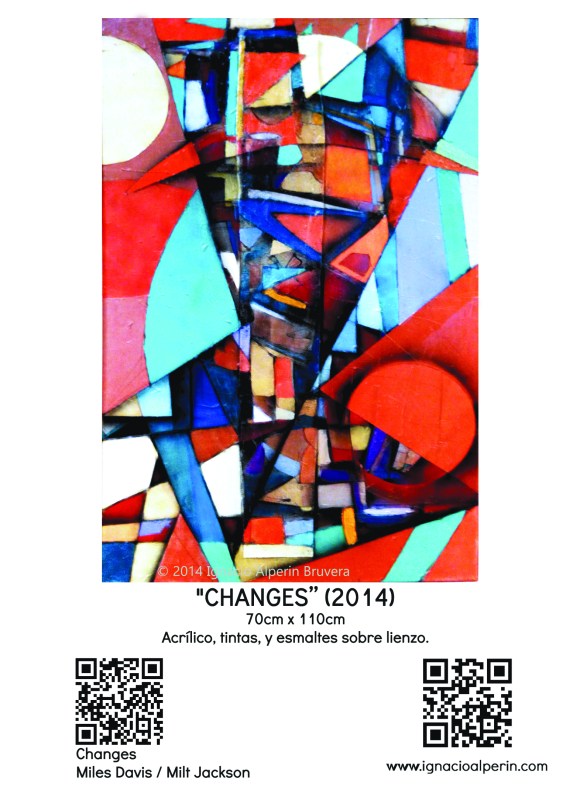
CHANGES

La vida nos exige un cambio constante si es que deseamos crecer.

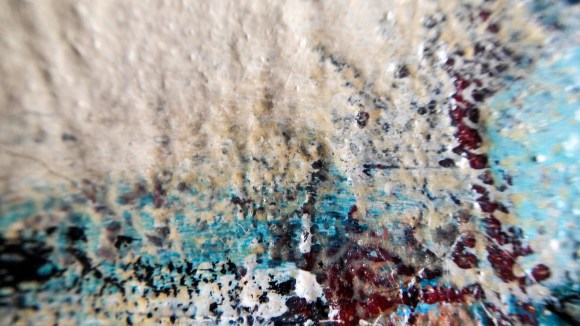
Las crisis nos desgarran, nos desarman, y nos obligan a reconstruirnos como personas.Changes_Alperin_detail_2

Como el ave fénix, desde las cenizas -o al menos a partir de los fragmentos de nuestro ser-, buscamos recomponernos con la mayor fidelidad posible.

Pero la reconstrucción nunca es perfecta. Las piezas nunca encajan exactamente como antes. Es probable que nosotros como unidad, y ellas como partes de un rompecabezas modificado a mitad de camino, hayamos adquirido nuevos bordes y aristas. Y en situaciones extremas, habremos dejado en el camino retazos que ya nunca más volverán a ser y levantado piezas necesarias para nuestra renovación personal.

El resultado es que logramos resurgir, pero la similitud a lo anterior contrasta con lo que pasamos a ser ahora.

¿Somos mejores? ¿Tal vez peores? Eso solo el tiempo lo dirá…pero desde ya, ante tamaña epopeya organizativa, somos definitivamente más complejos.

Es en esa complejidad que escondemos matices y detalles que preferimos dejar para nuestro interior, alejados de la superficialidad que nos define ante otros.

Changes_Alperin_detail_3Y algunos trazos quedan forzosamente esbozados en lápiz. Borradores de nuestro ser, líneas tentativas de nuestras nuevas formas que quedan simplemente, a veces burdamente, bosquejadas. No vaya a ser que no nos terminen de cerrar. Y si así fuera, podremos de esa manera borrarlos de nuestra recuperada fisonomía sin generar demasiados daños ni levantar sospechas.

Changes (cambios)…. somos los mismos pero no somos iguales a lo que éramos, y cada derrumbe y posterior reconstrucción, nos da más detalles para contemplar, más signos escondidos a la vista de todos, más “nosotros” y menos “reflejo de los otros”.

Y dejo el pequeño homenaje insinuado para los que quieran jugar a las escondidas conmigo.

Todos mostramos nuestra admiración de alguna manera. Uds. encontrarán mi tributo como parte de un lúdico ejercicio saltimbanqui, casi de arlequín.

Algunos ya conocían la obra…otros no.

Espero que les guste, así como el tema, muy cercano al sentido de la obra, en la voz y piano de un cantante británico que muchos no conocen todavía pero que claramente los invito a conocer mejor: Jamie Cullum canta “Changes” en vivo en Juan les Pins (2011).fotos pub polaroid frente changes

Hasta la próxima!
Ignacio

entrevista2014

© Copyright 2015/2016 by Ignacio Alperin Bruvera

Categories
2015 art works 2015 Exhibitions 2016 exhibtions Promoting your Art Videos Visual Jazz

Formas

formas(2015)_detail2_AlperinFormas (pronounced for-mass) in Spanish means “shapes”, but it can also mean “manners” in the way our parents kept telling us to have better manners, and  it can also mean “ways”, as in different ways of doing something.

My art encompasses the three.

I solidly work on shapes, I try to find good manners of executing and presenting my art to others, and I am always searching for new ways to do what I do.

The end result…well, the opinion on the end result I leave up to you.

In this case, it has to do with the music of Argentine “Bandoneon” maestro Dino Saluzzi.

In his 2006 album “Senderos” (ECM) with Jon Christensen, Formas is de second last song.

Written by Saluzzi and Christensen, it reminds us more and more of the great Astor Piazzola. Less jazzy in its context, but still investigative and climatic, his music transcends tango into other frontiers of sound.

So here is this brilliant álbum, and the painting inspired by “Formas”. Almost 10 years after the song saw the light of day as an important part of this inspired album.

Formas (by Dino) (2015) 45x55 IAB4show_edited.jpgUntil next time.

Ignacio

©2016 by Ignacio Alperin Bruvera

Categories
2015 art works EN ESPAÑOL Poetry/Poesia Visual Jazz

DESENGAÑO

PHOTO_20160103_165448_edited.jpg

Cayeron solas.

Por la mañana,

como gotas

de sangre

de una herida

sin cerrar.


No había luz,

Y se encerraba

en sí misma.

Con toda la fuerza

de la noche,

y del día.


Sin pensarlo.

Sin quererlo.

Sin contarlo.

Solo sintiendo.

Como un torrente

de aguas frías,

gélidas, rebeldes,

que se unen

por fuerza mayor.

Y fluyen hacia el mar.

El mar de siempre.

El mar de lágrimas.

Que no espera por nada,

ni por nadie.


Ni por él.

Ni por ella.

Solo a Dios

y sin saberlo.

Solo por instinto

y sin fuerzas.

Solo por recuerdos

y sin ganas.

Solo por temor

A ya no ser.

PHOTO_20160103_165458_edited.jpg


Escrito por/ writen by Ignacio Alperin

©1994 by Ignacio Alperin Bruvera


Categories
2012 art works 2012 Exhibitions IN ENGLISH previous works by the same artist Promoting your Art Videos Visual Jazz

It´s just a good idea

This is going to be short and to the point.

Buying art is a good idea.

PhotoFunia Classic Frame Regular 2014-07-30 10 54 57

If you look it at it from the point of view of sheer gratification, few things that you will buy for your house at a reasonable price will give you more enjoyment and for such a long time.

What are the chances that your sofa will increase in price over time? (Yes, I mean after use).sofa.jpg

Not many? How about close to none?

What are the chances that a painting you bought for anywhere between $500 and $5000 will increase in price over time?

Well, you don´t have the best odds but it can and it does happen. Anywhere higher than $4,000 and your odds get better, and those you purchase at prices that go anywhere from $5,000 to $15,000 have probably very good odds of maintaining and increasing prices.

So, if you have a keen eye and good luck, your purchased art work may double, triple, or multiply its original price many times over.


foundart2

Now, it is important that you keep it, remember where it is, and pass it over to the next generations. Otherwise what could happen to you is what happened to the unknown original owner of the painting “Preparation for Egypt” (which is thought was painted somewhere between 1605 and 1620). A German student in Berlin was looking for an old sofa for her appartment and decided to buy a pullout couch at a flea market. When she opened it, the painting was inside. It went on to be purchased by an anonymous bidder at auction in Hamburg for a price of $27,630, making the student about 100 times what she originally paid for the couch. So the lesson is to keep your art close, protected, in your will so you can pass it on to others, and definitely, do not hide it in a sofa (no matter how much you like the sofa).


If you are a betting person, always spend a little more (with good and knowledgeable advice is always better) as price in art relates to how the market views the artist (obviously, a higher price acts as an initial validation of the art work). But this is not a must.

little tunes 21
LITTLE TUNES 21 (2012) by Ignacio Alperin

You can find great deals amongst emerging as well as established artists. In my case, I make the point of always of having paintings available below $5,000 (sometimes as low as $1,500 or even less for small pieces), as my interest is that my art get to as many hands as possible. I love having someone buying something for $1,000, and then seeing that person 6 months later with a smile on his or her face because not only they love their painting, but they know they have already made a profit on it as well.

They are my best marketing people. I love the fact that they like my art, and I love seeing them talk about how much they enjoy a particular painting. And I am not alone in this pricing strategy. A great number of artists share this attitude towards the market.

So, if you are looking for enjoyment, originality, a smart and lasting gift for yourself and for the people you love and esteem, as well as a chance at making a handsome profit just for having a keen eye, you cannot do much better than buying art.

And as long as we are talking about smart things to do, I recommend you listen to this album. It is just another good idea.

See you soon.

Ignacio

ignacioalperin lights4.jpg

©2016 by Ignacio Alperin Bruvera


Categories
EN ESPAÑOL previous works by the same artist Promoting your Art Videos Visual Jazz

UNO EN MILES

No way to run detail2Ganador de 9 Grammy Awards y considerado una de los músicos más influyentes del Siglo XX, Miles Dewey Davis III (más conocido como Miles Davis, o simplemente “Miles”) continúa aún hoy, décadas después de su muerte, ejerciendo su influencia en ámbitos propios y ajenos.
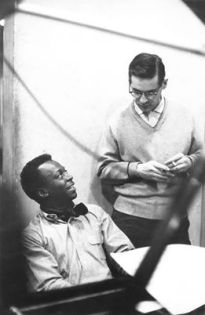
Desde médicos investigadores de la Universidad John Hopkins, a diseñadores de la D-School de la Universidad de Stanford, la música de Davis, y su trabajo en cuartetos y quintetos basados en una alta dosis de brillante inspiración y, por sobre todas las cosas, de perfecta improvisación, genera estudios y teorías sobre las neurociencias y su aplicación en áreas creativas.

Como artista plástico, la música de Miles me ha acompañado desde los 12 años, edad en 1236305_10151883675027941_1673098507_nque descubrí sus dotes casi “mágicos”. Durante muchos años ignoraba que una parte de mis dones creativos se debían a una sinestesia aplicada a mi obra. Mi ignorancia temporal, igualmente marcada por una certeza creativa, le dieron entonces al Jazz, y particularmente a Davis y sus contemporáneos como Evans, Coltrane, Monk, Hawkins, Jamal, Brubeck, Basie, Roach, y Clark (solo por nombrar a algunos) una faceta inspiradora y un poder milagroso sobre mi arte.
Sobre los hombros de estos genios musicales yo sentía que mis propias creaciones se alzaban hacia alturas insospechadas. Con el tiempo supe que mi interpretación sinestésica le daba una explicación más “terrenal” a mi característico uso pictórico de movimientos, ritmos, cadencias, y explosiones tonales. Pero el tiempo también me dio la razón sobre el aspecto inspirador de la música de Davis y su influencia sobre quienes la escuchamos con amor y admiración.

Hoy en día el ojo de las ciencias está puesto sobre las creaciones de estos genios de la música que lograron utilizar sus poderes y procesos creativos de una manera poco vista hasta entonces. Su obra nos enseña, tal vez particularmente hoy en día que estamos finalmente comprendiendo el funcionamiento de nuestros cerebros de manera más concreta, que nuestras capacidades pueden ser entrenadas para improvisar grupalmente, para trabajar en equipo de manera ordenada, fluida, y natural. Y esos procesos pueden tener, a la vez, la intimidad sensorial así como la explosión grupal de un tema de Davis.

Mi obra hoy sigue volando sobre las alas de estos genios creativos. Mi “Visual Jazz”, como lo bautizara una periodista norteamericana, sigue plasmando sobre lienzos, maderas, objetos y estructuras las cadencias y los ritmos de un estilo de Jazz que me continúa guiando y exigiendo, y por ello agradezco cada día. Un Jazz que, a la vez, ha pasado a convertirse en uno de los legados culturales más importantes que nos ha dejado el Siglo XX.

Y sobre todo, sigo agradeciendo al único y genial Miles, por haberse atrevido a mostrarnos el camino desde siempre.

Hasta la próxima!

Ignacio

entrevista2014

©2015/2016 por Ignacio Alperin Bruvera (Publicado anteriormente en el Blog claudiopignataro.com bajo http://claudiopignataro.com/2015/07/07/la-musica-de-miles-davis-que-inspira-a-los-artistas/ )

Categories
2014 Art works 2015 art works 2015 Exhibitions 2016 art works IN ENGLISH Visual Jazz

That other day


IAB_That Other Day_2015_detail
THAT OTHER DAY (2014) – Detail –

This is something like the “B side” of my previous article on this same blog (THAT DAY: https://theartofthinkingoutloud.com/2016/01/28/that-day/) and which is set to the music of Kind of Blue .

Blue in Green” is the third tune on Miles Davis’ 1959 album, Kind of Blue. One of two ballads on the LP. (the other being “Flamenco Sketches“).


As an aside here (and something that may earn you points in one of those “did you know?” kind of games), it has been said that the second ballad which appears on the record as “Flamenco Sketches” is in fact the song “All Blues” and vice versa. Yes, the argument is that somebody may have switched them by mistake and that they only realized it when the records were already printed and so were the covers, and as a result one simply became the other.

At the very least this is what Jeremy Yudkin argues (also as an aside point) in his scholarly article Miles Davis Kind of Blue, which you can read on the Oxford University Press Music Quarterly Journal. He correctly points out that “Flamenco Sketches” fits more logically with the strumming mid-tempo of the song which appears as “All Blues”, while the title “All Blues” fits much better with the last, very slow song that is known as “Flamenco Sketches” (If you ask me, the easiest thing would be to simply check the original copyright registry of both scores…but no one is asking me…I know).


In any case, the spirit behind “That other day” is a little bit more complex, and less romantic, than “That Day”.PhotoFunia TV interference Regular 2014-08-03 02 35 54

One of the most beautiful songs in that masterpiece album is “Blue in Green“, with its mainly modal melody. Recorded on March 2nd, 1959, in New York City, and in the same session where “So what” – another classic – was also recorded, it was the result of combining the talents of some of the best musicians of its time: Julian “Cannonball” Adderley, Miles Davis, Jimmy Cobb, Bill Evans on piano, and Paul Chambers on bass.

Even though the song appeared in the original record as written by Davis, it has long been speculated that pianist Bill Evans had, at the very least, a hand in it (the credits for the Evan´s trio Album “Portrait in Jazz”, in which there is a version of “Blue in Green”, attribute the song to ´Davis-Evans´)

Some go as far as to say that Evans actually wrote it. This is the case of producer Earl Zindar, whom in the Fall 1993 issue of a magazine called Letter from Evans , said that he knew perfectly well that Evans had actually penned it himself. He said “I know that it is [100-percent Bill (Evan)’s] because he wrote it over at my pad where I was staying in East Harlem, 5th floor walkup, and he stayed until 3 o’clock in the morning playing these six bars over and over.

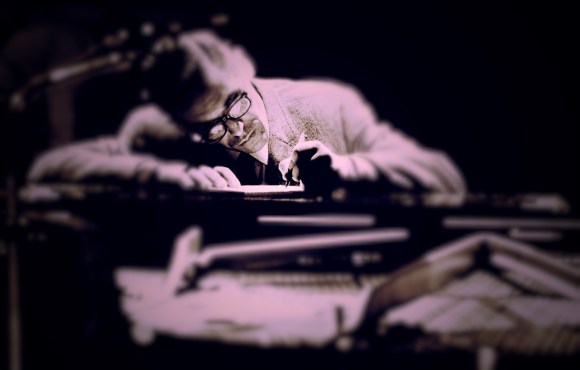
evanswriting.jpgOn the opposite side of the street we find Miles Davis asserting, in his autobiography, that he alone composed all the songs on Kind of Blue. Confirming this is the writer and poet Quincy Troupe, co-author of one of the best know Davis biographies -, who said in an interview and in regards to this issue:
Miles talked about being back in Arkansas, and he was walking home from church. And the people in the backwoods were playing these really bad, really great gospels. He couldn’t see the people but he heard these gospels coming in through the trees and over the trees. And it was dark and he was about six years old, and he was walking with his cousin. So he said that gospel, and that music, and also he had been listening to the music from the Guinean Ballet, the finger piano, so all of that fused and came back to him with this feeling that he heard playing when he was walking through the back roads of Arkansas.

And he started remembering what that music sounded like and felt like. He said that feeling was what I was trying to get close to in Kind of Blue. That feeling had got in my creative blood, my imagination, and I had forgotten it was there. I wrote these blues to try to get back to that feeling I had when I was six years old, walking with my cousin down that dark, Arkansas road.”

The end result is that, sadly, we will never know the whole truth. Over the last 20 years the song appears mostly now as a “Davis-Evans” composition. It is sometimes difficult to know what goes on in the mind of brilliantly creative people to get stuck, at one point, over something like this and never settle the issue. I guess, it is that exception that everyone talks about when reaffirming a certain opposite rule.

The issue became so heated between both musicians that Zindar himself, in another interview conducted by Win Hinkle, recalled the 1978 Evans NPR interview in which he asserts his authorship of the song, and recalls –with certain humor and disdain – writing to Miles with the suggestion that he should be entitled to a percentage of royalties, to which Miles apparently responded with an envelope that had a check for twenty-five dollars in it.

I am no musician, but I can distinctly see Evans hand in this. Miles was also a wizard, so doubts persist. I guess the best way to go about it is to just enjoy their brilliance and accept that for once, these two geniuses showed their flaws and pettiness for all of us to see. An exceptional blemish for two men who had dazzling musical careers that no one can refute or argue with.

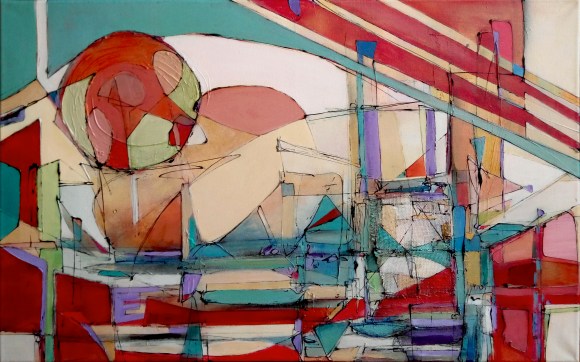
Here is my pictorial version of “That Other Day”. That nonetheless beautiful day – the music still moves us the same way it did before – but it is also the day in which these two egos collided. More complex than the original painting, but maintaining its spirit and stressing the superposed opinions of Bill and Miles.

I hope you enjoy it.

IAB_That Other Day_2015
THAT OTHER DAY (2014) by Ignacio Alperin


Until next time.

Ignacio

CAR_edited

©2016 by Ignacio Alperin Bruvera