A personal, curatorial & bilingual Blog about: Artistic Movements, my Art, Creativity, Innovation, Design, Leadership, Empowerment, Sustainability, Science, Jazz, Movies and other cool pursuits - Blog personal y curatorial bilingüe sobre: Movimentos Artísticos, mi Arte, Creatividad, Innovación, Diseño, Liderazgo, Empoderamiento, Sustentabilidad, Ciencia, Jazz, Películas y otros temas.
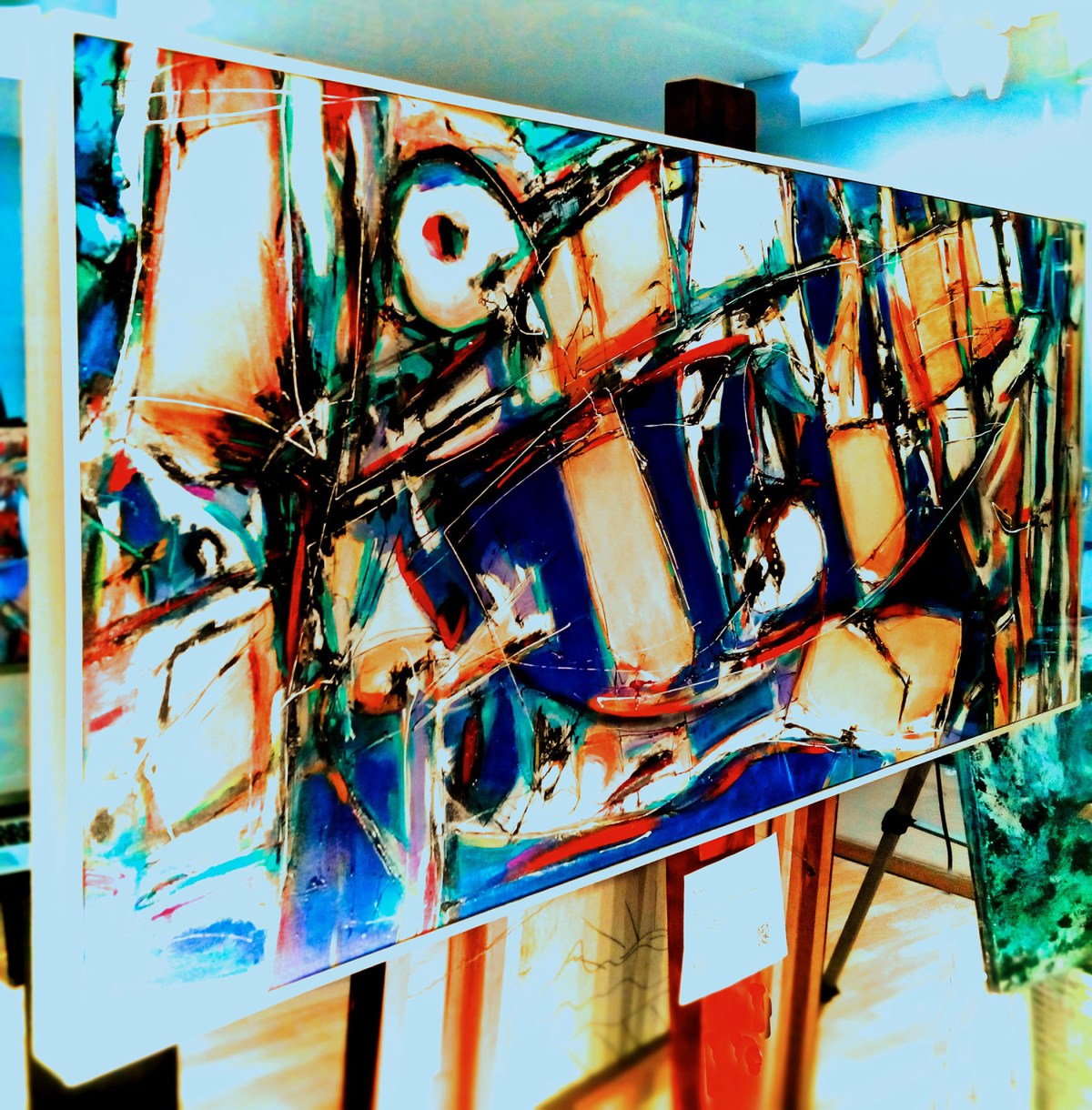
It was a rainy morning that had turned into a lovely afternoon. You know the sort of day I mean. Wet streets that reflect the sunlight with enriched tones, trees with rain water droplets hanging from every leave. The air, cleared by nature and perfumed by the ozone coming from the warm wet grass of the park next door, while the cleansing wind felt slightly cooler from caressing the surface of all the wet buildings that surrounded us.
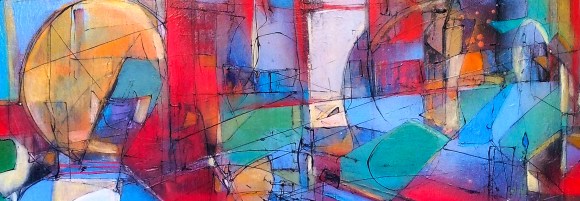
THAT DAY (2014) – detail – by Ignacio Alperin
As usual, I was painting and listening to some jazz.
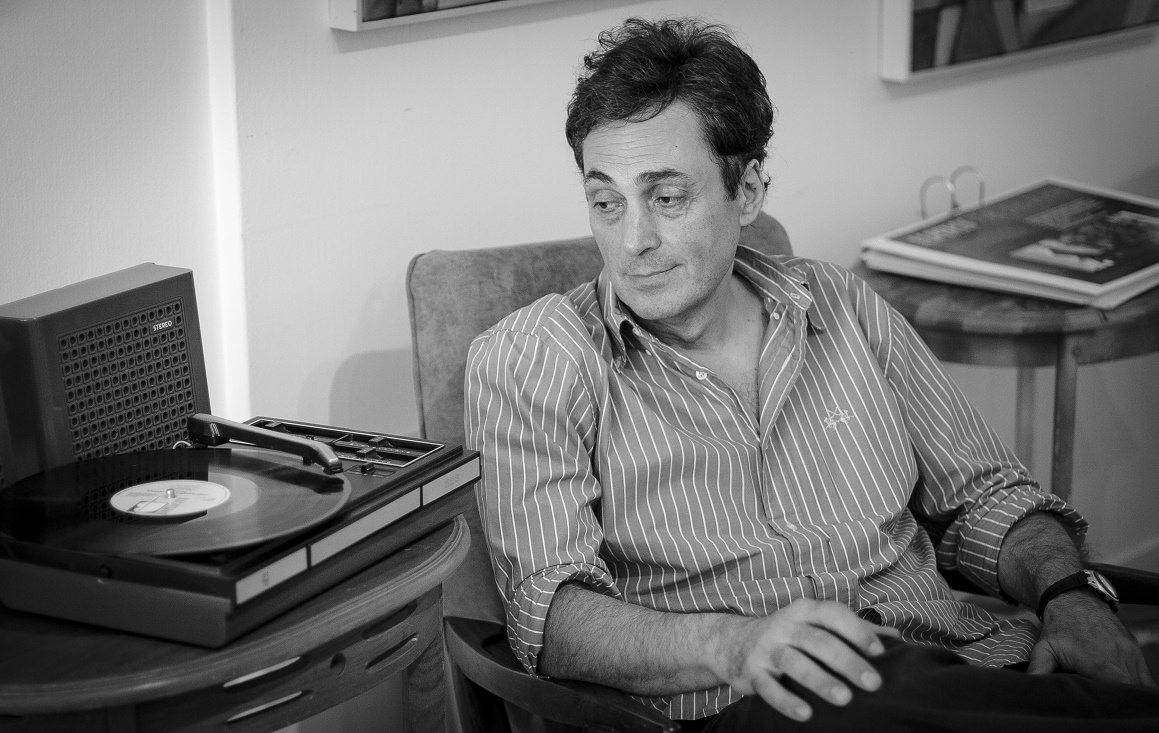
It was Kind of Blue, in vinyl, playing this time on an old record player rather than my usual garb. A gift from my late dear aunt Frances whom, after passing away, had left for me to enjoy.
I remember sill that at first I could not get it to work. It was a portable Phillips record player in bright red which packs like a little suitcase. Very cute, very shiny, and very silent.
I thought to myself, “Where will I be able to find someone to fix this?”
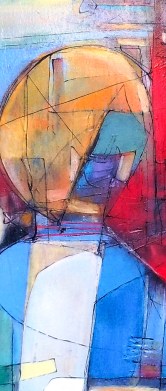
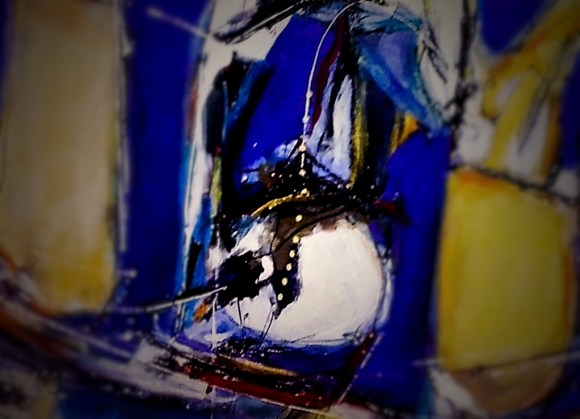
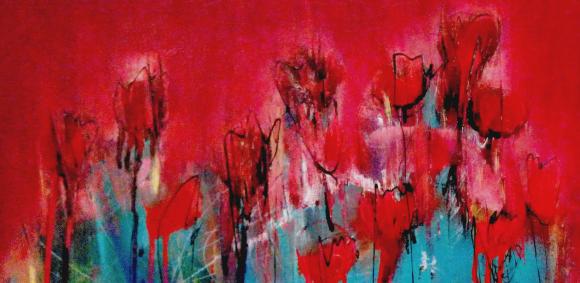
THAT DAY – Detail
It was, after all, more than 40 years old. So I gave it a try myself. As it happens, and as I fiddled with it for a while, I realized that it didn´t work simply because it had never been plugged in since purchased. It was brand new, seals untouched, warranty still in the box. Simply the contacts had rusted over the years from inaction.
A bit of cleaning and suddenly, I was off and running. The slightly tinny sound of the small speakers did not bother me. I had my huge Yamahas for everything else. This was the right sound for special moments.
And this was one of those special moments. As artists, we all – consciously or not – try to achieve some kind of immortality. Or at the very least, surpass our own life time by leaving behind something that may allow us to achieve a kind of “longevity” of sorts through our artistic works.
I envy – in a manner that is more healthy admiration – the fact that movie actors and musicians through image and sound can achieve this much more easily than us.
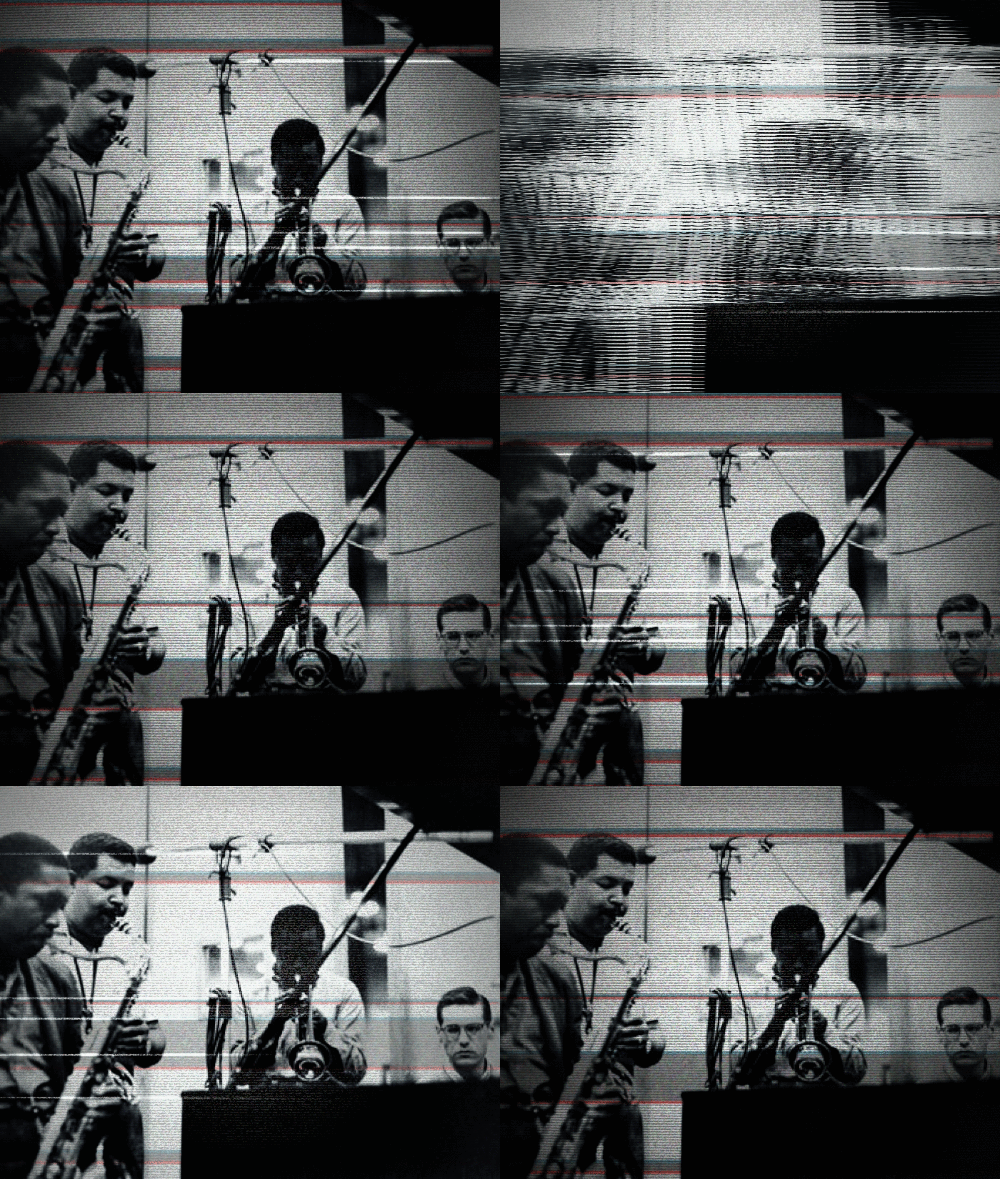
To me, listening to any of these recordings is like being in my house one moment, then I turn Kind of Blue on, and next thing I know, I am pushed into some type of time travelling gizmo. All of a sudden I am in 1959, standing in a corner of a studio while these guys, most of them long gone in 2016, come suddenly to life.
They look at each other, some smile, others concentrate while puffing smoke, others chew gum and read their music. Suddenly the voice behind the glass taps and says “Take one!”, and off they go. As I listen they are alive, they are immortal, they are playing “live” for me once again and they are great at it.
It is that very personal, very emotional connection, the one I use in my painting. It is a combination of admiration, melancholy, and happiness. My synesthesia helps along the way, and it all translates into colors and shapes, and hopefully feelings transmitted at a distance.
So I was painting and I thought to myself “This day” is “That day”. The wet trees, the sun coming through, Miles´ trumpet pushing the clouds, Evans keyboard giving a soundtrack to the wind, Cannonball and Coltrane caressing the grass, Chambers putting rhythm to the bounce of every rain drop, and Cobb simply reminding us of the summer storm that was quickly receding in the background.
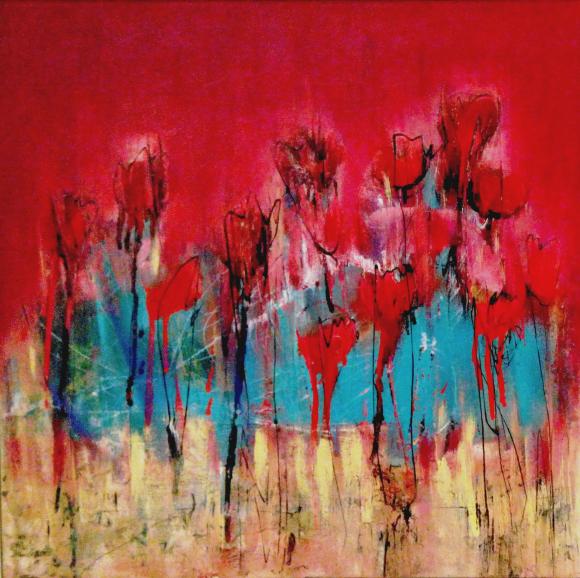
And here is “That Day”.
The result of that beautiful rainy morning, and sunny afternoon, in which a great “live” band and myself just spent the time painting together.
THAT DAY (2014) by Ignacio Alperin 60cm x 80cm Acrylic, oil based paints and sprays, and inks on canvas
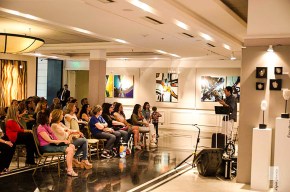
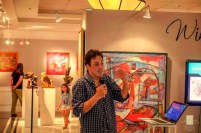
Hacia fines de 2015 tuve la fortuna de participar del evento Wine & Art, en el marco de la semana Buenos Aires Deli & Polo en el Hipódromo Argentino de Palermo.
Organizado por Art Work, con la gentil, creativa y esmerada Ligia Janeiro a la cabeza, fui invitado a presentar , en versión acotada, uno de de mis ya clásicos seminarios titulados “The Crash Flash Boom Creative Afternoon”.
Con una nutrida concurrencia de artistas y creativos, dedicamos un poco más de dos horas a indagar el por qué de estos procesos, y a comprender que podemos domarlos, alejándonos de lo imprevisto y de lo fortuito, convirtiéndolos así en nuestras armas de uso intensivo.
Quiero agradecer nuevamente a todos los que se acercaron, a los que tuvieron palabras muy generosas para conmigo, a todo el personal de Art Work, y particularmente a Ligia Janeiro por su generosidad y excelente buena onda.
(English)
At the end of 2015 I was generously invited to the event “Wine & Art”, held within the Buenos Aires Deli & Polo week, at the posh Palermo Racetrack in Buenos Aires.
Organized by Art Work, with Ligia Janeiro at the helm, I was invited to present one of my “The Crash, Flash Boom, Creative afternoon” seminars (in a shorter 2 hour version).
I had a wonderful time, and I was very flattered by the participation of some many artists and creatives, for the kind words afterwards, and for Ligia´s kind invitation and superb energy and care.
Creativity does not have to be something untamed. If we understand how it works and the mental processes that make it up, we can leave behind the “fortuitous event of the creative flash” and use simple tools to get our creative reasoning and thinking to work to our own benefit, in a concerted effort with others, while capitalizing on all of its potential.
In a world where information is being sent to us at incredible speed and with unconceivable depths; where we are also producing, inadvertently, data beyond our understanding; in a civilization that is advancing technologically beyond what the educational system can cope with; at a time when the knowledge of how things work is in more and more hands; and the technology which allows us to make them is in less and less hands; the role of the creative mind must evolve as well.
Now, evolving does not necessarily mean going freaky! It does not inevitably mean developing at the same speed the ability to digest all that is thrown to us, as well as rehashing it in new ways.
In fact, it may mean something completely different.
KIND OF BLUE (AND OCHRE TOO) -2014- by Ignacio Alperin
One of the biggest misconceptions on the theory of evolution, just to bring this point forward, is that the mechanism of natural selection – central to the theory – and which may result in improved abilities to survive and reproduce, should necessarily mean that the outcome is progressive.
As it happens, this is clearly not so.
What is called natural selection under the theory, does not produce organisms perfectly suited to their environments, as it is commonly misinterpreted. What it means, really, is that these organisms through different traits and skills are “good enough” to survive.
So evolving may mean, in simple terms, adapting survival characteristics which may be new, or even reacquiring qualities and attributes that were useful before, were lost for one or more generations due to environmental or social changes, and now have become of importance once again.
So how does this translate to the information age?
Well, it means for a start that the role of a creative professional is not to keep up with the speed of change but with change itself. In sporting terms, the creative thinker may be more like a long distance runner than a sprinter.
Secondly, being creative means being open to novelty and interested in everything. I always call myself “an encyclopedia of useless information”, this said with a glint in my eye, as I know very well that I gather information that most will discard for a good reason. To me, it is never useless.
But I must learn to choose what I digest. So the other evolutive step for a XXIst Century creative mind, may be then going back rather than forward. Specifically, to XIXth Century London and perhaps pay a visit to a certain sleuth who lived at 221b Baker Street.
Sir Arthur Conan Doyle created the great detective, Sherlock Holmes, based on a doctor named Joseph Bell whom Doyle admired for his quick logical interpretation as a physician, as well as for his “Method” of deductive reasoning (“Observe carefully, deduce shrewdly, and confirm with evidence”).
Bell turned detective became, in late 1886 and thanks to the pen of Conan Doyle, none other than the great Sherlock.
The role of the creative individual is very similar to the role of the detective. It involves keen observation, careful deduction, asking the right questions, having the correct basic knowledge, and above all, connecting all the dots (coming up with a hypothesis that is not necessarily constricted by a traditional structure).
In a world where information surpasses us, while technology seems to be speeding up way ahead, becoming like the road runner may be the wrong approach.
It may be that I enjoy going against the wave, but if everything speeds up, I usually slow down (and vice versa). Creative reasoning and creative thinking in a slow moving environment allows for swiftness. While if everybody rushes, our role is to slow down.
Like Neo in the Matrix, our advantage is that of being capable of decelerating everything down to the point where we are actually so cognitively enhanced that, in reality and for everyone else for that matter, we are indeed ahead of the curve.
And to do that, a bit of XIXth Century deductive reasoning may be the thing. Evolution may mean in this case, for example, simply slowing down; perhaps taking on a musical instrument – and not necessarily a violin -; or being involved in long periods of apparent daydreaming. In that mental estate, your mind will be doing its best detective work, and your deductive skills will allow you to see and connect the dots that no one else has managed to yet perceive.
Connecting the dots… KIND OF BLUE (AND OCHRE TOO) – 2014 – Detail –
I know I am going to get myself in trouble for writing this.
Furthermore, I am probably going to get a lot of mails from artists who have come to my “Flash, Crash, Boom, Creative afternoon” lectures.
I like talking about the importance, for an artist – any artist – of being conscious of the significance of the “mythological” aspect of his or her story. I have always argued that the “selling point “ is as much the artist as the art.
Let´s take van Gogh as an example.
A painting he may have given in exchange for rent (100 bucks worth perhaps) has remained intact. It is always the same painting. It hasn´t gotten better with time. It is not wine – it isn´t that it has “aged well” -. It has not acquired flavors, or details in this case, which were not there before.
What has changed in our appreciation of the artist. It is van Gogh himself who has aged well. We have come to appreciate his story, his ways, his dramas, and his techniques better with time. And as a result, everything he has done has become something else. Each one of his paintings have become “a van Gogh”. His “mythology” has overpassed the painter and the flawed human being. And that is where the difference rests.
I always make the point of qualifying this view by pointing out that, by mythology, I do not mean becoming, or asking to be treated, like a “god” –although many colleagues do fall into this trap- , and neither do I mean that you should lie about your history.
It has to do with, simply put, being consciously aware that an artist´s story
This “may be” Banksy – who has built his own mythology by being secretive to the point of not ever showing his face –
is as much part of the process behind the growth in value of an artist work, as is the quality of work produced. People, more often than not, “buy” – engage, become interested, admire, or simply like – the artist first, and then they become interested in the art to the point of deciding to make a purchase (particularly when the price of a painting is above impulse purchase price).
This is so normal, that when in a newspaper we read that a famous painting is sold at a record price, for example, it is generally the case that the title usually implies that it is the artist who has been sold, while in the follow through we learn about the painting, sculpture or whatever it is really behind the news.
We “buy” Picasso, Van Gogh, Rauschenberg or Pollock. And we get – assuming we had the money – whatever painting is available at the time. The reason is twofold. On the one hand we understand there are market forces behind all these sales, as we are talking about investment grade painters and paintings after all. So whatever is available must be worth our while.
And secondly, we are talking about paintings that resist, endure, and grow in appreciation during a long period of time. And these facts usually have a common thread. In fact, each one of these works represent, in pictorial terms, an intricate part of the artist´s life.
We are talking, then, about art that is a visible section of an artist´s passion. And that is also central to this equation. We are buying a piece of an artist´s identity, a piece of his artistic soul. Or at least that which will endure the passage of time. No matter what embelishments the artist may have made to his own story, what survive are the vestiges of his true self.
This is all very personal stuff. We are talking about an artist´s spirit, his or her heart, and in the case of those already gone, the legacy of work that is left behind and provides the artists with that desired immortality of sorts.
Yet many artists, in their desire to get to that special plateau, become mere caricatures of themselves. They make up stories, take on looks that are more for the benefit of others than a symbol of whom they are, and fictionalize their lives to the point of becoming like characters in a pantomime.
They confuse “a personality” with “personality”, they make-up a stereotype of an artist rather than being true to their history and letting others judge and decide. They feed us with fiction, while true art is as real as it gets.
True art is about a naked person being shown and exposed; it is a soul being revealed; it is a heart discovered in its most intimate detail.
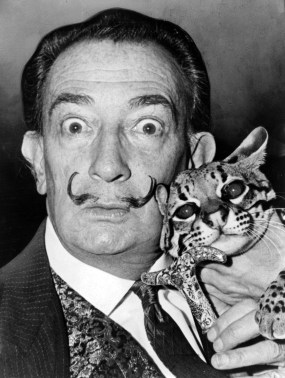
Salvador Dali
Many have “put on an act”. Dali was brilliant at this. But the key word here is “brilliant”. He built an engaging public persona around his personal quirkiness. And all of this pointed towards two ends. On the one hand his renowned love of money, and secondly it was probably his way of exorcising his own childhood demons.
Did we see the real Dali in action? Probably not, but was it a fake personality or was it based on his very real and eccentric nature and life history.
This was the second son of a family who had lost their first child, also named Salvador, only nine months earlier. He looked so much like his dead brother that his mother suspected that he was actually their previous dead child reborn, and it is believed to have acted accordingly. On top of that, and from all accounts, he was quite the sadist as a child. Even to the point of considering that pleasure and pain were pretty much the same mechanism. He used to attack people for no apparent reason, and it is said that he even threw a dear friend off a bridge “just because” (his friend was badly hurt as a result).
So, was he putting on an act or was the act an embellishment – a mythology of sorts– of his own life story and personality? You can decide if there is a difference between this and the fictional character. But keeping in mind Dali´s story, is then the fictional character many artists envelop themselves with, something wrong?
This slideshow requires JavaScript.
Some will argue that, whether truth, embellishment, or pure fiction, in all cases this is just marketing. And if as such it increases your sales, it is ok. And it may well be so. But the fact remains, and my experience corroborates this assumption, that many artists do end up believing they are this phony façade. They end up playing out the character in their real lives, and to a certain level, they end up getting lost in their own concoction.
So what is the point then?
Very simply: Whatever you do, be true to yourself, or at the very least, try your utmost to keep true to yourself. You are an artist. You are someone whom, by definition, will follow what your heart dictates. And that does not mean you cannot work on your own mythology. If you think about it, your life –any life for that matter – is rich and therefore plentiful in “workable material”.
Your beginnings, your family, your place of birth, your life experience, your ideological bents, your personal attributes and your personal agonies. They all have contributed to your present YOU. Your life is the source of your own mythology, and it is also the fountain from which your artistic endeavors spout.
It needs to be put into an attractive order. It needs to become your life story almost in cinematographic terms. It needs that attractiveness that makes your story something to be consumed, in the good sense, like a good novel. In short, it needs to become a story that people can engage to and become close to, and by doing so, they will begin to know you, and will become closer to you and your art.
There is an old saying in marketing about not falling on the trap of basing your decisions on your own marketing. One thing is what you sell, which necessarily enhances your virtues in detriment of your weaknesses. Something else is believing in your own “enhancements”.
Falling into the trap of that “fictitious character” is part of the learning process. I see many who do fall and never get out of that hole. In the short term it may be fine and it may potentially be profitable as well. But in most cases it will not last. And what is worst, it will take you astray from your true self, which is in the end, where your art is coming from.
“Not only roses are red” (2015) by Ignacio Alperin
FAR-OFF, most secret, and inviolate Rose,
Enfold me in my hour of hours; where those
Who sought thee in the Holy Sepulchre,
Or in the wine-vat, dwell beyond the stir
And tumult of defeated dreams; and deep
Among pale eyelids, heavy with the sleep
Men have named beauty. Thy great leaves enfold
The ancient beards, the helms of ruby and gold
Of the crowned Magi; and the king whose eyes
Saw the pierced Hands and Rood of elder rise
In Druid vapour and make the torches dim;
Till vain frenzy awoke and he died; and him
Who met Fand walking among flaming dew
By a grey shore where the wind never blew,
And lost the world and Emer for a kiss;
And him who drove the gods out of their liss,
And till a hundred moms had flowered red
Feasted, and wept the barrows of his dead;
And the proud dreaming king who flung the crown
And sorrow away, and calling bard and clown
Dwelt among wine-stained wanderers in deep woods:
And him who sold tillage, and house, and goods,
And sought through lands and islands numberless years,
Until he found, with laughter and with tears,
A woman of so shining loveliness
That men threshed corn at midnight by a tress,
A little stolen tress. I, too, await
The hour of thy great wind of love and hate.
When shall the stars be blown about the sky,
Like the sparks blown out of a smithy, and die?
Surely thine hour has come, thy great wind blows,
Far-off, most secret, and inviolate Rose?
William B. Yeats (1865 – 1939)
“Not Only Roses are Red” (2015) by Ignacio Alperin – detail –
IGNACIO ALPERÍN BRUVERA: EL ARTISTA ARGENTINO QUE LOGRÓ LLEVAR EL ESPÍRITU DEL JAZZ A LA PINTURA
DE JOHN COLTRANE Y THELONIOUS MONK A KANDINKSI Y EL DON DE LA SINESTESIA/DEL SAXO AL ÓLEO/ENTREVISTA A UN ARTISTA ARGENTINO QUE SORPRENDE CON SU OBRA INSPIRADA POR EL JAZZ/SUS MUESTRAS EN EUROPA Y ESTADOS UNIDOS/”EL JAZZ PRODUCE ALGO MUY PODEROSO”/POR SANTIAGO ENEAS CASANELLO
IGNACIO ALPERÍN BRUVERA: EL ARTISTA QUE LOGRÓ LLEVAR EL ESPÍRITU DEL JAZZ A LA PINTURA / POR SANTIAGO ENEAS CASANELLO. FOTOS: JACINTO FREIXAS.
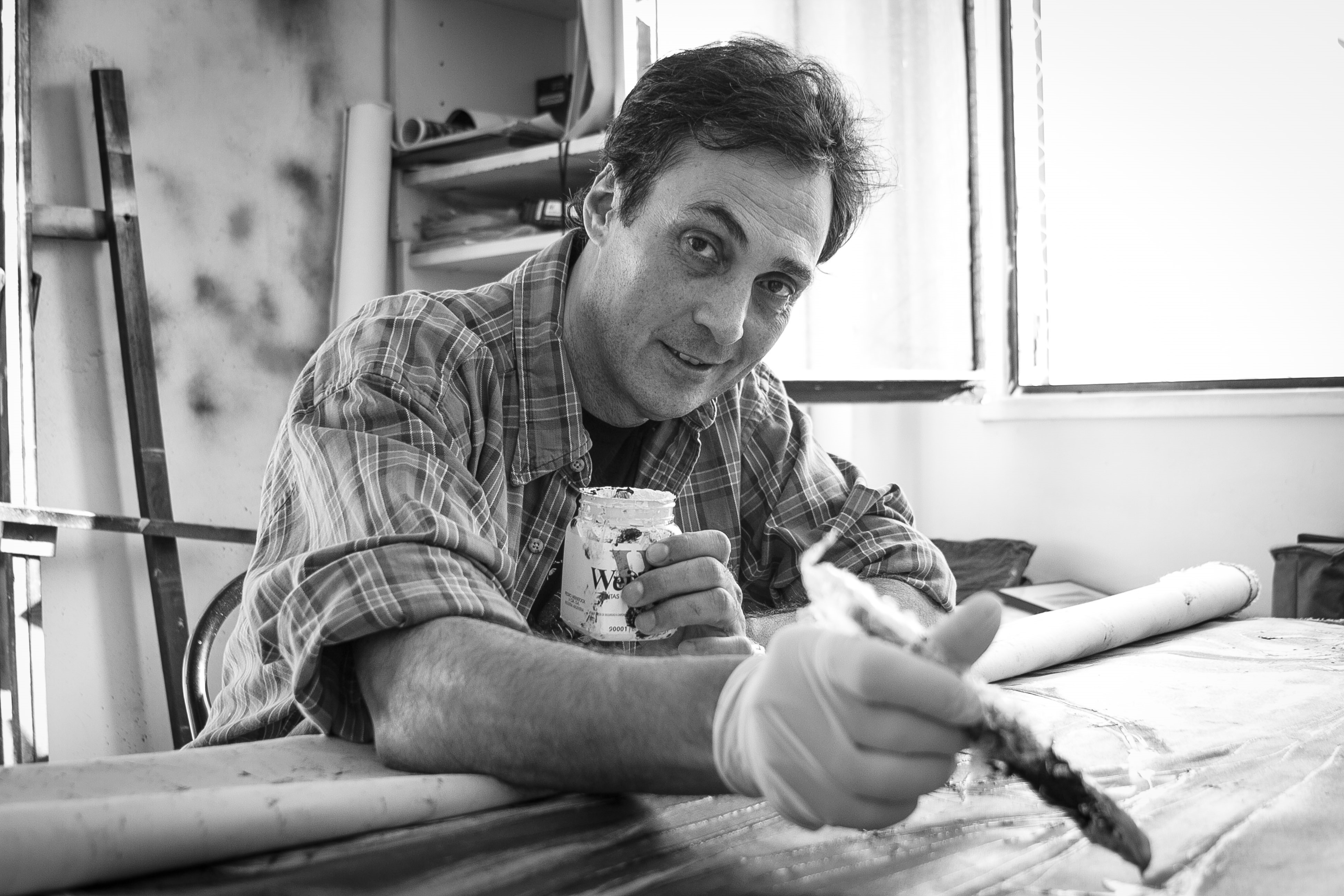
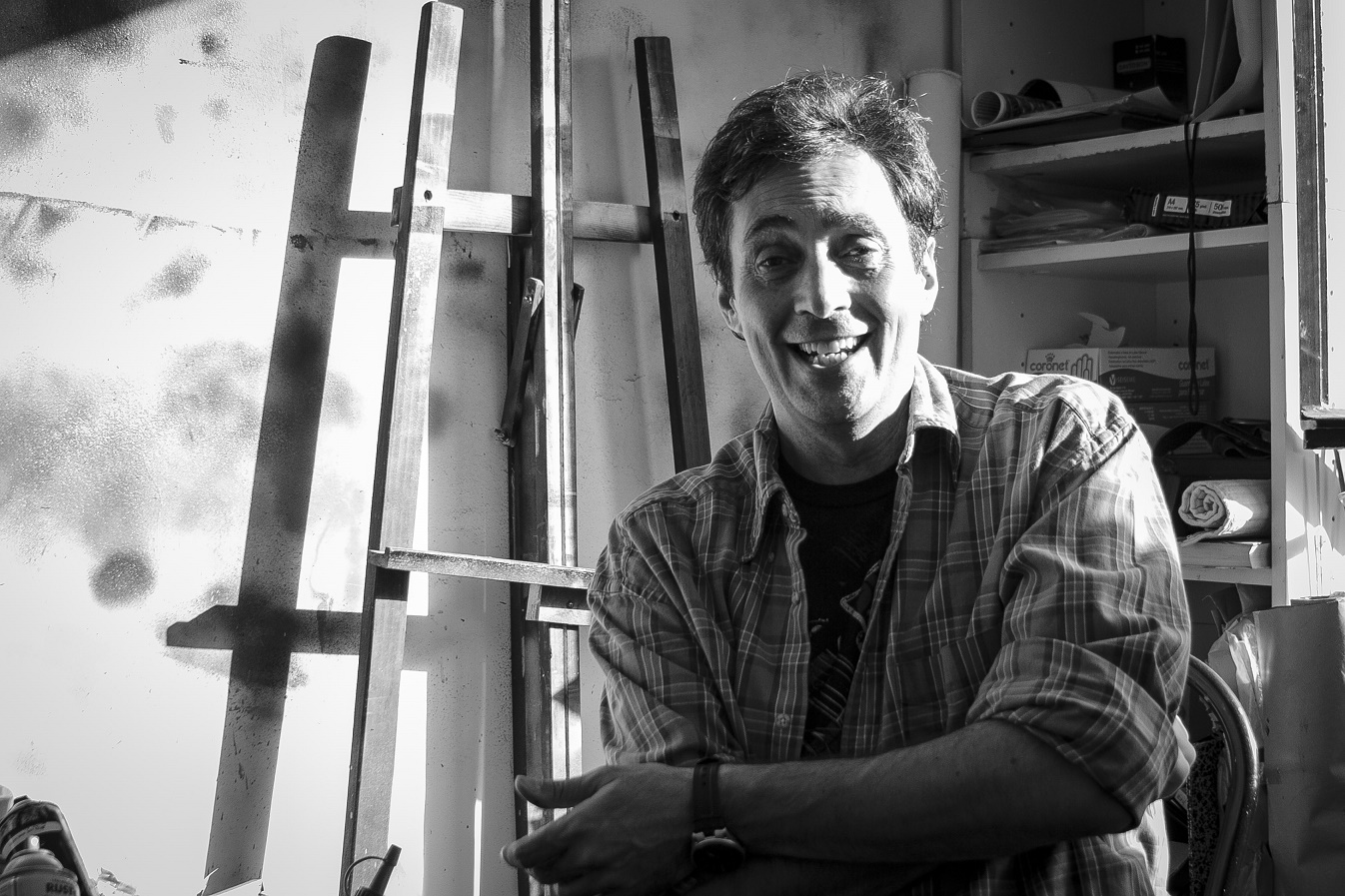
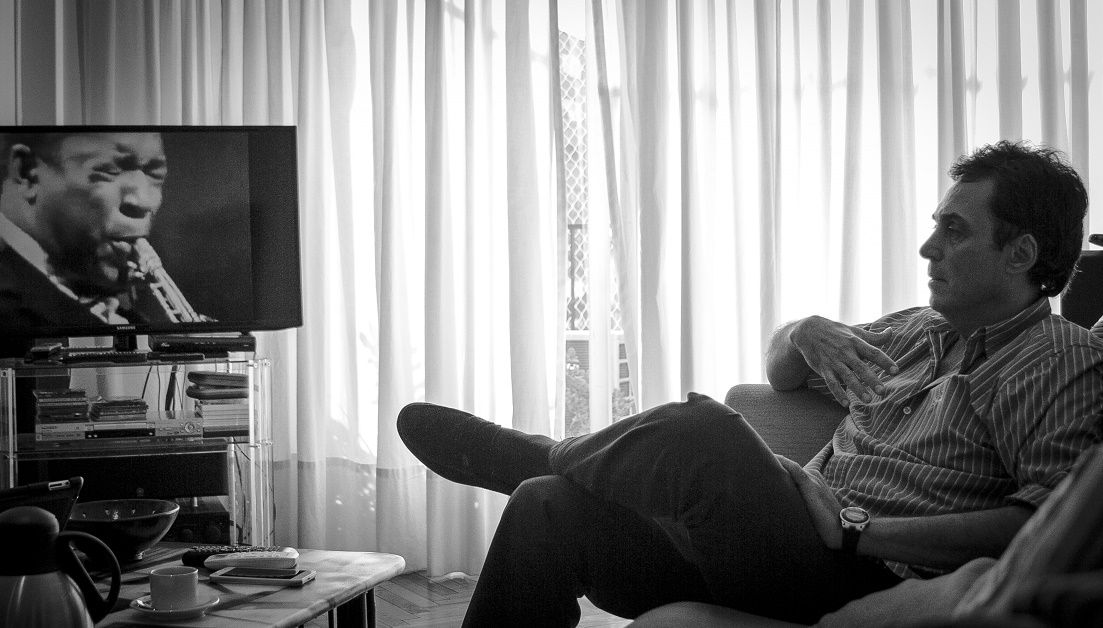
Afuera, el ruido del tránsito y el estrés. Pero adentro, en su taller en un departamento de Retiro, Ignacio Alperín Bruvera puede pasarse tres días recostado en un sillón escuchando jazz. Miles Davis, John Coltrane, Bill Evans, entre muchos otros músicos de ese género que tanto lo conmueve y que le genera “algo muy poderoso”. Desde que siendo adolescente vivía en Australia, y el padre de una de sus mejores amigas, jazzista, lo introdujo en el ambiente jazzero de Melbourne. “Pero no es que tengo la mejor vida del mundo y cuando estoy así escuchando música no hago nada”, le aclara a MALEVA: “yo en ese tiempo estoy trabajando, en esos días se me pueden ocurrir cinco obras”. Ignacio Alperín Bruvera es un artista de Buenos Aires, criado en Australia (“me queda el humor australiano”), que no pinta escenas de jazz, pero pinta casi siempre bajo la influencia del jazz. Su obra, en general abstracta y de una precisión técnica notable, sorprende y es un éxito en el mundo. Realizó muestras en el país, en Estados Unidos (New York, Miami, Fort Lauderdale), y en Europa (Berlín, Lisboa, Londres). Sus influencias: Kandinsky, Pollock, Picasso, pero sobre todo la melancolía de un saxo de Nueva Orleans o una improvisación hipnótica de la época de oro del jazz. Todo eso lo plasma en el lienzo. Jazz visual, así lo define. Él, sus pinceles, son la vía conductora.
¿Qué tipo de jazz son tus cuadros?
Yo diría que el jazz es mi principal fuente de inspiración pero también hay música clásica y otros estilos que aparecen, pero el jazz a mí siempre me gustó mucho. En Australia, en donde viví 16 años, e hice toda la secundaria y la universidad, era amigo de una chica que era hija de un jazzista llamado Steve Gibbons, músico de jazz y el hacía música muy de New Orleans. Con ella yo aprendí a conocer el ambiente del jazz australiano. Yo pinto desde los 12 años y eso solidificó mi enamoramiento con el jazz. Desde que tengo 14 años que ponía la música a todo volumen en mi casa y me encerraba para pintar. Un médico me dijo que tengo sinestesia que es una condición neuronal benigna que se produce en el momento de gestación y que tiene el dos por ciento de la población de la tierra, aunque no sabe que la tiene. La sinestesia es una condición neuronal inusual que conecta sentidos. El jazz me toca algo interno muy poderoso. El que tenía sinestesia era Kandinski que también decía inspirarse por el jazz y la música, y da la casualidad que muchos años después encontré un video muy poco conocido de Kandinski dibujando y recuerdo haberlo visto y me fui a buscar entre las cosas que yo dibujaba y veo que habíamos hecho un dibujo muy parecido.
Es cierto que hay algo “kandiskeano” en tu obra.
Sí, me lo dice mucha gente, pero soy de ver pocos artistas para no influenciarme demasiado. Pero de golpe entendí que lo que tenemos en común tiene más que ver con la sinestesia que otra cosa.
“Yo pinto desde los 12 años y eso solidificó mi enamoramiento con el jazz. Desde que tengo 14 años que ponía la música a todo volumen en mi casa y me encerraba para pintar. Un médico me dijo que tengo sinestesia que es una condición neuronal benigna que conecta sentidos.”
¿Encontrás patrones cuando escuchas jazz y pintás? ¿Por ejemplo que ciertos músicos te provoquen determinados colores?
Te diría que no. Pero Bill Evans ahora que lo pienso me tira a azules verdosos, pero porque su estilo no está basado en una demostración enorme de cualidades con los diez dedos sino en como manejaba los silencios dentro de su obra.
¿Cómo empieza el proceso creativo, vos decís voy a pintar o voy a escuchar música?
Si no pinto me estreso, para mí pintar es una necesidad. Tengo una enorme colección de música, y me puedo pasar tres días tirado en un sillón escuchando música pero no es que tengo una gran vida sino que estoy trabajando, en esos tres días tal vez me surgieron 5 obras. Por lo general no trabajo una obra por mes sino que voy comenzando obras y a medida que voy avanzando elijo el momento de hacia donde voy yendo con la obra. Obras grandes haré 15 al año.
¿Revelás que músico está detras de tus obras o es algo que queda en vos?
Le suelo dedicar el nombre de la obra al tema que más me impactó del disco.
“Miles Davis, Bill Evans, Thelonious Monk, John Coltrane, todos ellos me inspiran pero la lista es enorme…”
Mencioname cinco músicos que para vos hayan sido claves en la producción de tu obra.
Miles Davis, Bill Evans, Thelonious Monk, John Coltrane y después una lista enorme. ¿Qué te pasa con el silencio? ¿Podés pintar en silencio?El silencio me permite ordenar la obra.¿Pero te inspiraste alguna vez sin música?Sí. También tengo obras semi figurativas. Yo empecé con mi padre que es ingeniero en las mesas de dibujo, y me enseñaba la línea de horizonte, las perspectivas, trabajar con reglas, con los ángulos. Empecé con óleos, pasé a acrílicos y ahora es un mix. Mi obra hoy tiene de todo, tinta, spray, alambres, todo.
“También tengo obras semi figurativas. Yo empecé con mi padre que es ingeniero en las mesas de dibujo, y me enseñaba la línea de horizonte, las perspectivas, trabajar con reglas, con los ángulos. Empecé con óleos, pasé a acrílicos y ahora es un mix. Mi obra hoy tiene de todo, tinta, spray, alambres, todo.”
¿Y pretendes transmitir algún mensaje, alguna consigna con tu arte?
Lo cierto es que el artista a lo largo de la historia estaba adosado a la iglesia o a la monarquía, el artista que cuestiona es novedoso. Yo tengo mil cosas que cuestionar de la sociedad actual pero no lo plasmo en mi arte. Aunque sí hay una conexión con lo que entiendo que es la vida. Exploro desde la tragedia personal hasta los triunfos. Aparece la esperanza en un punto trágico y si estoy en un momento fantástico exploro la idea de que todo puede cambiar. Eso en definitiva es la vida.
¿Qué momento disfrutás más de la creación?
Lo que puedo decir que el comienzo de la obra para mí nunca es fácil, comienzo con una idea. Pero el inicio no es fácil. Al finalizar el primer día miro y casi siempre estoy muy disconforme con lo que he hecho. Soy muy crítico de mi propia obra. Una vez me apuraron para una muestra y largué una obra que todavía no estaba lista y la curadora se dio cuenta y la expuso separada. Y esa obra la tuve guardada por un año y pico. La realidad es que el artista para adentro te va admitir sus errores, pero para afuera no podés. La obra es imperfecta y parte de lo lindo de la obra es que así lo sea.
Sos politólogo, trabajaste en empresas, sos docente de creatividad (en la Universidad Católica). ¿Cómo conjugás todos esos perfiles con tu faceta de artista?
Justamente, yo a mis alumnos les digo que ya pasó la época en la que la gente sentía que ser empleado de una empresa, trabajar 50 años e irte con un reloj de oro era una realización. Acercarse a la búsqueda de la felicidad tiene que ver con aprovechar todos los talentos que tenemos.
“Si no pinto me estreso, para mí pintar es una necesidad. Tengo una enorme colección de música, y me puedo pasar tres días tirado en un sillón escuchando música pero no es que tengo una gran vida sino que estoy trabajando, en esos tres días tal vez me surgieron 5 obras.”
¿Tocás algún instrumento?
No, pero es algo que en algún momento aprenderé. Me gusta el saxo pero intuyo que me será más fácil aprender el piano.
¿Qué conexión encontrás entre el jazz y la creatividad, que es la disciplina que enseñás?
El jazz es música de burdel y pega un cambio a fines de los cuarenta cuando empiezan a aparecer todos estos tipos que venían de estudiar en academias de música y el jazz empieza a alejarse del jazz de las grandes orquestas de veinte tipos y mucho ritmo de Nueva Orleans y empieza a parecerse más al cuarteto de música clásica, y esa para mí es la etapa de oro, la que más me gusta. Del 40 al 65 para mí es una etapa de oro. Todos tipos que vienen a improvisar dentro de la complejidad de sus partituras. Son fantásticos ejemplos de creatividad e innovación grupal en la música y en todo.
¿A qué hora te gusta despertarte?
Yo a veces pinto a las cuatro de la mañana, por eso soy de despertarme tarde.
¿A qué le dirías basta?
Me sacan el egoísmo y el resentimiento. También la violencia. Pero el egoísmo, insisto, me parece un pecado capital.
¿Con quién te tomarías un whisky?
No con artistas porque pienso que sus obras hablan por ellos.
¿Primer síntoma que tendrías si no pudieras ser más artista?
Se pueden hacer otras ochenta mil cosas creativas. Buscaría otras maneras de expresarme. Pero estaría muy frustrado. O canalizaría para que otra gente exprese lo que querría expresar yo.
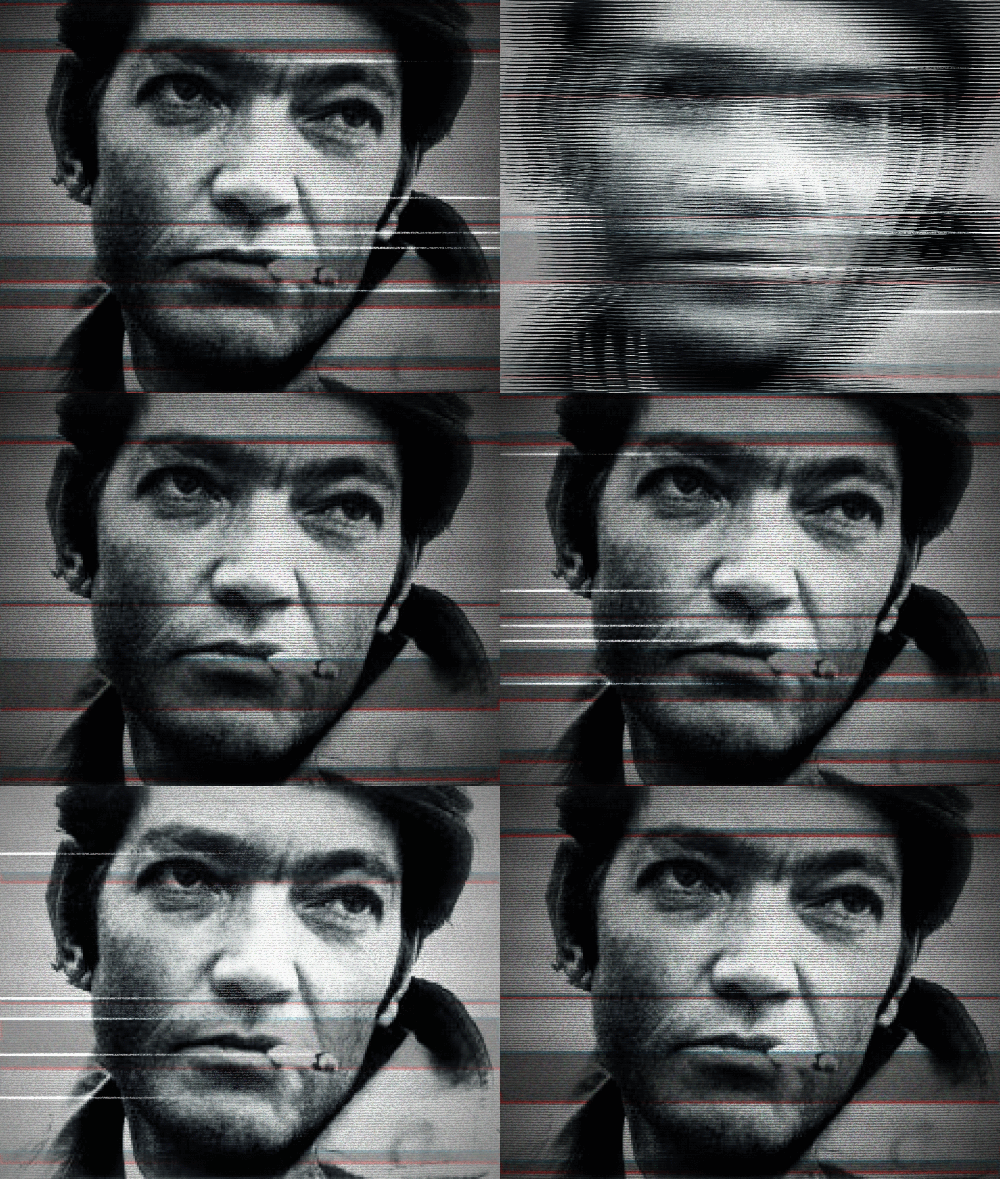
Argentine writer Julio Cortazar was born on a day like this, exactly 100 years ago. All over the world literary buffs and fans are celebrating this new anniversary of his birth with articles and mentions.
A prolific writer and a brilliant story teller, he left his mark in the minds and souls of the many millions who enjoyed his brilliance.
Stories like “Hopscotch” (published in 1963 and probably his most important novel), where the story can change according to the order in which the chapters of the book are read (hence the name), Cronopios and Famas, The final round, The Browl outside, and many more are highlights of his very entertaining, deeply complex, and fascinating works.
Even if you have never read him, you may have enjoyed some of his stories which have been made into movies.
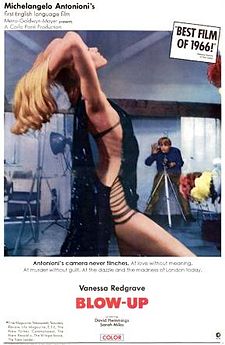
The best known is, clearly, “Blow-up” (1966), a very successful adaptation of Cortazar´s short story “The Devil´s drool” (1959), directed by Michelangelo Antonioni, and starring David Hemmings, Vanessa Redgrave, and Sarah Miles. While Cortázar’s story “La autopista del sur” (“The Southern Thruway”) influenced another film of the 1960s, Jean-Luc Godard’s Week End (1967).
Cortazar´s love of boxing and Jazz is legendary. While I do not share his love of boxing, I do share his love for Jazz. One of the highlights of “Blow-up”, at least for Cortazar, was the fact that the music was written and performed by such a jazz genius as Herbie Hancock. While “The Pursuer” (1959), a short story that gives its name to a book, is losely based on the life of bebop saxofonist Charly Parker. And his constant musical references, particularly to Jazz, and in lesser extent to “Classical” music (a term that in fact he really detested), do mark his literary production.
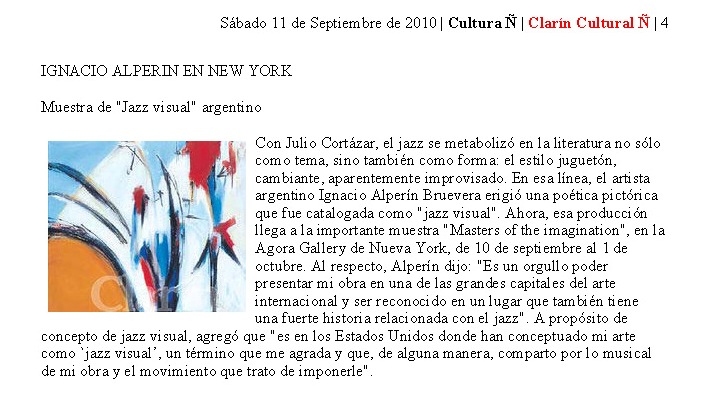
Some years ago, a very brave journalist from the Clarin Newspaper in Argentina put me in a bind, when he compared my paintings and my passion for infusing them with the rhythm and musical cadences of Jazz, with what another Argentine, writer Julio Cortazar, had done with the literary presence of this beautiful and free form musical style in all of his writings.
I always felt almost “embarrassed” at this comparison. But on a day like this, I take it as an honor and an important legacy which in my own way, I wish to continue.
Cortazar passed away too early. It was 1984. He was buried in Paris (Montparnasse) where he lived. It was from illness, but many say that the man who always looked 20 years younger than his real age, had suddenly become old and frail from the emptiness that he felt after the passing of Carol Dunlop, from Leukemia, in 1982. She was his second wife and the love of his life.
Like many greatly creative people, all the toughness everyone saw on the outside, was just a shell which protected a highly sensitive and frail soul.
As a homage to this great mind, I would like to share with you this short video prepared by the Juan March Foundation in Spain, in which Cortazar himself talks about the relationship, almost the love affair, he had with Jazz and how it is brought forward in his works.
El artista plástico Ignacio Alperín ha ganado notoriedad a nivel nacional e internacional con su arte movedizo y rítmico, conectado fuertemente al Jazz y a una movida marcadamente personal.
Por Cecilia Tvrdoñ
Cuando uno lee los comentarios sobre la obra del artista plástico Ignacio Alperín, uno nota que expertos y no expertos coinciden en ciertas frases: movimiento, ritmo, cadencia, color. Son todas palabras que buscan relatar de lo que se trata su obra, la cual por su fuerza y estilo tan personal, es difícil de encajonar en referencias clásicas definidas. Es fresca, intuitiva, innovadora y desde ya, muy alejada de lo que uno supondría al escuchar su historia.
¿Cuánto tiempo viviste en el extranjero?
Nací en la Argentina. Pero parte de mi infancia, y toda mi adolescencia y juventud, la viví en Australia, donde también estudié. Los que más me conocen dicen que soy un poquito Aussie. Además de Australia, y por razones laborales de mis padres, pude viajar mucho, e inclusive residir temporariamente en países como Singapur, Malasia, Francia e Italia. Volví a la Argentina en 1990 por curiosidad más que necesidad, y duré poco tiempo. Me “bañé” de realidad y me fui tambaleando como esos boxeadores que entran al ring sin estar preparados. Di vueltas por Inglaterra, Francia, Italia y retorné al país en 1997.
Finalmente te adaptaste.
No realmente. Pero tal vez ahora estoy como esos boxeadores a los que les pegaron tanto que ya no le importa (risas). En serio, lo que sucede si uno viene de crecer en un país anglosajón y pasa a nuestra cultura, es que hay diferencias fundamentales que cuestan congeniar. Más allá de que cuando volví a la Argentina hablaba castellano con un poco de acento gringo, creo que lo que me pasa tiene que ver con los códigos. Estoy muy feliz en mi país, pero tal vez se entienda si te digo que afuera extrañaba nuestra calidez humana, eso de ser familieros a toda costa (muy tano) y nuestro sentido del humor; mientras que estando acá extraño el respeto por los demás, el sentido de justicia social, y las reglas claras y similares para todos, que son las pautas con las que crecí en Australia.
¿Tu formación es puramente artística?
Se podría decir que el arte me acompaña desde que nací, ya que vengo de una familia muy abierta al arte y al diseño. Mi madre es una excelente dibujante que dejó de lado su pasión para formar una familia, pero nunca dejó de enseñarnos todo lo que sabía. Mi padre es un ingeniero con una carrera internacional que ha tenido muchos contactos con movimientos de vanguardia, tanto arquitectónicos como artísticos. Por todo ello mi primera formación fue más cercana al dibujo. En Australia, como parte de mi formación general, estudié artes visuales, e hice cursos y talleres. Pero en algún momento decidí encaminar mi propia exploración y allí es donde todavía me encuentro hoy.
¿Te dedicaste siempre al arte?
Pese a que el arte es la gran constante de mi vida, como considero que el ser humano debe responder con acciones a todas las necesidades intelectuales que se presentan (hacer algo con los dones que Dios nos ha dado sería una frase que siempre me inculcaron y que se me viene a la mente ahora) también estudié, entre otras cosas, Derecho, Ciencias Políticas, Relaciones Internacionales, y algo de Economía y Marketing.
Nada que ver con el arte… Sos el abogado pintor.
(Sonríe) Mirá, pinto, en el sentido más formal del concepto, desde los 12 años. Es algo que me ha acompañado siempre. Vendí mi primer cuadro en Australia a los 20 años, lo que marcaría el comienzo de mi carrera profesional de artista. Como también estudié otras profesiones, mi arte debió competir con otras responsabilidades, muchas veces ocupando el lugar de acompañante permanente y bálsamo para el alma. Y desde hace ya más de 10 años, la de artista es mi profesión principal.
¿Nos contás un poco más de tu alter ego profesional?
Para los que me conocen por primera vez, siempre les pregunto si quieren que hable como Bruce Wayne o como Batman (se ríe nuevamente). A simple vista parecen ser actividades muy alejadas entre sí. Pero la realidad es que hay un hilo conductor, y es que en todos yo soy yo. La vida hoy es muy compleja y en términos objetivos, es más larga. Ya la idea de pertenecer a una empresa toda tu vida y retirarte con el reloj de oro, pese a ser muy admirable, es casi imposible. El dinamismo del mercado, los altibajos económicos, y las presiones emocionales ligadas a un mundo donde todo es “ya”, hacen que los cambios laborales y profesionales no sólo sean casi inevitables, sino que hasta podrían considerarse muy sanos porque son como brisas de aire fresco que renuevan el “ambiente interior”. Pero no todo es fantástico. Admitamos que los momentos en los que algo terminó y lo nuevo no termina de concretarse, son momentos duros para todos. Pero creo fervientemente que la solución está casi siempre en nosotros mismos.
Perfecto, pero ¿y tu vida como Bruce Wayne?
(Se endereza) Tengo que tener el phisique du role para contestar. Estudié y estudio siempre. Tanto profesiones clásicas como en lo relacionado al arte (inclusive estudié teatro). Tengo el extraño honor de ser el primer argentino en la historia de Australia en recibirse de abogado. Hice una práctica en un estudio internacional en Melbourne y de allí me fui directo a trabajar en una empresa. Me desarrollé laboralmente en diferentes empresas y en diferentes países. Llegué a ser Gerente General de una S.A. y de mi propia empresa, Director Ejecutivo del Colegio de Abogados de la Ciudad de Buenos Aires, y Socio Gerente de un estudio extranjero entre otras cosas. Y hoy, en paralelo a mi arte, sigo dando charlas y conferencias sobre los procesos creativos, el arte y la creatividad en general, enfocado a empresas, profesionales y artistas. En fin… Muy Bruce Wayne.
Y mientras tanto el arte acechaba…
Yo diría que el arte ha sido y es mi compañero fiel de toda la vida. Dónde iba, mi arte iba conmigo. Y hoy en día es un trabajo full time, de 7 días a la semana.
¿Cómo definirías tu arte?
Si queremos darle un nombre tradicional, mi arte podría encuadrarse dentro de lo expresionista y abstracto. Mis series son generalmente basadas en el jazz particularmente, y en la música en general. Lo de Jazz Visual, o Visual Jazz, que es como se le conoce más popularmente aquí y afuera, responde a la denominación que le dio a mi obra una periodista norteamericana la primera vez que expuse en New York. Y la verdad es que me gustó porque de manera muy sintética, plasma lo que yo trato de generar como artista.
¿Qué tiene de diferente tu trabajo con la música, comparado a lo que hacen otros artistas, muchos de los cuales escuchan música también mientras trabajan?
Yo tengo sinestesia. No es algo malo, y para los que no la conocen, es una condición tan benigna del lóbulo frontal del cerebro que hasta hace algunos años no se podía diagnosticar fehacientemente y a nadie le importaba.
Inclusive hay un porcentaje importante de la población mundial que lo tiene y, algún médico me corregirá, se produce durante el proceso de gestación, dónde cierta característica del lóbulo frontal no se desarrolla o se desarrolla tal vez de otra manera a lo que se consideraría “normal”.
El resultado es que se producen conexiones neuronales fuera de lo común. Por ejemplo, hay personas que cuando escuchan ciertos sonidos se les generan sabores específicos (do es chocolate, re es frutilla… por dar un ejemplo simplificado).
En mi caso, mi sinestesia es leve, pero me permite “ver” formas y colores cuando escucho ciertos sonidos, particularmente música. En particular, encuentro que el Jazz y la música denominada “Clásica” genera los resultados más importantes. Y como amo el Jazz desde pequeño, es mi inspiración principal.
Esta cualidad, ¿estuvo siempre presente en tu obra?
Cuando era un joven artista me resistía a estos impulsos y no los plasmaba en mi obra. Los ignoraba ya que mi educación era más formal, y deseaba lo que muchos deseamos, que es ser aceptado.
Pero con el tiempo me di cuenta que lo que me hacía diferente (no digo original) era el hecho de que mi cerebro pudiese “ver” cosas que otros no veían. La inspiración no llegaba solamente a través de impulsos visuales, o puramente emocionales, sino que también a través de ondas que producía mi cerebro al verse estimulado por el sonido.
Ahí comprendí, que el respetar la “formalidad” le quitaba a mi trabajo, por un lado, esa elusiva característica individual que todos buscamos, y a mi vida de artista el disfrute de crear de una manera que me hacía verdaderamente feliz.
Y así fue como comencé, de a poco, a experimentar lo que hoy ya es una característica de mi obra. Logré así unir mi impronta, y mi capacidad de trabajo, con las posibilidades que este don me genera, y encontré la manera de fusionarlos y aprovecharlos artísticamente.
Y se nota en la vitalidad, los movimientos y el ritmo que hay en tu obra.
Esa “visión” de movimientos, formas y colores creo que hoy se plasman claramente en mi trabajo pese a ser marcadamente abstracto. Si no me equivoco, el comentario que más he escuchado sobre mi obra, sea de expertos (artistas, curadores, etc) como del público en general, es que se ven plasmados los ritmos, los movimientos, y las cadencias de la música de manera muy clara.
Me ha llevado años, pero igualmente, me hace muy feliz escucharlo.
Tal vez la reputación de tu obra ya me esté dando la respuesta, pero ¿encontrás que la obra abstracta es aceptada y valorada en nuestro país como en el extranjero?
Creo que la obra abstracta tiene su mercado en todo el mundo. La abstracción pictórica existe desde principios del siglo XX y va a seguir existiendo. Y sinceramente, tampoco creo que sea un problema que haya personas a las que no les guste la abstracción. Es más, están en todo su derecho. Y creo que es un tema que no pasa necesariamente por la educación, aunque comprenderla seguramente allana el camino para disfrutarla. Más bien intuyo que en general es un tema de gustos.
Igualmente te cuento que en la Argentina las obras abstractas tienen muchos adeptos, particularmente entre los coleccionistas de mediana edad y jóvenes, y eso claramente es muy bueno.
¿Manejás tu obra de manera personal?
El mercado del arte es muy complejo. Creo haber tenido la suerte de que mi obra haya sido resaltada en medios nacionales y extranjeros. Eso es fantástico desde el punto de vista de la validación externa que necesita el público que se acerca a la obra. Algunos curadores recomiendan mi obra y eso también es muy bueno. Pero no lo es todo.
Participo de eventos y ferias, generalmente por invitación, y elijo dónde participar. La elección no se basa en la fama de la feria o muestra necesariamente, pero en lo que en el momento también pueda resultar beneficioso para mi arte. Eso sí, nunca le digo que no a los eventos a beneficio.
También mantengo mi presencia a través de mi Sitio personal; de mi Blog; de un grupo, una Fan Page y una página personal en Facebook; de presencia en LinkedIn donde contribuyo con artículos en 7 grupos de arte. Tengo una substancial masa de seguidores en Twitter también, y todo ello requiere de tiempo y planificación.
Siempre que uno habla de la Red pareciera ser que no requiere trabajo. Se publica y listo. Pero creo que con lo que acabo de contar queda claro que, por un lado, promocionarse por Internet es un trabajo como como cualquier otro y requiere de tiempo, constancia y cierta precisión. Y la pata tradicional también lleva tiempo y esfuerzos.
Recordemos que además de todo eso, pinto, planifico, trabajo en mis objetos y diseños, y coordino la representación de mis obras. Es realmente un trabajo full-time.
¿Proyectos?
Proyectos y realidades siempre. Hoy, en paralelo a mi arte, sigo dando charlas y conferencias sobre los procesos creativos, el arte y la creatividad en general, enfocado a empresas, profesionales y artistas. No soy de los que anuncian sus proyectos futuros con asiduidad. Siento que la presión positiva que se genera al trabajar silenciosamente, pese a las ganas de contarlo a los cuatro vientos, es muy frágil. Se disipa fácilmente si uno genera expectativas y “desinfla” esa presión interior. Digamos simplemente que creo en el futuro, mío y en el del país, y estoy apostando para que podamos hacer grandes cosas juntos.
Si querés ver a Ignacio Alperín en acción, mirá la nota en YouTube, en el canal arteztvfull o bien en la fan page Artez Teve Programa de Televisión.



 Con una nutrida concurrencia de artistas y creativos, dedicamos un poco más de dos horas a indagar el por qué de estos procesos, y a comprender que podemos domarlos, alejándonos de lo imprevisto y de lo fortuito, convirtiéndolos así en nuestras armas de uso intensivo.
 and creatives, for the kind words afterwards, and for Ligia´s kind invitation and superb energy and care.





 story almost in cinematographic terms. It needs that attractiveness that makes your story something to be consumed, in the good sense, like a good novel. In short, it needs to become a story that people can engage to and become close to, and by doing so, they will begin to know you, and will become closer to you and your art.






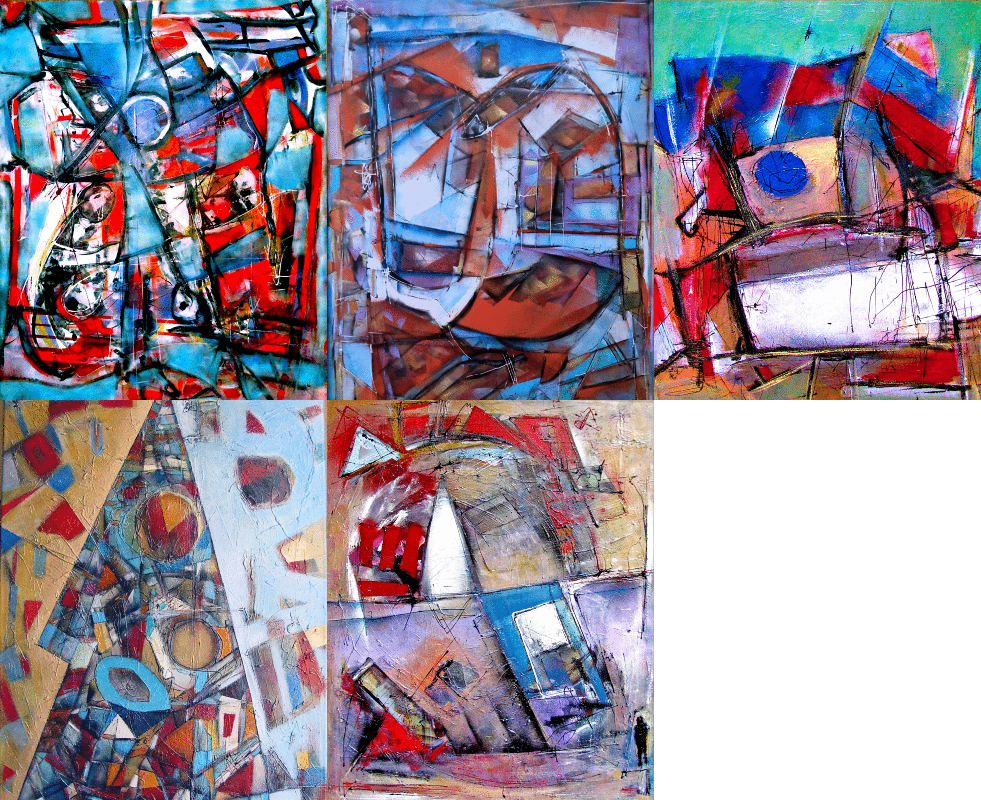
 IGNACIO ALPERIN: THE ART OF THINKING OUT LOUD / EL ARTE DE PENSAR EN VOZ ALTA