A personal, curatorial & bilingual Blog about: Artistic Movements, my Art, Creativity, Innovation, Design, Leadership, Empowerment, Sustainability, Science, Jazz, Movies and other cool pursuits - Blog personal y curatorial bilingüe sobre: Movimentos Artísticos, mi Arte, Creatividad, Innovación, Diseño, Liderazgo, Empoderamiento, Sustentabilidad, Ciencia, Jazz, Películas y otros temas.
If you look it at it from the point of view of sheer gratification, few things that you will buy for your house at a reasonable price will give you more enjoyment and for such a long time.
What are the chances that your sofa will increase in price over time? (Yes, I mean after use).
Not many? How about close to none?
What are the chances that a painting you bought for anywhere between $500 and $5000 will increase in price over time?
Well, you don´t have the best odds but it can and it does happen. Anywhere higher than $4,000 and your odds get better, and those you purchase at prices that go anywhere from $5,000 to $15,000 have probably very good odds of maintaining and increasing prices.
So, if you have a keen eye and good luck, your purchased art work may double, triple, or multiply its original price many times over.
Now, it is important that you keep it, remember where it is, and pass it over to the next generations. Otherwise what could happen to you is what happened to the unknown original owner of the painting “Preparation for Egypt” (which is thought was painted somewhere between 1605 and 1620). A German student in Berlin was looking for an old sofa for her appartment and decided to buy a pullout couch at a flea market. When she opened it, the painting was inside. It went on to be purchased by an anonymous bidder at auction in Hamburg for a price of $27,630, making the student about 100 times what she originally paid for the couch. So the lesson is to keep your art close, protected, in your will so you can pass it on to others, and definitely, do not hide it in a sofa (no matter how much you like the sofa).
If you are a betting person, always spend a little more (with good and knowledgeable advice is always better) as price in art relates to how the market views the artist (obviously, a higher price acts as an initial validation of the art work). But this is not a must.
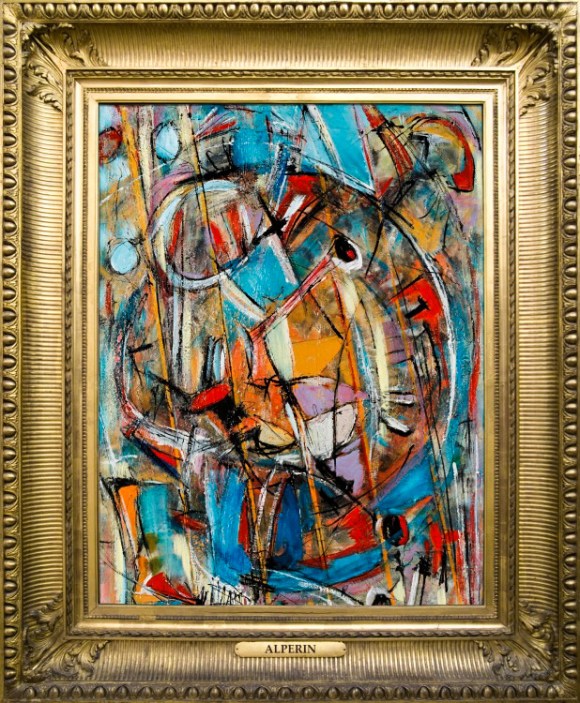
LITTLE TUNES 21 (2012) by Ignacio Alperin
You can find great deals amongst emerging as well as established artists. In my case, I make the point of always of having paintings available below $5,000 (sometimes as low as $1,500 or even less for small pieces), as my interest is that my art get to as many hands as possible. I love having someone buying something for $1,000, and then seeing that person 6 months later with a smile on his or her face because not only they love their painting, but they know they have already made a profit on it as well.
They are my best marketing people. I love the fact that they like my art, and I love seeing them talk about how much they enjoy a particular painting. And I am not alone in this pricing strategy. A great number of artists share this attitude towards the market.
So, if you are looking for enjoyment, originality, a smart and lasting gift for yourself and for the people you love and esteem, as well as a chance at making a handsome profit just for having a keen eye, you cannot do much better than buying art.
And as long as we are talking about smart things to do, I recommend you listen to this album. It is just another good idea.
Ganador de 9 Grammy Awards y considerado una de los músicos más influyentes del Siglo XX, Miles Dewey Davis III (más conocido como Miles Davis, o simplemente “Miles”) continúa aún hoy, décadas después de su muerte, ejerciendo su influencia en ámbitos propios y ajenos.
Desde médicos investigadores de la Universidad John Hopkins, a diseñadores de la D-School de la Universidad de Stanford, la música de Davis, y su trabajo en cuartetos y quintetos basados en una alta dosis de brillante inspiración y, por sobre todas las cosas, de perfecta improvisación, genera estudios y teorías sobre las neurociencias y su aplicación en áreas creativas.
Como artista plástico, la música de Miles me ha acompañado desde los 12 años, edad en que descubrí sus dotes casi “mágicos”. Durante muchos años ignoraba que una parte de mis dones creativos se debían a una sinestesia aplicada a mi obra. Mi ignorancia temporal, igualmente marcada por una certeza creativa, le dieron entonces al Jazz, y particularmente a Davis y sus contemporáneos como Evans, Coltrane, Monk, Hawkins, Jamal, Brubeck, Basie, Roach, y Clark (solo por nombrar a algunos) una faceta inspiradora y un poder milagroso sobre mi arte.
Sobre los hombros de estos genios musicales yo sentía que mis propias creaciones se alzaban hacia alturas insospechadas. Con el tiempo supe que mi interpretación sinestésica le daba una explicación más “terrenal” a mi característico uso pictórico de movimientos, ritmos, cadencias, y explosiones tonales. Pero el tiempo también me dio la razón sobre el aspecto inspirador de la música de Davis y su influencia sobre quienes la escuchamos con amor y admiración.
Hoy en día el ojo de las ciencias está puesto sobre las creaciones de estos genios de la música que lograron utilizar sus poderes y procesos creativos de una manera poco vista hasta entonces. Su obra nos enseña, tal vez particularmente hoy en día que estamos finalmente comprendiendo el funcionamiento de nuestros cerebros de manera más concreta, que nuestras capacidades pueden ser entrenadas para improvisar grupalmente, para trabajar en equipo de manera ordenada, fluida, y natural. Y esos procesos pueden tener, a la vez, la intimidad sensorial así como la explosión grupal de un tema de Davis.
Mi obra hoy sigue volando sobre las alas de estos genios creativos. Mi “Visual Jazz”, como lo bautizara una periodista norteamericana, sigue plasmando sobre lienzos, maderas, objetos y estructuras las cadencias y los ritmos de un estilo de Jazz que me continúa guiando y exigiendo, y por ello agradezco cada día. Un Jazz que, a la vez, ha pasado a convertirse en uno de los legados culturales más importantes que nos ha dejado el Siglo XX.
Y sobre todo, sigo agradeciendo al único y genial Miles, por haberse atrevido a mostrarnos el camino desde siempre.
“Blue in Green” is the third tune on Miles Davis’ 1959 album, Kind of Blue. One of two ballads on the LP. (the other being “Flamenco Sketches“).
As an aside here (and something that may earn you points in one of those “did you know?” kind of games), it has been said that the second ballad which appears on the record as “Flamenco Sketches” is in fact the song “All Blues” and vice versa. Yes, the argument is that somebody may have switched them by mistake and that they only realized it when the records were already printed and so were the covers, and as a result one simply became the other.
At the very least this is what Jeremy Yudkin argues (also as an aside point) in his scholarly article Miles Davis Kind of Blue, which you can read on the Oxford University Press Music Quarterly Journal. He correctly points out that “Flamenco Sketches” fits more logically with the strumming mid-tempo of the song which appears as “All Blues”, while the title “All Blues” fits much better with the last, very slow song that is known as “Flamenco Sketches” (If you ask me, the easiest thing would be to simply check the original copyright registry of both scores…but no one is asking me…I know).
In any case, the spirit behind “That other day” is a little bit more complex, and less romantic, than “That Day”.
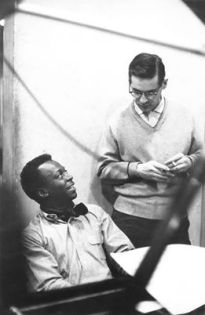
One of the most beautiful songs in that masterpiece album is “Blue in Green“, with its mainly modal melody. Recorded on March 2nd, 1959, in New York City, and in the same session where “So what” – another classic – was also recorded, it was the result of combining the talents of some of the best musicians of its time: Julian “Cannonball” Adderley, Miles Davis, Jimmy Cobb, Bill Evans on piano, and Paul Chambers on bass.
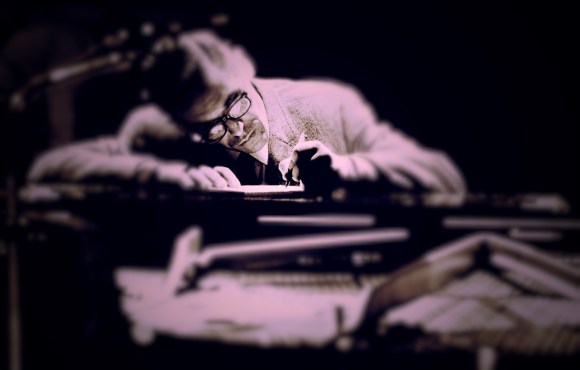
Even though the song appeared in the original record as written by Davis, it has long been speculated that pianist Bill Evans had, at the very least, a hand in it (the credits for the Evan´s trio Album “Portrait in Jazz”, in which there is a version of “Blue in Green”, attribute the song to ´Davis-Evans´)
Some go as far as to say that Evans actually wrote it. This is the case of producer Earl Zindar, whom in the Fall 1993 issue of a magazine called Letter from Evans , said that he knew perfectly well that Evans had actually penned it himself. He said “I know that it is [100-percent Bill (Evan)’s] because he wrote it over at my pad where I was staying in East Harlem, 5th floor walkup, and he stayed until 3 o’clock in the morning playing these six bars over and over.”
On the opposite side of the street we find Miles Davis asserting, in his autobiography, that he alone composed all the songs on Kind of Blue. Confirming this is the writer and poet Quincy Troupe, co-author of one of the best know Davis biographies -, who said in an interview and in regards to this issue:
“Miles talked about being back in Arkansas, and he was walking home from church. And the people in the backwoods were playing these really bad, really great gospels. He couldn’t see the people but he heard these gospels coming in through the trees and over the trees. And it was dark and he was about six years old, and he was walking with his cousin. So he said that gospel, and that music, and also he had been listening to the music from the Guinean Ballet, the finger piano, so all of that fused and came back to him with this feeling that he heard playing when he was walking through the back roads of Arkansas.
And he started remembering what that music sounded like and felt like. He said that feeling was what I was trying to get close to in Kind of Blue. That feeling had got in my creative blood, my imagination, and I had forgotten it was there. I wrote these blues to try to get back to that feeling I had when I was six years old, walking with my cousin down that dark, Arkansas road.”
The end result is that, sadly, we will never know the whole truth. Over the last 20 years the song appears mostly now as a “Davis-Evans” composition. It is sometimes difficult to know what goes on in the mind of brilliantly creative people to get stuck, at one point, over something like this and never settle the issue. I guess, it is that exception that everyone talks about when reaffirming a certain opposite rule.
The issue became so heated between both musicians that Zindar himself, in another interview conducted by Win Hinkle, recalled the 1978 Evans NPR interview in which he asserts his authorship of the song, and recalls –with certain humor and disdain – writing to Miles with the suggestion that he should be entitled to a percentage of royalties, to which Miles apparently responded with an envelope that had a check for twenty-five dollars in it.
I am no musician, but I can distinctly see Evans hand in this. Miles was also a wizard, so doubts persist. I guess the best way to go about it is to just enjoy their brilliance and accept that for once, these two geniuses showed their flaws and pettiness for all of us to see. An exceptional blemish for two men who had dazzling musical careers that no one can refute or argue with.
Here is my pictorial version of “That Other Day”. That nonetheless beautiful day – the music still moves us the same way it did before – but it is also the day in which these two egos collided. More complex than the original painting, but maintaining its spirit and stressing the superposed opinions of Bill and Miles.
It was a rainy morning that had turned into a lovely afternoon. You know the sort of day I mean. Wet streets that reflect the sunlight with enriched tones, trees with rain water droplets hanging from every leave. The air, cleared by nature and perfumed by the ozone coming from the warm wet grass of the park next door, while the cleansing wind felt slightly cooler from caressing the surface of all the wet buildings that surrounded us.
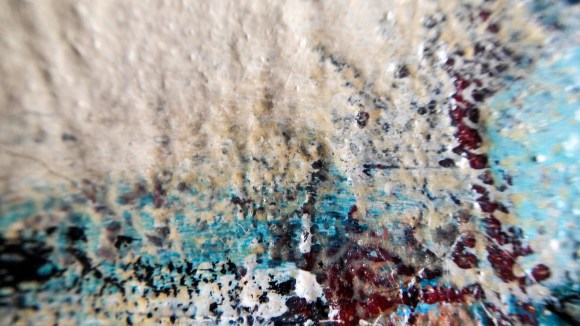
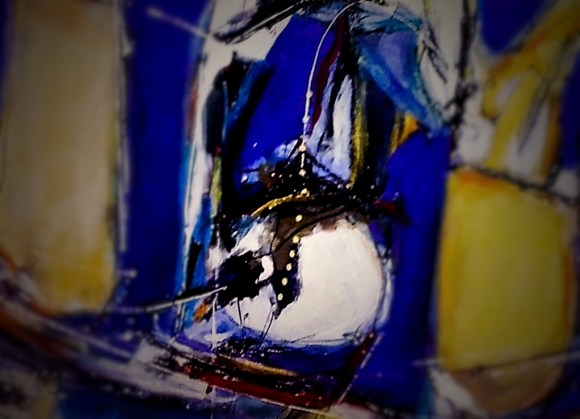
THAT DAY (2014) – detail – by Ignacio Alperin
As usual, I was painting and listening to some jazz.
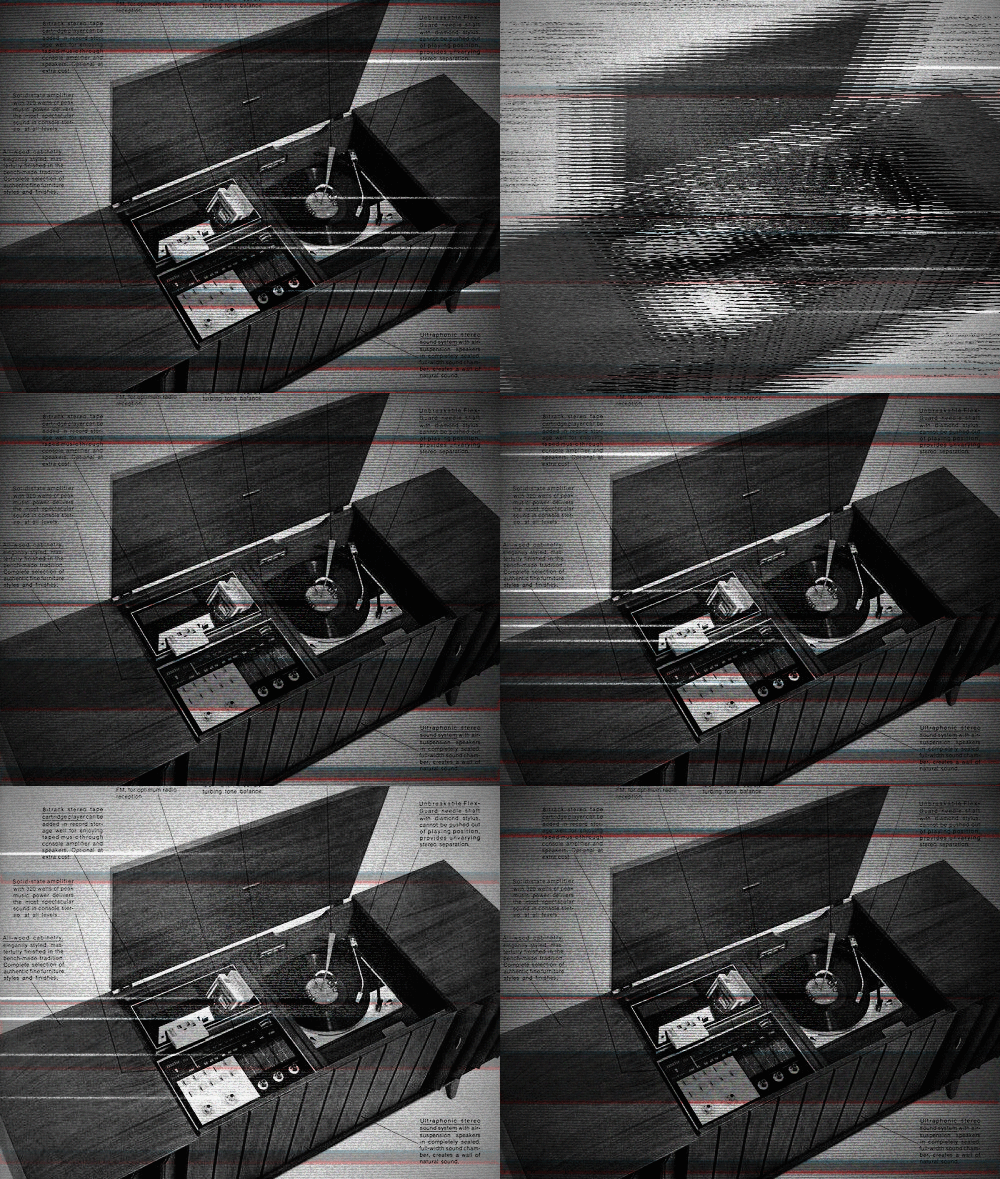
It was Kind of Blue, in vinyl, playing this time on an old record player rather than my usual garb. A gift from my late dear aunt Frances whom, after passing away, had left for me to enjoy.
I remember sill that at first I could not get it to work. It was a portable Phillips record player in bright red which packs like a little suitcase. Very cute, very shiny, and very silent.
I thought to myself, “Where will I be able to find someone to fix this?”
THAT DAY – Detail
It was, after all, more than 40 years old. So I gave it a try myself. As it happens, and as I fiddled with it for a while, I realized that it didn´t work simply because it had never been plugged in since purchased. It was brand new, seals untouched, warranty still in the box. Simply the contacts had rusted over the years from inaction.
A bit of cleaning and suddenly, I was off and running. The slightly tinny sound of the small speakers did not bother me. I had my huge Yamahas for everything else. This was the right sound for special moments.
And this was one of those special moments. As artists, we all – consciously or not – try to achieve some kind of immortality. Or at the very least, surpass our own life time by leaving behind something that may allow us to achieve a kind of “longevity” of sorts through our artistic works.
I envy – in a manner that is more healthy admiration – the fact that movie actors and musicians through image and sound can achieve this much more easily than us.
To me, listening to any of these recordings is like being in my house one moment, then I turn Kind of Blue on, and next thing I know, I am pushed into some type of time travelling gizmo. All of a sudden I am in 1959, standing in a corner of a studio while these guys, most of them long gone in 2016, come suddenly to life.
They look at each other, some smile, others concentrate while puffing smoke, others chew gum and read their music. Suddenly the voice behind the glass taps and says “Take one!”, and off they go. As I listen they are alive, they are immortal, they are playing “live” for me once again and they are great at it.
It is that very personal, very emotional connection, the one I use in my painting. It is a combination of admiration, melancholy, and happiness. My synesthesia helps along the way, and it all translates into colors and shapes, and hopefully feelings transmitted at a distance.
So I was painting and I thought to myself “This day” is “That day”. The wet trees, the sun coming through, Miles´ trumpet pushing the clouds, Evans keyboard giving a soundtrack to the wind, Cannonball and Coltrane caressing the grass, Chambers putting rhythm to the bounce of every rain drop, and Cobb simply reminding us of the summer storm that was quickly receding in the background.
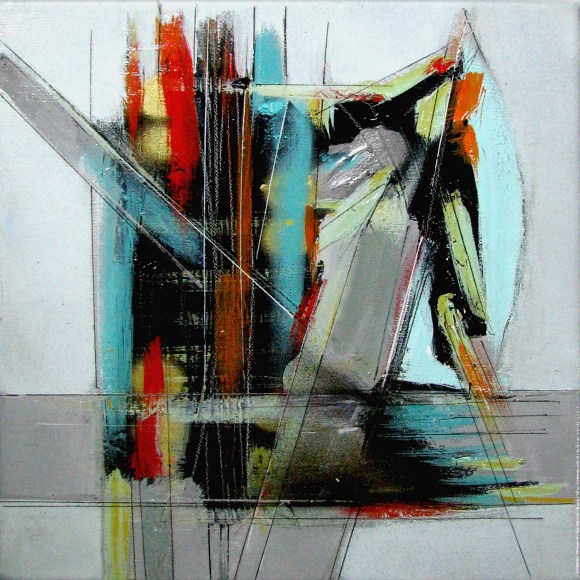
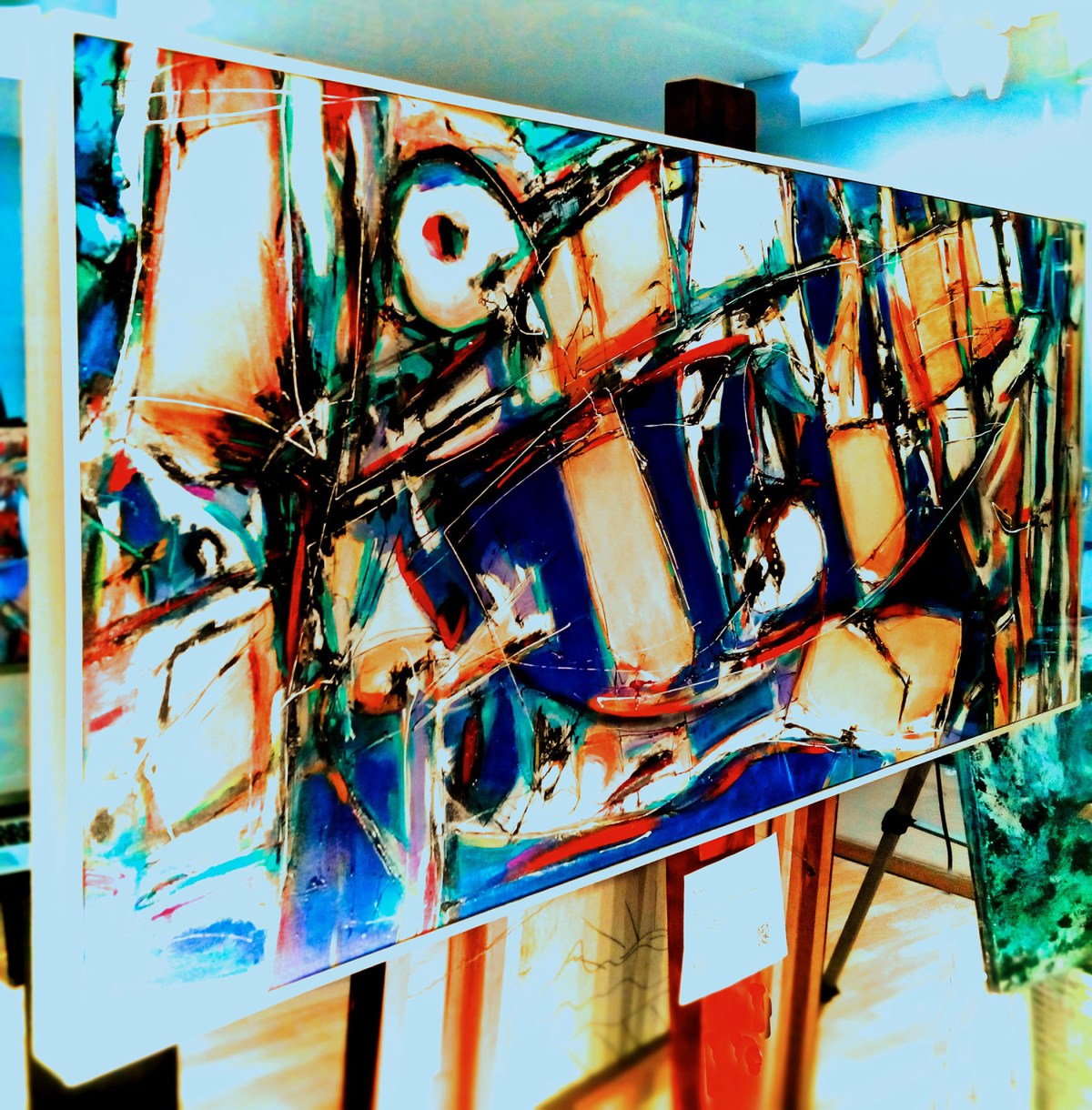
And here is “That Day”.
The result of that beautiful rainy morning, and sunny afternoon, in which a great “live” band and myself just spent the time painting together.
THAT DAY (2014) by Ignacio Alperin 60cm x 80cm Acrylic, oil based paints and sprays, and inks on canvas
El Universo entero es producto de un proceso de creación y modificación constante.
Mientras que nuestra civilización siempre ha intentado, de alguna manera u otra, ejercer – o aparentar ejercer- el control sobre la naturaleza y el universo mismo, la experiencia nos enfrenta con una realidad algo diferente.
TIME REMEMBERED (2015) by Ignacio Alperin
Nuestra propia existencia como raza humana ha dependido siempre de una serie de eventos que obedecen en parte a lo que generen nuestras propias acciones, y en una importante proporción a una serie de eventos absolutamente fortuitos.
Dentro de lo que denominamos eventos fortuitos, algunos se producirán dentro de los ecosistemas familiares, profesionales y comerciales que nosotros mismos generemos, mientras otros tendrán que ver con hechos relacionados a las acciones de otros, y en la mayoría de los casos, al funcionamiento del universo mismo.
Nuestra supervivencia global e individual se basa en gran medida, entonces, en nuestra propia adaptabilidad y creatividad en cada momento de nuestras vidas, y en cómo compartimos ese aprendizaje a lo largo y ancho de las generaciones.
Aunque no nos percibamos como seres creativos y especulemos con que, alternativamente, sí hay personas específicamente creativas que han heredado genéticamente ese don, la realidad nos indica lo contrario.
Dizzy & Duke
Mientras es innegable que hay gente diferente, tanto en lo relacionado a ciertas vocaciones individuales, como a genialidades esporádicas que sí pueden obedecer a características excepcionales, y también como producto de rasgos heredados, ya sea genéticamente o a través de mandatos familiares o sociales; es igualmente cierto que todos sin excepción tenemos la capacidad de, intuitivamente de base y constructivamente a través del aprendizaje y la comprensión, ser creativos miembros de la sociedad y de utilizar esa creatividad más allá de nuestro ámbito personal y familiar.
Fragmento de Creativos en la era de la creatividad
Arte y Jazz – Algunos Conceptos y Propuestas (Tercera Revisión)
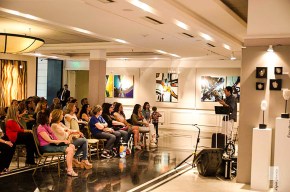
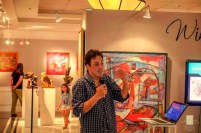
Hacia fines de 2015 tuve la fortuna de participar del evento Wine & Art, en el marco de la semana Buenos Aires Deli & Polo en el Hipódromo Argentino de Palermo.
Organizado por Art Work, con la gentil, creativa y esmerada Ligia Janeiro a la cabeza, fui invitado a presentar , en versión acotada, uno de de mis ya clásicos seminarios titulados “The Crash Flash Boom Creative Afternoon”.
Con una nutrida concurrencia de artistas y creativos, dedicamos un poco más de dos horas a indagar el por qué de estos procesos, y a comprender que podemos domarlos, alejándonos de lo imprevisto y de lo fortuito, convirtiéndolos así en nuestras armas de uso intensivo.
Quiero agradecer nuevamente a todos los que se acercaron, a los que tuvieron palabras muy generosas para conmigo, a todo el personal de Art Work, y particularmente a Ligia Janeiro por su generosidad y excelente buena onda.
(English)
At the end of 2015 I was generously invited to the event “Wine & Art”, held within the Buenos Aires Deli & Polo week, at the posh Palermo Racetrack in Buenos Aires.
Organized by Art Work, with Ligia Janeiro at the helm, I was invited to present one of my “The Crash, Flash Boom, Creative afternoon” seminars (in a shorter 2 hour version).
I had a wonderful time, and I was very flattered by the participation of some many artists and creatives, for the kind words afterwards, and for Ligia´s kind invitation and superb energy and care.
Creativity does not have to be something untamed. If we understand how it works and the mental processes that make it up, we can leave behind the “fortuitous event of the creative flash” and use simple tools to get our creative reasoning and thinking to work to our own benefit, in a concerted effort with others, while capitalizing on all of its potential.
In a world where information is being sent to us at incredible speed and with unconceivable depths; where we are also producing, inadvertently, data beyond our understanding; in a civilization that is advancing technologically beyond what the educational system can cope with; at a time when the knowledge of how things work is in more and more hands; and the technology which allows us to make them is in less and less hands; the role of the creative mind must evolve as well.
Now, evolving does not necessarily mean going freaky! It does not inevitably mean developing at the same speed the ability to digest all that is thrown to us, as well as rehashing it in new ways.
In fact, it may mean something completely different.
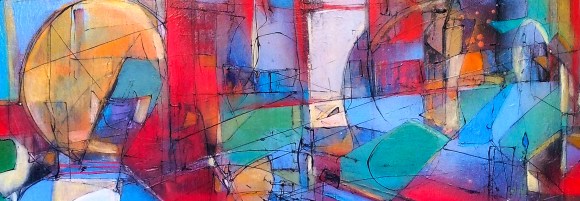
KIND OF BLUE (AND OCHRE TOO) -2014- by Ignacio Alperin
One of the biggest misconceptions on the theory of evolution, just to bring this point forward, is that the mechanism of natural selection – central to the theory – and which may result in improved abilities to survive and reproduce, should necessarily mean that the outcome is progressive.
As it happens, this is clearly not so.
What is called natural selection under the theory, does not produce organisms perfectly suited to their environments, as it is commonly misinterpreted. What it means, really, is that these organisms through different traits and skills are “good enough” to survive.
So evolving may mean, in simple terms, adapting survival characteristics which may be new, or even reacquiring qualities and attributes that were useful before, were lost for one or more generations due to environmental or social changes, and now have become of importance once again.
So how does this translate to the information age?
Well, it means for a start that the role of a creative professional is not to keep up with the speed of change but with change itself. In sporting terms, the creative thinker may be more like a long distance runner than a sprinter.
Secondly, being creative means being open to novelty and interested in everything. I always call myself “an encyclopedia of useless information”, this said with a glint in my eye, as I know very well that I gather information that most will discard for a good reason. To me, it is never useless.
But I must learn to choose what I digest. So the other evolutive step for a XXIst Century creative mind, may be then going back rather than forward. Specifically, to XIXth Century London and perhaps pay a visit to a certain sleuth who lived at 221b Baker Street.
Sir Arthur Conan Doyle created the great detective, Sherlock Holmes, based on a doctor named Joseph Bell whom Doyle admired for his quick logical interpretation as a physician, as well as for his “Method” of deductive reasoning (“Observe carefully, deduce shrewdly, and confirm with evidence”).
Bell turned detective became, in late 1886 and thanks to the pen of Conan Doyle, none other than the great Sherlock.
The role of the creative individual is very similar to the role of the detective. It involves keen observation, careful deduction, asking the right questions, having the correct basic knowledge, and above all, connecting all the dots (coming up with a hypothesis that is not necessarily constricted by a traditional structure).
In a world where information surpasses us, while technology seems to be speeding up way ahead, becoming like the road runner may be the wrong approach.
It may be that I enjoy going against the wave, but if everything speeds up, I usually slow down (and vice versa). Creative reasoning and creative thinking in a slow moving environment allows for swiftness. While if everybody rushes, our role is to slow down.
Like Neo in the Matrix, our advantage is that of being capable of decelerating everything down to the point where we are actually so cognitively enhanced that, in reality and for everyone else for that matter, we are indeed ahead of the curve.
And to do that, a bit of XIXth Century deductive reasoning may be the thing. Evolution may mean in this case, for example, simply slowing down; perhaps taking on a musical instrument – and not necessarily a violin -; or being involved in long periods of apparent daydreaming. In that mental estate, your mind will be doing its best detective work, and your deductive skills will allow you to see and connect the dots that no one else has managed to yet perceive.
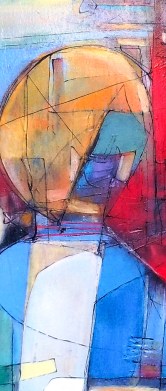
Connecting the dots… KIND OF BLUE (AND OCHRE TOO) – 2014 – Detail –






 Ganador de 9 Grammy Awards y considerado una de los músicos más influyentes del Siglo XX, Miles Dewey Davis III (más conocido como Miles Davis, o simplemente “Miles”) continúa aún hoy, décadas después de su muerte, ejerciendo su influencia en ámbitos propios y ajenos.
 que descubrí sus dotes casi “mágicos”. Durante muchos años ignoraba que una parte de mis dones creativos se debían a una sinestesia aplicada a mi obra. Mi ignorancia temporal, igualmente marcada por una certeza creativa, le dieron entonces al Jazz, y particularmente a Davis y sus contemporáneos como Evans, Coltrane, Monk, Hawkins, Jamal, Brubeck, Basie, Roach, y Clark (solo por nombrar a algunos) una faceta inspiradora y un poder milagroso sobre mi arte.


 On the opposite side of the street we find Miles Davis asserting, in his autobiography, that he alone composed all the songs on Kind of Blue. Confirming this is the writer and poet Quincy Troupe, co-author of one of the best know Davis biographies -, who said in an interview and in regards to this issue: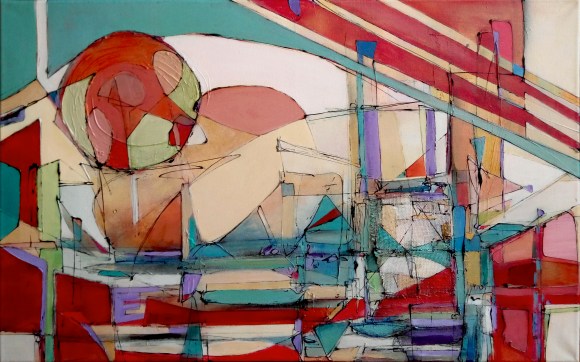






 Con una nutrida concurrencia de artistas y creativos, dedicamos un poco más de dos horas a indagar el por qué de estos procesos, y a comprender que podemos domarlos, alejándonos de lo imprevisto y de lo fortuito, convirtiéndolos así en nuestras armas de uso intensivo.
 and creatives, for the kind words afterwards, and for Ligia´s kind invitation and superb energy and care.



 IGNACIO ALPERIN: THE ART OF THINKING OUT LOUD / EL ARTE DE PENSAR EN VOZ ALTA